
GUIDE
Miracle Blanket vs. Woolino 4 Season Ultimate Sleep Sack
Published on
These serve different stages of infant sleep. The Miracle Blanket is a snug swaddle for newborns (0–4 months) who need that womb-like hold. The Woolino is a merino wool sleep sack built to last from 2 months through 2 years. Many families end up owning both.
The Miracle Blanket and Woolino 4 Season Ultimate Sleep Sack are two of the most recommended sleep products in parenting communities — but they solve different problems. The Miracle Blanket locks down the startle reflex with a no-escape swaddle design. The Woolino replaces loose blankets with a temperature-regulating wearable blanket that grows with your baby. Choosing between them depends on your baby's age, sleep challenges, and whether you need a swaddle, a sleep sack, or eventually both.
Log naps, nightwakes, and sleep patterns
A Swaddle and a Sleep Sack Walk Into a Nursery
The Miracle Blanket and the Woolino 4 Season Ultimate Sleep Sack are both beloved sleep products, but they are not direct competitors. They solve different problems at different stages.
The Miracle Blanket is a swaddle. It wraps your newborn tightly with arm flaps and a foot pouch, keeping the startle reflex from jolting them awake every 20 minutes. It is built for the first few months of life, and it does that one job extremely well.
The Woolino 4 Season Ultimate Sleep Sack is a wearable blanket. It replaces loose blankets (which are not safe in the crib) with a zippered merino wool sack that fits from 2 months all the way to age 2. Arms stay free. Temperature stays regulated. Parents stay sane.
Many families use both — the Miracle Blanket first, then transition to the Woolino. This guide breaks down when each one makes sense.
For more on building healthy sleep habits, see our 1-month-old sleep schedule guide.
| Feature | Miracle Blanket | Woolino 4 Season | What It Means |
|---|---|---|---|
| Product Type | Swaddle wrap | Wearable sleep sack | Different categories. Swaddles are for newborns; sleep sacks replace loose blankets for older babies. |
| Age Range | Newborn to ~4 months (pre-rolling) | 2 months to 2 years | The Woolino covers a much wider age range. The Miracle Blanket is purpose-built for the newborn swaddle period. |
| Primary Material | 100% breathable cotton knit | Merino wool inner, organic cotton outer | Both use natural fibers. Wool gives the Woolino superior temperature regulation across seasons. |
| Temperature Regulation | Breathable but single-season | 4-season thermoregulating (60–77 °F) | Woolino wins here. Merino wool actively regulates body temperature. Cotton is breathable but passive. |
| Startle Reflex Control | Excellent — arm flaps + foot pouch lock baby in | None — arms are free | Miracle Blanket wins for newborns with a strong Moro reflex. The Woolino is not a swaddle. |
| Ease of Use | Moderate — specific wrapping technique required | Very easy — zipper closure, shoulder snaps | Woolino is simpler. The Miracle Blanket has a learning curve, but most parents get it within 2–3 tries. |
| Diaper Changes | Full unwrap required | Two-way zipper for bottom access | Woolino wins for overnight changes. Unswaddling and re-swaddling a sleeping newborn is no fun. |
| Sizing | One size (up to ~18 lbs) | One size (2 mo – 2 yr, up to 35 lbs) | Both brands went with a one-size approach. The Woolino covers a much longer growth range. |
| Machine Washable | Yes — cold wash, tumble dry low | Yes — cold wash, line dry or tumble dry low | Tie. Both handle the washing machine fine, which matters because baby sleep gear gets dirty fast. |
| Safety Certifications | Meets CPSC standards | OEKO-TEX Standard 100, CPSC compliant | Woolino has additional third-party textile certification. Both meet US safety requirements. |
| TOG Rating | Not rated (single-layer cotton) | 1.0 TOG (4-season) | The Woolino's 1.0 TOG rating makes it suitable year-round without overheating. Cotton swaddles vary. |
Why the Miracle Blanket Has a Cult Following
The Miracle Blanket earned its reputation by solving one very specific problem: babies who bust out of every other swaddle.
The design uses two inner arm flaps that pin each arm separately against the body, plus a large outer wrap and a foot pouch that keeps legs tucked. There is no velcro, no snaps, no zippers — just fabric and tension. The result is a swaddle that even the most determined newborn struggles to escape.
For babies with a powerful Moro reflex — the involuntary startle that causes arms to fly up and eyes to snap open — this level of containment can be the difference between 45-minute sleep stretches and 3-hour ones.
The trade-off is that you need to learn the specific wrapping technique. There is a learning curve. Expect to watch the instructional video two or three times and fumble through a few attempts before it clicks. Once you have it down, the whole wrap takes about 30 seconds.
The other trade-off: diaper changes require a full unwrap. At 3 AM, this is not ideal.
Why Parents Pay Premium for the Woolino
The Woolino's price tag ($80–$100) causes sticker shock. But the math actually works in your favor.
Merino wool is the key. Unlike synthetic sleep sacks that trap heat or cotton ones that only breathe passively, merino wool actively regulates temperature. It absorbs moisture when your baby is warm and insulates when the nursery is cool. The Woolino is rated at 1.0 TOG, which makes it comfortable in room temperatures from 60 to 77 degrees Fahrenheit — basically every season in a climate-controlled home.
One size fits most of babyhood. The Woolino is designed to fit from 2 months to 2 years. Adjustable shoulder snaps accommodate growth. This means you buy one sleep sack instead of cycling through three or four sized ones. At $80 over 22 months of use, that works out to under $4 per month.
The two-way zipper opens from the bottom, so you can change a diaper without removing the sleep sack or waking up your baby more than necessary. At 3 AM, this is very much ideal.
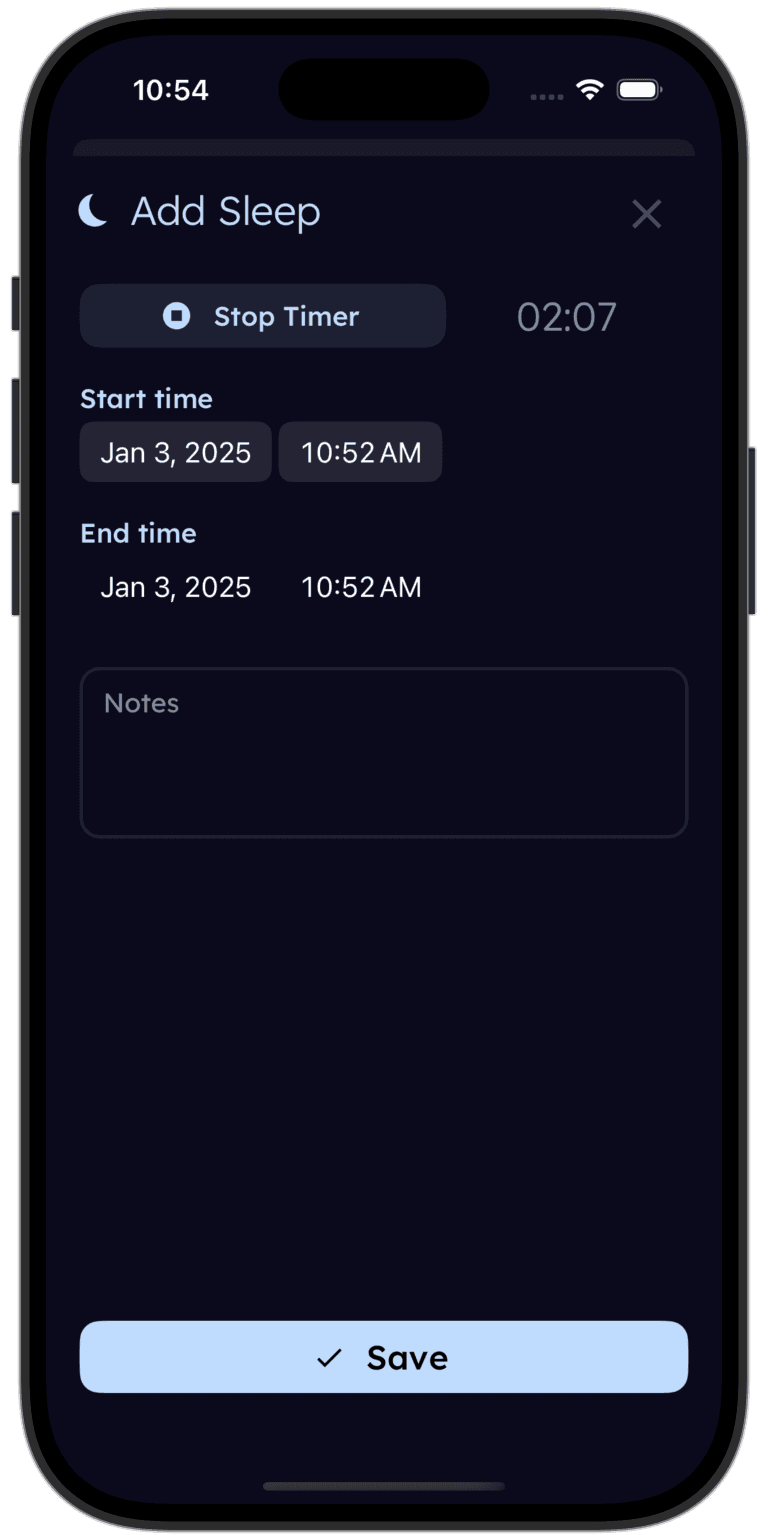
Tinylog tracks sleep so you can see what's working.
Log naps, nightwakes, and total sleep hours. See patterns over days and weeks. Bring the data to your next pediatrician visit.


The Swaddle-to-Sleep-Sack Transition
Most babies need to stop swaddling somewhere between 3 and 5 months — specifically, when they start showing signs of rolling over. The AAP is clear on this: once rolling begins, arms need to be free.
This transition can be rough. Your baby has spent months sleeping in a snug cocoon, and suddenly their arms are loose and flailing. Some babies adjust in a night or two. Others take a week of rough sleep.
A few strategies that help:
- Go cold turkey. Put the baby in the Woolino (or another sleep sack) and ride out a few rough nights. Most babies adapt within 3–5 nights.
- One arm out first. Swaddle with one arm free for a few nights, then both arms free, then move to a sleep sack.
- Keep the room conditions consistent. Same temperature, same sound machine, same bedtime routine. Change one variable at a time.
The overlap between the Miracle Blanket's age range (0–4 months) and the Woolino's starting age (2 months) gives you a natural transition window.
| Product | Typical Price | Cost Per Month of Use | Typical Use Period |
|---|---|---|---|
| Miracle Blanket Swaddle | $30–$35 | ~$8–$12/month of use | Used for ~3–4 months |
| Woolino 4 Season Ultimate Sleep Sack | $80–$100 | ~$4–$5/month of use | Used for ~22 months |
Price: The Long Game Favors Woolino
On sticker price alone, the Miracle Blanket wins — it costs a third of the Woolino. But sticker price is misleading here because these products cover completely different time spans.
The Miracle Blanket covers about 3–4 months of your baby's life. At $30–$35, that is roughly $8–$12 per month of use.
The Woolino covers about 22 months. At $80–$100, that is roughly $4–$5 per month — and you are not buying replacement sleep sacks as your baby grows through sizes.
If you buy both (which many families do), your total outlay is around $110–$135 for sleep gear that covers your baby from birth through age 2. That is solid value compared to buying multiple sized swaddles and multiple sized sleep sacks along the way.
Choose the Miracle Blanket If
- Your newborn has a strong startle (Moro) reflex that wakes them up constantly
- You need something specifically for the first 0–4 months of life
- Other swaddle wraps keep coming undone — your baby is a Houdini
- You want a simple cotton product without extra materials or features
- Budget is tight and you need an effective swaddle under $35
Choose the Woolino Sleep Sack If
- Your baby is past the swaddle stage (rolling or close to it) and needs a sleep sack
- You want one product that lasts from 2 months through toddlerhood
- Temperature regulation is a concern — your nursery runs warm in summer and cool in winter
- You want easy overnight diaper changes without a full unwrap
- You prefer natural, certified materials (merino wool, organic cotton, OEKO-TEX)
- You are tired of buying new sleep sacks every few months as your baby grows
Where to Buy
If you are in the newborn swaddle stage, the Miracle Blanket Swaddle (~$30–$35) is one of the most escape-proof swaddles on the market. It has a devoted following among parents of strong-startle-reflex babies, and it works. Available in a range of colors and patterns. Best purchased on Amazon or directly from the Miracle Blanket website.
If you need a sleep sack that will last from infancy through toddlerhood, the Woolino 4 Season Ultimate Sleep Sack (~$80–$100) is the buy-it-once option. Merino wool temperature regulation, one size that grows with your baby, and a two-way zipper for painless diaper changes. Available on Amazon, the Woolino website, and select baby retailers.
If your baby is under 3 months and you are not sure what you need yet — get both. Swaddle now, sleep sack later. Your total cost is still less than most baby monitors.
Tinylog earns a small commission on purchases made through these links, at no cost to you.
Tip: check promo.new before purchasing. It's hit or miss depending on the product, but when it hits, you'll be glad you checked.
The Bottom Line
The Miracle Blanket and the Woolino are not really competitors — they are teammates that cover different chapters of your baby's sleep journey.
The Miracle Blanket is the specialist. It does one thing — contain a flailing newborn — and it does it better than almost any other swaddle on the market. It is affordable, simple, and has a short but intense window of usefulness.
The Woolino 4 Season Ultimate Sleep Sack is the long-game pick. It costs more upfront but covers nearly two years of safe sleep with natural temperature regulation, easy diaper access, and no need to buy replacement sizes.
For families who can swing both, the combination covers your baby from day one through toddlerhood. For families choosing one, it comes down to timing: newborn with startle reflex problems? Miracle Blanket. Baby approaching or past the rolling milestone? Woolino.
If you are tracking your baby's sleep — which is especially helpful during the swaddle transition — Tinylog makes it easy to log naps, nightwakes, and total sleep hours so you can see what is actually working.
Related Guides
- 1-Month-Old Sleep Schedule — What to expect and how to start building routines
- 4-Month Sleep Regression — Why sleep falls apart and how to get through it
- Baby Feeding Chart — How much your baby should eat by age
- Safe Sleep — AAP guidelines and what actually matters
Sources
- MiracleBlanket.com. "Miracle Blanket Swaddle — Product Information." 2026.
- Woolino.com. "Woolino 4 Season Ultimate Baby Sleep Bag — Product Information." 2026.
- American Academy of Pediatrics. "Safe Sleep: Back Is Best." HealthyChildren.org, 2025.
- OEKO-TEX. "Standard 100 by OEKO-TEX — Certification Details." oeko-tex.com.
- The Wool Company. "Benefits of Merino Wool for Baby Sleep." thewoolcompany.com, 2025.
- Consumer Reports. "Best Sleep Sacks and Swaddles of 2026." consumerreports.org.
- Mommyhood101. "Miracle Blanket Review." mommyhood101.com, 2025.
This guide is for informational purposes only and is not medical advice. Always follow the AAP's safe sleep guidelines. If your baby has difficulty sleeping or you have concerns about sleep safety, consult your pediatrician.
Frequently asked questions
- Can I use the Miracle Blanket and Woolino together?
- Not at the same time, but sequentially. Many families swaddle with the Miracle Blanket for the first 3–4 months, then transition to the Woolino sleep sack once the baby starts showing signs of rolling. The Woolino's 2-month start age overlaps with the tail end of the swaddle period, making the handoff smooth.
- Is the Woolino worth the high price?
- For many families, yes. The Woolino fits from 2 months to 2 years, which means you buy one sleep sack instead of three or four cheaper ones as your baby grows. Merino wool also regulates temperature naturally, reducing the guesswork about how to dress your baby for sleep. Per month of use, it often costs less than budget alternatives.
- How do I wash the Miracle Blanket?
- Machine wash cold on a gentle cycle and tumble dry low. The cotton-knit fabric holds up well to frequent washing, which you will absolutely need to do. Avoid bleach and fabric softeners.
- Can the Woolino be used in summer?
- Yes. Merino wool is thermoregulating — it wicks moisture and breathes in warm temperatures while insulating in cool ones. The Woolino is designed for room temperatures between 60–77 degrees Fahrenheit. In hot climates, dress your baby in just a diaper underneath.
- When should I stop using the Miracle Blanket?
- Stop swaddling when your baby shows signs of rolling over, which typically happens between 3–5 months. The AAP recommends discontinuing swaddling at the first sign of rolling attempts. Transition to a sleep sack like the Woolino at that point.
- Is merino wool safe against a baby's skin?
- Yes. The Woolino uses superfine merino wool (17.5 microns), which is much finer than regular wool and does not cause the itchy feeling associated with coarser wool fibers. It is naturally hypoallergenic and has been certified by OEKO-TEX Standard 100 for safety against baby skin.