
GUIDE
Munchkin 360 vs. Munchkin Straw Cup
Published on
Both are solid transition cups from the same brand at the same price. The 360 is dentist-recommended and teaches open-cup drinking without spills. The Weighted Straw Cup teaches straw drinking and works at any angle — making it the better pick for babies still building coordination. The right choice comes down to drinking skill and your goals for the transition.
The Munchkin Miracle 360 and Munchkin Weighted Straw Cup are two of the most popular transition cups sold in the US. Both are BPA-free, dishwasher safe, and priced identically at around $8–10 for a 2-pack. But they teach fundamentally different drinking skills and suit different stages of development. Here's a clear breakdown of how they compare.
Log meals, solids, and more
Same Brand, Same Price, Very Different Cups
The Munchkin Miracle 360 and the Munchkin Weighted Straw Cup sit right next to each other on store shelves. They're the same price, the same brand, and the same sizes. Choosing between them feels like it should be easy — and then you read both descriptions and realize they teach fundamentally different skills.
Here's what matters: the 360 trains your child to drink like they're using a regular open cup, tipping their head and sipping from the rim. The weighted straw cup trains straw drinking, which lets a child pull liquid up without tilting the cup at all.
Both skills are useful. Both cups are better for dental health than a traditional hard-spouted sippy cup. But they're not interchangeable, and the right choice depends on your child's age, coordination, and what skill you want to build.
For a broader picture of what your baby should be eating and drinking at each stage, see our baby feeding chart.
| Feature | Miracle 360 | Weighted Straw Cup |
|---|---|---|
| Drinking mechanism | 360-degree drinking edge — child sips from any point around the rim | Weighted straw tilts to follow liquid at any angle; flip-top lid with Click Lock |
| Spill protection | Valve seals the rim when not drinking; spill-resistant in most positions | Click Lock flip-top lid; closes securely, leaks minimally when closed |
| Recommended by | Pediatric dentists; promotes open-cup drinking motion | Speech-language pathologists and feeding therapists for oral motor development |
| Sizes | 7oz and 10oz | 7oz and 10oz |
| Number of parts | 3 parts: cup body, lid base, valve ring | More parts: cup body, lid, straw, straw weight, flip-top cap |
| Ease of cleaning | Easier — fewer parts, wide opening, fewer crevices | Harder — straw and weight require a straw brush; flip-top lid has hinges that trap residue |
| BPA-free | Yes | Yes |
| Dishwasher safe | Yes, top rack | Yes, top rack |
| Best age range | 9 months and up; typically 12+ months for consistent independent use | 6 months and up; weighted straw makes it accessible earlier than most cups |
| Price | ~$8–10 per 2-pack (~$4–5 per cup) | ~$8–10 per 2-pack (~$4–5 per cup) |
| Skill taught | Open-cup sipping motion; preparation for drinking from a regular glass | Straw drinking; useful lifelong skill that transfers to regular cups and juice boxes |
| Works when tilted / upside down | No — liquid must pool at the rim for the valve to work correctly | Yes — weighted straw follows the liquid regardless of cup angle |
How Each Cup Works
Understanding the mechanics makes the choice obvious.
The Miracle 360 has a valve embedded in the rim of the lid. The valve is closed by default — liquid cannot escape unless a child presses their lips against the rim and sucks. Because the entire 360-degree edge is drinkable, the child does not need to find a specific spout. They tip the cup slightly, press lips to the rim, and sip. The motion is almost identical to drinking from a regular glass, just with training wheels.
The key limitation: the cup has to be tilted toward the child for this to work. The liquid needs to pool against the rim valve. If a toddler holds the cup sideways or upside down, the valve is not in contact with liquid and nothing comes out. This is good for spill resistance. It is less good for a baby who doesn't yet understand how to orient a cup.
The Weighted Straw Cup works differently. The straw has a small counterweight at the bottom. As the cup tilts in any direction — sideways, backward, or even mostly upside down — the weighted end swings to follow the liquid and keeps the straw submerged. The child always has access to liquid regardless of how they're holding the cup. The flip-top lid clicks shut when not in use.
The key advantage: a younger baby with limited cup coordination can drink successfully because the cup does the work of keeping the straw in the liquid. The child only needs to learn to suck from a straw, not manage cup angle at the same time.
The Dental Health Angle
Pediatric dentists have been pushing back on traditional spouted sippy cups for years, and for good reason. The sucking motion required to drink from a hard spout is similar to bottle feeding — it places prolonged pressure on the front teeth and palate, which can affect dental development if the cup is used heavily through toddlerhood.
The Miracle 360 addresses this directly. Because the child sips from an open rim rather than a hard spout, the motion is closer to open-cup drinking. The American Academy of Pediatric Dentistry and most pediatric dental practices that comment on sippy cups recommend either open cups or straw cups over hard-spouted cups. The 360's spoutless design checks that box.
Straw cups are also considered fine by dental standards. Straw drinking does not place the same prolonged pressure on the teeth and palate as a hard spout. The straw delivers liquid further back in the mouth. Most dentists who recommend transitioning off bottles by 12–18 months will consider both straw cups and the 360 to be acceptable alternatives.
The honest bottom line on dental health: both cups are meaningfully better than a traditional hard-spouted sippy cup. If your pediatric dentist has specifically recommended the 360 design, that's worth following. But if your child has taken strongly to straw drinking, there's no dental reason to force a switch to the 360.
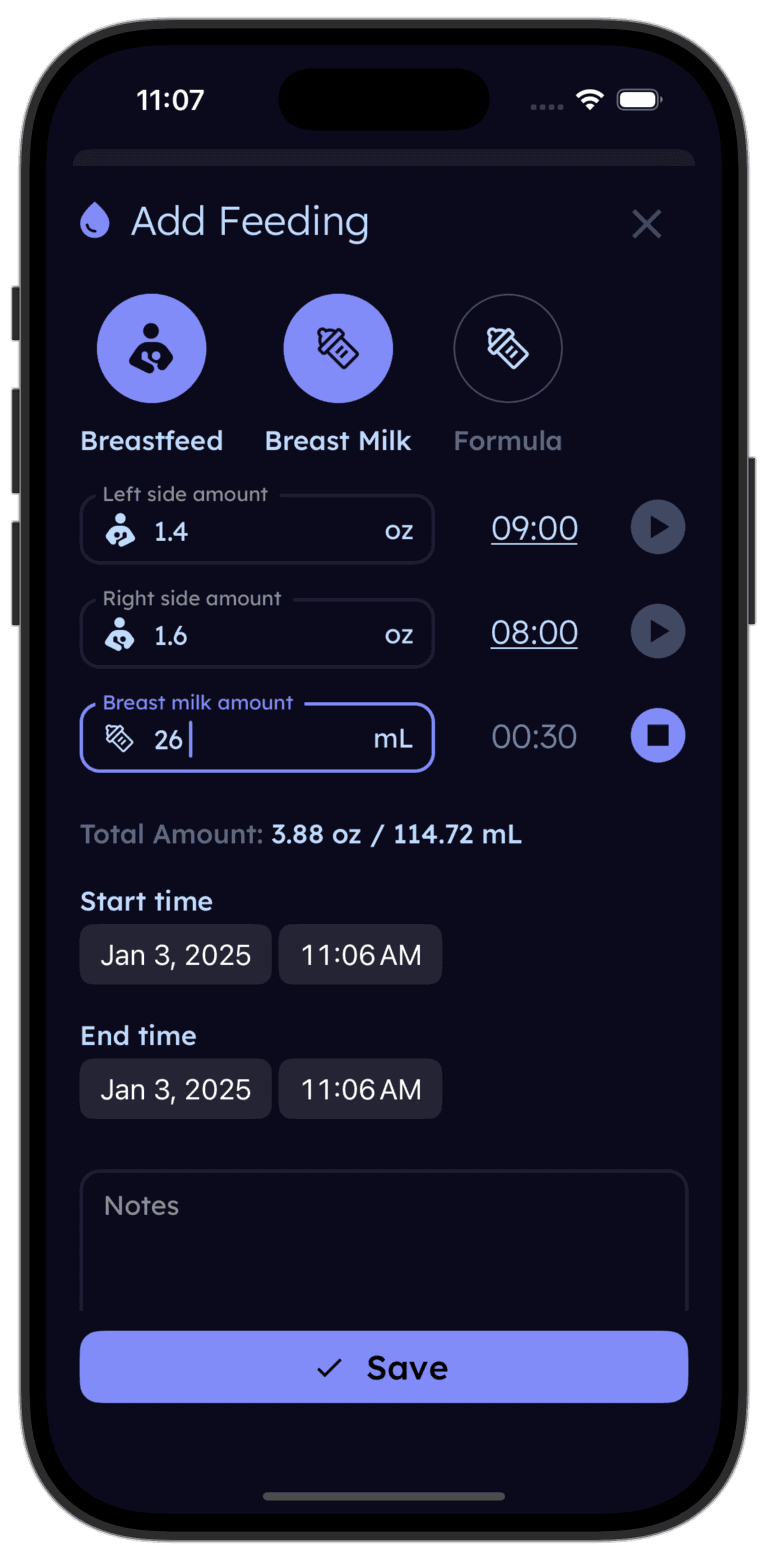
Tinylog tracks meals so you can spot patterns.


Ease of Use and Cleaning
This is where the 360 pulls ahead in the daily-life category.
The Miracle 360 has three parts: the cup body, the lid base with the valve, and the valve ring that holds the mechanism in place. To clean it properly, you pull the valve ring off, remove the valve, and wash all three components. Three parts is manageable. The parts are not small, the cup body has a wide opening, and the valve is a straightforward silicone piece that rinses clean.
The Weighted Straw Cup has more moving pieces: the cup body, the flip-top lid, the straw, the straw weight (which detaches from the straw), and the cap. The straw is the problem area. Milk — especially whole milk — leaves a film inside the straw that a standard dish brush cannot reach. You need a straw brush to clean it properly. The straw weight also accumulates residue at the connection point. The flip-top lid's hinge can trap liquid in small gaps.
If you skip a thorough straw cleaning, the cup develops an odor. This is the top complaint in parent reviews for straw cups generally, and the Munchkin version is not immune.
The practical advice: Buy a straw cleaning brush if you go with the Straw Cup. They cost $3–5 and make the cleaning difference dramatic. Without one, you'll be fighting mold and smell within a few weeks of heavy use.
| Product | Typical Price | Cost Per Cup | Notes |
|---|---|---|---|
| Munchkin Miracle 360 Sippy Cup, 7oz 2-pack | $8–10 | ~$4–5 | Most common pack size; available in multiple colors |
| Munchkin Miracle 360 Sippy Cup, 10oz 2-pack | $9–11 | ~$4.50–5.50 | Larger size for older toddlers; same valve design |
| Munchkin Weighted Straw Cup, 7oz 2-pack | $8–10 | ~$4–5 | Includes Click Lock flip-top lid and weighted straw |
| Munchkin Weighted Straw Cup, 10oz 2-pack | $9–11 | ~$4.50–5.50 | Larger capacity; same weighted straw mechanism |
Price: A Dead Heat
Both cups land at the same price — roughly $8–10 for a 2-pack, or $4–5 per cup. There is no price-based reason to choose one over the other.
The only ongoing cost difference is accessories. If you go with the Straw Cup, budget for a straw brush. If straws degrade or the straw weight stops attaching securely, replacement straws for the Munchkin cup are sold separately and run a few dollars.
The 360 has no meaningful ongoing accessory costs. The silicone valve is part of the lid assembly and is replaced by buying a new lid, but most parents don't replace valves routinely — they hold up well with proper cleaning.
Smart buying approach for either cup:
- Start with one 2-pack before stocking up — your child may reject one design
- Buy the size that matches current feeds — 7oz works for most children under 18 months, 10oz for older toddlers with larger drinks
- Watch for Target Circle and Amazon promotions — Munchkin products go on sale frequently and the 2-packs drop to $6–7 regularly
Choose the Munchkin Miracle 360 If
- Your child is 9–12 months or older and has already shown some open-cup awareness
- Your pediatric dentist has recommended moving away from spouted cups as soon as possible
- You want the fewest parts to wash — the 360 is the simpler cup to disassemble and clean
- Your child is ready to practice a sipping motion similar to drinking from a real glass
- Spill resistance at the table and in the car seat matters more than drinking at any angle
Choose the Munchkin Weighted Straw Cup If
- Your child is 6–9 months and you want to start cup practice earlier
- Your child has not yet mastered tilting a cup and needs the liquid to be accessible at any angle
- A feeding therapist or speech pathologist has recommended straw drinking for oral motor development
- You want your child to learn a skill — straw drinking — that transfers directly to juice boxes, water bottles, and restaurant cups
- Your child is a strong independent drinker who grabs the cup and tips it in every direction
- You are transitioning off bottles and want a cup that feels familiar and doesn't require a new technique
Where to Buy
If your goal is dental-friendly open-cup training with the fewest parts to wash, the Munchkin Miracle 360 Cup (~$8–10 for a 2-pack) is hard to beat. The spoutless rim design earns genuine endorsement from pediatric dentists, and three-part cleanup is one of the easiest in the category.
If your child is younger, still developing cup coordination, or a feeding therapist has recommended straw drinking, the Munchkin Weighted Straw Cup (~$8–10 for a 2-pack) is the better starting point. The weighted straw removes the angle problem and teaches a straw-drinking skill that transfers to every other cup your child will use for the rest of their life. Just buy a straw brush.
Tinylog earns a small commission on purchases made through these links, at no cost to you.
We've found promo.new handy for finding discounts on baby gear. Doesn't always have what you need, but it's worth a shot.
The Bottom Line
The Munchkin Miracle 360 and the Munchkin Weighted Straw Cup are both good transition cups. The choice comes down to one question: what skill do you want to build right now?
The Miracle 360 is the better choice if your child is 9–12 months or older, already has some cup awareness, and you want to move toward open-cup drinking with dental-friendly mechanics and minimal cleanup. It is the simpler cup to use and maintain.
The Weighted Straw Cup is the better choice if your child is younger or still building coordination, if a therapist has pointed you toward straw drinking, or if you want a cup that forgives imperfect cup-holding technique. The weighted straw is genuinely clever engineering that makes early cup use less frustrating for both baby and parent.
Both cups are far better for long-term dental health than a traditional hard-spouted sippy cup. If you're torn, consider buying one 2-pack of each — at $8–10 each, the experiment is affordable, and babies often surprise you with which one they take to.
Tracking what your child is eating and drinking — including how much fluid they're getting as you make the cup transition — can help you catch any gaps. Tinylog makes it easy to log meals and drinks and spot patterns over time.
Related Guides
- Baby Feeding Chart — How much your baby should eat and drink at each age
- Baby First Foods — How to introduce solids and build a varied diet
- Baby Gagging on Solids — What's normal and what to watch for
- Baby's First Dentist Visit — When to go and what to expect
- Baby-Led Weaning vs. Purees — Comparing two approaches to starting solids
Sources
- Munchkin. "Miracle 360 Sippy Cup — Product Information." munchkin.com. 2026.
- Munchkin. "Weighted Straw Cup — Product Information." munchkin.com. 2026.
- American Academy of Pediatric Dentistry. "Oral Health Policies — Sippy Cup Use." aapd.org. 2025.
- American Academy of Pediatrics. "Switching to a Cup." healthychildren.org. 2025.
- Cleveland Clinic. "When and How to Transition Baby Off Bottles." health.clevelandclinic.org. 2025.
- Feeding Matters. "Supporting Oral Motor Development Through Cup Drinking." feedingmatters.org. 2025.
This guide is for informational purposes only. Cup readiness varies by child. If your child has feeding difficulties, is not meeting developmental milestones, or you have concerns about oral motor development, consult your pediatrician or a pediatric feeding therapist.
Frequently asked questions
- Which cup is better for a 6-month-old just starting solids?
- The Munchkin Weighted Straw Cup is generally the better starting point for very young babies. Straw drinking is an accessible skill at 6–9 months, and the weighted straw follows the liquid regardless of the cup's angle, which helps babies who are still developing the motor control to tip a cup. The 360 requires a deliberate sipping motion that is harder to learn before 9–12 months.
- Is the Munchkin 360 actually dentist-recommended?
- Yes. The 360 design is frequently recommended by pediatric dentists because it promotes an open-cup drinking motion rather than the prolonged sucking associated with traditional spouted sippy cups. Extended sippy cup use with a hard spout can affect tooth and palate development. The 360's spoutless design avoids that risk. Straw cups are also considered better than spouted sippy cups by most dental guidelines.
- Does the Munchkin 360 really not spill?
- It is spill-resistant, not completely spill-proof. The 360 design uses a valve that seals the entire rim unless a child actively drinks from it. In practice it handles being tossed, knocked over, and dropped very well. However, if the valve is not seated correctly after washing, or if the cup is repeatedly squeezed, small amounts of liquid can escape. Most parents find it reliable enough for daily use.
- How does the weighted straw work?
- The straw in the Munchkin Weighted Straw Cup has a small counterweight at the bottom. As the cup tilts in any direction, the weighted end swings to follow the liquid, keeping the straw submerged. This means the child can drink regardless of whether the cup is held upright, tilted sideways, or tipped back — which is helpful for babies who don't yet understand they need to tip a cup to drink.
- At what age should I switch away from a sippy cup entirely?
- The American Academy of Pediatrics and American Academy of Pediatric Dentistry recommend transitioning away from bottles by 12–18 months and moving toward open cups or straw cups. Most pediatric dentists recommend limiting or eliminating hard-spouted sippy cups by 18 months. Both the Munchkin 360 and the Weighted Straw Cup support this transition more healthily than a traditional spouted cup.
- Are both cups dishwasher safe?
- Yes. Both the Munchkin Miracle 360 and the Munchkin Weighted Straw Cup are dishwasher safe on the top rack. Both are also BPA-free. The 360 has 3 parts to clean; the Straw Cup has more components including the straw, straw weight, and flip-top lid, which can trap milk residue if not fully disassembled for washing.