
GUIDE
Nestig Cloud Crib vs. HALO BassiNest Swivel Sleeper 3.0
Published on
These solve different problems. The Nestig Cloud is a full-size convertible crib your baby can use for years. The HALO BassiNest is a bedside bassinet designed for the first 5 months. Most families end up needing both a bassinet and a crib — so the real question is whether you want to start with one, or skip straight to the other.
The Nestig Cloud Crib and HALO BassiNest Swivel Sleeper 3.0 are two of the most popular sleep products for newborns, but they are fundamentally different categories of baby gear. One is a long-term investment, the other is a short-term convenience tool. Here is how to figure out which one you actually need — or whether you need both.
Log sleep, wake windows, and nap patterns
Two Very Different Products for the Same Sleeping Baby
The Nestig Cloud Crib and HALO BassiNest Swivel Sleeper 3.0 both give your newborn a safe place to sleep. But that is about where the similarities end. One is a full-size convertible crib that will be in your home for years. The other is a bedside bassinet that your baby will outgrow before they can roll over reliably.
This is not really an apples-to-apples comparison — it is more like comparing a sedan to a rental scooter. Both get you where you need to go, but the use case and lifespan are completely different.
The reason parents end up comparing these two is usually because they are trying to figure out: do I need a bassinet AND a crib, or can I just pick one? That is the question we are going to answer honestly.
For tracking your baby's sleep patterns — which becomes incredibly useful once you are trying to establish a schedule — see our 4-month sleep schedule guide.
| Feature | Nestig Cloud Crib | HALO BassiNest 3.0 | What It Means |
|---|---|---|---|
| Product type | Full-size convertible crib | Bedside bassinet | Different categories entirely. A crib is a long-term sleep space; a bassinet is a short-term bedside sleeper. |
| Age range | Birth through toddler years (~3 years) | Birth to ~5 months (or when baby pushes up on hands and knees) | Nestig wins on lifespan by a mile. The BassiNest is a 4–5 month product. |
| Weight limit | Up to 50 lbs (crib mode) | ~20 lbs | The crib obviously holds more. The bassinet is designed for small babies only. |
| Sleep surface size | Standard crib mattress (28" x 52") | ~17" x 34" oval | The crib has a much larger sleep surface. The bassinet is cozy and enclosed — which newborns tend to prefer. |
| Bedside access | No — standard crib with four fixed walls | Yes — 360° swivel, lowering side wall | HALO wins for nighttime convenience. You can reach your baby without getting out of bed. |
| Room sharing | Possible but takes up significant floor space in a bedroom | Designed for bedside use — base slides under the bed | HALO is purpose-built for room sharing. A crib in the bedroom works but is bulky. |
| Converts to toddler bed | Yes — toddler rail included | No | Nestig converts and grows with your child. The BassiNest has a fixed, short lifespan. |
| Mattress | Sold separately or in bundle (standard crib mattress) | Included (fitted to bassinet) | HALO includes the mattress. Nestig's mattress bundle is recommended but adds to the cost. |
| Portability | Not portable — assembled in place | Somewhat portable — adjustable base, can be moved between rooms | Neither is truly portable, but the BassiNest is easier to reposition. |
| Aesthetic / design | Modern, clean lines, natural wood and muted colors | Functional medical-adjacent look, mesh sides, plastic base | Nestig wins on design. The Cloud crib looks like furniture. The BassiNest looks like hospital equipment (but it works great). |
| Assembly | Moderate — typical crib assembly, ~30–45 min | Easy — minimal assembly, ~10–15 min | HALO is simpler to set up. Crib assembly is a rite of passage for new parents. |
The Core Tradeoff: Lifespan vs. Convenience
Here is the fundamental tension between these two products:
The Nestig Cloud Crib is a long-term investment. You assemble it once, your baby sleeps in it from day one (or whenever you transition from a bassinet), and it converts into a toddler bed when they are ready. For many families, this is the only sleep furniture they buy. Total usable lifespan: roughly 3 years.
The HALO BassiNest is a short-term convenience tool. It sits right next to your bed, swivels toward you, and has a lowering side wall so you can reach your baby without standing up. It is phenomenal for the newborn stage — especially for breastfeeding parents or anyone recovering from a C-section. Total usable lifespan: roughly 4 to 5 months.
That lifespan difference is the single biggest factor. If you buy the BassiNest, you will still need a crib eventually. If you buy the crib, you might not need a bassinet at all — but you will lose that bedside convenience during the hardest months.
The Bedside Factor: Why Bassinets Exist
The American Academy of Pediatrics recommends room sharing (not bed sharing) for at least the first 6 months. A bedside bassinet is the easiest way to follow that recommendation.
The HALO BassiNest's 360-degree swivel is its standout feature. The base slides under your bed frame, and the sleeping pod rotates so you can pull it right next to you. One wall lowers with a button press so you can see and reach your baby without sitting up. At 3 AM when you have been asleep for 45 minutes and the baby needs to eat again, that matters.
The Nestig Cloud Crib does not offer any of this. It is a standard crib with four walls. You can put it in your bedroom for the early months, but it takes up a lot more space and you will need to stand up and walk over to it every time the baby cries.
If nighttime feeding convenience is your top priority — and for the first few months, it probably should be — the BassiNest earns its price tag quickly.
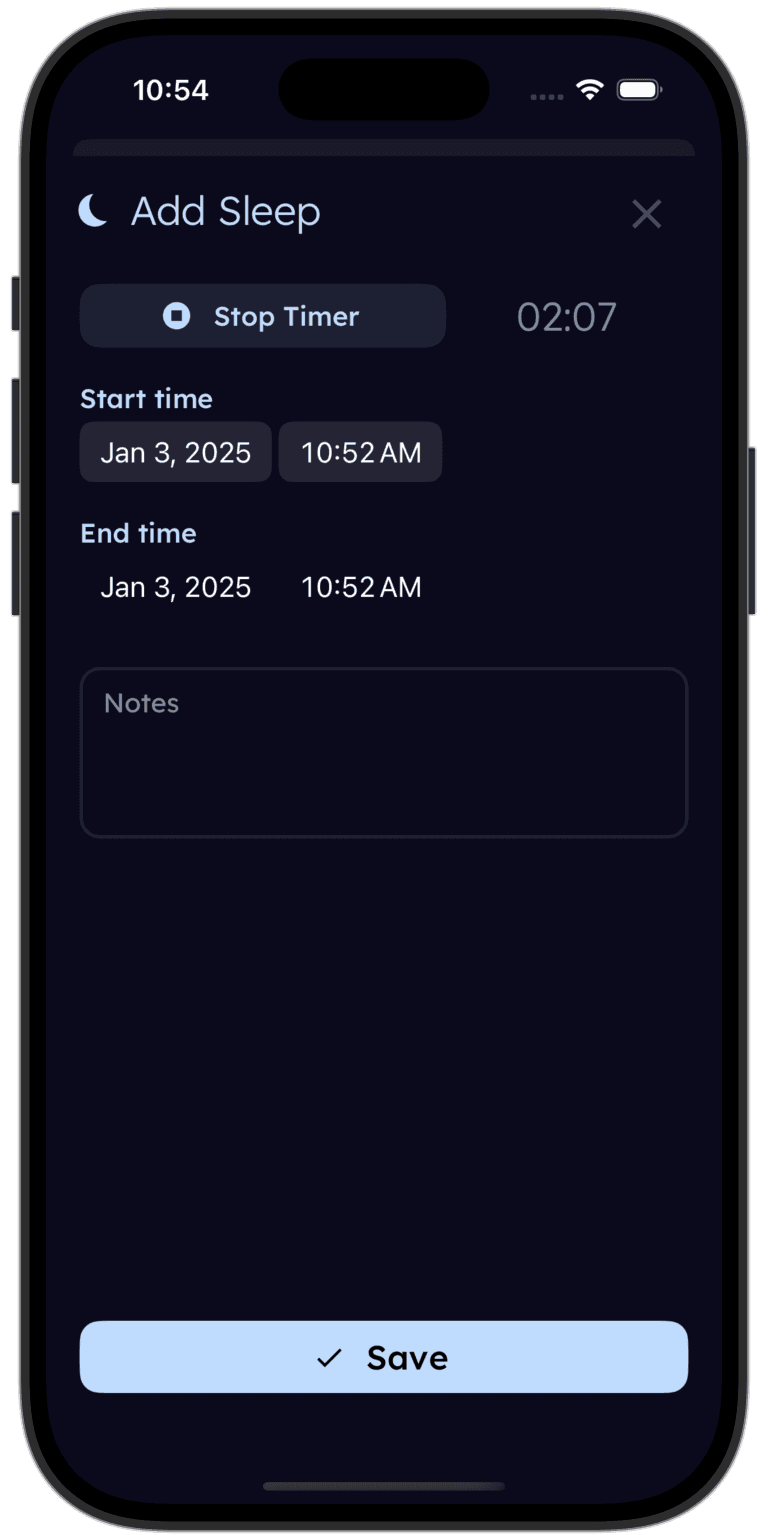
Tracking sleep helps you spot when baby is ready to move from bassinet to crib.
Log naps and nighttime sleep, track wake windows, and see patterns develop over time. When it is time to transition to the crib, you will have the data to know your baby is ready.


Design and Build Quality: Where Nestig Shines
There is no polite way to say this: the HALO BassiNest looks like medical equipment. It is functional, sturdy, and well-engineered — but with its mesh walls, plastic frame, and adjustable metal base, it is not winning any design awards. It does its job and it does it well, but it is not something you will be excited to photograph.
The Nestig Cloud Crib is a different story. It has clean lines, sustainably sourced wood, and a minimalist aesthetic that actually looks good in a nursery. Nestig puts real thought into design — the rounded edges, the muted color options, and the overall feel of the crib are noticeably above average. It is one of those baby products that does not look like a baby product.
Does design matter for a baby who cannot see past 12 inches? No. Does it matter for the parent who has to look at this furniture every single day for three years? Honestly, yes.
Safety: Both Are Solid
Both the Nestig Cloud Crib and HALO BassiNest meet all current CPSC safety standards. Neither has been subject to safety recalls as of this writing. Both provide firm, flat sleep surfaces consistent with AAP safe sleep guidelines.
A few specific safety notes:
- Nestig Cloud Crib uses non-toxic finishes and meets GREENGUARD Gold certification for low chemical emissions. The mattress (sold separately) is designed to fit snugly with no gaps.
- HALO BassiNest has mesh walls for airflow and visibility. The lowering side wall automatically returns to its full height position — it does not stay down, which prevents accidental bed-sharing.
The most important safety factor for any baby sleep product is how you use it: firm mattress, nothing else in the sleep space, baby on their back. Both of these products make it easy to follow those rules.
| Product | Typical Price | Notes |
|---|---|---|
| Nestig Cloud Crib (crib only) | $349–$399 | Does not include mattress. The Nestig mattress bundle brings the total to ~$450–$500. |
| Nestig Cloud Crib + mattress bundle | $450–$500 | Best value if buying new. Occasionally discounted during sales events. |
| HALO BassiNest Swivel Sleeper 3.0 | $250–$330 | Includes mattress pad. Price varies by fabric edition. Essentia version is the most affordable. |
| Both (bassinet now + crib later) | $600–$830 total | The most common setup. You can stagger the purchases — buy the bassinet before birth, the crib at 3–4 months. |
Cost: It Depends on Your Path
The HALO BassiNest runs about $250–$330 depending on the edition. That gets you a safe sleep space for about 4–5 months.
The Nestig Cloud Crib runs about $350–$500 depending on whether you add the mattress. That gets you a safe sleep space for about 3 years.
On a pure cost-per-month basis, the crib is dramatically better value. But that math only works if you skip the bassinet entirely — and many parents find that unrealistic during the newborn phase.
The most common path: buy the bassinet before birth (you need something ready on day one), then buy the crib around 3–4 months when the baby starts outgrowing the bassinet. Total cost: $600–$830. That is real money, but you are covering your baby's sleep needs from birth through toddlerhood.
If you can only buy one, the crib is the better long-term investment. You can move it into your bedroom temporarily or use a less expensive bassinet alternative for the first few months.
Choose the Nestig Cloud Crib If
- You want one sleep product that lasts from birth through toddlerhood
- Budget is a factor and you would rather not buy a bassinet you will use for only 4 months
- You have a nursery set up and plan to have baby sleep there from early on
- Design and aesthetics matter to you — the Cloud crib is genuinely beautiful furniture
- You are planning for a second child and want a crib that will be reused
- You are comfortable moving the crib into your bedroom temporarily for room sharing
Choose the HALO BassiNest If
- You want baby right next to your bed for nighttime feeds without getting up
- You are recovering from a C-section or have limited mobility after birth
- You want to follow the AAP room-sharing recommendation without fitting a full crib in your bedroom
- Your baby is already on the way and you need a safe sleep space set up fast
- You plan to buy a crib eventually but want something smaller and more convenient for the newborn stage
- Nighttime breastfeeding is a priority and you want the easiest possible access to baby
Where to Buy
The Nestig Cloud Crib (~$350–$500 with mattress) is the long-term pick. It is a beautifully designed, convertible crib that grows with your child from newborn through toddler. If you want one sleep product that lasts for years, this is the one. Available directly from Nestig's website, and occasionally through specialty baby retailers.
The HALO BassiNest (~$250–$330) is the newborn convenience pick. The swivel base, lowering wall, and bedside design make those brutal first months significantly more manageable — especially for breastfeeding parents and C-section recovery. Available on Amazon, Target, buybuy BABY, and the HALO website.
If your budget allows, getting both is the move most families make — and the one most families are glad they made.
Tinylog earns a small commission on purchases made through these links, at no cost to you.
Want to save a few bucks? promo.new is worth a quick look. It won't always have your product, but when it does, the savings are real.
The Bottom Line
The Nestig Cloud Crib and HALO BassiNest are not really competitors — they are complementary products that serve different stages.
The HALO BassiNest is the best bedside sleeper for the newborn stage. The swivel, the lowering wall, and the compact footprint make nighttime feeds and room sharing genuinely easier. But it lasts about 5 months, and then you need a crib anyway.
The Nestig Cloud Crib is a beautiful, well-built crib that converts to a toddler bed. It is the better long-term value by far. But it does not sit next to your bed or give you easy nighttime access during the weeks when you need it most.
For most families, the honest answer is: get the bassinet for the newborn months and the crib for everything after. If you can only pick one, pick the crib — you can always improvise a room-sharing setup for the first few months.
If you are tracking your baby's sleep — which helps you spot patterns, anticipate regressions, and know when they are ready to transition sleep spaces — Tinylog makes it easy to log naps, nighttime sleep, and wake windows in a few taps.
Related Guides
- 4-Month-Old Sleep Schedule — Around the time most babies transition from bassinet to crib
- 4-Month Sleep Regression — What happens to sleep around the bassinet-to-crib transition
- Baby Development: 3 Months — Milestones and growth during peak bassinet months
- Baby Fighting Sleep — When the sleep space is not the problem
Sources
- Nestig. "Cloud Crib — Product Specifications and Safety Information." nestig.com, 2026.
- HALO Innovations. "BassiNest Swivel Sleeper 3.0 — Product Specifications." halosleep.com, 2026.
- American Academy of Pediatrics. "Safe Sleep Recommendations." healthychildren.org, 2024.
- Consumer Reports. "Best Cribs of 2026." consumerreports.org, 2026.
- Consumer Reports. "Best Bassinets of 2026." consumerreports.org, 2026.
- Wirecutter (NYT). "The Best Bassinets." nytimes.com/wirecutter, 2025.
- Wirecutter (NYT). "The Best Cribs." nytimes.com/wirecutter, 2025.
- Babylist. "Nestig Cloud Crib Review." babylist.com, 2025.
- Babylist. "HALO BassiNest Swivel Sleeper Review." babylist.com, 2025.
- CPSC. "Safe Sleep for Babies." cpsc.gov, 2025.
This guide is for informational purposes only and is not a substitute for pediatric advice. Always follow the AAP safe sleep guidelines: firm, flat surface, nothing in the crib or bassinet except a fitted sheet, and baby on their back. Product specifications can change — verify current details on the manufacturer's website before purchasing.
Frequently asked questions
- Can I use the HALO BassiNest from birth instead of a crib?
- Yes. The HALO BassiNest is designed for newborns from birth up to about 5 months or until baby can push up on hands and knees (whichever comes first). Many families use a bassinet exclusively for the first few months, then transition to a crib. The AAP recommends room-sharing for at least the first 6 months, and a bedside bassinet makes that easier.
- Is the Nestig Cloud Crib safe for newborns?
- Yes. The Nestig Cloud Crib meets all CPSC and ASTM safety standards for full-size cribs and is safe from day one. It uses a firm, flat mattress (sold separately or in a bundle) that meets safe sleep guidelines. The only downside to starting with a crib is that it will be in the nursery rather than right next to your bed.
- How long does the HALO BassiNest last?
- The HALO BassiNest has a weight limit of approximately 20 lbs and should be discontinued once your baby can push up on hands and knees. For most babies, this means 4 to 5 months of use. Some larger or more physically advanced babies outgrow it sooner.
- Can the Nestig Cloud Crib convert to a toddler bed?
- Yes. The Nestig Cloud Crib converts from a crib to a toddler bed using the included conversion kit. The toddler rail replaces one side of the crib, extending the usable lifespan well into the toddler years (up to about age 3, depending on your child).
- Is the HALO BassiNest swivel feature worth it?
- For many parents, yes. The 360-degree swivel lets you rotate the sleeping area toward you in bed without getting up. One side wall lowers so you can reach your baby easily for nighttime feedings. If you are recovering from a C-section or have limited mobility, the swivel is genuinely helpful.
- Do I need both a bassinet and a crib?
- Not necessarily, but many families find both useful. A bassinet keeps baby close for nighttime feeds during the first few months. A crib is the long-term sleep space. If budget is tight, you can skip the bassinet and put the crib in your bedroom for the early months — it just takes up more room. If you can afford both, the bassinet-then-crib path is the most common setup.