
GUIDE
Nestig Cloud Crib 3-in-1 vs. Nestig Wave Crib
Published on
Both are beautifully designed Nestig convertible cribs with premium materials and the brand's modular expansion system. The Cloud has soft, rounded panels and a sculpted organic look. The Wave has flowing, undulating lines and a more dramatic silhouette. The biggest differences are aesthetic — structurally, they're more alike than different.
The Nestig Cloud and Nestig Wave are the two standout cribs from one of the most design-forward baby brands on the market. Both are built from FSC-certified solid wood, both convert from crib to toddler bed to daybed, and both work with Nestig's modular expansion system. Choosing between them is mostly about which design speaks to you — and a few practical differences worth knowing.
Log sleep, feeds, and milestones
Same Brand, Different Personality — Here's What Actually Matters
The Nestig Cloud and Nestig Wave are siblings, not strangers. They share the same wood, the same finish, the same safety certifications, and the same modular expansion philosophy. If you held one in each hand (good luck — they're heavy), the build quality would feel nearly identical.
So why do two versions exist? Because design is personal, and Nestig knows it. The Cloud has a soft, rounded look that feels warm and approachable. The Wave has flowing, dramatic curves that feel more sculptural and architectural. Same bones, different personality.
Here's what you should know upfront: from a safety and functionality standpoint, these cribs are essentially the same. Both meet CPSC standards, both convert through three stages, both use FSC-certified solid wood. The decision comes down to aesthetics, a small price gap, and which expansion accessories you might want down the line.
For tracking your baby's sleep once the crib is set up, see our sleep schedule guides by age.
| Feature | Nestig Cloud Crib | Nestig Wave Crib | What It Means |
|---|---|---|---|
| Manufacturer | Nestig | Nestig | Same brand, same direct-to-consumer model, same design philosophy. The difference is in the crib itself. |
| Crib type | 3-in-1 convertible (crib, toddler bed, daybed) | 3-in-1 convertible (crib, toddler bed, daybed) | Tie. Both convert through the same three stages. |
| Materials | FSC-certified solid Brazilian wood, water-based non-toxic finish | FSC-certified solid Brazilian wood, water-based non-toxic finish | Tie. Same sustainably sourced wood and finish across both models. |
| Mattress height positions | 3 adjustable positions | 3 adjustable positions | Tie. Both offer the same three height settings. |
| Design aesthetic | Soft, rounded cloud-like panels with gentle curves | Flowing, undulating wave-shaped panels with dramatic curves | Both are statement cribs. The Cloud is softer and more organic. The Wave is bolder and more sculptural. |
| Toddler rail included | No, sold separately (~$50) | No, sold separately (~$50) | Tie. Both require a separate toddler rail purchase for the toddler bed stage. |
| Modularity / expansion | Compatible with Nestig Cloud expansion packs | Compatible with Nestig Wave expansion packs | Both use Nestig's modular system, but expansion packs are model-specific — they're not interchangeable. |
| Assembly time | ~45–60 minutes | ~45–60 minutes | Similar. The Wave's curved panels need a bit more care during alignment, but overall effort is comparable. |
| Weight | ~55 lbs | ~57 lbs | Nearly identical. Both are heavy, solid cribs that feel substantial once assembled. |
| Color options | 3–4 colors (White, Natural Wood, Sage, Midnight) | 2–3 colors (White, Natural Wood, Sage) | The Cloud has a slightly wider palette. Both offer curated, well-designed color choices. |
| Certifications | JPMA, CPSC compliant, FSC-certified wood | JPMA, CPSC compliant, FSC-certified wood | Identical certifications. Both meet all current U.S. safety standards. |
Materials and Build Quality
This is the shortest section in the guide, and that tells you something.
Both the Nestig Cloud and the Nestig Wave use FSC-certified solid Brazilian wood (typically eucalyptus) with a water-based, non-toxic finish. The wood is dense, heavy, and has a quality feel that you notice the moment you unbox the crib. Both cribs weigh in the mid-50-pound range, which makes them sturdy once assembled and a workout to carry upstairs.
The finish is smooth on both models — no rough patches, no chemical smell. Nestig uses the same manufacturing process for both cribs, so you're getting the same material quality regardless of which design you pick.
If you're choosing between these two cribs based on build quality alone, save your energy. It's a tie. Move on to design.
Design: Soft Curves vs. Bold Waves
This is where the decision lives for most parents, so let's be specific about what each crib looks like.
The Nestig Cloud has gently rounded solid panels that curve inward at the top, creating a soft, cocoon-like shape. The edges are smooth and organic — nothing sharp, nothing angular. It feels calm. Parents often describe it as cozy, warm, and nurturing. With three to four color options, the Cloud works well in nurseries that lean toward earthy tones or Scandinavian simplicity.
The Nestig Wave has undulating, flowing panels with more pronounced curves that rise and fall like — well — waves. The silhouette is more dramatic and more architectural. Where the Cloud whispers, the Wave speaks up. It's the kind of crib that anchors a room. The color palette is slightly smaller (two to three options), but the design itself does most of the talking.
Neither design is better. If you want the nursery to feel like a calm retreat, the Cloud fits that mood. If you want the crib to be a statement piece that visitors notice immediately, the Wave delivers that.
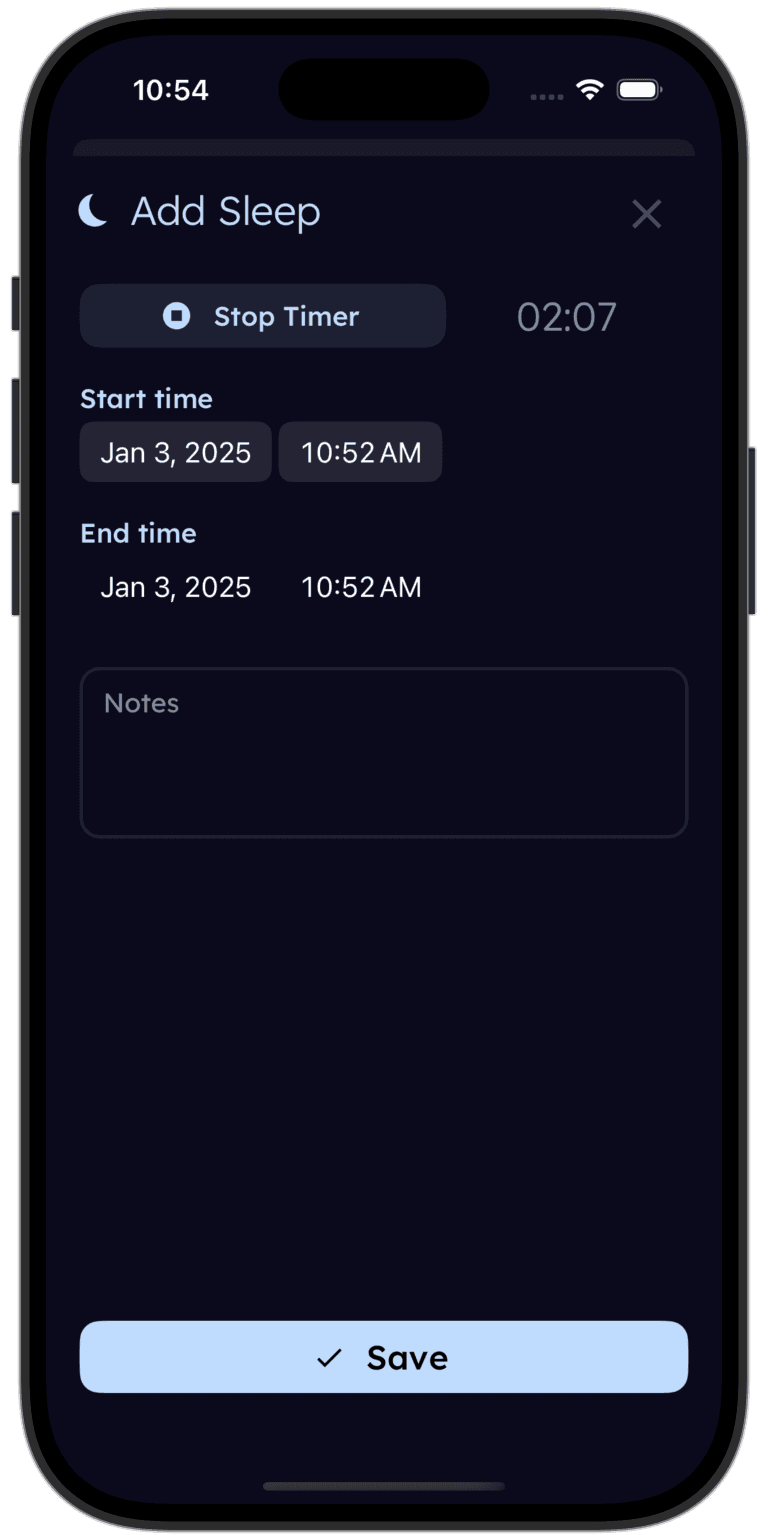
Tinylog tracks sleep so you can spot patterns before they become problems.
Log sleep, feeds, and diaper changes, track nap patterns over time, and get a clear picture of your baby's day. Bring the data to your next pediatrician visit.


Convertibility and the Modular System
Both cribs follow the same 3-in-1 conversion path: crib to toddler bed to daybed.
For both models, the toddler bed rail is sold separately at around $50. The daybed conversion — removing one side entirely — requires no additional parts for either crib. So the conversion experience is functionally identical.
Where things diverge slightly is the modular expansion system. Nestig sells add-on packs that let you reconfigure the crib as your child grows. Both the Cloud and Wave support this system, but the expansion packs are model-specific. A Cloud expansion pack won't fit the Wave, and vice versa. Before you buy accessories, double-check compatibility on Nestig's site.
The Cloud, being the older and more established model, currently has a wider range of available expansion accessories. The Wave's accessory lineup is growing but isn't as extensive yet. If the modular system is a big part of why you're buying a Nestig crib, the Cloud gives you more options today.
Mattress and Sleep Surface
Both cribs accept a standard full-size crib mattress (52 by 28 inches). Neither includes a mattress — plan to buy one separately.
Both offer three mattress height positions, which is standard for most cribs. You'll start at the highest setting for a newborn and lower it as your child grows and begins pulling up. Three positions is plenty for safe, practical use through the crib years.
There's no difference here. Pick any standard crib mattress that meets CPSC firmness requirements and it'll work with either model.
If you're building a safe sleep setup, our 4-month sleep regression guide covers what to expect when sleep patterns start shifting.
| Product | Typical Price | Notes |
|---|---|---|
| Nestig Cloud Crib 3-in-1 | $750–$850 | Sold direct through Nestig's website. Occasional sales but rarely deeply discounted. |
| Nestig Wave Crib | $800–$900 | Also sold direct through Nestig. The Wave often sits at a slight premium over the Cloud. |
| Toddler rail (either crib) | ~$50 | Required for the toddler bed conversion. Sold separately for both models — make sure to order the one that matches your crib. |
| Standard crib mattress (either crib) | $80–$200 | Neither crib includes a mattress. Budget $100–$150 for a good dual-sided crib mattress. |
Price: A Small Gap, Not a Dealbreaker
The Nestig Cloud typically runs $750–$850. The Nestig Wave typically runs $800–$900. That's a gap of roughly $50–$100 — noticeable, but not the kind of difference that should drive the decision on its own.
Both cribs also need a separately purchased toddler rail (~$50) and a crib mattress ($80–$200). So your all-in cost for either setup lands somewhere in the $880–$1,150 range depending on which mattress you choose.
The Wave's slight premium reflects its newer design and the more complex panel shapes involved in manufacturing. Whether that $50–$100 matters depends on your overall nursery budget, but the gap is small enough that it shouldn't be the deciding factor. Pick the design you love. You'll look at it every day for two-plus years.
Choose the Nestig Cloud If
- You want a softer, gentler aesthetic — rounded edges that feel calm and organic
- You prefer slightly more color options to match your nursery palette
- You want the most popular Nestig model with the largest base of parent reviews
- You'd like to save $50–$100 compared to the Wave at similar quality
- You prefer a design that blends in as part of the nursery rather than dominating it
- You want the broadest selection of compatible Nestig expansion accessories
Choose the Nestig Wave If
- You want a bold, sculptural crib that's the clear centerpiece of the nursery
- You're drawn to dramatic curves and a more architectural aesthetic
- You prefer a design that feels distinct even within Nestig's lineup
- You want the newer Nestig model with the most current design language
- You don't mind a slight price premium for a more striking silhouette
- You like the idea of a crib that doubles as a genuine piece of furniture design
Where to Buy
The Nestig Cloud Crib (~$750–$850) is Nestig's most popular model — soft, rounded, and organic, with the widest selection of colors and expansion accessories. It's the safer pick if you're not sure which design you prefer, and it has a larger base of parent reviews to read through.
The Nestig Wave Crib (~$800–$900) is Nestig's bolder option — dramatic curves, architectural presence, and a design that makes the crib the focal point of the nursery. It costs a bit more and has fewer color choices, but the silhouette is genuinely striking.
Both are sold exclusively through Nestig's website. Whichever you choose: follow the assembly instructions exactly, make sure the mattress fits snugly with no gaps, and always place your baby on their back to sleep. Safe sleep practices matter more than any design choice.
Tinylog earns a small commission on purchases made through these links, at no cost to you.
We've found promo.new handy for finding discounts on baby gear. Doesn't always have what you need, but it's worth a shot.
The Bottom Line
The Nestig Cloud and Nestig Wave are two excellent cribs from the same brand, built with the same materials, held to the same safety standards, and designed to grow with your child through the same three stages. You genuinely cannot go wrong with either one.
Nestig Cloud Crib is the better fit if you want a softer, more organic look, slightly more color and accessory options, a wider base of parent reviews, and a price that's $50–$100 lower.
Nestig Wave Crib is the better fit if you want a bolder, more sculptural presence, the newest Nestig design, and a crib that doubles as a statement piece of furniture.
For most families choosing between these two, the simplest advice is this: look at both cribs on Nestig's website, picture each one in your nursery, and go with the one that makes you feel something. The specs won't steer you wrong either way — this is a design decision, and you're allowed to just pick the one you love.
If you're logging your baby's sleep — and you should, because it helps you spot nap transitions, regressions, and patterns early — Tinylog makes it simple to track sleep and see trends over time.
Related Guides
- Babyletto Hudson vs. Nestig Cloud Crib — How the Cloud compares to a popular mid-range alternative
- 1-Month-Old Sleep Schedule — What to expect in those early weeks in the crib
- 4-Month Sleep Regression — The first major sleep disruption and how to handle it
- Baby Fighting Sleep — What to do when your baby resists the crib at bedtime
Sources
- Nestig. "The Cloud Crib — Product Specifications." nestig.com, 2026.
- Nestig. "The Wave Crib — Product Specifications." nestig.com, 2026.
- Consumer Product Safety Commission. "Crib Safety Standards (16 CFR 1219/1220)." cpsc.gov, 2026.
- Forest Stewardship Council. "FSC Certification Standards." fsc.org, 2026.
- BabyGearLab. "Nestig Cloud Crib Review — Tested & Rated." babygearlab.com, 2025.
- BabyGearLab. "Nestig Wave Crib Review — Tested & Rated." babygearlab.com, 2025.
- Wirecutter. "The Best Cribs." nytimes.com/wirecutter, 2026.
- What to Expect. "Best Convertible Cribs of 2026." whattoexpect.com, 2026.
- American Academy of Pediatrics. "Safe Sleep Recommendations." aap.org, 2025.
This guide is for informational purposes only and is not a substitute for professional safety guidance. Crib safety standards and product specifications can change — always verify current specs on the manufacturer's website before purchasing. Follow the American Academy of Pediatrics safe sleep guidelines: place your baby on their back on a firm, flat sleep surface with no loose bedding, pillows, or soft objects in the crib.
Frequently asked questions
- Are the Nestig Cloud and Nestig Wave equally safe?
- Yes. Both cribs meet all current U.S. safety standards (CPSC 16 CFR 1219/1220) and are JPMA certified. Both use FSC-certified solid wood with water-based, non-toxic finishes. Neither has been recalled. Safety-wise, there is no meaningful difference between the two.
- Do both Nestig cribs convert to a toddler bed?
- Yes. Both the Cloud and the Wave are 3-in-1 convertible cribs that work as a crib, a toddler bed, and a daybed. Both require a separately purchased toddler rail for the toddler bed stage. The daybed conversion needs no extra parts for either model.
- Can I use the same Nestig expansion packs with both cribs?
- Not all expansion packs are interchangeable. While both cribs use Nestig's modular system, each model has its own compatible accessories and expansion kits designed to match its specific panel shapes. Always check Nestig's website for compatibility before purchasing add-ons.
- What mattress size do the Nestig Cloud and Nestig Wave use?
- Both use a standard full-size crib mattress (52 inches by 28 inches). Neither crib includes a mattress — you'll need to buy one separately. Any standard crib mattress that meets CPSC firmness requirements will work with either crib.
- Which Nestig crib is easier to assemble?
- Assembly is similar for both, typically taking 45–60 minutes. The Wave's curved panels require slightly more care during alignment, but the overall process and hardware are comparable. Both include all necessary tools and clear instructions.
- Which Nestig crib works better in a small nursery?
- The Cloud and Wave have nearly identical footprints when assembled. The Wave's undulating side panels can make it feel slightly larger visually, but in actual floor space the difference is negligible. For a genuinely small room, either crib will work — measure your space against the published dimensions on Nestig's website before ordering.