
GUIDE
Nuna Pipa Aire RX + Trvl LX vs. Doona+
Published on
The Nuna Pipa Aire RX paired with the Trvl LX gives you a best-in-class car seat and a full-featured stroller that lasts into toddlerhood. The Doona+ bundles a car seat and stroller into one device for unmatched grab-and-go convenience. Same problem, two very different price tags and lifespans.
One side gives you two separate products, each optimized for its job — an ultralight 6.2 lb car seat with top crash test scores and a compact stroller with real suspension, storage, and a 50 lb capacity. The other side gives you a single device that transforms from car seat to stroller in seconds, no adapters or assembly required. The Nuna system costs roughly double upfront but lasts years longer. The Doona costs less today but tops out around 12–18 months.
Log feeds, sleep, and diapers on the go
A Two-Piece Travel System vs. an All-in-One
The Nuna Pipa Aire RX paired with the Nuna Trvl LX and the Doona+ both get your baby from the car to the sidewalk. They just take opposite approaches to get there.
The Nuna travel system is two separate products, each built to do its job well. The Pipa Aire RX is an ultralight infant car seat at 6.2 lbs with top-tier crash test scores. The Trvl LX is a compact stroller with real suspension, an underseat basket, adjustable recline, and a one-hand fold. Click the car seat into the stroller for the infant months, then switch to the stroller seat as your child grows — all the way to 50 lbs.
The Doona+ is a single device. It is a rear-facing infant car seat with stroller wheels built into the frame. Pull it from the car, press a button, and the wheels extend. No stroller to open, no adapters to attach, no second piece of equipment. When you reach your destination, retract the wheels and carry it inside.
Both systems work. The tradeoff is stroller quality and lifespan vs. speed and simplicity.
| Feature | Nuna Pipa Aire RX + Trvl LX | Doona+ | What It Means |
|---|---|---|---|
| System type | Separate car seat + stroller (two-piece travel system) | Integrated car seat with built-in stroller wheels (all-in-one) | Two fundamentally different approaches. Nuna optimizes each piece; Doona combines them. |
| Car seat weight | 6.2 lbs (Pipa Aire RX, without canopy/inserts) | 16.5 lbs (includes stroller mechanism) | The Nuna seat is less than half the weight. Big difference when carrying a sleeping baby. |
| Stroller weight | 17 lbs (Trvl LX with canopy and armbar) | N/A — stroller is the car seat (16.5 lbs total) | The Doona eliminates a separate stroller. The Nuna stroller is a separate 17 lb piece. |
| Child weight range (car seat) | 4–30 lbs (Pipa Aire RX) | 4–35 lbs | Doona accommodates 5 extra pounds, which may add a few weeks of use. |
| Stroller weight capacity | Up to 50 lbs (Trvl LX stroller seat) | Up to 35 lbs (same as the car seat — no separate stroller mode) | Nuna wins by a wide margin. The Trvl LX lasts well into toddlerhood. |
| Crash test performance | Top-rated — lowest forces in BabyGearLab independent testing | Passed all standards; scored lower in independent crash testing | Nuna has a measurable safety edge in third-party crash test data. |
| Suspension | Progressive front and rear-wheel suspension (Trvl LX) | None | Trvl LX provides a noticeably smoother ride on real-world surfaces. |
| Storage basket | Underseat basket included (Trvl LX) | None — snap-on bag accessory sold separately | The Doona's lack of storage is one of the most common parent complaints. |
| Handlebar | Adjustable height, leatherette-wrapped (Trvl LX) | Fixed height, not adjustable | Trvl LX is more comfortable for tall parents and extended pushing. |
| Recline positions | Multi-position recline with near-flat carriage mode (Trvl LX) | Fixed recline angle | Trvl LX is far more adjustable. Near-flat recline is great for napping on walks. |
| Fold | One-hand fold, self-standing, includes carry bag (Trvl LX) | Wheels retract into car seat — no separate fold needed | Doona is faster for car-to-stroller. Trvl LX folds smaller for storage and overhead bins. |
| FAA certified | Yes — Pipa Aire RX, with or without base | Yes | Both work on airplanes. Nuna seat is much lighter to carry down the aisle. |
| Materials / certifications | GREENGUARD Gold certified, merino wool & TENCEL inserts, no added flame retardants | Bamboo charcoal fabric, fiber-reinforced polymers, rust-free aluminum | Nuna's GREENGUARD Gold and flame-retardant-free policy appeal to chemical-conscious parents. |
Safety: The Car Seat Part of the Equation
Both the Nuna Pipa Aire RX and the Doona+ meet federal FMVSS 213 crash test standards. Both are FAA-certified for aircraft use. Both offer side impact protection.
Where they differ is in independent testing. BabyGearLab found that the Nuna Pipa RX recorded lower forces on the crash test dummy's sensors than any other infant seat they tested. The Doona+ scored toward the lower end of the seats they evaluated. This does not mean the Doona is unsafe — it passed every required standard — but if third-party crash data matters to you, the Nuna has a clear advantage.
The Nuna also carries GREENGUARD Gold certification, meaning its materials have been independently tested for low chemical emissions. It uses no added flame retardant chemicals. The Doona does not carry this certification.
For many parents, the safety difference alone tilts the decision. For others, both seats are safe enough and the choice comes down to everything else.
Stroller Quality: Not Even Close
This is where the two-piece system pulls ahead decisively.
The Nuna Trvl LX is a purpose-built stroller. It has progressive front and rear-wheel suspension, larger wheels that handle sidewalk cracks and gravel, an adjustable-height leatherette handlebar, multiple recline positions including a near-flat carriage mode for napping, and a real underseat storage basket. It folds with one hand, stands upright when folded, and fits in most overhead bins. It weighs 17 lbs and holds children up to 50 lbs.
The Doona+ has small, hard wheels with no suspension. The handlebar is fixed at one height. There is one recline angle. There is no storage basket — you can buy a snap-on bag accessory, but it holds very little. For a 30-second walk from the parking lot to the pediatrician's office, none of this matters. For a 45-minute walk through the neighborhood, it matters a lot.
If you plan to use your stroller primarily for quick transitions — parking lot to store, rideshare to apartment — the Doona is perfectly fine. If you plan to actually stroll with it regularly, the Trvl LX is in a different league.
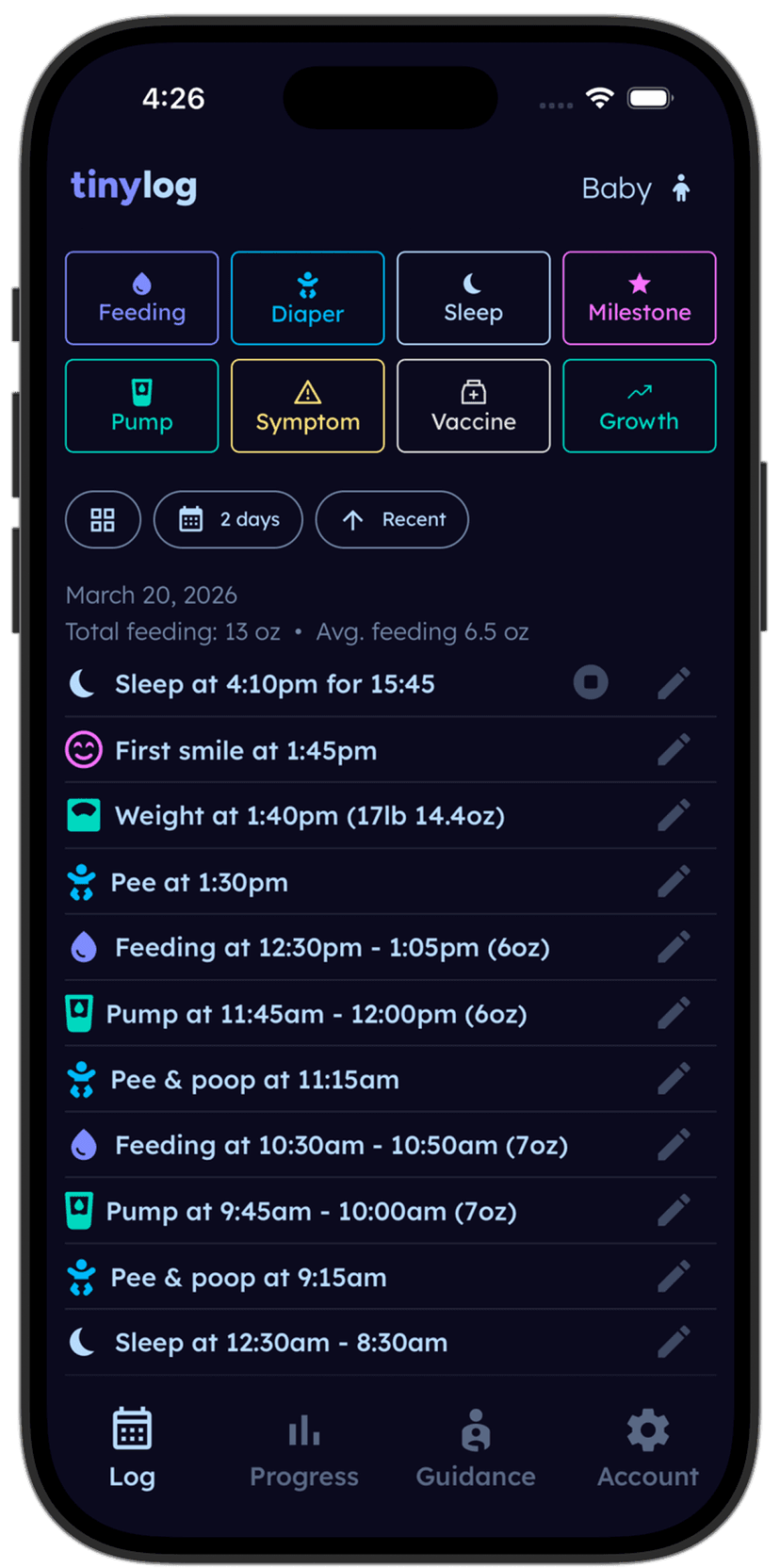
Tinylog helps you time outings around feeds and naps.
Log feeds, diapers, and sleep from your phone — know when the next one is coming so you can plan your trip.


Lifespan: 18 Months vs. 4+ Years
The Doona+ is a rear-facing infant car seat rated for 4–35 lbs and up to 32 inches. Most babies hit one of those limits between 12 and 18 months. At that point, the Doona is done — you need a new convertible car seat and a separate stroller.
The Nuna travel system has a longer runway. The Pipa Aire RX covers the same infant period (4–30 lbs), so you will outgrow the car seat portion on a similar timeline. But the Trvl LX stroller keeps going to 50 lbs, which covers most children through age 4 or 5. You will still need a convertible car seat after the infant stage, but you will not need another stroller.
That lifespan difference reshapes the cost math significantly.
| Product | Typical Price | Total System Cost | Notes |
|---|---|---|---|
| Nuna Pipa Aire RX (seat + RELX base) | $550–$600 | $550–$600 (car seat only) | Does not include stroller — Trvl LX sold separately |
| Nuna Trvl LX Stroller | $600 | $600 (stroller only) | Pairs directly with Pipa Aire RX — no adapters needed |
| Nuna Pipa Aire RX + Trvl LX (full travel system) | $1,100–$1,200 | $1,100–$1,200 | Stroller lasts to 50 lbs — usable for 3–4+ years |
| Doona+ (seat + base + integrated stroller) | $550–$600 | $550–$600 | Complete system in one box. Outgrown by 12–18 months. |
The Real Cost Picture
At first glance, the Doona+ looks like the clear winner on price. You get a complete car seat and stroller for $550–$600. The Nuna travel system runs $1,100–$1,200 for the same two functions. That is roughly double.
But zoom out to three years. When your baby outgrows the Doona around 12–18 months, you will need to buy a convertible car seat ($200–$400) and a stroller ($150–$600). Your total spend is now $900–$1,600.
With the Nuna system, you also need a convertible car seat after the infant stage. But you already own a stroller that works to 50 lbs. Your total spend stays at $1,300–$1,600.
The gap narrows — and in some scenarios disappears entirely.
If you only care about the first year, the Doona costs less. If you are thinking about the full toddler years, the Nuna system often comes out ahead because the Trvl LX eliminates a future stroller purchase.
Both seats hold their resale value well. If you sell the infant car seat (while still within its expiration date) and the Doona after your child outgrows them, you can recoup a meaningful portion of the cost.
The Convenience Question
The Doona+ exists because of one specific moment: the transition from car to sidewalk. In that moment, nothing else on the market is faster. You lift, you press, you roll. Done.
With the Nuna system, that same moment involves popping open the Trvl LX, clicking in the Pipa Aire RX, and going. It takes maybe 15–20 extra seconds once you have the routine down. Not a big deal to some parents. A dealbreaker for others — especially when you are doing it one-handed with a screaming baby and a grocery list.
For rideshares and taxis, the Doona is hard to beat. No trunk space needed for a stroller. For airports, both work — the Doona rolls right to the gate, while the Nuna stroller gets gate-checked and the ultralight car seat goes on the plane.
For daily use as an actual stroller, the convenience flips. The Trvl LX is more comfortable to push, easier on rough surfaces, and has a place to put your stuff. The Doona's convenience is front-loaded into the first 30 seconds; the Trvl LX's convenience plays out over the next 30 minutes.
Choose the Nuna Pipa Aire RX + Trvl LX If
- You want a stroller that actually performs — suspension, storage, adjustable recline, and comfortable handling
- You plan to use your stroller well past the infant stage (Trvl LX holds up to 50 lbs)
- Crash test performance and GREENGUARD Gold certification are priorities
- You take long walks, visit parks, or stroll daily — not just quick car-to-door transitions
- You fly often and want the lightest possible car seat (6.2 lbs) for the airplane
- You are willing to invest more upfront for a system that lasts years instead of months
Choose the Doona+ If
- You want one device that handles everything — no separate stroller to store, fold, or assemble
- You mostly take short trips from car or rideshare to your destination
- Upfront cost matters more than long-term cost — you want to spend less today
- You live in a city and value instant car-to-sidewalk transitions above stroller performance
- Storage space is tight and you want the fewest possible pieces of baby gear
- You already have a toddler stroller and just need an infant-stage bridge solution
Where to Buy
If you want a travel system built to last, the Nuna Pipa Aire RX + Trvl LX ($1,100–$1,200 for both) pairs the lightest premium car seat on the market with a stroller that has real suspension, one-hand fold, and a 50 lb capacity. The car seat leads independent crash testing, the stroller lasts into toddlerhood, and both carry GREENGUARD Gold certification. It is the system for parents who want the best of both worlds and are willing to pay for it.
If all-in-one simplicity is what you need, the Doona+ ($550–$600) remains the only car seat on the market with a fully integrated stroller. For quick errands, city life, rideshares, and air travel during the infant months, nothing matches its seamless car-to-sidewalk transition. Accept that you will need a stroller and convertible car seat later, and enjoy the simplicity while it lasts.
Whichever you pick, try to see both in person before buying. How a stroller feels in your hands — the push, the fold, the weight — tells you more than any comparison chart.
Tinylog earns a small commission on purchases made through these links, at no cost to you.
Want to save a few bucks? promo.new is worth a quick look. It won't always have your product, but when it does, the savings are real.
The Bottom Line
The Nuna Pipa Aire RX + Trvl LX and the Doona+ represent the two main schools of thought on infant travel systems.
The Nuna system wins on car seat safety testing, stroller quality, material certifications, and total lifespan. Two separate products, each excellent at its job, that together cover your child from birth through age 4 or 5. The cost is higher upfront, but the stroller eliminates a future purchase.
The Doona+ wins on upfront cost, instant convenience, all-in-one simplicity, and total gear footprint. One device, one step, zero assembly. It shines for city parents, frequent travelers, and families who want the simplest possible infant setup. It does not replace a real stroller for daily use, and you will need to buy one eventually.
For families who walk daily and want gear that grows with their child, the Nuna system is the stronger long-term investment. For families who prioritize speed and simplicity during the infant months above all else, the Doona earns its place.
If you are tracking feeds, naps, and diapers to time outings around your baby's schedule, Tinylog can help you know when the next feed or nap is due so you can plan accordingly.
Related Guides
- Nuna Pipa Aire RX vs. Doona+ — Car seat to car seat comparison without the stroller
- Doona+ vs. Nuna TRVL LX — Stroller-focused comparison
- Baby Feeding Chart — How much your baby should eat by age
- 1-Month-Old Sleep Schedule — What to expect for newborn sleep
Sources
- Nuna Baby. "PIPA aire rx Car Seat — Product Information." nunababy.com, 2026.
- Nuna Baby. "TRVL lx Stroller — Compact & Luxe." nunababy.com, 2026.
- Doona. "Doona+ Car Seat & Stroller Travel System." doona.com, 2026.
- BabyGearLab. "Best Infant Car Seats — Crash Tested." babygearlab.com, 2026.
- Strolleria. "Nuna TRVL vs. Nuna TRVL lx — In-Depth Stroller Comparison." strolleria.com, 2025.
- The Baby Cubby. "Doona vs. Nuna PIPA Urbn: The Best Travel Systems for City Life." babycubby.com, 2025.
- Orbit Baby. "Nuna Pipa Aire RX Review (2026 Real User Ratings)." orbitbaby.com, 2026.
This guide is for informational purposes only. Car seat safety depends on correct installation in your specific vehicle. Always follow the manufacturer's instructions and consult your local certified car seat technician (CPST) if you need installation help. Verify current specs and pricing on the manufacturer's website before purchasing.
Frequently asked questions
- Is the Nuna Pipa Aire RX + Trvl LX travel system worth the higher price?
- It depends on how long you plan to use it. The Nuna system costs $1,100–$1,200 upfront, but the Trvl LX stroller holds children up to 50 lbs and lasts well into toddlerhood. The Doona+ costs $550–$600 but most babies outgrow it by 12–18 months, at which point you need a separate stroller and convertible car seat anyway. Over three years, the total spend often evens out.
- Can I use the Nuna Pipa Aire RX on an airplane without the Trvl LX stroller?
- Yes. The Nuna Pipa Aire RX is FAA-certified and can be installed on an airplane using just the aircraft seat belt — no base or stroller needed. At 6.2 lbs, it is one of the lightest infant seats to carry through an airport.
- Does the Doona+ work as well as a dedicated stroller for daily walks?
- Not really. The Doona+ has small wheels, no suspension, a fixed handlebar, and virtually no storage. It is designed for short transitions from car to destination, not extended strolling. The Nuna Trvl LX is a far better daily stroller with suspension, adjustable recline, and an underseat basket.
- How does crash test performance compare between the two car seats?
- Both the Nuna Pipa Aire RX and Doona+ meet federal FMVSS 213 safety standards. In independent testing by BabyGearLab, the Nuna Pipa RX recorded lower forces on crash test dummy sensors than any other infant seat tested. The Doona scored toward the lower end of tested seats. Both are safe, but the Nuna has a measurable edge.
- Can I use the Nuna Trvl LX stroller after my baby outgrows the Pipa Aire RX car seat?
- Yes. The Trvl LX accommodates children from birth to 50 lbs using its own stroller seat. Once your child outgrows the infant car seat (around 12–18 months), you switch to the stroller seat and the Trvl LX keeps working for years. This is one of the biggest advantages of a two-piece system.
- Which setup is better for frequent air travel?
- Both work well for flying, but in different ways. The Doona+ lets you wheel through the terminal and install directly on the plane — one device does everything. The Nuna system requires carrying the car seat (very light at 6.2 lbs) and gate-checking the stroller. For pure airport convenience, the Doona has the edge. For overall travel versatility and a better stroller at your destination, the Nuna system wins.