
GUIDE
Owlet Dream Duo 2 vs. Babysense MaxView
Published on
These monitors solve very different problems. The Owlet Dream Duo 2 bundles an FDA-cleared pulse oximeter sock with an HD camera for live health tracking. The Babysense MaxView is a high-quality local video monitor with no WiFi, no app, and no subscription. One monitors your baby's vitals. The other just shows you what's happening in the room — really well.
The Owlet Dream Duo 2 and Babysense MaxView 1080p sit at opposite ends of the baby monitor spectrum. One is a connected health device with a wearable sensor. The other is a dedicated screen with a pan-and-tilt camera that stays completely offline. The right choice depends on whether you want data about your baby's body or a reliable video feed you can glance at without unlocking your phone.
Log naps, nighttime sleep, and wake windows
Two Very Different Approaches to Watching Your Baby Sleep
The Owlet Dream Duo 2 and Babysense MaxView 1080p both call themselves baby monitors, but they are built around completely different ideas about what parents actually need at 2 AM.
The Owlet is a connected health device. It pairs a 1080p camera with an FDA-cleared wearable sock that reads your baby's blood oxygen saturation and heart rate in real time. You watch everything through a smartphone app. There is no handheld screen.
The Babysense MaxView is a dedicated video monitor. It has a 5.5-inch HD display, a pan-and-tilt camera you control from your nightstand, and a closed FHSS signal that never touches the internet. There is no app, no WiFi dependency, and no wearable sensor.
One gives you data. The other gives you a picture. Both do their respective jobs well — the question is which job you are hiring a monitor to do.
| Feature | Owlet Dream Duo 2 | Babysense MaxView 1080p | What It Means |
|---|---|---|---|
| Manufacturer | Owlet Baby Care | Babysense | Owlet is a US-based health tech company. Babysense is an Israeli baby safety brand with decades of experience. |
| Monitor type | Smart health monitor + HD camera | Dedicated video monitor (non-WiFi) | Fundamentally different products. Owlet tracks vitals. Babysense shows video. |
| Video resolution | 1080p Full HD | 1080p Full HD | Tie on paper. Babysense's dedicated screen looks sharper than watching Owlet through a phone. |
| Parent unit | Smartphone app (no handheld screen) | 5.5-inch dedicated LCD screen | Babysense wins for quick glances. No phone unlock, no app loading, no dead phone battery worries. |
| Health monitoring | FDA-cleared SpO2 + heart rate via wearable sock | None | Owlet wins outright. This is the main reason to buy it. No other consumer monitor offers FDA-cleared vitals. |
| Camera control | Manual positioning only (no remote pan/tilt) | 355-degree pan, 90-degree tilt, 4x zoom (remote) | Babysense wins. Full remote camera control from the parent unit is a major convenience advantage. |
| Connectivity | WiFi (2.4GHz), app-based | FHSS 2.4GHz (no WiFi, no internet) | Babysense is more private and reliable. Owlet offers remote access from anywhere with internet. |
| Multi-camera support | Single camera only | Up to 4 cameras with split-screen | Babysense wins for families with multiple kids or rooms to monitor. |
| Battery life | ~16–18 hours (sock); camera requires wall power | Up to 20 hours ECO mode / 12 hours regular use | Babysense's parent unit is portable. Owlet's camera stays plugged in; the sock needs nightly charging. |
| Range | Unlimited (WiFi/internet) | 1,000 feet (FHSS signal) | Owlet wins if you need remote access. Babysense's 1,000-foot range covers any normal home. |
| Subscription required | No (optional cloud upgrade available) | No | Tie. Neither requires a subscription. Owlet offers optional extended video history for a fee. |
| HSA/FSA eligible | Yes | No | Owlet's FDA-cleared sock makes the entire bundle eligible. This can save you $100+ depending on your plan. |
The Big Difference: Health Vitals vs. Pure Video
The single most important distinction between these two monitors is what the Owlet sock does that no camera can.
The Owlet Dream Sock is an FDA-cleared pulse oximeter that wraps around your baby's foot and continuously tracks blood oxygen levels (SpO2) and heart rate. If readings fall outside preset ranges, your phone gets an alert. For parents of preemies, babies with respiratory conditions, or anyone who finds themselves checking breathing every 20 minutes, this data can be genuinely calming.
The Babysense MaxView does not track any health metrics. It shows you high-definition video of your baby sleeping, lets you hear every sound, and gives you remote camera control. That is all it does — and for many parents, that is all they need.
Here is the honest tension: the Owlet sock provides real medical data, but it can also create anxiety if you are not prepared for occasional false alarms. The sock can slip, readings can fluctuate, and your phone can buzz at 3 AM for reasons that turn out to be nothing. Some parents find the data deeply reassuring. Others find it makes them more anxious, not less.
If your pediatrician has specifically recommended pulse oximetry monitoring, the Owlet is a clear choice. If you just want to see and hear your baby, the Babysense does that with fewer moving parts.
WiFi vs. No WiFi: A Bigger Deal Than You Think
The Owlet Dream Duo 2 requires WiFi. Everything — the video feed, the vitals data, the alerts — flows through your home network to Owlet's servers and back to your phone. If your WiFi drops, you lose your monitor.
The Babysense MaxView uses a closed FHSS radio signal between the camera and the parent unit. No WiFi, no internet, no cloud servers, no app. The signal is encrypted and frequency-hops, making it essentially unhackable. The monitor works during internet outages, and nobody on the internet can access your baby's camera feed.
This matters more than most comparison articles admit. WiFi baby monitor hacking is rare but real — it makes the news every couple of years. More practically, WiFi monitors introduce latency, depend on router reliability, and drain your phone battery since the app needs to stay active.
If you live in an area with spotty internet, travel frequently to places with unreliable WiFi, or simply value the peace of mind that comes with a closed system, the Babysense's no-WiFi design is a genuine advantage.
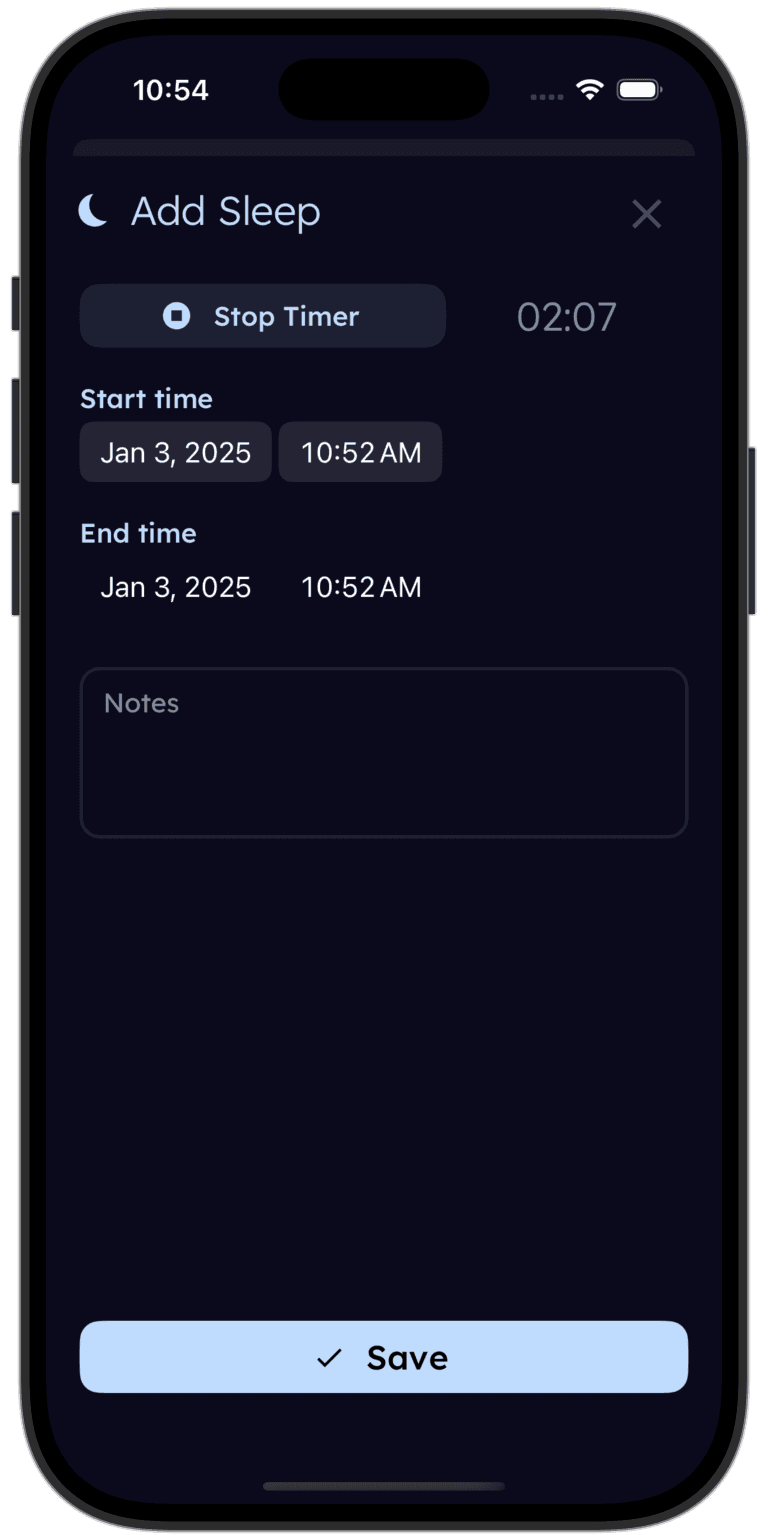
Tinylog tracks sleep so you can spot patterns.
Log naps, bedtime, wake-ups, and sleep totals. See trends over days and weeks. Bring the data to your next pediatrician visit.


Camera and Display: The Day-to-Day Experience
On paper, both monitors shoot 1080p video. In practice, the viewing experience is quite different.
The Babysense MaxView has a dedicated 5.5-inch screen that sits on your nightstand. You glance at it. You see your baby. You go back to sleep. The camera offers full 355-degree pan and 90-degree tilt that you control from the parent unit, plus 4x digital zoom. You can reposition the view without getting out of bed. The built-in night vision is solid, and the 6-color RGB night light doubles as a soft nursery light.
The Owlet Cam 2 shoots sharp 1080p video and has a 130-degree wide-angle lens, but you watch it on your phone. That means unlocking your phone, opening the app, waiting for the stream to load, and resisting the urge to check your email while you are at it. The camera cannot be panned or tilted remotely — you position it manually in the nursery and that is your angle.
For the 3 AM "did I just hear something?" check, a dedicated screen wins every time. For checking in from the office or sending a clip to your partner, the Owlet's app-based approach is more flexible.
| Product | Typical Price | Monthly (Over 12 Months) | Notes |
|---|---|---|---|
| Owlet Dream Duo 2 (camera + sock bundle) | $369–$399 | ~$25–$33 over 12 months | HSA/FSA eligible. No subscription required. |
| Babysense MaxView 1080p (1 camera) | $149–$160 | ~$10–$13 over 12 months | No subscription. Additional cameras ~$60 each. |
| Babysense MaxView 1080p (2 cameras) | $189–$200 | ~$13–$17 over 12 months | Best value for two-room monitoring. |
Price: $200+ Apart, But Context Matters
The Babysense MaxView costs roughly $150–$200 depending on the camera count. The Owlet Dream Duo 2 runs $370–$400. That is a substantial gap — but the comparison is not apples to apples.
The Owlet includes a medical-grade wearable sensor that would cost $200+ on its own. If you were going to buy a standalone pulse oximeter anyway, the price gap shrinks. And if you can use HSA or FSA dollars, you might pay effectively nothing out of pocket for the Owlet.
The Babysense, meanwhile, gives you more camera hardware per dollar. The two-camera bundle with split-screen for under $200 is genuinely hard to beat. Adding a third or fourth camera later is about $60 each.
Neither monitor charges a subscription fee for core functionality. The Owlet offers an optional cloud upgrade for extended video history, but it is not required.
Choose the Owlet Dream Duo 2 If
- Your baby was born premature or has a health condition that makes vitals monitoring reassuring
- You want FDA-cleared pulse oximetry and heart rate data on your phone
- You plan to use HSA or FSA funds to cover a large portion of the cost
- You want to monitor your baby from outside the house (work, errands, date night)
- Sleep analytics and trend data are valuable to you
- You are comfortable relying on a smartphone app as your only parent unit
Choose the Babysense MaxView If
- You want a dedicated screen you can glance at without touching your phone
- Privacy matters and you prefer a monitor that never connects to the internet
- You need to monitor multiple rooms or kids with split-screen and up to four cameras
- Remote pan, tilt, and zoom control from the parent unit is a must
- You want a straightforward video monitor without health-tracking complexity
- Budget is a factor and you want excellent video quality under $200
Where to Buy
If you want health vitals monitoring and sleep analytics, the Owlet Dream Duo 2 (~$399) is the most comprehensive smart baby monitor available. The FDA-cleared sock gives you real pulse oximetry and heart rate data — not just camera-based guesses. Best value through Amazon, Best Buy, or directly from Owlet. Remember it is HSA/FSA eligible.
If you want a reliable, high-quality video monitor that stays off the internet, the Babysense MaxView 1080p (~$160 for one camera) delivers excellent picture quality, full remote camera control, and split-screen multi-camera support at a fraction of the cost. Available on Amazon, Walmart, and babylist.
Our honest take: if your pediatrician has recommended vitals monitoring or you have a preemie, go Owlet. For everyone else, the Babysense MaxView does everything most parents actually need a baby monitor to do — and does it for less than half the price.
Tinylog earns a small commission on purchases made through these links, at no cost to you.
Tip: check promo.new before purchasing. It's hit or miss depending on the product, but when it hits, you'll be glad you checked.
The Bottom Line
These are not competing products so much as different tools for different problems.
The Owlet Dream Duo 2 is for parents who want health data — oxygen saturation, heart rate, sleep trends — streamed to their phone in real time. It costs more, depends on WiFi, and requires a smartphone. But the FDA-cleared vitals tracking is something no other consumer baby monitor offers.
The Babysense MaxView is for parents who want a sharp, reliable, no-fuss video monitor with a dedicated screen, remote camera control, and zero internet dependency. It costs less, supports multiple cameras, and works even if your router catches fire.
Both are solid picks in their respective categories. The right answer depends on what keeps you up at night — the question of whether your baby is breathing okay, or just wanting a quick look at the crib without fumbling with your phone.
If you are tracking your baby's sleep patterns — which pairs well with either monitor — Tinylog makes it easy to log naps, bedtime, and wake-ups so you can spot trends over time.
Related Guides
- Nanit Pro vs. Owlet Dream Duo 2 — Two premium smart monitors compared head to head
- Infant Optics DXR-8 Pro vs. Babysense MaxView — Two top non-WiFi monitors compared
- Owlet Dream Duo 2 vs. CuboAi Gen 3 — Health sock vs. AI-powered camera monitoring
- Momcozy BM01 vs. Babysense MaxView — Budget non-WiFi monitors compared
Sources
- Owlet Baby Care. "Owlet Dream Duo 2 — Product Specifications." owletcare.com, 2026.
- Babysense. "MaxView 1080p Full HD Split-Screen Baby Monitor." babysensemonitors.com, 2026.
- Tom's Guide. "Owlet Dream Duo Baby Monitor Review." tomsguide.com, 2025.
- BabyGearLab. "The Best Video Baby Monitors — Lab Tested & Ranked." babygearlab.com, 2026.
- BabyGearEssentials. "Owlet Dream Duo 2 Review: Best Health Tracking Baby Monitor." babygearessentials.com, 2025.
- Best Buy. "Owlet Dream Duo (Gen 2) Smart Baby Monitor Bundle." bestbuy.com, 2026.
This guide is for informational purposes only. Baby monitor choice is a personal preference based on your family's needs. If you have concerns about your baby's breathing or heart rate, consult your pediatrician before relying on any consumer monitoring device.
Frequently asked questions
- Does the Owlet Dream Duo 2 require WiFi?
- Yes. The Owlet Dream Duo 2 requires a WiFi connection and uses a smartphone app as its parent unit. There is no dedicated handheld screen. If your WiFi goes down, you lose both the video feed and the health data stream. The Babysense MaxView operates entirely without WiFi on a secure FHSS signal.
- Is the Babysense MaxView hackable?
- The Babysense MaxView uses a closed 2.4GHz FHSS (frequency-hopping spread spectrum) signal that never touches the internet. It cannot be remotely accessed or hacked in the way that WiFi-connected monitors can be. This is one of its biggest selling points for privacy-conscious parents.
- Does the Owlet Dream Duo 2 require a subscription?
- No subscription is required for the core features, including live vitals monitoring, live video, and 48 hours of video clip storage. An optional Owlet360 upgrade extends video history to 14 days. The Babysense MaxView has no subscription at all.
- Can the Owlet sock cause skin irritation?
- Some parents report mild redness on the foot where the sock sits, especially if the fit is too tight or the sock is worn for extended periods. Owlet recommends alternating feet and taking breaks during the day. Most babies tolerate it well, but watch for irritation during the first week.
- Can I use the Babysense MaxView with multiple cameras?
- Yes. The Babysense MaxView supports up to four cameras and offers a split-screen mode so you can watch two rooms at once on the 5.5-inch display. Additional cameras are sold separately. The Owlet Dream Duo 2 does not support multi-camera split-screen viewing.
- Is the Owlet Dream Duo 2 eligible for HSA or FSA?
- Yes. The Owlet Dream Duo 2 is HSA and FSA eligible because it includes an FDA-cleared medical device (the pulse oximeter sock). This can offset a significant portion of the cost. The Babysense MaxView is not HSA/FSA eligible.