
GUIDE
Owlet Dream Duo 2 vs. HelloBaby HB32W
Published on
These monitors serve very different purposes. The Owlet Dream Duo 2 is a premium smart system with a wearable sock that tracks heart rate and blood oxygen. The HelloBaby HB32W is a straightforward, affordable video monitor that just works. One costs seven times more than the other, and whether that gap is justified depends entirely on what you need.
The Owlet Dream Duo 2 and HelloBaby HB32W sit at opposite ends of the baby monitor market. Owlet bundles a 1080p Wi-Fi camera with its Dream Sock pulse oximeter for real-time health vitals. HelloBaby gives you a secure, non-Wi-Fi video feed with a 3.2-inch parent unit for under $70. Comparing them is less about which is better and more about which type of monitoring matters to you.
Log naps, wake windows, and night wakings
A Smart Health System vs. a Simple Video Monitor
The Owlet Dream Duo 2 and the HelloBaby HB32W are not really competitors. They are different products solving different problems at wildly different price points. Comparing them is a bit like comparing a smartwatch to a wristwatch — one does a lot more, but the other still tells you the time.
Owlet Dream Duo 2 bundles a 1080p Wi-Fi camera with the Dream Sock, a wearable pulse oximeter that tracks your baby's heart rate and blood oxygen in real time. It streams everything to your phone, wherever you are. It is a smart health monitoring system that happens to include a camera.
HelloBaby HB32W is a dedicated video baby monitor with a 3.2-inch handheld parent unit, VGA camera, two-way audio, temperature sensor, and lullabies. It connects directly between camera and parent unit on a secure signal — no Wi-Fi, no app, no internet needed.
We broke down every meaningful difference so you can decide which type of monitoring actually fits your life.
For tips on building a solid sleep routine alongside your monitoring setup, see our 1-month-old sleep schedule.
| Feature | Owlet Dream Duo 2 | HelloBaby HB32W | What It Means |
|---|---|---|---|
| Manufacturer | Owlet, Inc. | HelloBaby | Owlet is a publicly traded baby health company. HelloBaby is a consumer electronics brand focused on affordable monitors. |
| Camera resolution | 1080p HD | 640 × 480 (VGA) | Owlet's camera produces a much sharper image, especially noticeable in daytime and when zooming. |
| Connection type | Wi-Fi (2.4 GHz) with app | FHSS 2.4 GHz (no Wi-Fi) | Owlet requires Wi-Fi and gives app access from anywhere. HelloBaby is a closed circuit with no internet dependency. |
| Health monitoring | Pulse rate + blood oxygen via Dream Sock | None | Owlet's wearable sock tracks real-time vitals. HelloBaby offers no health monitoring. |
| Night vision | Infrared, automatic, sharp | Infrared, automatic, adequate | Both switch on automatically. Owlet's higher resolution sensor gives a clearer dark image. |
| Two-way audio | Yes — through app | Yes — through parent unit | Tie. Both let you talk to your baby. Owlet does it via phone; HelloBaby via the handheld unit. |
| Temperature sensor | No built-in room sensor | Yes — displayed on screen with alerts | HelloBaby wins here. Room temperature display and configurable alerts are useful nursery features. |
| Parent unit / display | Phone app only (no dedicated unit) | 3.2" TFT LCD handheld unit | HelloBaby has a standalone screen that works without a phone. Owlet requires your phone and a working internet connection. |
| Lullabies | No | Yes — 8 built-in | HelloBaby includes lullabies you can trigger from the parent unit. Owlet has no sound machine features. |
| Subscription required | Optional Owlet+ ($10/mo or $100/yr) | None — no ongoing costs | HelloBaby is buy-it-and-forget-it. Owlet works without a subscription but locks extras behind Owlet+. |
| Multi-camera support | Yes — via app | Up to 4 cameras | Both expand for multiple rooms. HelloBaby add-on cameras are much cheaper. |
The Dream Sock: Owlet's Entire Value Proposition
If you strip away the sock, the Owlet Dream Duo 2 is a decent Wi-Fi baby camera. Not bad, but nothing you cannot get for $80 elsewhere. The Dream Sock is what you are really paying for.
The sock wraps around your baby's foot and uses pulse oximetry to measure heart rate and blood oxygen saturation (SpO2) in real time. If readings drop outside preset zones, the base station lights up red and your phone buzzes. For anxious new parents — especially those with a baby who had NICU time or breathing concerns — those green numbers on the app screen can be the difference between sleeping and staring at the ceiling all night.
A few honest caveats:
- It is not a medical device. The FDA sent Owlet a warning letter in 2021 about its marketing claims. The current Dream Sock is sold as a "wellness" product, not a medical-grade monitor.
- False alarms are part of the deal. A wiggling foot can shift the sensor and trigger an alert at 3 AM when nothing is wrong. Some parents find the alarms reassuring; others find them exhausting.
- Socks need charging. The Dream Sock needs to be charged regularly. The HelloBaby HB32W camera plugs into a wall and the parent unit charges on a dock — no extra devices to keep powered.
The HelloBaby HB32W has no health monitoring at all. It shows you video, plays audio, and displays room temperature. That is it. And for many families, that is plenty.
Connectivity: Phone App vs. Handheld Unit
This is a bigger deal than most comparison charts suggest.
The Owlet Dream Duo 2 streams everything through your phone over Wi-Fi. That means you can check on your baby from the office, the backyard, or another city. It also means the system stops working if your Wi-Fi goes down, your phone dies, or the app glitches at midnight. You are adding your home internet as a dependency in your baby monitoring setup.
The HelloBaby HB32W has a dedicated parent unit with its own screen and battery. It connects to the camera on a closed radio signal. No Wi-Fi needed. No phone needed. No login screen. You pick it up and you see your baby. If your power stays on, the monitor works. Period.
For parents who want a monitor they can grab off the nightstand and glance at without unlocking a phone, the HelloBaby approach is genuinely simpler. For parents who want to peek at the nursery from a work meeting, Owlet is the only option here.
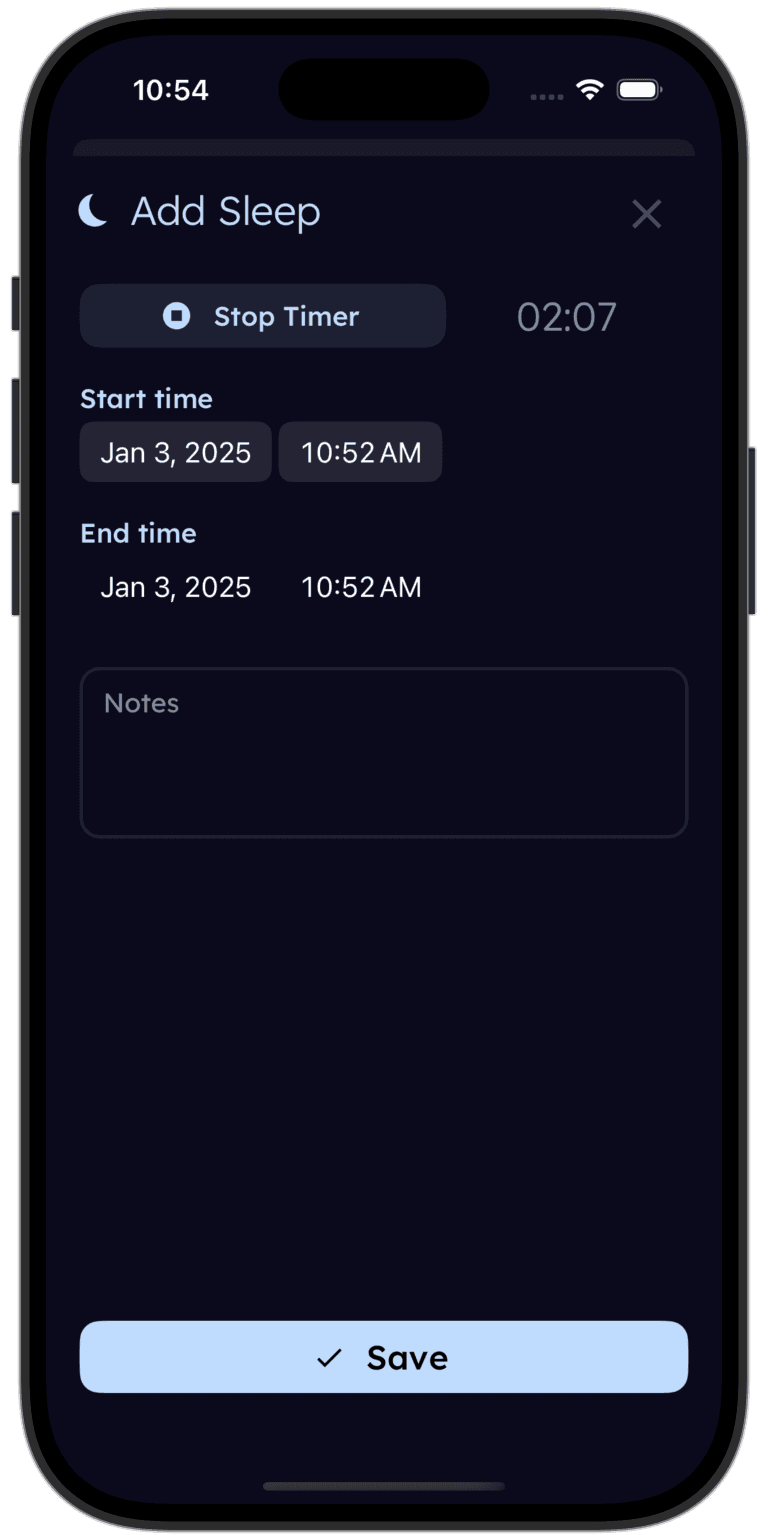
Tinylog tracks sleep so you can spot what's working.
Log naps, bedtime, wake windows, and night wakings. See trends over days and weeks and bring the data to your next pediatrician visit.


Video and Audio Quality
The Owlet Dream Duo 2 shoots at 1080p. The HelloBaby HB32W shoots at VGA (640 × 480). That is a significant resolution gap. The Owlet image is sharper, more detailed, and holds up better when you zoom in.
But context matters. The HelloBaby displays its VGA feed on a 3.2-inch screen, where the lower resolution looks perfectly fine. You can clearly see your baby, tell if their eyes are open, and check their position. You are not watching a movie — you are glancing at a baby monitor.
The Owlet feed shows up on your phone screen, which is much larger and higher resolution. The 1080p feed looks good here. But you are also dealing with occasional buffering, Wi-Fi latency, and the app's load time. The HelloBaby feed is instant — turn on the parent unit and the image is there.
Both monitors have two-way audio. Owlet routes it through the app. HelloBaby routes it through the parent unit's built-in speaker and mic. Both work. Neither sounds amazing. Baby monitor audio is functional, not hi-fi.
| Product | Typical Price | Ongoing Cost | Year-One Estimate |
|---|---|---|---|
| Owlet Dream Duo 2 (Camera + Sock) | $349–$399 | $0–$10/mo (Owlet+ optional) | ~$349–$519 |
| HelloBaby HB32W (Camera + Parent Unit) | $49–$69 | $0 — no subscription | ~$49–$69 |
| HelloBaby add-on camera | $29–$39 | $0 | Per additional camera |
Price: A $300 Gap You Need to Justify
The Owlet Dream Duo 2 costs $349–$399. The HelloBaby HB32W costs $49–$69. That is roughly a $300 difference, and it is the elephant in every nursery where this decision gets made.
What does that $300 buy you? Specifically:
- Real-time heart rate and blood oxygen tracking via the Dream Sock
- 1080p camera vs. VGA
- Remote app access from anywhere with internet
- Optional Owlet+ subscription for historical health trends
What does the HelloBaby give you that Owlet does not?
- A dedicated parent unit that works without a phone or Wi-Fi
- Room temperature display with configurable alerts
- 8 built-in lullabies
- Zero ongoing costs and zero internet dependency
If health vitals are your primary motivation, the Owlet price makes sense. If you want a reliable video monitor and do not need biometric data, spending $350+ is hard to justify when a $55 monitor does the core job well.
Choose the Owlet Dream Duo 2 If
- Real-time heart rate and blood oxygen readings give you peace of mind
- You want to check the camera from work, the grocery store, or anywhere with cell service
- Your baby has a medical history where monitoring vitals at home feels reassuring
- You prefer a phone-based interface over a dedicated parent unit
- You are okay putting a wearable sock on your baby each night
Choose the HelloBaby HB32W If
- Your budget is under $70 and you want a monitor that just works
- You prefer a secure, closed-circuit system with no Wi-Fi or hacking risk
- You want a dedicated parent unit that works without your phone or internet
- Room temperature monitoring and alerts matter to you
- You want built-in lullabies you can play from the parent unit
- You do not need health vitals and just want to see and hear your baby
Where to Buy
If real-time health monitoring is what helps you sleep at night, the Owlet Dream Duo 2 (~$349–$399) is the only consumer baby monitor that pairs a wearable pulse oximeter with a camera. The Dream Sock tracks heart rate and blood oxygen continuously, and the 1080p camera lets you check in from anywhere on your phone. It is a premium system for parents who want that extra layer of data.
If you want a reliable, no-fuss video monitor without the smart features or the price tag, the HelloBaby HB32W (~$55 at most retailers) is one of the best values in baby monitors. Secure non-Wi-Fi connection, decent video and audio, room temperature alerts, and built-in lullabies — all for less than what some parents spend on a single pack of diapers.
If you are torn, ask yourself one question: do you need to see your baby's heart rate, or do you need to see your baby? The answer makes the decision simple.
Tinylog earns a small commission on purchases made through these links, at no cost to you.
Looking for a discount? Try checking promo.new. It doesn't always find what you're looking for, but when it does, it works like a charm.
The Bottom Line
The Owlet Dream Duo 2 and HelloBaby HB32W are built for different parents with different priorities.
Owlet Dream Duo 2 is the right pick if you want real-time health vitals, app-based monitoring from anywhere, and a sharp 1080p camera. The Dream Sock is what sets it apart from every other consumer baby monitor. You pay a premium for that capability, and for many families it is worth every dollar.
HelloBaby HB32W is the right pick if you want a straightforward, affordable video monitor that works every time you pick it up. No Wi-Fi worries, no subscriptions, no sock to charge. It does the fundamental job — letting you see and hear your baby — reliably and cheaply.
If you are logging your baby's sleep alongside whatever monitor you choose — and you should be, especially in the early months — Tinylog makes it simple to track naps, bedtime, and night wakings all in one place.
Related Guides
- Nanit Pro vs. Owlet Dream Duo 2 — Two premium smart monitors compared
- Infant Optics DXR-8 PRO vs. HelloBaby HB32W — Premium vs. budget non-Wi-Fi monitors
- 1-Month-Old Sleep Schedule — What to expect and how to start building habits
- Safe Sleep for Babies — AAP guidelines every parent should know
Sources
- Owletcare.com. "Owlet Dream Duo 2 — Product Information." 2026.
- HelloBaby.com. "HB32W Video Baby Monitor — Product Information." 2026.
- FDA.gov. "FDA Warns Companies Selling Unregulated Pulse Oximetry Products for Infants." 2021.
- AAP. "Safe Sleep Guidelines for Infants." HealthyChildren.org, 2025.
- Wirecutter (The New York Times). "The Best Baby Monitors." nytimes.com/wirecutter, 2026.
- BabyGearLab. "Best Baby Monitors of 2026." babygearlab.com.
- Consumer Reports. "Best Baby Monitors From Our Tests." consumerreports.org, 2026.
This guide is for informational purposes only. The Owlet Dream Sock is not an FDA-cleared medical device and should not replace medical-grade monitoring when prescribed by a physician. Always follow AAP safe sleep guidelines and consult your pediatrician with health concerns.
Frequently asked questions
- Is the Owlet Dream Duo 2 worth the price over the HelloBaby HB32W?
- It depends on what you need. The Owlet Dream Duo 2 provides real-time heart rate and blood oxygen monitoring through a wearable sock, plus a Wi-Fi camera with app access. If health vitals and remote viewing from anywhere give you peace of mind, the premium price may be justified. If you simply need to see and hear your baby on a reliable video feed, the HelloBaby HB32W does that job well for a fraction of the cost.
- Does the HelloBaby HB32W connect to Wi-Fi or an app?
- No. The HelloBaby HB32W uses a closed FHSS 2.4 GHz signal between the camera and parent unit. There is no Wi-Fi, no app, and no cloud connection. This makes it immune to internet outages and remote hacking but means you cannot view the feed on your phone.
- Can the Owlet Dream Sock detect SIDS?
- No. The Owlet Dream Sock is not an FDA-cleared medical device and cannot detect or prevent SIDS. It monitors pulse rate and blood oxygen saturation and alerts you if readings fall outside preset ranges. The FDA has specifically cautioned against marketing consumer infant pulse oximeters as SIDS prevention tools. Always follow AAP safe sleep guidelines.
- Which monitor has better night vision?
- Both have automatic infrared night vision. The Owlet Dream Duo 2 camera produces a sharper night image thanks to its 1080p sensor. The HelloBaby HB32W night vision is adequate and clear enough to see your baby, but with less fine detail due to its lower VGA resolution.
- Can I view the Owlet camera from outside the house?
- Yes. Because the Owlet Dream Duo 2 connects via Wi-Fi, you can view the live camera feed and receive sock alerts from anywhere through the Owlet app on your phone. The HelloBaby HB32W has no remote access — the parent unit must be within radio range of the camera, typically 150–250 feet inside a home.
- Do I need a subscription for either monitor?
- The HelloBaby HB32W has no subscription — it works fully out of the box with no ongoing costs. The Owlet Dream Duo 2 works without a subscription for real-time vitals and live video. An optional Owlet+ membership (around $10/month or $100/year) adds historical health trends, extended data, and sleep analytics.