
GUIDE
Owlet Dream Sock vs. CuboAi Gen 3
Published on
The Owlet Dream Sock tracks your baby's heart rate and oxygen through a wearable sensor. The CuboAi Gen 3 uses an AI camera to detect danger without touching your baby. They barely overlap — your pick comes down to what kind of data helps you sleep at night.
These two monitors sit at opposite ends of the baby tech spectrum. One is a tiny pulse oximeter on your baby's foot. The other is a wall-mounted camera with a computer science degree. Both claim to help you worry less — and honestly, both deliver.
Log naps, night wake-ups, and sleep patterns
Same Problem, Opposite Solutions
The Owlet Dream Sock and CuboAi Gen 3 both promise to help you worry less while your baby sleeps. But they go about it in completely different ways.
The Owlet Dream Sock is a tiny fabric sensor that wraps around your baby's foot and reads their heart rate and blood oxygen saturation in real time. No camera. No video feed. Just biometric data streamed to your phone with alerts if something drifts outside normal ranges.
The CuboAi Gen 3 is an AI-powered camera that mounts on the wall and watches your baby using computer vision. It detects covered faces, rollovers, breathing motion, and crying — all without putting anything on your baby. You get a sharp 1080p video feed and smart alerts based on what the camera sees.
Both are wellness tools, not medical devices. That bears repeating. If your pediatrician has flagged a genuine concern about your baby's breathing or oxygen levels, ask them about medical-grade monitoring — not a consumer product.
For healthy babies with parents who want to sleep a little easier? Both of these do their job well.
| Feature | Owlet Dream Sock | CuboAi Gen 3 | What It Means |
|---|---|---|---|
| Manufacturer | Owlet, Inc. | CuboAi (Yun Yun AI Baby Inc.) | Owlet is a US baby tech company focused on wearable health sensors. CuboAi is a Taiwanese AI startup with pediatric research partnerships. |
| Monitoring approach | Wearable sock sensor (no camera) | AI-powered camera only (no wearable) | Completely different philosophies. Owlet reads your baby's body. CuboAi watches from the wall. |
| Health metrics tracked | Heart rate, blood oxygen (SpO2), sleep/wake patterns | Breathing motion, face covered, rollover detection | Owlet gives you biometric vitals. CuboAi gives you visual safety alerts. Very little overlap. |
| Camera included | No — sock only (camera sold separately in Duo bundle) | Yes — 1080p HD camera with night vision | If you want video, CuboAi has it built in. Owlet Dream Sock is a data-only wearable. |
| Alert system | Phone alerts for heart rate, oxygen, and sock displacement | Phone alerts for covered face, rollover, crying, and danger zone | Owlet alerts on biometric changes. CuboAi alerts on physical events it sees on camera. |
| Sleep tracking | Yes — sleep/wake analysis with trend data tied to vitals | Yes — AI sleep analytics with sleep score | Both track sleep. Owlet connects sleep data to heart rate and oxygen for deeper context. |
| Room environment monitoring | No room sensor (skin temp only via sock) | Built-in room temperature and humidity sensor | CuboAi monitors the nursery itself. Owlet only monitors what's on your baby's foot. |
| Smart home integration | Owlet app only | Alexa and Google Home compatible | CuboAi plays nicer with other devices. You can pull up a live view on an Echo Show or Nest Hub. |
| Wearable comfort | Soft fabric sock — fits 5–30 lbs | No wearable required | Some babies sleep fine in the sock. Others fuss. CuboAi avoids the question entirely. |
| Subscription required | Optional (extended history and trends) | Optional (video playback and cloud storage) | Tie. Both work without a subscription. Paid tiers add nice-to-haves, not essentials. |
| Regulatory status | Consumer wellness device (not FDA-cleared) | Consumer electronics (not FDA-cleared) | Neither is a medical device. Treat both as wellness tools, not medical monitors. |
The Core Tradeoff: Biometrics vs. Computer Vision
This is the decision that matters most, and everything else flows from it.
The Owlet Dream Sock uses pulse oximetry — the same underlying technology as the clip on your finger at the hospital — to continuously measure heart rate and SpO2. You see actual numbers. You get alerts based on actual readings. For parents who find hard data calming, this is powerful stuff.
But there is no camera. You cannot see your baby. If you want video, you need a separate monitor or you need to upgrade to the Owlet Dream Duo bundle (which adds about $100 to the price). The sock itself is a data stream, not a visual.
The CuboAi Gen 3 gives you a gorgeous 1080p camera with strong night vision and layers AI detection on top. It watches for dangerous situations — face covered by a blanket, baby rolling into an unsafe position, baby crawling toward the edge of the crib. You can also see your baby anytime you want.
But it cannot measure heart rate or oxygen. Its "breathing detection" is visual — it watches for chest movement. If your baby is under a blanket or in an unusual position, accuracy can drop. It is inference, not measurement.
Video: One Has It, One Doesn't
This sounds obvious, but it changes the daily experience more than you might expect.
With the CuboAi Gen 3, you can glance at your phone at 2 AM and immediately see your baby sleeping peacefully. The 1080p HD resolution with enhanced infrared means the nighttime image is actually clear — not the grainy gray blob you get from cheaper monitors. CuboAi also captures 18-second video clips of detected events (with the premium plan), so you can review what triggered an alert.
With the Owlet Dream Sock, you open the app and see numbers — heart rate, oxygen level, sleep state. Reassuring in a different way, but you cannot see your baby. Plenty of parents pair the sock with a basic $30 video monitor and call it good. Others find that defeating the purpose of a streamlined smart setup.
If video matters to you — and for most parents it does — the CuboAi includes it. The Owlet does not.
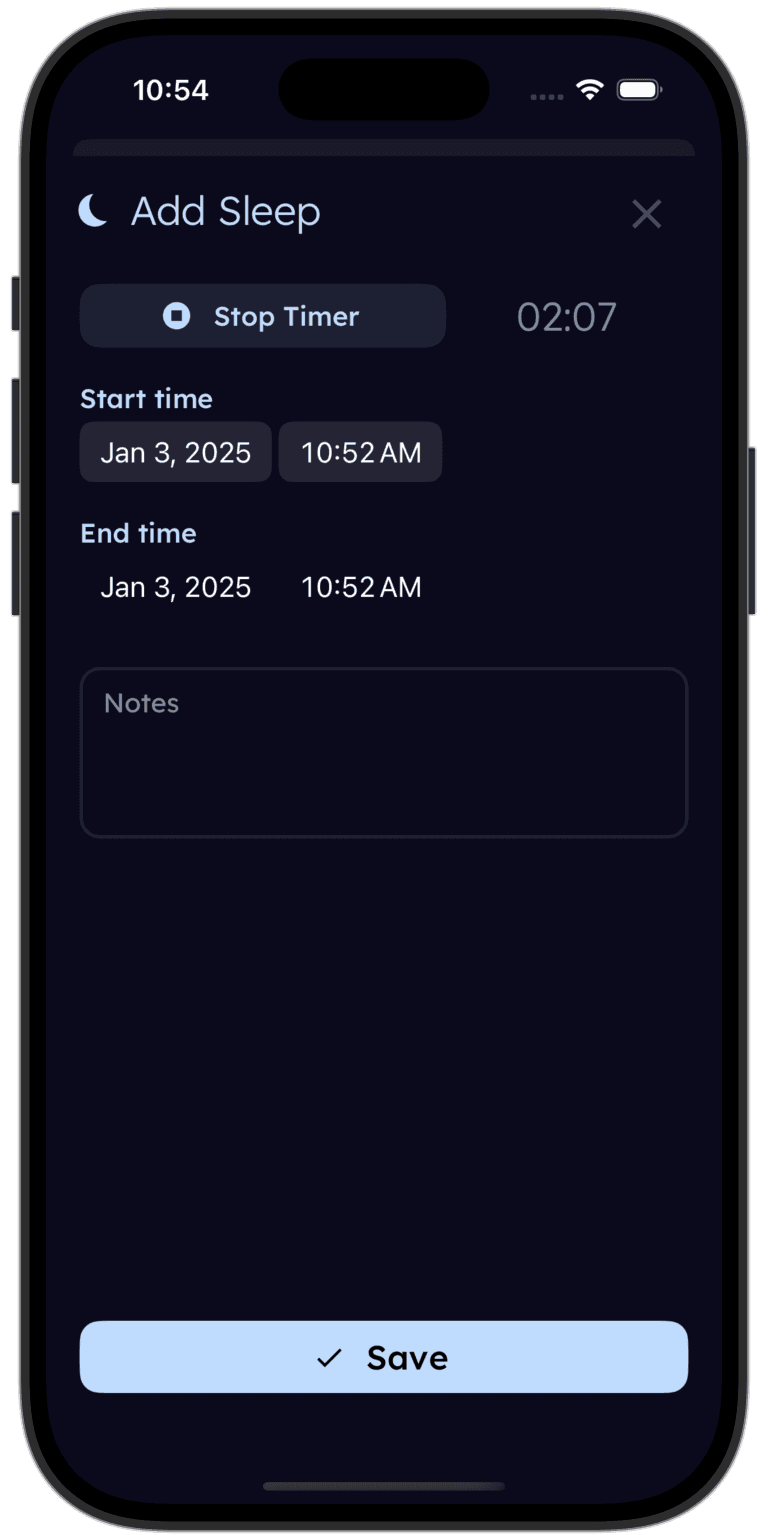
Tinylog tracks sleep so you can see patterns the monitor misses.
Log naps and night sleep, note wake-ups and how long it takes to resettle. Over a few weeks, the data tells a story that a single night's monitor feed cannot.


Comfort and Practicality at 3 AM
The CuboAi Gen 3 mounts on the wall or sits on a shelf. You set it up once and forget about it. There is nothing to charge nightly, nothing to put on your baby, and nothing that falls off during a 3 AM diaper change. It just works.
The Owlet Dream Sock needs to be placed on your baby's foot at bedtime and removed in the morning. It charges on a base station during the day. The sock fits babies from 5 to 30 lbs, and you will likely need a replacement sock ($89–$99) as your baby grows. Some babies sleep through it without issue. Others kick and fuss until it comes off — and then you get the "sock disconnected" alert at 4 AM.
This is a real practical consideration. If you are the kind of parent who wants the simplest possible setup, CuboAi wins by a wide margin. If you are willing to manage the sock routine because biometric data matters to you, Owlet is worth it.
| Product | Typical Price | Purchase Type | Ongoing Cost |
|---|---|---|---|
| Owlet Dream Sock (standalone wearable) | $300–$370 | One-time | $0 (or ~$10/mo for premium plan) |
| CuboAi Gen 3 Smart Baby Monitor (camera + stand) | $249–$299 | One-time | $0 (or ~$10/mo for premium plan) |
| Owlet replacement sock (when baby outgrows) | $89–$99 | As needed | N/A |
Price: CuboAi Gives You More for Less
The CuboAi Gen 3 runs $249–$299 and includes a camera, AI detection, room sensors, and smart home integration out of the box.
The Owlet Dream Sock costs $300–$370 and gives you biometric tracking — but no camera, no room sensors, and no smart home integration. If you want video, you are either buying a second monitor or upgrading to the Dream Duo bundle at $349–$399.
Then there is the replacement sock. The Owlet sock fits babies 5–30 lbs, but many parents report needing a new one around 12–15 months as their baby's foot grows. That is another $89–$99.
Over the first year, the total cost of ownership can look like this:
- CuboAi Gen 3: ~$250–$300 (and you are done)
- Owlet Dream Sock: ~$390–$470 (sock + replacement, no camera)
For parents on a budget, CuboAi delivers a lot more hardware and features per dollar. The Owlet premium is specifically the price of biometric data — and that data is genuinely unique in the consumer monitor market.
Choose Owlet Dream Sock If
- You want real-time heart rate and blood oxygen data on your phone while your baby sleeps
- Your baby was premature or has a condition that makes biometric tracking genuinely reassuring
- You already have a video monitor and just want health data layered on top
- You prefer hard numbers over camera-based guesses about what's happening
- Detailed sleep trends connected to physiological readings sound useful — and you would actually look at them
Choose CuboAi Gen 3 If
- You do not want anything on your baby's body while they sleep
- Having a high-quality camera feed with solid night vision matters to you
- You want covered-face and rollover alerts powered by AI, no wearable needed
- You use Alexa or Google Home and want live view on smart displays
- Room temperature and humidity monitoring are features you actually want built in
- You have twins or plan to add cameras to multiple rooms down the road
Where to Buy
If biometric health tracking is what you are after, the Owlet Dream Sock ($300–$370) is the only consumer wearable that gives you real-time heart rate and oxygen data on your phone. Nothing else on the market does this. For parents of preemies or babies with health concerns, the peace of mind from actual vitals data is hard to replicate with a camera alone.
If you want a smart camera that does everything without touching your baby, the CuboAi Gen 3 ($249–$299) packs 1080p video, AI safety alerts, room environment monitoring, and smart home integration into one device — at a lower price point. It is the better all-around value for healthy, full-term babies.
Whichever you go with, remember: these are wellness products, not replacements for safe sleep practices. Always follow AAP safe sleep guidelines, and talk to your pediatrician if you have real concerns about your baby's breathing.
Tinylog earns a small commission on purchases made through these links, at no cost to you.
Before you buy, it's worth checking promo.new for a deal. It doesn't cover everything, but we've had good luck with it.
The Bottom Line
The Owlet Dream Sock and CuboAi Gen 3 are not really competing products — they are different tools for different concerns.
Owlet Dream Sock is the right pick if you want biometric data. Heart rate and blood oxygen, streamed live to your phone, with alerts if something looks off. No camera, no video — just the numbers. It costs more and requires nightly sock management, but no camera system can give you that data.
CuboAi Gen 3 is the right pick if you want a smart, high-quality camera with AI-powered safety detection and zero wearables. Better video, more features, lower price, and nothing to put on your baby at bedtime. It cannot tell you your baby's heart rate, but for most healthy babies, that is not the data point that matters most.
If you are logging your baby's sleep — and pairing those logs with what the monitor tells you at night can be surprisingly useful — Tinylog makes it easy to track sleep patterns and share the data with your pediatrician.
Related Guides
- Baby Sleep Safety — AAP guidelines and safe sleep environment tips
- 1-Month-Old Sleep Schedule — What to expect for newborn sleep patterns
- Baby Feeding Chart — How much your baby should eat by age
- Owlet Dream Duo 2 vs. CuboAi Gen 3 — How the full Owlet Duo bundle compares
Sources
- Owlet.com. "Owlet Dream Sock — Product Information and Specifications." 2026.
- CuboAi.com. "CuboAi Gen 3 Smart Baby Monitor — Features and Specifications." 2026.
- American Academy of Pediatrics. "Safe Sleep Recommendations." HealthyChildren.org, 2025.
- Consumer Reports. "Best Baby Monitors of 2026." consumerreports.org, 2026.
- Wirecutter (NYT). "The Best Baby Monitors." nytimes.com/wirecutter, 2025.
- BabyGearLab. "Owlet Dream Sock Review." babygearlab.com, 2025.
- BabyGearLab. "CuboAi Smart Baby Monitor Review." babygearlab.com, 2025.
This guide is for informational purposes only. Neither the Owlet Dream Sock nor the CuboAi Gen 3 is an FDA-cleared medical device. These are consumer wellness products and should not replace safe sleep practices or medical advice. If you have concerns about your baby's breathing or health, consult your pediatrician.
Frequently asked questions
- Does the Owlet Dream Sock work without a camera?
- Yes. The Owlet Dream Sock is a standalone wearable monitor — no camera included. It tracks heart rate, blood oxygen (SpO2), and sleep patterns via a sensor on your baby's foot and sends data to your phone. If you want a camera too, Owlet sells the Dream Duo bundle separately.
- Does the CuboAi Gen 3 detect breathing?
- The CuboAi Gen 3 uses AI-powered video analysis to detect breathing motion visually. It does not measure blood oxygen or heart rate. It watches for chest movement and alerts you if it stops detecting motion. This is different from biometric measurement — it is camera-based inference.
- Which monitor is better for preemies?
- The Owlet Dream Sock is generally preferred by parents of preemies because it tracks actual biometric data — heart rate and oxygen saturation. Camera-based monitoring like CuboAi cannot provide that level of physiological detail. That said, neither device is a medical monitor. Talk to your pediatrician about appropriate monitoring for a premature baby.
- Do I need a subscription for either monitor?
- Neither monitor requires a subscription for core features. The Owlet Dream Sock works fully without a paid plan, though an optional subscription unlocks extended sleep history and trends. CuboAi offers a premium tier for 18-second event video playback and cloud storage. Both are perfectly functional without paying monthly.
- Can my baby kick off the Owlet sock?
- It happens. The Owlet sock is designed to stay snug, but active sleepers can dislodge it — especially as they get older and more mobile. When the sock loses contact, you get a notification. Some parents find this reassuring (it means the system is working), while others find the false alerts annoying at 4 AM.
- Is either monitor a medical device?
- No. Neither the Owlet Dream Sock nor the CuboAi Gen 3 is FDA-cleared as a medical device. Both are classified as consumer wellness products. They can provide helpful data and peace of mind, but they should not replace safe sleep practices or medical-grade monitoring prescribed by a doctor.