GUIDE

Pediatrician vs. Family Doctor

Both pediatricians and family physicians are qualified to care for newborns. Pediatricians have deeper specialized training in child-specific conditions, while family doctors can treat the whole family and provide continuity as your child grows into adulthood.

The best provider is the one who listens, is accessible, and earns your trust.

Prepare for your first visit

Track questions and milestones

Board certification shows parents that the pediatrician has achieved a standard of knowledge.
Dr. Kimberly GiulianoDr. Kimberly Giuliano, MD, Pediatrician, Cleveland Clinic

A Decision That Matters Less Than You Think

First-time parents often agonize over whether to choose a pediatrician or a family physician for their newborn. The reality is that both are qualified to provide excellent newborn and infant care. The AAP does not state that pediatricians provide superior care to family physicians for routine pediatric needs. The AAFP does not claim family physicians are better suited than pediatricians for specialized child health concerns. Both organizations acknowledge the other's competence.

The difference comes down to training emphasis and practice structure, not quality of care. A pediatrician has spent three years training exclusively on children and will likely see more unusual pediatric cases. A family physician has spent three years training across the lifespan and can offer the convenience of treating your entire family. Both follow the same AAP guidelines for well-child visits, immunization schedules, and developmental screening. To make the most of whichever provider you choose, our pediatrician visit prep guide walks you through what to bring and ask.

What actually matters is the individual provider. A family doctor who listens carefully, takes your concerns seriously, and is accessible after hours will serve your baby better than a pediatrician who rushes visits and dismisses parental instincts, and vice versa.


Pediatrician vs. Family Doctor
Training focus
Pediatrician3-year residency focused exclusively on children (birth through 21 years).
Family Doctor3-year residency covering all ages: pediatrics, adult medicine, obstetrics, geriatrics.
Age range treated
PediatricianBirth through 18-21 years only. Your child will eventually need to transition to an adult provider.
Family DoctorAll ages, birth through end of life. Can serve your entire family with one provider.
Availability
PediatricianMore common in urban and suburban areas. May have longer wait times in some markets.
Family DoctorAvailable everywhere, including rural areas. Often more appointment flexibility.
Rare condition expertise
PediatricianMore exposure to uncommon pediatric conditions during training. More likely to recognize rare presentations.
Family DoctorTrained to recognize common pediatric conditions. Will refer to specialists for uncommon or complex cases.
Family continuity
PediatricianTreats children only. Parents see a separate provider.
Family DoctorCan see your child, you, your partner, and grandparents. One practice, one relationship.
Well-child visits
PediatricianOffice designed for children. Separate sick/well waiting areas are more common.
Family DoctorShared waiting room with adult patients. Some offices have pediatric-specific hours or areas.
Both provider types follow the same AAP well-child visit schedule and immunization guidelines.

Pediatrician Advantages

  • Exclusively focused on children — higher volume of pediatric cases means more pattern recognition
  • More likely to have subspecialty connections and referral networks for complex pediatric conditions
  • Office environment designed for children (toys, kid-friendly decor, child-sized equipment)
  • Training includes extensive NICU, pediatric emergency, and subspecialty rotations
  • May be more current on pediatric-specific guidelines (vaccines, developmental screening tools, growth charts)

These advantages matter most for families with complex medical histories or children with chronic conditions.

Pediatrician Considerations

  • Your child will need to transition to an adult provider at age 18-21
  • Cannot treat parents or siblings who are adults — you will need a separate provider
  • Fewer pediatricians in rural areas, which may mean longer drives or wait times
  • Higher demand can mean less appointment availability in some markets

The provider transition at age 18-21 is a practical consideration but rarely a deciding factor for newborn parents.

Family Doctor Advantages

  • Treats your entire family — one provider who knows everyone's health history
  • No transition to adult care needed — continuity from birth through adulthood
  • More widely available, especially in rural and underserved areas
  • Broader medical context — understands family health history firsthand
  • Often more flexible scheduling due to higher availability

Family continuity is particularly valuable when family medical history is relevant to the child's care.

Family Doctor Considerations

  • Less pediatric-specific training volume compared to a pediatrician
  • Shared waiting rooms may expose your newborn to adult patients who are sick
  • May see fewer uncommon pediatric conditions, potentially delaying recognition
  • Office may not be designed with young children in mind

Many family practices have adapted their offices and scheduling to better serve pediatric patients.

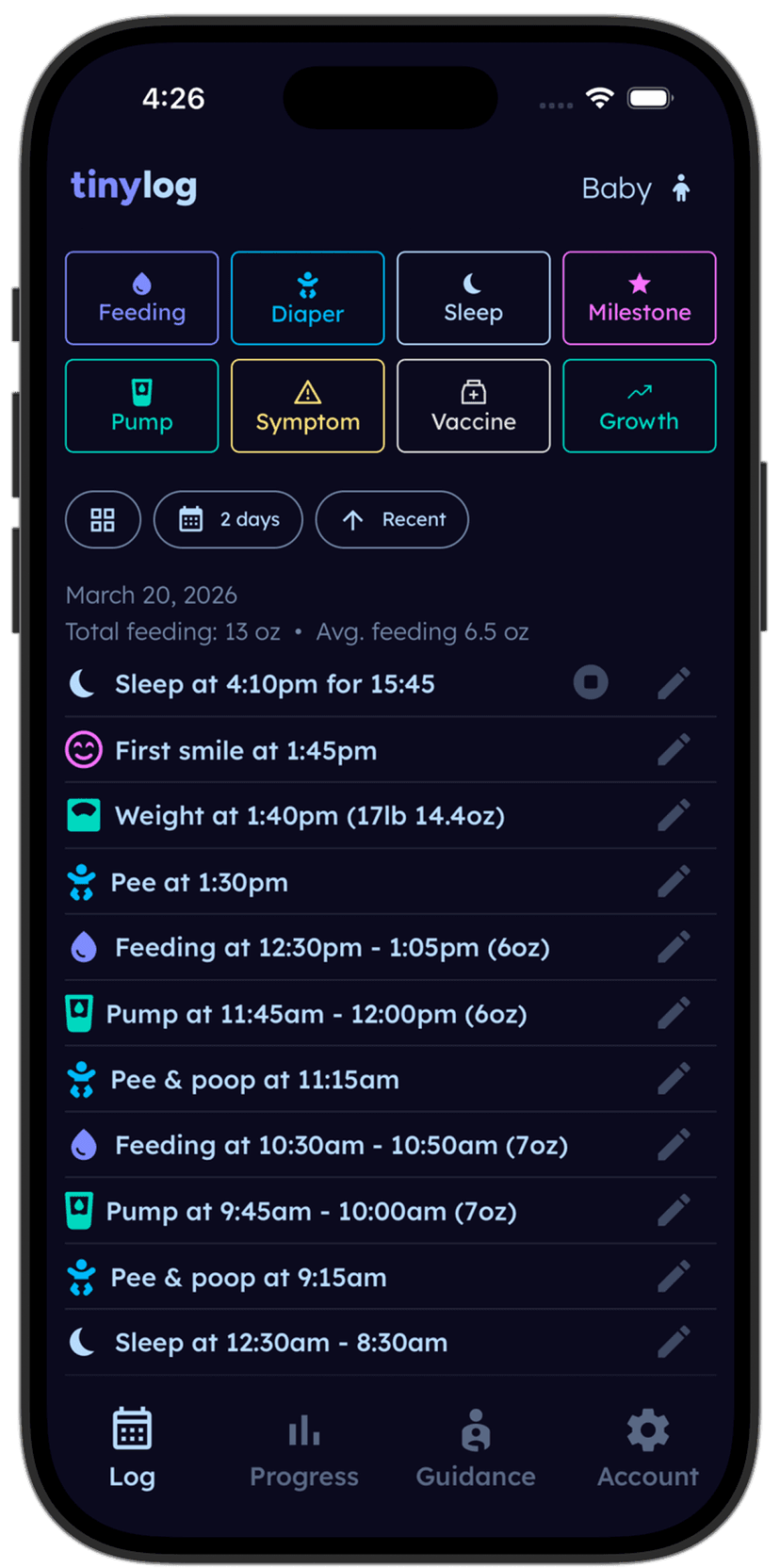
Tinylog activity overview showing daily tracking for pediatrician visits

Track milestones and questions between visits — no matter which provider you choose.

Tinylog helps you log milestones, symptoms, and questions as they come up, so you're always prepared when you walk into that 15-minute well-child visit.

Download on the App StoreGet It On Google Play

When a Pediatrician May Be the Better Choice

Consider a pediatrician if your baby was born prematurely, has a known medical condition, or if there is a family history of developmental or genetic conditions. If you are still preparing for your baby's arrival, our newborn essentials checklist can help you get ready alongside choosing a provider. The deeper subspecialty network that pediatric practices maintain can be valuable when referrals to pediatric neurologists, cardiologists, or geneticists are needed. If your baby requires frequent specialist visits, a pediatrician's referral network may streamline that process.

When a Family Doctor May Be the Better Choice

Consider a family doctor if you value having one provider for your entire family, if you live in a rural area with limited pediatrician availability, or if continuity of care through adulthood is important to you. The family medicine model is also practical for families where the parent's health directly affects the baby (postpartum depression, breastfeeding issues related to maternal health) — your family doctor can address both in the same visit. Either way, knowing the signs that warrant calling your provider is essential during those first weeks.

Tips That Apply Either Way

Interview providers before your baby arrives

Most practices offer prenatal meet-and-greets. Use this to ask about their approach to breastfeeding support, vaccine schedules, after-hours access, and how they handle parental concerns. The right provider is the one whose communication style matches yours.

Ask about after-hours access

Newborn concerns do not follow business hours. Ask whether the practice has a nurse line, after-hours call service, or same-day sick appointments. This matters more in the first few months than almost any other factor.

Prepare for every visit

Regardless of your provider type, bringing a list of observations, milestones reached, and questions makes every well-child visit more productive. Fifteen minutes goes fast — preparation ensures your concerns get addressed.

Related Guides

Sources

  • American Academy of Pediatrics. (2023). Bright Futures: Guidelines for Health Supervision of Infants, Children, and Adolescents. 4th Edition.
  • American Academy of Family Physicians. (2022). Family Physicians and Pediatric Care. AAFP Position Statement.
  • Phillips, R. L., et al. (2009). Usual Source of Care for Children and Adolescents: The Role of Primary Care. Pediatrics, 124(3), 897-903.
  • Starfield, B. (1998). Primary Care: Balancing Health Needs, Services, and Technology. Oxford University Press.

This guide is for informational purposes only and is not a substitute for professional medical advice. Consult your pediatrician for guidance specific to your baby.

Get this comparison in your inbox.
We'll send you the breakdown so you can make an informed decision before your baby arrives.
Whichever provider you choose, showing up prepared makes the visit count.
Download Tinylog to track milestones, symptoms, and questions between visits.
Download on the App StoreGet It On Google Play