
Stop counting total hours
Seriously. Obsessing over whether your baby hit exactly 14 hours will drive you crazy. If your baby is eating well, gaining weight, and has alert periods during the day, the total number matters way less than you think.
GUIDE
Published on ·Updated on
Probably. The AAP says 14–17 hours, but healthy newborns routinely sleep 12–18 hours. The range is way wider than most people realize.
If your baby is alert when awake, feeding well, and gaining weight — they're almost certainly getting enough sleep, even if it doesn't feel like it at 3 AM.
Log naps and wake windows
“Most kids have a 'tell' that indicates they are ready for sleep. Try to notice which cue, when followed consistently, allows the child to fall asleep independently and within 15 minutes of being placed into the crib.”
| Age | Total Sleep (Range) | Naps | Longest Stretch | Reality Check |
|---|---|---|---|---|
| 0–2 weeks | 14–18 hrs | 7–8 (no pattern) | 2–3 hrs | They're basically nocturnal. Day/night confusion is the default. |
| 2–6 weeks | 14–17 hrs | 6–8 (still chaotic) | 2–4 hrs | 20-minute naps are totally normal. So are random 3-hour naps. |
| 6–12 weeks | 13–16 hrs | 4–6 | 3–5 hrs | You might get one longer stretch at night. Celebrate that. |
| 3–6 months | 12–16 hrs | 3–4 | 4–8 hrs | Huge variation here. Some babies sleep through; most don't. |
| 6–12 months | 12–15 hrs | 2–3 | 6–10 hrs | Regressions will mess with your progress. It's temporary. |
That number sounds so simple and clean. But nobody tells you what it actually looks like in practice. Here's the thing: 14–17 hours of newborn sleep is scattered across 7 or 8 naps that range from 20 minutes to 3 hours. It's broken up by feedings every 2–3 hours around the clock. It's not a solid block of anything.
And here's what really matters: that "14–17 hours" figure is a population average. It describes the middle of a bell curve, not a minimum requirement. Plenty of healthy, thriving babies sleep 12 or 13 hours total. Some sleep 18. Both ends of that spectrum can be completely normal.
Your pediatrician isn't looking at total sleep hours in isolation. They're looking at the whole picture — is your baby gaining weight? Alert during wake periods? Meeting early milestones? Producing enough wet and dirty diapers? A baby who sleeps 12 hours total but checks all those boxes is doing great. A baby who sleeps 17 hours but is hard to wake for feeds and isn't gaining weight needs attention.
The pattern matters more than the total. Are they getting some stretches of consolidated sleep at night? Are wake windows getting slightly longer as the weeks pass? Are they able to eat enough during waking hours? Those trends tell you way more than any single daily total ever could.
All of these are developmentally normal. Your baby isn't broken — they're just brand new at this whole sleeping thing.
This is not a diagnostic checklist. If something feels off, call your pediatrician. You don't need a reason beyond 'I'm worried' — that's literally what they're there for.
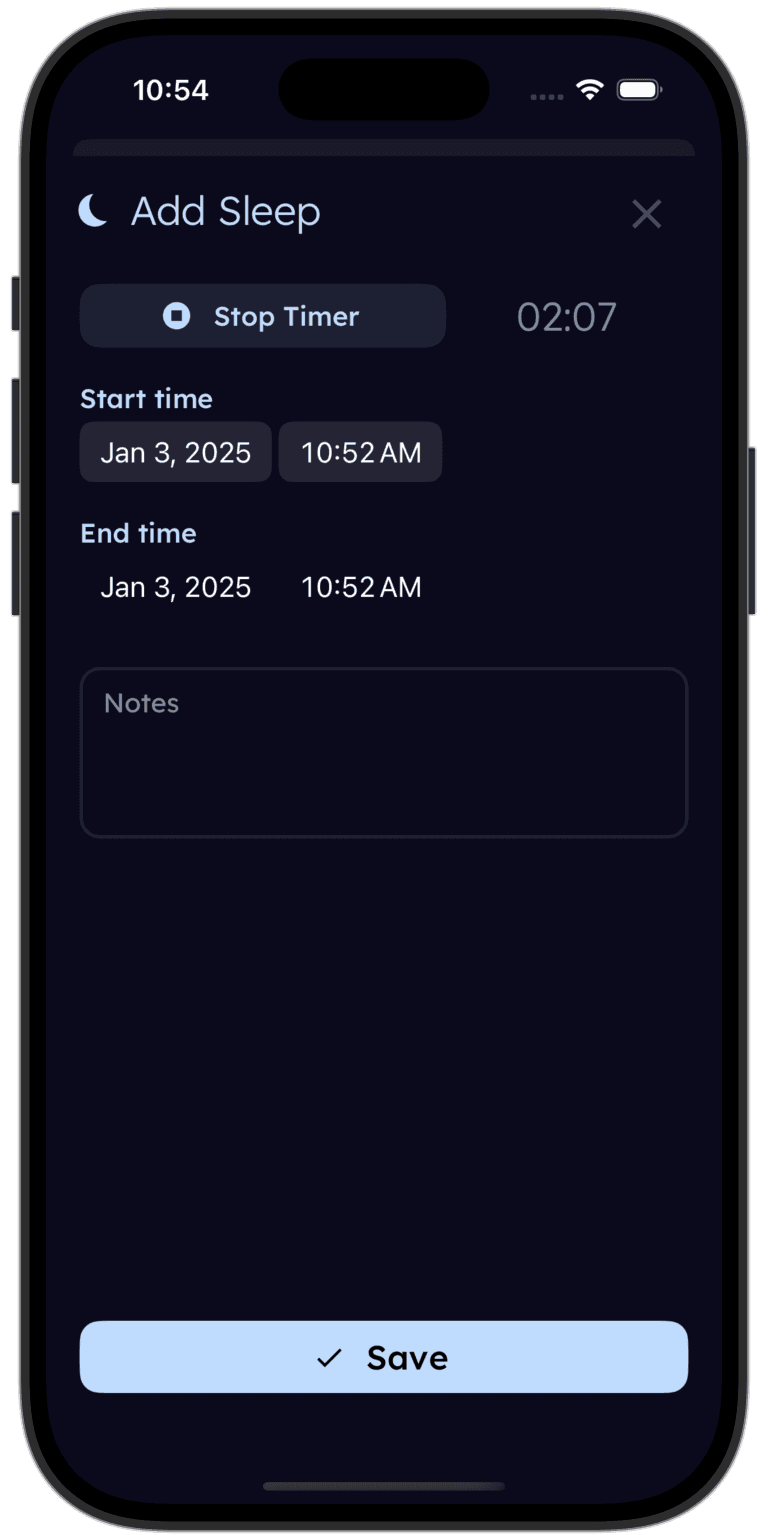
Track a full week and you'll actually know what's going on. Log sleep with one tap, see daily totals add up, and spot real patterns — not just the bad nights that feel like they last forever.


Seriously. Obsessing over whether your baby hit exactly 14 hours will drive you crazy. If your baby is eating well, gaining weight, and has alert periods during the day, the total number matters way less than you think.
Sleepy cues — yawning, looking away, rubbing eyes, getting fussy — are more reliable than any schedule. Every baby has different wake windows, and they change constantly in the early weeks.
Back to sleep, firm flat surface, nothing in the crib. Every time. Even for naps. Even if they seem to sleep better on their tummy. This is the one area where the guidelines are clear and absolute.
The first 6–8 weeks are survival mode. Around 3–4 months, most babies start consolidating sleep into longer stretches. You're not doing anything wrong — it's just really hard right now.
Babies have off nights just like adults do. A terrible night after a week of good ones doesn't mean regression. Look at the trend over days and weeks, not individual nights.
The HALO SleepSack (~$30) is what most hospitals use. Three-way swaddle means you can do arms in, one arm out, or both out as your baby grows — so you are not buying three different products. The bottom unzips for diaper changes, which at 3 AM is genuinely life-changing.
Tinylog earns a small commission on purchases made through these links, at no cost to you.
Before you buy, it's worth checking promo.new for a deal. It doesn't cover everything, but we've had good luck with it.
Tracking sleep can be genuinely helpful — it turns vague anxiety into actual data. When you can look at a week of sleep logs and see that your baby actually slept 13.5 hours on average, it's way more reassuring than trying to remember whether last Tuesday was a good night or not.
But tracking should reduce your stress, not add to it. If you find yourself anxious about every logged nap, take a step back. The goal is to spot trends and have data for your pediatrician — not to optimize every minute of your newborn's day. They're going to figure out sleep on their own timeline, and your job is just to keep them safe and fed while they do.
Is My Baby's Sleep Normal? — What to expect at every age
Newborn Sleep Schedule — What sleep looks like in the first months
Baby Only Sleeps When Held — Understanding contact sleep