GUIDE

Postpartum Anxiety vs. Postpartum Depression

Postpartum depression centers on persistent sadness, hopelessness, and withdrawal. Postpartum anxiety centers on excessive worry, racing thoughts, and hypervigilance. They can occur separately or together, and both respond well to treatment.

Postpartum anxiety is underdiagnosed because worry 'looks like' normal new-parent concern. Here's how to tell the difference.

Track mood patterns in Tinylog

Spot what's changing over time

You are not a bad parent because you have these common struggles. There is help and treatment.
Dr. Camila L. ArnaudoDr. Camila L. Arnaudo, MD, Perinatal Psychiatrist, Indiana University School of Medicine

The Condition Nobody Talks About Enough

Postpartum depression gets most of the attention in maternal mental health conversations. And it deserves that attention — it affects roughly 1 in 7 mothers and can be devastating without treatment. If you are unsure whether what you are experiencing is clinical depression or the normal emotional upheaval after birth, our guide on postpartum depression vs. baby blues can help you distinguish between the two. But postpartum anxiety is at least as common, possibly more so, and it's dramatically underdiagnosed.

A 2016 study in the Journal of Affective Disorders found that postpartum anxiety affects approximately 15-20% of new mothers — potentially more common than postpartum depression. Yet postpartum anxiety isn't even a standalone diagnosis in the DSM-5. It's often lumped under generalized anxiety disorder or missed entirely because the standard screening tool (the Edinburgh Postnatal Depression Scale) was designed primarily to detect depression.

The result: millions of women struggle with a condition that looks, from the outside, like being a really attentive mother. The constant checking, the inability to sleep, the intrusive thoughts about something terrible happening — these get normalized as "just what new moms do." They're not. When worry becomes uncontrollable and interferes with your ability to function or rest, it's a clinical condition that deserves treatment.

Postpartum Anxiety vs. Postpartum Depression — Side by Side
Core experience
Postpartum AnxietyExcessive, uncontrollable worry. Racing thoughts. Sense that something bad is about to happen.
Postpartum DepressionPersistent sadness, emptiness, or hopelessness. Loss of interest in things you used to enjoy.
Thinking patterns
Postpartum AnxietyCatastrophic 'what if' thoughts. Mentally rehearsing worst-case scenarios. Can't turn off the worry.
Postpartum DepressionNegative self-talk. 'I'm a terrible mother.' 'My baby deserves better.' Guilt and worthlessness.
Sleep
Postpartum AnxietyCan't sleep even when baby sleeps — too wired, checking the monitor, listening for breathing.
Postpartum DepressionEither can't sleep (insomnia) or sleeping too much. Exhaustion that doesn't improve with rest.
Physical symptoms
Postpartum AnxietyHeart racing, chest tightness, nausea, dizziness, muscle tension. Panic attacks in some cases.
Postpartum DepressionFatigue, appetite changes, headaches, body aches. Feeling physically heavy or slowed down.
Behavior
Postpartum AnxietyHypervigilant. Checking on baby constantly. Avoiding situations perceived as risky. Over-researching.
Postpartum DepressionWithdrawal. Difficulty getting out of bed. Loss of motivation. Avoiding the baby in some cases.
Energy
Postpartum AnxietyWired but exhausted. Adrenaline-driven restlessness. Can't sit still or relax.
Postpartum DepressionLow energy. Everything feels like too much effort. Even basic tasks feel overwhelming.
How others see it
Postpartum AnxietyOften mistaken for being a 'careful' or 'good' mother. Worry is normalized.
Postpartum DepressionMore likely to be noticed by others because sadness and withdrawal are more visible.
Many women experience symptoms of both conditions simultaneously. If you are in crisis, contact the Postpartum Support International Helpline: 1-800-944-4773.

Postpartum Anxiety — What to Know

  • Increasingly recognized by healthcare providers — screening tools are improving
  • Highly responsive to cognitive behavioral therapy (CBT), often within weeks
  • Medication options are available and effective, many compatible with breastfeeding
  • Mindfulness and relaxation techniques provide additional symptom relief alongside treatment
  • Awareness is growing — more resources and support groups are available than ever before

Treatment is effective and most women improve significantly with appropriate care.

Postpartum Anxiety — Be Aware

  • Significantly underdiagnosed — standard postpartum screening (EPDS) focuses more on depression
  • Often dismissed as normal new-parent worry, delaying treatment by months
  • Physical symptoms (racing heart, nausea) are sometimes misattributed to other conditions
  • Can escalate to panic disorder or OCD-type intrusive thoughts without treatment

If you're experiencing intrusive thoughts about harm coming to your baby, this is a known anxiety symptom — not a reflection of your intentions. Tell your provider.

Postpartum Depression — What to Know

  • Well-researched and well-understood — decades of clinical evidence on effective treatments
  • Standard screening with the Edinburgh Postnatal Depression Scale catches many cases early
  • Therapy and medication are highly effective — most women improve significantly within 6-8 weeks
  • Healthcare providers are trained to identify it, and stigma is decreasing
  • Multiple treatment options allow for personalized care approaches

PPD is highly treatable. Seeking help is a sign of strength, not weakness.

Postpartum Depression — Be Aware

  • Still underreported — many women don't seek help due to shame, guilt, or fear of judgment
  • Can impact bonding, daily functioning, and partner relationships when untreated
  • Anxiety symptoms may be overlooked when depression is the primary diagnosis
  • Recovery takes time — even with treatment, improvement is gradual, not immediate

If you're having thoughts of harming yourself or your baby, call 988 (Suicide & Crisis Lifeline) or go to your nearest emergency room.

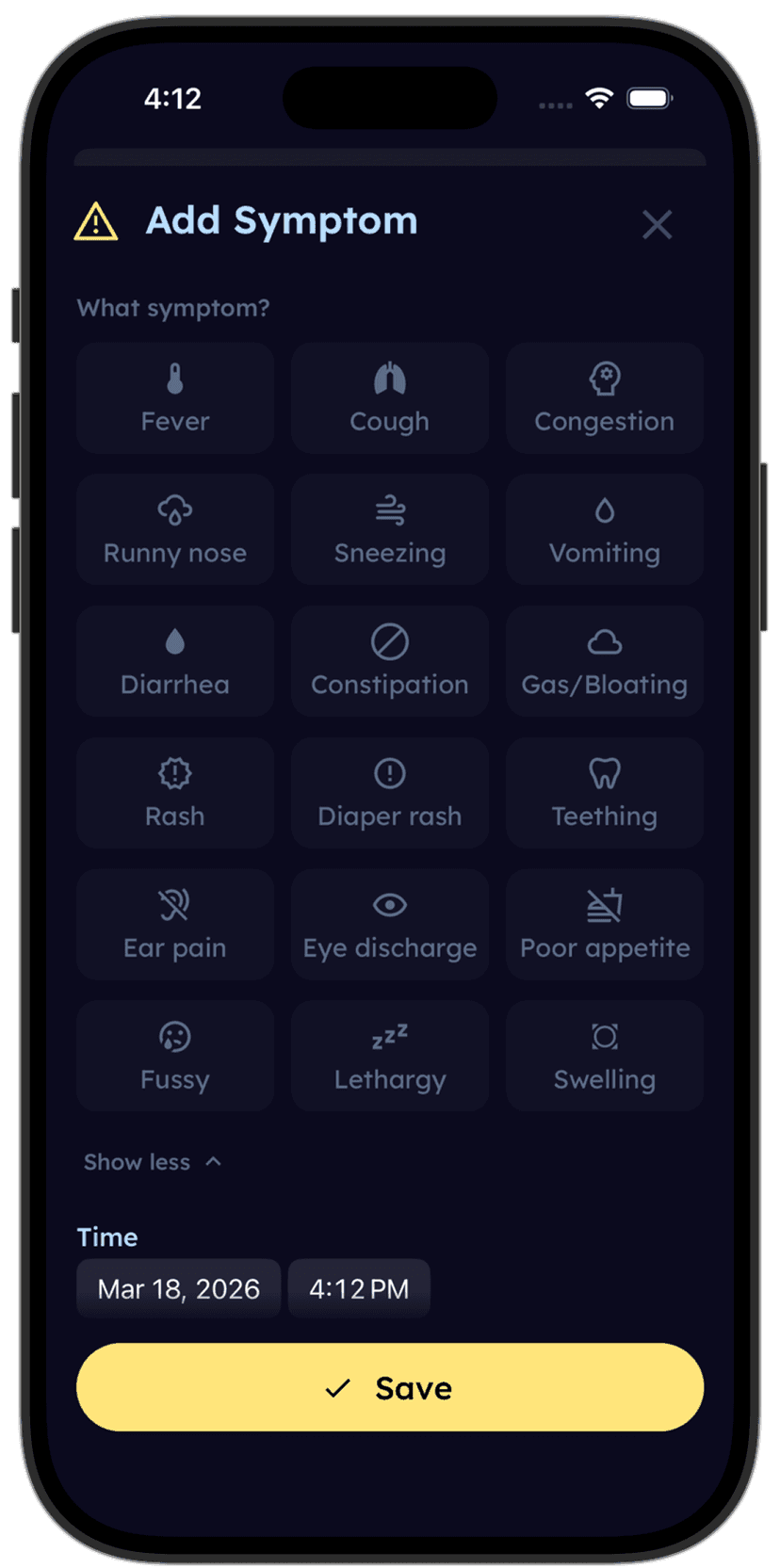
Tinylog symptom tracker showing daily mood and symptom logging for postpartum monitoring

Mood data helps your provider help you.

Tinylog lets you log daily symptoms and mood alongside baby's feeds and sleep. When you bring two weeks of mood data to your appointment, your provider can see the pattern — not just a snapshot of one bad day.

Download on the App StoreGet It On Google Play

How to Tell Which One You Have

The simplest way to distinguish postpartum anxiety from depression: anxiety is about too much energy in the wrong direction. Depression is about too little energy in any direction. Anxiety makes you hypervigilant, wired, and unable to stop your brain. Depression makes you withdraw, flatten, and struggle to start anything.

In practice, the distinction isn't always clean. About 50% of women with postpartum depression also have significant anxiety. You might feel simultaneously exhausted and unable to sleep, withdrawn and hypervigilant, hopeless and terrified. If your experience doesn't fit neatly into one category, that's normal — and your provider can address the full picture.

The most important question isn't which label applies. It's whether what you're feeling is getting in the way of your daily life, your ability to care for your baby, or your ability to feel any sense of well-being. Keeping a close eye on your overall postpartum recovery — both physical and emotional — can help you notice when something is off. If the answer is yes — regardless of whether it's anxiety, depression, or both — you deserve evaluation and support.


Getting Help

Start with your OB-GYN, midwife, or primary care provider — and consider using one of the best pregnancy and postpartum apps to track mood data before your appointment. Describe what you're experiencing as specifically as you can. "I can't stop worrying about the baby dying in her sleep" is more actionable than "I feel stressed." If your provider dismisses your concerns, seek a second opinion. Perinatal mood disorders are their specialty area, and dismissal is not acceptable care.

Cognitive behavioral therapy (CBT) is the gold-standard treatment for both postpartum anxiety and depression. It's time-limited, evidence-based, and effective. For anxiety specifically, CBT helps you identify catastrophic thought patterns and develop strategies for managing them. For depression, it addresses negative self-talk and behavioral withdrawal. Medication is an option when therapy alone isn't sufficient, and many SSRIs are compatible with breastfeeding.

If you are in crisis: Call the Postpartum Support International Helpline at 1-800-944-4773 (call or text). Call 988 (Suicide & Crisis Lifeline) for immediate support. Text HOME to 741741 (Crisis Text Line). You are not alone, and help is available now.

Tips That Apply Either Way

Log mood alongside baby care

Tracking how you feel each day — even a simple rating — creates data your provider can use. It also helps you notice whether symptoms are stable, improving, or worsening. This isn't about curing anything with an app — it's about having better information for better conversations.

Name what you're feeling

Anxiety and depression feel different. 'I can't stop worrying' is different from 'I feel nothing.' Being able to describe your experience specifically helps your provider identify the right condition and recommend the right treatment.

Reach out before you feel ready

Most women wait too long to seek help. If you're questioning whether what you feel is normal, that question itself is worth bringing to your provider. You don't need to be in crisis to deserve support.

Related Guides

Sources

  • Falah-Hassani, K., et al. (2017). The prevalence of antenatal and postnatal co-morbid anxiety and depression. Psychological Medicine, 47(12), 2041–2053.
  • Dennis, C. L., et al. (2017). Prevalence of antenatal and postnatal anxiety: systematic review and meta-analysis. The British Journal of Psychiatry, 210(5), 315–323.
  • Fairbrother, N., et al. (2016). Perinatal anxiety disorder prevalence and incidence. Journal of Affective Disorders, 200, 148–155.
  • American College of Obstetricians and Gynecologists (ACOG). (2023). Screening and Diagnosis of Mental Health Conditions During Pregnancy and Postpartum. Clinical Practice Guideline No. 4.
  • Postpartum Support International. Resources and helpline. postpartum.net. Helpline: 1-800-944-4773.

This guide is for informational purposes only and is not a substitute for professional medical advice. If you are experiencing symptoms of postpartum anxiety or depression, please contact your healthcare provider. If you are in crisis, call the Postpartum Support International Helpline at 1-800-944-4773 or the 988 Suicide & Crisis Lifeline.

Get this comparison in your inbox.
We'll send you this guide so you can reference it when you need it.
Mood tracking helps identify patterns over time.
Download Tinylog — log daily symptoms so you and your provider can see what's happening.
Download on the App StoreGet It On Google Play