GUIDE

Postpartum Depression vs. Baby Blues

Baby blues affect up to 80% of new mothers and resolve within 2 weeks. Postpartum depression is a clinical condition affecting 1 in 7 mothers that requires treatment. The key difference is duration, severity, and whether symptoms are getting worse.

If you're wondering whether what you're feeling is normal, this guide walks through exactly what to look for.

Many women suffer in silence because they are worried about being judged...But it's not your fault. It's not that you're a bad mom. It's not that you don't love your baby.
Dr. Erica NewlinDr. Erica Newlin, MD, OB-GYN, Cleveland Clinic

Most Mothers Feel Something — The Question Is What

If you're in the early days after having a baby and you're crying for no reason, feeling overwhelmed, or wondering whether something is wrong with you — you're not alone. The vast majority of new mothers experience some form of emotional upheaval after delivery. The question isn't whether you'll feel different. It's whether what you're feeling is the expected adjustment or something that needs attention.

Baby blues and postpartum depression share overlapping symptoms in the first two weeks, which makes them easy to confuse. Some mothers also experience postpartum anxiety, which has its own distinct pattern of symptoms. Both involve crying, irritability, mood swings, and feeling overwhelmed. The difference lies in duration, trajectory, and severity. Baby blues get better. Postpartum depression doesn't — not without help.

According to the American Psychiatric Association, approximately 80% of new mothers experience baby blues, while 10-15% develop postpartum depression. A 2014 study in JAMA Psychiatry found that about 20% of women who initially present with baby blues go on to develop postpartum depression, which makes the two-week checkpoint genuinely important.


Baby Blues vs. Postpartum Depression — Side by Side
Who it affects
Baby BluesUp to 80% of new mothers. Considered a normal postpartum adjustment.
Postpartum DepressionAbout 1 in 7 mothers (approximately 15%). A clinical mood disorder.
When it starts
Baby BluesWithin the first 2-3 days after delivery.
Postpartum DepressionCan begin any time during the first year postpartum, often within the first month.
Duration
Baby BluesResolves within 10-14 days without treatment.
Postpartum DepressionPersists beyond 2 weeks and does not resolve on its own. Can last months or longer without treatment.
Severity
Baby BluesMild. Tearfulness, mood swings, irritability. You can still function and care for your baby.
Postpartum DepressionModerate to severe. Persistent sadness, hopelessness, inability to enjoy things, difficulty functioning.
Sleep impact
Baby BluesTired from newborn care but able to sleep when given the opportunity.
Postpartum DepressionInsomnia even when baby is sleeping, or sleeping excessively and unable to get up.
Bonding
Baby BluesStill feel connected to baby despite emotional swings.
Postpartum DepressionMay feel disconnected, indifferent, or overwhelmed by responsibility for baby.
Treatment needed
Baby BluesSelf-care, rest, and social support. No clinical treatment required.
Postpartum DepressionTherapy, medication, or both. Professional treatment is effective and important.
If you are in crisis, contact the Postpartum Support International Helpline: 1-800-944-4773 (call or text). You can also text HOME to 741741 for the Crisis Text Line.

Baby Blues — What to Know

  • Extremely common — affecting up to 80% of new mothers means this is a normal hormonal response
  • Self-limiting — resolves within 2 weeks without treatment in most cases
  • Does not typically interfere with ability to care for baby or yourself
  • Responds well to rest, support from partner/family, and basic self-care
  • Not associated with long-term mental health consequences

Baby blues are a normal part of the massive hormonal shift after delivery.

Baby Blues — Watch For

  • Can feel alarming when you don't expect it — many mothers are unprepared for the emotional intensity
  • Difficult to distinguish from early postpartum depression in the first two weeks
  • May be dismissed by family members as 'just hormones' even when support would help
  • In about 20% of cases, baby blues can transition into postpartum depression

The transition from baby blues to PPD is gradual. Track symptoms to catch it early.

Postpartum Depression — What to Know

  • Highly treatable — therapy and medication are effective for the vast majority of women
  • Better understood than ever — screening tools like the Edinburgh Postnatal Depression Scale are widely used
  • Early identification and treatment leads to better outcomes for both mother and baby
  • Growing awareness means less stigma and more support resources available
  • Treatment doesn't have to mean stopping breastfeeding — many medications are compatible

PPD is not your fault and not something you can 'push through.' Treatment works.

Postpartum Depression — Be Aware

  • Often underdiagnosed — many women don't report symptoms due to stigma or fear of judgment
  • Can significantly impact bonding, daily functioning, and relationships if untreated
  • May require trying different treatments before finding what works
  • Without treatment, symptoms can persist for months or longer and worsen over time

If you're having thoughts of harming yourself or your baby, call 988 (Suicide & Crisis Lifeline) or go to your nearest emergency room immediately.

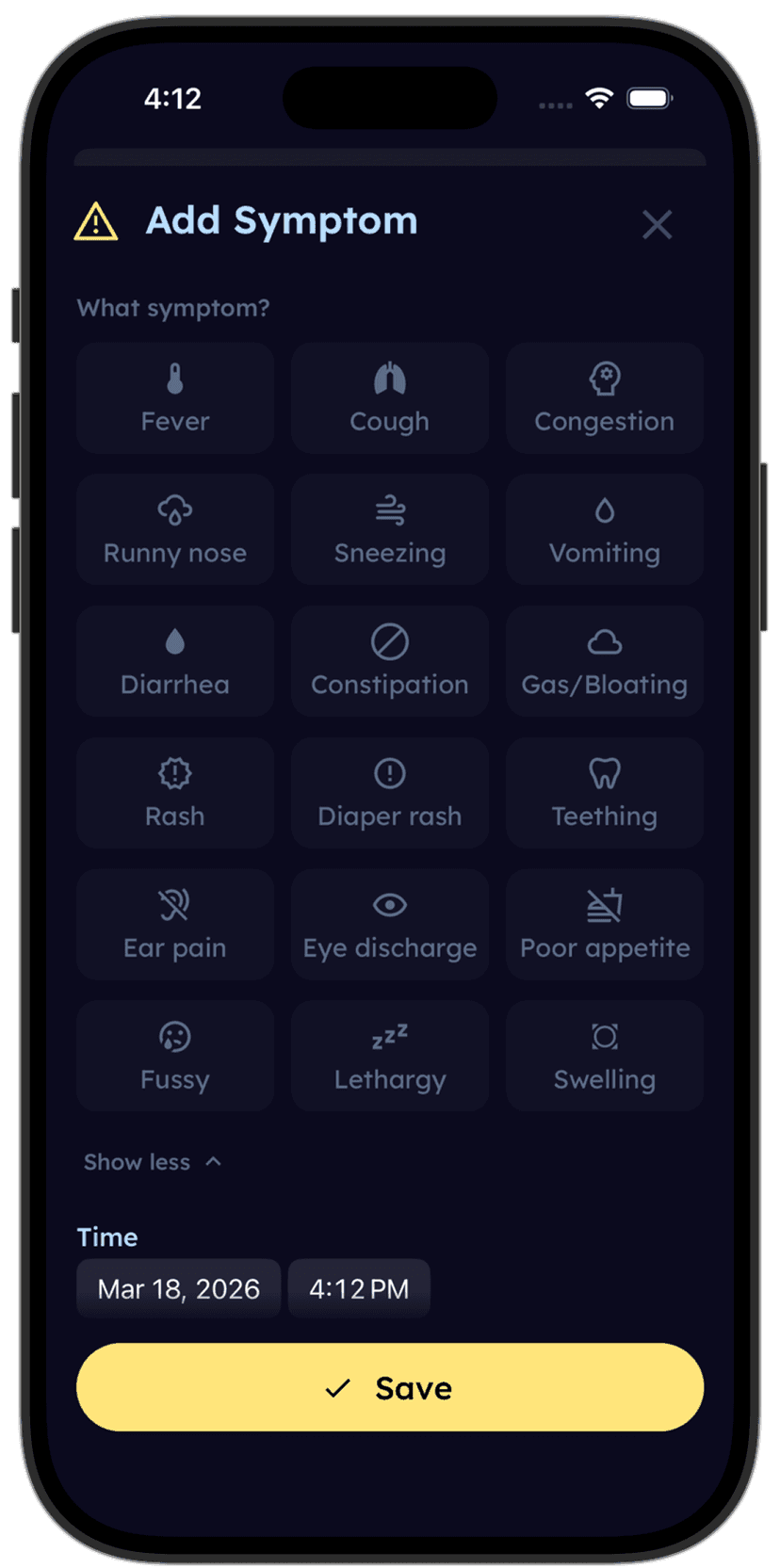
Tinylog symptom tracker showing daily mood and symptom logging

Daily mood tracking helps you see the pattern.

Tinylog lets you log symptoms and mood alongside baby care — so when you talk to your provider, you have real data instead of 'I think I've been feeling bad for a while.'

Download on the App StoreGet It On Google Play

When to Call Your Provider

Call your healthcare provider if any of the following apply: your symptoms haven't improved by two weeks postpartum, your symptoms are getting worse rather than better, you're unable to sleep even when the baby is sleeping, you're having persistent thoughts that your baby would be better off without you, you've lost interest in your baby or feel unable to care for them, or you're having thoughts of self-harm.

You don't need to wait for a scheduled appointment. Call the office, describe what you're experiencing, and ask for an evaluation. Most providers can screen for postpartum depression in a single visit using the Edinburgh Postnatal Depression Scale (EPDS), a validated 10-question screening tool.

If you are in immediate crisis: Call the Postpartum Support International Helpline at 1-800-944-4773 (call or text). You can also call 988 (Suicide & Crisis Lifeline) or text HOME to 741741 (Crisis Text Line). These services are free, confidential, and available 24/7.

Treatment Works — and It Matters

Postpartum depression is one of the most treatable mood disorders. Cognitive behavioral therapy (CBT) and interpersonal therapy (IPT) are both evidence-based and effective. SSRIs like sertraline (Zoloft) are commonly prescribed and are compatible with breastfeeding at standard doses. Many women benefit from a combination of therapy and medication.

The most important thing to know: untreated postpartum depression doesn't just affect you. Research published in The Lancet Psychiatry (2019) found that maternal depression in the first year is associated with effects on infant attachment, cognitive development, and emotional regulation. Getting treatment is an act of care for both you and your baby.

Recovery takes time, but it happens. Most women who receive appropriate treatment see significant improvement within 6-8 weeks. Understanding the full scope of postpartum recovery — physical and emotional — can help you give yourself grace during this period. You are not broken. You are not a bad mother. You have a medical condition that responds to treatment.

Tips That Apply Either Way

Track your mood daily

Logging how you feel each day — even just a one-word entry — creates a record that helps you and your provider distinguish between normal fluctuations and a concerning pattern. Two weeks of mood data is more useful than trying to remember how you felt.

Know the two-week marker

Baby blues should improve by two weeks postpartum. If you're still feeling the same or worse at the two-week mark, call your provider. This is the clearest signal that what you're experiencing may be more than normal adjustment.

Tell someone

Whether it's your partner, a friend, your mother, or your provider — say it out loud. 'I don't feel right' is enough. Postpartum depression thrives in silence, and speaking up is the first step toward feeling better.

Related Guides

Sources

  • American Psychiatric Association. (2022). Diagnostic and Statistical Manual of Mental Disorders (5th ed., text rev.). Postpartum-onset specifier.
  • Wisner, K. L., et al. (2013). Onset Timing, Thoughts of Self-Harm, and Diagnoses in Postpartum Women with Screen-Positive Depression Findings. JAMA Psychiatry, 70(5), 490–498.
  • Gavin, N. I., et al. (2005). Perinatal depression: a systematic review of prevalence and incidence. Obstetrics & Gynecology, 106(5), 1071–1083.
  • Stein, A., et al. (2014). Effects of perinatal mental disorders on the fetus and child. The Lancet, 384(9956), 1800–1819.
  • Postpartum Support International. Helpline and resources. postpartum.net. Helpline: 1-800-944-4773.

This guide is for informational purposes only and is not a substitute for professional medical advice. If you are experiencing symptoms of postpartum depression, please contact your healthcare provider. If you are in crisis, call the Postpartum Support International Helpline at 1-800-944-4773 or the 988 Suicide & Crisis Lifeline.

Get this comparison in your inbox.
We'll send you this guide so you can reference it during those early weeks.
Tracking mood helps you see patterns you'd otherwise miss.
Download Tinylog — log daily symptoms to support conversations with your healthcare provider.
Download on the App StoreGet It On Google Play