GUIDE

Power Pumping

Power pumping can help increase supply by mimicking the demand signal of cluster feeding — but it's not magic, and it's not a first-line intervention.

Before you commit to an hour of pump-rest-pump-rest, here's what to expect, how to do it right, and why it should come after the basics, not instead of them.

What Power Pumping Actually Is

Power pumping is a technique that mimics cluster feeding — the natural pattern where babies feed very frequently over a short period, signaling the body to increase production. When baby cluster feeds, they're essentially telling your body: "I need more than you're currently making."

The pump version works on the same principle. By cycling between pumping and resting over an hour, you send a concentrated demand signal. Your body interprets this as "baby needs more" and responds by increasing production — but it takes a few days to kick in, because supply adjustments happen hormonally, not instantaneously.

The standard protocol takes one hour and replaces one regular pump session per day. You don't need to buy anything. You don't need a special pump. You just need 60 minutes and reasonable expectations.

The Power Pumping Protocol
Pump
Duration20 minutes
NotesRegular pumping session. Use your normal settings.
Rest
Duration10 minutes
NotesTurn off pump. Leave flanges on or take a break.
Pump
Duration10 minutes
NotesYou may not get much — that's fine. The stimulation matters.
Rest
Duration10 minutes
NotesRelax. Look at baby photos. Drink water.
Pump
Duration10 minutes
NotesFinal round. Again, output may be minimal. The signal is the point.
Total time: 60 minutes. Total pumping: 40 minutes. Output during the power pump session will likely be less than a normal session — that's expected. The signal matters more than what comes out.

Before You Start Power Pumping

Fix the basics first

Power pumping is not a first step. Before committing to it, check: Is your latch correct? Are your flanges properly sized? Are you pumping/nursing at least 8 times per 24 hours? Is there an underlying medical cause? Power pumping on top of a bad latch or wrong flanges is adding effort without addressing the root cause.

Set realistic expectations

Power pumping is not going to double your supply overnight. Realistic expectation: a modest increase (1-4 oz per day total) over 3-7 days. Some parents see more, some see nothing. It's worth trying, but don't treat it as a guaranteed fix.

Pick a consistent time

Do your power pumping session at the same time each day. Many parents choose the evening because that's when babies naturally cluster feed and supply is lower. Others prefer the early morning when prolactin is high and they get the most output. Either works — consistency matters more than timing.

This replaces one pump session, not adds to your day

Power pumping takes an hour. It replaces one of your regular sessions — you're not adding a full hour on top of your existing schedule. If you pump at 8 PM, make that session a power pump instead. Total daily sessions stay the same; one of them just gets more intense.

When Power Pumping Is Most Likely to Help

  • Supply is demand-limited (your body can make more but isn't getting enough signal)
  • You've recently returned to work and supply dipped from reduced nursing frequency
  • You're trying to build supply for an upcoming separation
  • Supply dropped after illness, stress, or missed sessions and you want to recover it
  • You're exclusively pumping and want to increase daily output by a few ounces

These scenarios involve supply that's responsive to increased demand. Power pumping gives that demand signal.

When Power Pumping Probably Won't Help

  • Low supply is caused by insufficient glandular tissue (IGT/breast hypoplasia)
  • Hormonal factors are limiting production (thyroid, PCOS, medication-related)
  • Your flanges are the wrong size and you're getting poor milk removal regardless
  • You're already pumping 10+ times per day and adding more stimulation won't help
  • The issue is milk transfer (latch/tongue tie), not milk production

If any of these describe your situation, address the underlying issue first. Power pumping is a demand tool — it can't fix supply, latch, or anatomy problems.

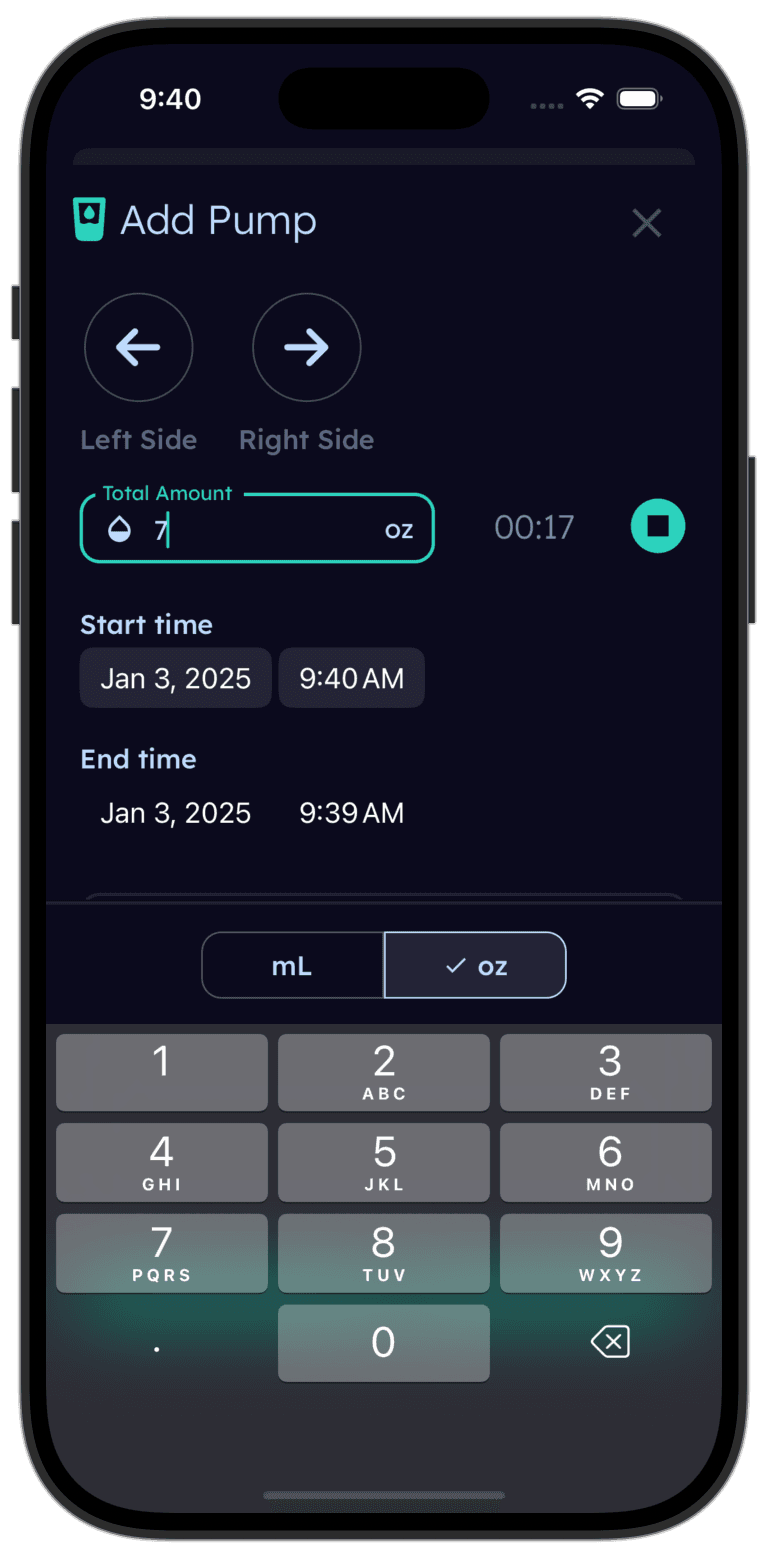
tinylog pump tracker showing daily output trends during power pumping

Trying power pumping? Track your daily total before you start, then during. If it's working, you'll see the number trend upward within a week.

tinylog logs pump sessions with output and shows daily totals over time. That's how you know if power pumping is actually doing something — or if you need a different approach.

Download on the App StoreGet It On Google Play

What the Evidence Actually Says

"Power pumping is clinically proven to increase supply." Not exactly. There are no high-quality randomized controlled trials specifically on power pumping. The concept is based on the well-established principle that increased milk removal drives increased production (supported by extensive research from Kent et al. and others). The cluster-feeding-by-pump approach is mechanistically sound, but the specific protocol hasn't been rigorously studied in a clinical trial.

"You'll see results after one session." Unlikely. Milk supply adjustments are hormonally driven and take 2-5 days to manifest. Any increase you see during a power pump session is from more thorough emptying, not new production. Real production increases show up 3-7 days into consistent daily power pumping.

"Power pumping is the best way to increase supply." It's a tool, not the best tool. Fixing latch, increasing overall nursing/pumping frequency, addressing medical causes, and proper flange sizing are all higher-priority interventions. Power pumping is best used as an adjunct to these fundamentals, not a replacement.


When to Get Help and What Kind

See an IBCLC if: you've been power pumping for 7-10 days with no increase, or if you're not sure whether your supply issue is demand-related or has another cause. An IBCLC can help you identify the actual bottleneck.

See your OB/GYN or endocrinologist if: you suspect hormonal factors (thyroid, PCOS) are limiting supply. Power pumping can't override a hormonal issue — treating the underlying condition can.

Consider your mental health: Power pumping adds time, effort, and emotional weight to an already demanding feeding routine. If it's causing significant stress without results, stopping is a reasonable choice. Your mental health matters as much as your milk supply.

For a broader view of supply-building interventions, see our how to increase milk supply guide.

Related Guides

Sources

  • Kent, J. C., et al. (2006). Volume and frequency of breastfeedings and fat content of breast milk throughout the day. Pediatrics, 117(3).
  • Morton, J., et al. (2009). Combining hand techniques with electric pumping increases milk production in mothers of preterm infants. Journal of Perinatology, 29(11).
  • Academy of Breastfeeding Medicine. (2018). ABM Clinical Protocol #9: Use of Galactagogues in Initiating or Augmenting Maternal Milk Production.
  • American Academy of Pediatrics (AAP). (2022). Breastfeeding and the Use of Human Milk. Pediatrics, 150(1).

Medical Disclaimer

This guide is for informational purposes only and is not a substitute for professional medical advice. If you're experiencing breastfeeding difficulties, consider consulting an IBCLC (International Board Certified Lactation Consultant) or your pediatrician.

Get this power pumping protocol in your inbox.
We'll send you the exact schedule and realistic timeline so you can try it properly.
Track your output before and during power pumping — so you know if it's actually working.
Download tinylog free — log pump sessions and see whether your daily totals are trending up.
Download on the App StoreGet It On Google Play