GUIDE

How to Increase Milk Supply

The evidence is clear: the single most effective way to increase supply is to remove more milk, more often. Everything else is secondary.

Before you buy lactation supplements or eat your weight in oatmeal, read this. The interventions that actually work are simpler — and harder — than the ones being marketed to you.

The Supply Intervention Hierarchy

There's a clear hierarchy in supply-building interventions, and it goes like this: fix milk removal first, optimize hormonal factors second, and consider supplements as a distant third.

The breastfeeding supplement industry is enormous and growing. It targets anxious parents with products that promise to "boost" and "support" supply. And while these products are mostly harmless, they're also mostly ineffective — and they distract from the interventions that actually work.

Here's the hard truth: increasing milk supply requires more frequent milk removal, which means more time nursing or pumping. There is no supplement, food, or trick that replaces this. The evidence is overwhelming and consistent on this point. More demand = more supply. That's the whole thing.

What the Evidence Supports

Nurse or pump more frequently

The foundation of every supply-building plan. Aim for 8-12 milk removals per 24 hours minimum. If you're currently at 6-8 feeds, adding 2-3 sessions can make a significant difference within days. Milk production follows a simple rule: the more you remove, the more you make. **Evidence level:** Strong — this is the primary mechanism of lactation. Supported by every major lactation organization.

Pump after nursing

Adding 10-15 minutes of pumping after nursing sessions tells your body that demand exceeds what baby removed. Do this for 2-3 feeds per day minimum. You may get very little at first — that's fine. The signal matters more than the output. **Evidence level:** Strong — widely recommended by IBCLCs and supported by Kent et al. research on milk production.

Fix latch for better transfer

A shallow latch means baby removes less milk per session, which tells your body to make less. Improving latch depth increases per-feed transfer, which increases supply signals. This is why an IBCLC visit is often the most effective supply intervention. **Evidence level:** Strong — poor milk transfer is the most common modifiable cause of low supply.

Night nursing / pumping

Prolactin levels peak between 1-5 AM. Nursing or pumping during this window sends the strongest supply-building signal. If you're trying to build supply, don't drop night sessions — they're your highest-impact feeds. **Evidence level:** Strong — prolactin circadian rhythm is well-established in lactation research.

Breast compression during feeds

Gently compressing your breast when baby pauses between active sucks helps push more milk out per feed. More thorough emptying = stronger signal to produce more. Simple, free, and you can do it at every feed. **Evidence level:** Moderate — recommended by IBCLCs, mechanistically sound, limited formal studies.

Skin-to-skin contact

Holding your baby skin-to-skin stimulates oxytocin and prolactin release — the hormones that drive milk production and letdown. Even outside of feeding times, skin-to-skin can help support supply. **Evidence level:** Moderate — multiple studies show skin-to-skin increases breastfeeding duration and milk volume in NICU settings.

Interventions With Limited (but Some) Evidence

Power pumping

Pumping 20 min on, 10 min off, 10 min on, 10 min off, 10 min on — mimicking cluster feeding. Anecdotal reports are positive, but formal studies are limited. Worth trying for a few days as a supplement to your regular routine, but it's not a magic fix. **Evidence level:** Limited but promising — no high-quality trials, but mechanism is sound.

Fenugreek

The most studied galactagogue. Some small studies show modest supply increases. But fenugreek can DECREASE supply in some people (especially those with thyroid conditions), causes maple-syrup-smelling sweat/urine, and can lower blood sugar. If you try it, monitor your supply closely. **Evidence level:** Mixed — some positive small studies, but Cochrane review found insufficient evidence overall.

Domperidone (prescription)

A dopamine antagonist that increases prolactin levels. Available by prescription in many countries (not approved for this use in the US). Has better evidence than herbal galactagogues but carries cardiovascular risks. Only consider under medical supervision for genuine supply issues that haven't responded to first-line interventions. **Evidence level:** Moderate — multiple studies showing efficacy, but safety concerns limit recommendation.

For a deep dive on power pumping specifically, see our power pumping guide.

What the Evidence Does NOT Support

Lactation cookies and brownies

They're oatmeal cookies with brewer's yeast and flaxseed at a 300% markup. No clinical evidence supports them. They taste fine and eating calories is important when you're breastfeeding, but they're not a supply intervention. Save your money.

Forcing extra fluids

Drinking when you're thirsty is important. Forcing yourself to drink 128 oz of water a day is not. Research shows no supply benefit from drinking beyond thirst. Over-hydrating can actually slightly decrease supply in some people by diluting electrolytes.

Specific 'milk-boosting' foods

Oatmeal, dark beer, brewer's yeast, fennel, almonds — all frequently recommended, none with clinical evidence for increasing supply. Eat a varied diet with adequate calories. That's the nutrition advice that actually matters for supply.

Expensive supplement stacks

Supplement companies market 'supply support' blends with ingredients like moringa, shatavari, milk thistle, and goat's rue. Evidence for these individual ingredients ranges from minimal to nonexistent. A $40/month supplement is not going to fix what more frequent nursing or a latch correction can.

tinylog pump session tracker showing daily output totals over time

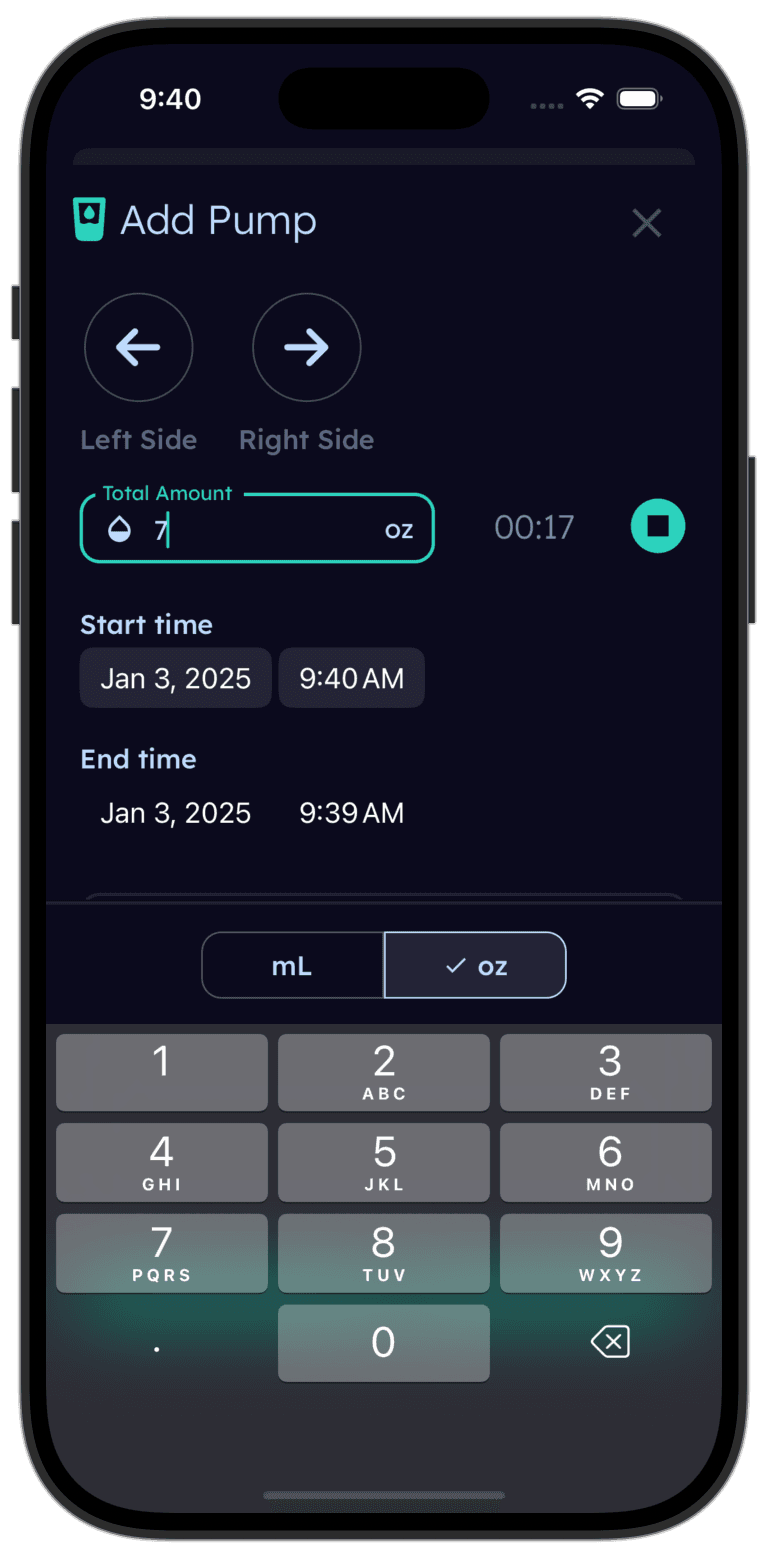
Trying to build supply? Track your pump sessions and daily totals so you can see whether interventions are actually working — not just hope they are.

tinylog logs pump output per session and tracks daily volume over time. See real trends so you know if what you're doing is working within the first 3-5 days.

Download on the App StoreGet It On Google Play

A Realistic Supply-Building Protocol

If your supply is genuinely low and you want to build it, here's a realistic protocol based on what IBCLCs actually recommend:

Week 1-2: Nurse baby on demand (minimum 8 times per day). Add 10-15 minutes of pumping after 3-4 nursing sessions daily. Include at least one night session between 1-5 AM. Do breast compression during all feeds. Get latch assessed by an IBCLC.

Week 2-4: Continue the above. If you're not seeing output increase, add one power pumping session per day (replacing a regular pump session). Evaluate for tongue tie if latch hasn't improved. Consider medical workup for hormonal factors if there's no response.

Ongoing: Monitor with diaper counts and weight checks. Adjust based on results. If supply responds — great, gradually reduce the extra pumping as supply stabilizes. If supply plateaus despite maximum effort, that's information too. Some parents reach a ceiling, and combo feeding fills the gap.

The first 12 weeks are the most responsive window. Don't wait until week 8 to start addressing a supply concern you noticed at week 2.


What the Evidence Actually Says

"Just nurse more and supply will increase." Mostly true — but with a caveat. More nursing only increases supply if milk is being effectively removed. If baby has a shallow latch and isn't transferring efficiently, 20 feeds a day won't help because the signal is "lots of stimulation but not much milk needed." Effective removal — deep latch, good transfer, thorough emptying — is what drives production.

"Fenugreek is the gold standard galactagogue." It's the most studied, not the most effective. A 2020 Cochrane review by Foong et al. found insufficient evidence for any herbal galactagogue. Individual small studies show modest effects for fenugreek, but the methodological quality is generally low. It's a reasonable thing to try, but it should never be the first or only intervention.

"Once you lose supply, you can't get it back." Depends on the cause. Supply lost due to reduced demand (skipping feeds, returning to work) can often be partially rebuilt by increasing demand again. Supply limited by glandular tissue or hormonal factors may not be recoverable. Supply lost after the 12-week calibration window is harder (but not impossible) to rebuild.

When to Get Help and What Kind

See an IBCLC as your first step. A comprehensive supply assessment — including latch evaluation, weighted feed, history review, and a customized plan — is the most effective thing you can do. Many supply issues are latch or transfer problems in disguise.

See your OB/GYN or endocrinologist if: you suspect thyroid issues, have PCOS, or have other hormonal conditions. A simple blood panel can identify treatable causes.

See your pediatrician for: weight checks to monitor whether supply interventions are working. They're your partner in tracking the outcome.

Don't self-diagnose with pump output. Get a weighted feed and proper assessment before concluding you have low supply. The intervention for actual low supply and the intervention for perceived low supply are very different.

If you're unsure whether your supply is actually low, start with our low milk supply guide. For understanding what pump output really means, see how much milk should I be pumping.

Related Guides

Sources

  • Foong, S. C., et al. (2020). Oral galactagogues for increasing breast-milk production in mothers of non-hospitalised term infants. Cochrane Database of Systematic Reviews.
  • Kent, J. C., et al. (2006). Volume and frequency of breastfeedings and fat content of breast milk throughout the day. Pediatrics, 117(3).
  • Nommsen-Rivers, L. A., et al. (2010). Delayed onset of lactogenesis among first-time mothers. American Journal of Clinical Nutrition, 92(3).
  • American Academy of Pediatrics (AAP). (2022). Breastfeeding and the Use of Human Milk. Pediatrics, 150(1).
  • Academy of Breastfeeding Medicine. (2018). ABM Clinical Protocol #9: Use of Galactagogues in Initiating or Augmenting Maternal Milk Production.
  • LactMed. National Library of Medicine. Drugs and Lactation Database.

Medical Disclaimer

This guide is for informational purposes only and is not a substitute for professional medical advice. If you're experiencing breastfeeding difficulties, consider consulting an IBCLC (International Board Certified Lactation Consultant) or your pediatrician.

Get this evidence-based supply guide in your inbox.
We'll email you the real interventions — no supplement marketing, no guilt trips.
Track your output to see if it's actually working.
Download tinylog free — log pump sessions and nursing to see supply trends over time.
Download on the App StoreGet It On Google Play