


GUIDE

Slow Flow Nipple vs. Medium Flow Nipple

Slow flow nipples are standard for newborns and young babies. Medium flow is typically appropriate when baby shows signs of frustration with slow flow — but age-based charts on packaging are unreliable. Your baby's behavior tells you more than the label.

Nipple flow rates aren't standardized across brands, and some babies stay on slow flow for months. Here's how to know when a switch actually makes sense.

Track feeding duration and volume

Log bottle feeds and watch for patterns

What we learned from those studies was that the name that's assigned to the nipple does not necessarily mean anything about the flow rate.
Britt PadosBritt Pados, PhD, RN, NNP-BC, Assistant Professor, Boston College Connell School of Nursing

The Dirty Secret of Nipple Flow Rates

There is no industry standard for bottle nipple flow rates. A "level 1" from one brand flows at a completely different rate than a "level 1" from another. A 2015 study published in Maternal and Child Nutrition (Pados et al.) tested nipple flow rates across multiple brands and found that actual flow rates at the same labeled level varied by up to 300%. A "slow flow" from one brand delivered more milk per minute than a "medium flow" from another.

This means the numbers on the packaging — level 1, level 2, slow, medium — are relative within a brand, not absolute measurements. If you switch brands, you're essentially changing flow rates regardless of whether you buy the same "level." This is worth knowing because it explains why some babies suddenly choke on a new brand at the "same" level, or why switching brands can unexpectedly solve a flow problem.

The practical takeaway: focus on your baby's behavior, not the label. If baby is feeding comfortably, gaining weight appropriately, and finishing feeds in a reasonable time (10-20 minutes for a full feed), the nipple is the right one — regardless of what level it says on the box. Our how much formula by age guide can help you confirm whether the volume your baby takes per feed is on track.

Slow Flow vs. Medium Flow Nipple
Typical age range (per packaging)
Slow Flow Nipple0-3 months (but this varies by brand and is not a rule)
Medium Flow Nipple3-6 months (but many babies don't need it until later or earlier)
Flow rate
Slow Flow NippleSlower drip — baby works harder to extract milk, mimicking breast effort
Medium Flow NippleFaster drip — less effort required, feeds may finish faster
Feed duration
Slow Flow Nipple10-20 minutes typically for a full feed
Medium Flow NippleMay reduce to 8-15 minutes depending on baby and volume
Best for combo-feeding
Slow Flow NippleRecommended for breastfed babies to prevent flow preference for the bottle
Medium Flow NippleMay cause flow preference in combo-fed babies — breast requires more effort
Swallowing effort
Slow Flow NippleBaby must actively suck to get milk — builds oral motor strength
Medium Flow NippleLess effort per suck — appropriate when baby's muscles are stronger
Choking/gulping risk
Slow Flow NippleLower — baby controls the pace more easily
Medium Flow NippleSlightly higher if baby isn't ready — watch for coughing and dribbling
Frustration potential
Slow Flow NippleCan cause frustration if baby has outgrown it — feeds too slowly, baby tires before finishing
Medium Flow NippleCan cause frustration if too fast — baby can't keep up with flow
Flow rates are not standardized across brands. A 'level 2' from one brand may flow faster or slower than a 'level 2' from another.

Slow Flow Advantages

  • Mimics the effort level of breastfeeding — ideal for combo-fed babies
  • Gives baby more control over the feeding pace, reducing overfeeding risk
  • Lower risk of choking, coughing, or gulping during feeds
  • Builds oral motor strength as baby actively works to extract milk
  • Standard starting point — no need to change unless baby shows signs of readiness

Slow flow is the default for good reason — most young babies need the pacing it provides.

Slow Flow Limitations

  • Feeds can become frustratingly long if baby has outgrown the flow rate
  • Baby may tire before finishing a full feed, leading to more frequent feeding
  • Strong suckers may collapse the nipple, pulling in air and causing gas
  • Can lead to bottle refusal if baby is working too hard for too little reward

These signs suggest baby may be ready for a flow increase — or may benefit from repositioning first.

Medium Flow Advantages

  • Matches the needs of older, stronger babies who feed more efficiently
  • Reduces feeding time — practical for busy schedules and daycare
  • Eliminates frustration from too-slow flow — baby gets milk without exhausting effort
  • Reduces nipple collapse in babies with strong suction
  • Appropriate transition when baby's oral motor skills have matured

Sizing up at the right time reduces frustration and keeps feeding positive.

Medium Flow Risks

  • Too fast a flow can cause choking, coughing, and milk dribbling
  • May increase the risk of flow preference in combo-fed babies, making breastfeeding harder
  • Can lead to overfeeding if baby gulps faster than their satiety signals register
  • Gas may increase if baby swallows air while trying to keep up with faster flow

If you see these signs after sizing up, going back to slow flow is always an option.

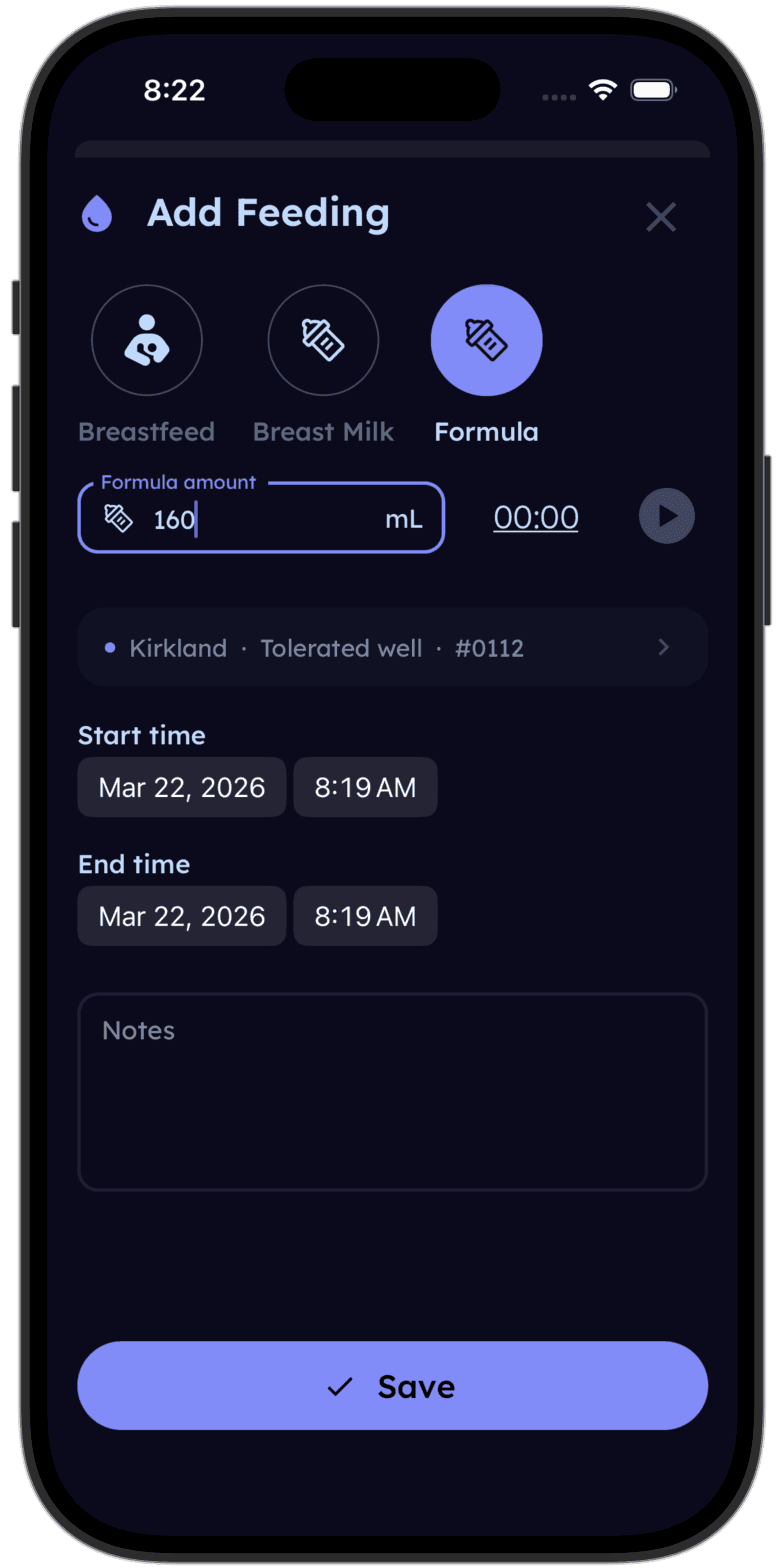
Tinylog app showing formula feeding log with bottle volumes and feeding times

Tracking feed duration and volume helps you spot when the nipple flow needs to change.

Tinylog logs every bottle feed with duration and volume. When feeds start taking noticeably longer or shorter, you'll see it in the data — giving you an objective basis for deciding whether to adjust flow rate.

Download on the App StoreGet It On Google Play

Special Considerations for Combo-Fed Babies

If your baby is both breastfed and bottle-fed, nipple flow choice becomes more strategic. Our combination feeding guide covers how to balance breast and bottle successfully. The breast doesn't deliver milk at a constant rate — baby has to work for the letdown, then flow varies throughout the feed. A fast-flow bottle is dramatically easier than breastfeeding, and some babies develop a preference for the path of least resistance.

This is why most lactation consultants recommend slow flow nipples for combo-fed babies, combined with paced bottle feeding. The goal isn't to make bottle feeding unpleasant — it's to keep the effort level roughly comparable to breastfeeding so baby doesn't refuse the breast.

If your combo-fed baby is getting frustrated with slow flow during bottle feeds but you're worried about flow preference, try paced feeding first. If frustration persists and baby is clearly ready for more flow, size up and monitor breastfeeding sessions for any changes in baby's willingness to latch and nurse.

How to Decide: Signs That Matter

Stay on slow flow if: Baby is feeding comfortably, finishing feeds in 10-20 minutes, gaining weight appropriately, and not showing frustration. If it's not broken, don't fix it.

Consider medium flow if: Feeds consistently take 25-30+ minutes and baby loses interest or falls asleep, baby is collapsing the nipple from strong suction, baby pulls off frequently and seems frustrated, or baby is no longer gaining weight appropriately (rule out other causes first).

Go back to slow flow if: After sizing up, baby chokes, coughs, gulps, or dribbles milk, baby seems overwhelmed and fussy during feeds, or breastfeeding sessions decline in quality for combo-fed babies.

Tips That Apply Either Way

Watch your baby, not the packaging

The age ranges on nipple packaging are marketing guidelines, not developmental milestones. Your 2-month-old might need medium flow. Your 6-month-old might be perfectly happy on slow flow. The signs that matter are behavioral: frustration during feeds, feeds consistently taking over 20-30 minutes, nipple collapse, or baby falling asleep mid-feed from working too hard.

Try paced bottle feeding before sizing up

If your baby seems frustrated with slow flow, try paced bottle feeding first: hold baby upright, tilt the bottle just enough to fill the nipple, and let baby take breaks. Sometimes the issue isn't flow rate — it's positioning. Paced feeding is especially important for combo-fed babies to keep the bottle effort level closer to breastfeeding.

One nipple size up at a time

If you decide to try a faster flow, go up one level only. Jumping from slow to fast can overwhelm a baby who just needed a slight increase. Also, since flow rates vary between brands, switching brands is essentially changing flow rates even if the level number is the same. Stick with one brand to maintain consistency.

Related Guides

Sources

  • Pados, B. F., et al. (2015). Milk Flow Rates From Bottle Nipples Used for Feeding Infants Who Are Hospitalized. American Journal of Speech-Language Pathology, 24(4), 671-679.
  • Mathew, O. P. (1991). Science of bottle feeding. Journal of Pediatrics, 119(4), 511-519.
  • Pados, B. F., et al. (2016). Milk Flow Rates From Bottle Nipples Used After Hospital Discharge. MCN: The American Journal of Maternal/Child Nursing, 41(4), 237-243.
  • Goldfield, E. C., et al. (2006). Coordination of sucking, swallowing, and breathing and oxygen saturation during early infant bottle-feeding and breastfeeding. Pediatric Research, 60(4), 450-455.

This guide is for informational purposes only and is not a substitute for professional medical advice. Consult your pediatrician for guidance specific to your baby.

Get this comparison in your inbox.
Keep this guide handy for when you're debating whether to size up.
Tracking feeding times helps you spot when the nipple flow is no longer right.
Download Tinylog — log bottle feeds with duration and volume to see trends over time.
Download on the App StoreGet It On Google Play