
Going back to work
Pumping at the office is a whole production. Some parents supplement with formula during work hours and nurse at home. Totally reasonable.
GUIDE
Published on ·Updated on
Breast milk and formula together. No guilt, no drama, just fed babies.
About 35% of U.S. parents combo feed by the time baby is 6 months old. Here's how to make it work without overthinking it.
Log breast, bottle and solids
“Whether breastfeeding or bottle-feeding, both methods of feeding are effective, and you should feel confident in whichever way works best for your family.”
Combination feeding means juggling breast, bottle, and sometimes pumping — all in the same day. That's three types of input, each with different units (minutes vs. ounces), different schedules, and different implications for supply. It's genuinely one of the hardest feeding patterns to keep track of, and most baby trackers weren't designed with this complexity in mind.
A good tracker should let you log all three feeding types separately and see them in one timeline — so you know exactly what your baby got today without mental math. Tinylog handles nursing sessions, pumped bottles, and formula as distinct entry types, and shows daily totals for each. For more on what breastfeeding parents should look for in a tracker, see our breastfeeding tracker guide.
Pumping at the office is a whole production. Some parents supplement with formula during work hours and nurse at home. Totally reasonable.
Maybe your supply dipped, or it never quite covered 100% of what your baby needs. Formula fills the gap without you having to stress about every ounce.
Your partner wants to feed the baby too. Or grandma. Or literally anyone who isn't you at 2 AM. A bottle of formula means someone else can take a shift.
Some babies need supplementation for weight gain. Some parents are on medications. Your doctor recommended it for a reason — trust that.
You just want to. That's it. That's the whole reason. And it's a perfectly good one.
| Time | Feed Type | Amount / Duration | Notes |
|---|---|---|---|
| 6:00 AM | Breast | 15–20 min/side | Morning supply is usually highest — great time to nurse |
| 9:00 AM | Formula bottle | 4 oz | Partner or caregiver can handle this one |
| 12:00 PM | Breast | 15 min/side | Nurse if possible to maintain midday supply |
| 3:00 PM | Formula bottle | 4 oz | Good slot if you're at work or need a break |
| 6:00 PM | Breast | 15–20 min/side | Cluster feeding in the evening is still normal |
| 8:30 PM | Formula bottle | 4–5 oz | A full bottle before bed can help with longer stretches |
| 11:00 PM | Breast or formula | 10–15 min or 3–4 oz | Dream feed — whichever is easier for you right now |
| 3:00 AM | Breast | 10–15 min/side | Night nursing helps maintain supply (prolactin peaks overnight) |
If someone else is giving a formula bottle, try to pump at the same time (or close to it). Your body needs the signal that milk is still needed at that hour. Skip this too many times and supply drops.
If you're transitioning from exclusive breastfeeding, replace one feeding at a time and wait 3–5 days before dropping the next one. Your body needs time to adjust without getting engorged or tanking your supply.
Offer the breast before offering the bottle. Baby gets the breast milk first, and formula tops them off. This keeps stimulation up while making sure baby is fully satisfied.
Prolactin levels are highest in the early morning. Nursing at wake-up and during night feeds does the most to protect your supply, even if daytime feeds are formula.
When you first start skipping a nursing session, you might get uncomfortably full. Hand express or pump just enough to relieve pressure — don't fully empty, or your body will think it needs to keep making that much.
If you're worried about supply dropping too much or baby not tolerating formula well, talk to your pediatrician or a lactation consultant. They can help you find the right balance.
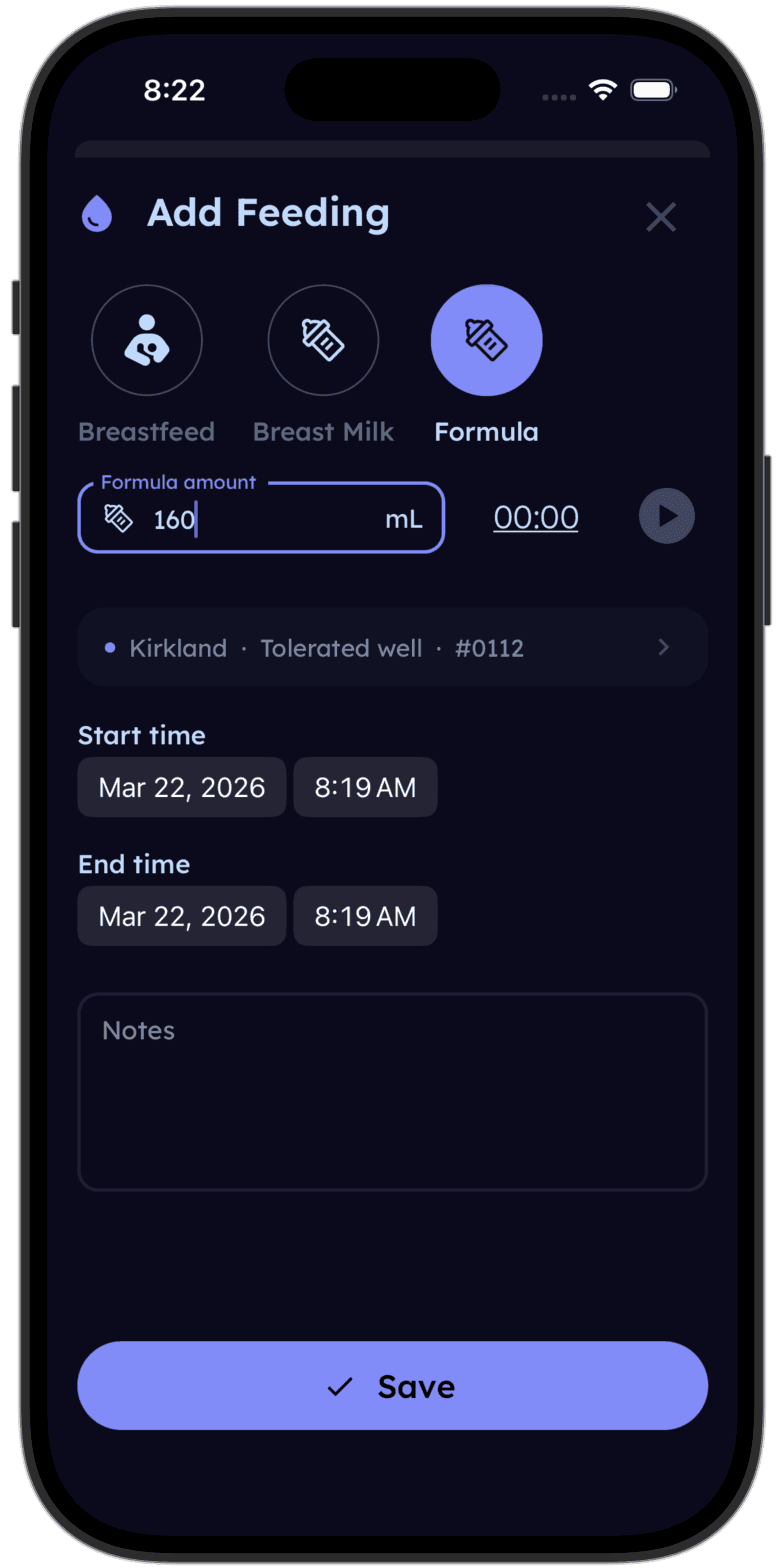
Log nursing sessions and formula bottles in seconds. See daily totals for each type, spot patterns over the week, and know exactly what your baby is getting without doing mental math.


A bottle warmer is not strictly necessary — warm water in a bowl works fine. But at 2 AM, the Philips Avent warmer (~$35) means you press a button and it is done in three minutes with no hot spots. It uses a water bath, not steam, so it is safe for breast milk nutrients.
Tinylog earns a small commission on purchases made through these links, at no cost to you.
Want to save a few bucks? promo.new is worth a quick look. It won't always have your product, but when it does, the savings are real.
Some breastfed babies are picky about bottle nipples. If baby is refusing the bottle, try a different shape or flow rate before assuming they hate formula. Slow-flow nipples mimic the breast better.
If baby doesn't finish the bottle, you'll have to throw out the breast milk too. Feed breast milk first, then offer formula separately. Less waste, less heartbreak.
Make a pitcher of formula in the morning and store it in the fridge (use within 24 hours). Way easier than measuring scoops one-handed at 2 AM.
If baby gets breast milk warm from the source, they might reject cold formula. Warm bottles to body temperature so the switch feels seamless. A bottle warmer is worth the counter space.
If you're storing pumped breast milk and prepared formula in the same fridge, label the bottles. They look the same at 3 AM and the storage rules are different.
Some days will be more breast, some more formula. Some days baby wants to nurse all evening and skip the bottle entirely. That's fine. Combo feeding is flexible by design — that's the whole point.
Supplementing with Formula — A practical, guilt-free guide
How to Wean — A gentle, evidence-based approach
Getting Enough Breast Milk? — How to know if breastfeeding is working