GUIDE

Sponge Bath vs. Tub Bath for Newborns

Sponge baths are recommended until the umbilical cord stump falls off (typically 1-3 weeks). After that, tub baths in a few inches of warm water are safe. Both methods keep your newborn clean — frequency matters less than technique.

Newborns do not need daily baths. Two to three times a week is plenty.

Track newborn care routines

Log baths, feedings, and more

Babies and adults have a lot different physiological properties when it comes to temperature regulation. You really want the water temperature to be just a little touch warmer than body temperature.
Dr. Peter VanHeystDr. Peter VanHeyst, DO, Pediatrician, Cleveland Clinic

Two Methods, One Goal: A Clean, Safe Baby

Bathing a newborn for the first time is intimidating for almost every new parent. The baby is small, slippery, and possibly screaming. If you are still in the first 48 hours with your newborn, the hospital staff will likely walk you through the first sponge bath. The good news: newborns do not get very dirty. They do not need daily baths, and the process is simpler than it looks once you have done it a few times.

The main question in the early weeks is whether to do a sponge bath or a tub bath. The answer is straightforward: sponge baths until the umbilical cord stump falls off, then tub baths afterward. The reason is that keeping the cord stump dry promotes faster healing and reduces infection risk. Once the stump detaches and the site heals (usually by 1-3 weeks), immersion baths are safe.

Some recent research suggests immersion baths before cord separation may not increase infection risk (Bryanton et al., 2004), but the AAP and most pediatricians still recommend sponge baths until the stump is gone. Follow your own pediatrician's guidance on timing.


Sponge Bath vs. Tub Bath
When to use
Sponge BathFrom birth until the umbilical cord stump falls off (typically 1-3 weeks).
Tub BathAfter the umbilical cord stump has fallen off and the area is healed.
Setup
Sponge BathFlat, padded surface (changing table, towel on counter). Bowl of warm water. Washcloths.
Tub BathBaby bathtub or sink with 2-3 inches of warm water (98-100 degrees F).
Baby position
Sponge BathLying on back, partially clothed. Expose only the area being washed.
Tub BathReclined in baby tub or supported in sink. Fully undressed.
Water exposure
Sponge BathMinimal — baby is wiped with a wet washcloth, not immersed.
Tub BathBaby sits in shallow water. Water covers legs and lower body.
Duration
Sponge Bath5-10 minutes. Quick and efficient to prevent baby from getting cold.
Tub Bath5-10 minutes. Longer is fine once baby is comfortable, but skin can dry out.
Temperature management
Sponge BathBaby can get cold quickly. Work fast, keep undressed areas covered with warm cloth.
Tub BathWarm water helps maintain temperature. Still work efficiently to avoid cooling.
Both methods are safe when done correctly. The primary factor in choosing is the status of the umbilical cord stump.

Sponge Bath Advantages

  • Safe for babies with unhealed umbilical cord stumps — keeps the stump dry
  • Baby stays partially clothed, reducing heat loss and sometimes reducing fussiness
  • No special equipment needed — a towel, bowl of water, and washcloths are sufficient
  • Easy to do on a changing table or any flat, safe surface
  • Good option when baby is too fussy for full immersion

Sponge baths are a temporary method — most families transition to tub baths within 2-3 weeks.

Sponge Bath Challenges

  • Baby may get cold more easily since water cools on the skin between wipes
  • Harder to clean skin folds thoroughly without immersion
  • Can feel awkward and clumsy for new parents learning to handle a wet newborn
  • Some babies dislike the feeling of a wet washcloth on exposed skin

These challenges are short-lived. You will only do sponge baths for a few weeks.

Tub Bath Advantages

  • Warm water is soothing for many babies — some who hate sponge baths love tub baths
  • Easier to clean skin folds (neck, armpits, thighs) thoroughly
  • Warm water helps maintain baby's body temperature during the bath
  • Can become a calming bedtime routine as baby gets older
  • Many baby tubs have built-in supports that free up a hand

Many babies who dislike sponge baths become calm and content during tub baths.

Tub Bath Challenges

  • Requires waiting until the umbilical cord stump has fallen off (unless your pediatrician says otherwise)
  • Baby must never be left unattended in water, even for a moment
  • Requires a baby bathtub or clean sink — slightly more setup than a sponge bath
  • Some babies find full immersion distressing, especially initially

Never leave a baby unattended in water, even in a baby tub with a support.

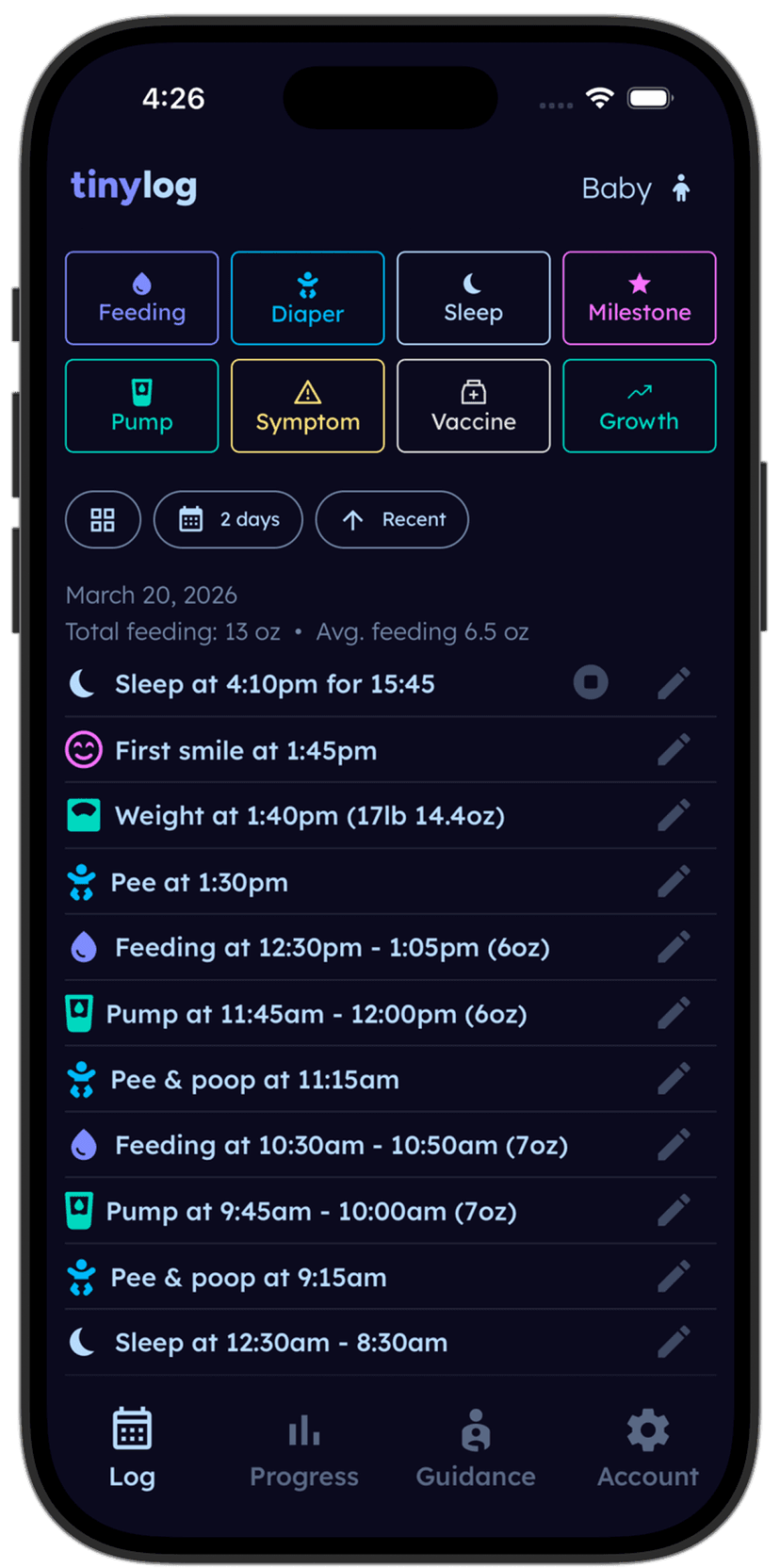
Tinylog daily activity tracking showing newborn care routines

Track your newborn's routines to build confidence in the early weeks.

Tinylog helps you log baths, feedings, diapers, and sleep so you can see patterns forming and feel more in control during the most overwhelming period of new parenthood.

Download on the App StoreGet It On Google Play

How to Give a Sponge Bath

Lay your baby on a padded, flat surface — if you are still getting set up, our newborn essentials checklist covers the supplies you will want on hand. Keep them in their diaper and undershirt. Dip a washcloth in warm water, wring it out, and start with the face — no soap. Clean the eyes from inner corner outward with a clean section of cloth for each eye. Wash the scalp, neck folds, behind ears, and hands. Then undress and wash the body, working from cleanest to dirtiest areas (diaper area last). Dry each area as you go to prevent heat loss. The whole process should take 5-10 minutes.

How to Give a Tub Bath

Fill the baby tub or sink with 2-3 inches of warm water (98-100 degrees F). Undress your baby and lower them in feet-first, supporting their head and neck with your arm. Keep one hand on the baby at all times. Use your free hand to wash with a wet washcloth, using a small amount of fragrance-free baby wash on the diaper area and skin folds. If your baby's skin looks dry or irritated after baths, see our guide on baby eczema for tips on protecting delicate skin. Rinse by pouring warm water gently with a cup. Lift the baby out onto a warm towel and dry promptly, paying attention to skin folds.

Tips That Apply Either Way

Prep everything before you start

Gather towels, washcloths, clean clothes, diaper, and any soap before you undress the baby. A wet, naked, screaming newborn is not the time to realize the towel is in the other room. Preparation makes the experience calmer for both of you.

Less soap is more

Newborn skin is delicate and does not need much soap. Use a small amount of fragrance-free baby wash on the diaper area and skin folds. Plain warm water is sufficient for the rest of the body. Over-washing strips the skin's natural oils and can cause dryness.

Never leave the baby unattended in water

This cannot be overstated. Drowning can happen in less than an inch of water in under 60 seconds. If the phone rings, someone knocks, or you forgot something — take the baby with you or wait. There are no exceptions to this rule.

Related Guides

Sources

  • American Academy of Pediatrics. (2023). Bathing Your Baby. HealthyChildren.org.
  • Bryanton, J., Walsh, D., Barrett, M., & Gaudet, D. (2004). Tub Bathing Versus Traditional Sponge Bathing for the Newborn. Journal of Obstetric, Gynecologic & Neonatal Nursing, 33(6), 704-712.
  • World Health Organization. (2014). Recommendations on Newborn Health. WHO Guidelines.
  • Blume-Peytavi, U., et al. (2016). Bathing and Cleansing in Newborns from Day 1 to First Year of Life. European Journal of Pediatrics, 175(3), 289-298.

This guide is for informational purposes only and is not a substitute for professional medical advice. Consult your pediatrician for guidance specific to your baby.

Get this comparison in your inbox.
We'll send you the bathing guide so you have it handy during those first weeks.
The first weeks are a blur. Tracking routines helps you stay grounded.
Download Tinylog to log daily care activities and build confidence in your routine.
Download on the App StoreGet It On Google Play