
GUIDE
Stokke Tripp Trapp vs. Peg Perego Siesta
Published on
Both are premium high chairs, but they serve different needs. The Stokke Tripp Trapp is a wooden, grow-with-baby chair that lasts from infancy through adulthood — no recline, no padding by default, but an unmatched lifespan. The Peg Perego Siesta is a fully padded, multi-recline seat that works beautifully from newborn naps through toddler meals but won't last past age three.
The Stokke Tripp Trapp and Peg Perego Siesta are two of the most well-regarded high chairs on the market, but they take fundamentally different approaches. The Tripp Trapp is a minimalist wooden chair designed to grow with your child for years — even decades. The Siesta is a feature-rich, padded seat with multiple recline positions and a compact fold. Choosing between them depends on what stage of parenthood you're in and what you value most.
Log meals, solids, and nursing sessions
Two Premium High Chairs With Very Different Philosophies
The Stokke Tripp Trapp and Peg Perego Siesta are both excellent high chairs, but they answer different questions. The Tripp Trapp asks: What if a high chair could grow with your child forever? The Siesta asks: What if a high chair did everything a baby needs right out of the box?
The Tripp Trapp is a solid beechwood chair that adjusts as your child grows — from baby (with accessories) through adulthood. It has no padding, no recline, and no tray by default. What it does have is a brilliant adjustable seat and footrest system that keeps your child ergonomically positioned at the family table for years. It's less a high chair and more a piece of furniture.
The Peg Perego Siesta is a fully featured, padded high chair that reclines nearly flat for newborns, adjusts to nine height positions, includes a dishwasher-safe tray and 5-point harness, and folds compactly when not in use. It handles the baby and toddler years beautifully — but your child will outgrow it around age three or four.
Which approach is right for your family depends on your priorities, your kitchen, and how you think about long-term value versus out-of-the-box convenience.
| Feature | Stokke Tripp Trapp | Peg Perego Siesta | What It Means |
|---|---|---|---|
| Manufacturer | Stokke (Norway) | Peg Perego (Italy) | Both are premium European baby gear brands with strong reputations for quality and design. |
| Chair type | Solid beechwood, no fold | Padded seat on metal/plastic frame, compact fold | Fundamentally different designs. The Tripp Trapp is furniture; the Siesta is baby gear. |
| Age range | Newborn (with Newborn Set) through adult (242 lbs) | Newborn through ~45 lbs (roughly age 3–4) | Tripp Trapp wins on longevity by a wide margin. It genuinely lasts a lifetime. |
| Recline positions | None (upright only; Newborn Set reclines for infants) | 5 recline positions, including nearly flat for newborns | Siesta wins. Multiple recline positions make it flexible for naps and feedings at every stage. |
| Height positions | Seat and footrest adjust to 14+ positions each | 9 height positions | Both adjust well. The Tripp Trapp's infinite adjustability keeps your child ergonomically positioned at any table height. |
| Footrest | Full-width adjustable wooden footrest (moves with growth) | Built-in footrest, not independently adjustable | Tripp Trapp wins. A proper, adjustable footrest supports posture and helps babies feel stable during meals. |
| Harness | 3-point harness (with Baby Set); 5-point available separately | 5-point harness included | Siesta wins out of the box. The Tripp Trapp's 5-point harness is an extra purchase (~$40). |
| Tray | Sold separately (~$80); designed to pull chair up to table without tray | Included, removable, dishwasher-safe | Siesta wins on value. The Tripp Trapp's philosophy is to eat at the table — but if you want a tray, you're paying extra. |
| Cleaning | Smooth wood — wipe with a damp cloth in seconds | Leatherette seat wipes down; food can collect in seams and crevices | Tripp Trapp wins. Nothing beats bare wood for ease of cleaning after a spaghetti explosion. |
| Foldability | Does not fold | Folds compactly, self-standing when folded | Siesta wins. If your kitchen is small, being able to fold and store the chair is a real advantage. |
| Weight of chair | ~15.4 lbs | ~23 lbs | Tripp Trapp is lighter, though neither chair is something you'd carry around frequently. |
| Aesthetic | Scandinavian minimalist; 14+ wood and paint colors | Modern with fabric/leatherette; multiple color options | Subjective, but the Tripp Trapp looks like furniture. The Siesta looks like a high chair. |
Longevity: Where the Tripp Trapp Stands Alone
The most striking difference between these chairs is how long they last.
The Stokke Tripp Trapp is rated for up to 242 pounds. That is not a typo. Stokke designed this chair to be used from infancy through adulthood. There are Tripp Trapps from the 1970s still in use today — parents buy one, their kids grow up in it, and then their grandkids use it. The wood is solid European beechwood, and the two-board seat and footrest system adjusts to fit anyone from a 6-month-old to a full-grown adult.
The Peg Perego Siesta is rated for up to 45 pounds, which most children reach between ages three and four. It does those first few years extremely well, but after that, you need a different chair.
In pure cost-per-year math: if you buy a Tripp Trapp at $300 and use it for 10 years, that's $30 per year. If you buy a Siesta at $330 and use it for 3 years, that's $110 per year. The Tripp Trapp's value story gets stronger every year you keep using it.
But here's the catch: the Tripp Trapp's longevity only matters if you actually use it that long. If you plan to have the chair for the baby and toddler years and then store it or pass it on, the Siesta gives you more features during those years for a similar price.
The Footrest Factor: Why It Matters More Than You Think
Pediatric occupational therapists consistently recommend that children eat with their feet supported. A proper footrest helps babies and toddlers feel stable, maintain good posture, and focus on eating rather than on keeping their balance. It's one of the most overlooked features in high chair design.
The Stokke Tripp Trapp has a full-width, depth-adjustable wooden footrest that moves independently of the seat plate. As your child grows, you slide the footrest down. The adjustment is precise — you can position it so your child's feet rest flat with their knees at a 90-degree angle, which is the ideal eating posture.
The Peg Perego Siesta has a built-in footrest, but it's not independently adjustable. It moves with the seat recline positions, and for younger babies, their feet may not reach it at all. It's adequate, but it's not the thoughtful, ergonomic solution that the Tripp Trapp offers.
If your child is a reluctant eater or tends to squirm during meals, a supported footrest can make a surprisingly big difference. This is one area where the Tripp Trapp's design philosophy genuinely shines.
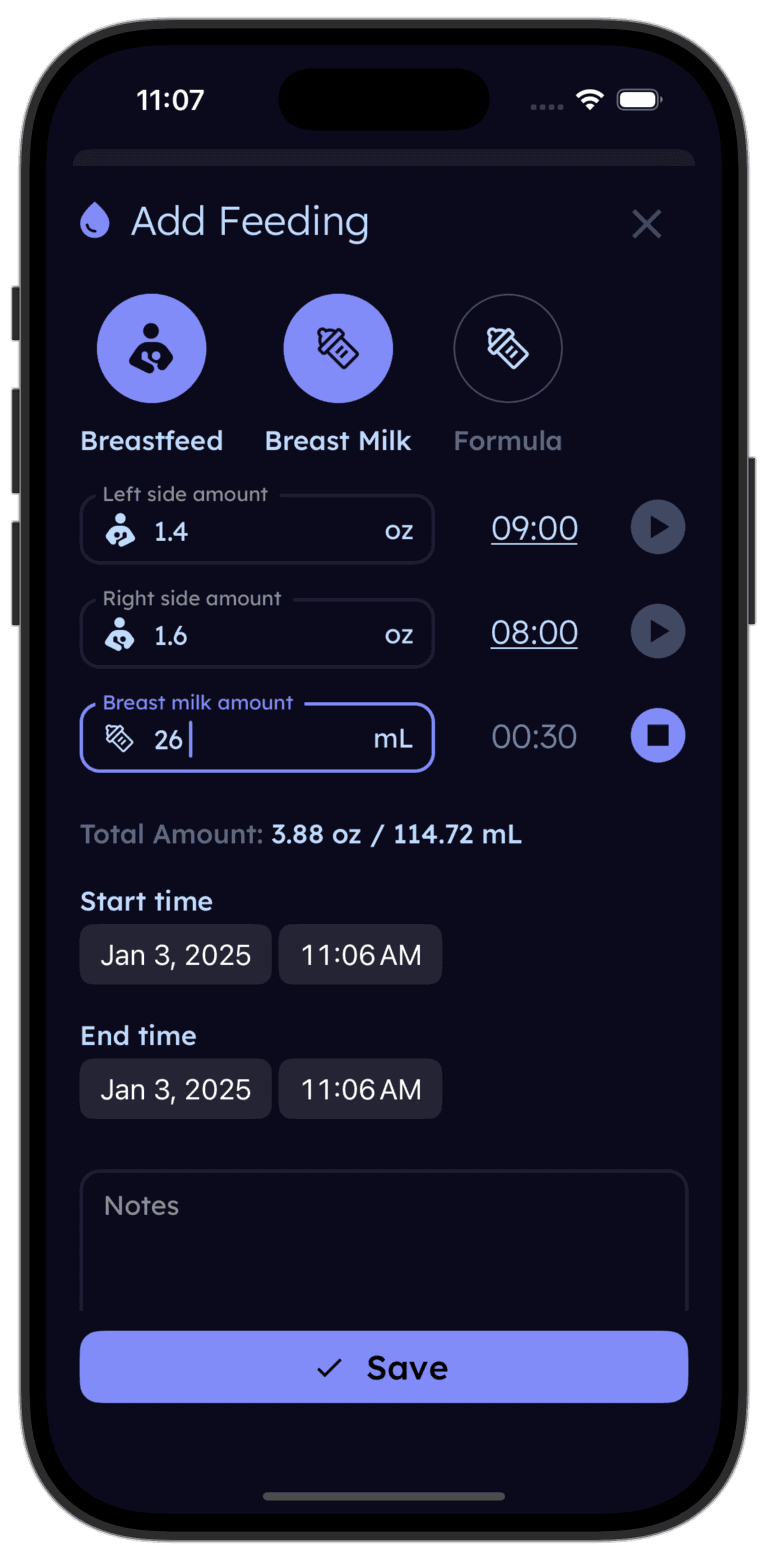
Tinylog tracks feedings so you can spot patterns.
Log breast, bottle, and solid feedings — see when baby eats most, how much they're taking, and when patterns shift. Bring the data to your next pediatrician visit.


Recline and Newborn Use: Where the Siesta Pulls Ahead
If you want your baby at the table from day one, the way each chair handles newborns is a key difference.
The Peg Perego Siesta reclines to five positions, including a nearly flat setting that's appropriate for newborns. You can park baby next to the dinner table in the reclined position while the rest of the family eats. No extra purchase required — the harness, padding, and recline are all built in.
The Stokke Tripp Trapp on its own is an upright chair with no recline. To use it with a newborn, you need the Tripp Trapp Newborn Set (~$100), which creates a fabric bouncer seat that attaches to the chair frame. It works well, but it's an additional purchase and another thing to set up and eventually remove.
For babies who can sit but aren't yet steady (roughly 6–36 months), the Baby Set (~$80) adds a backrest and front guard rail. This is practically a required accessory for the Tripp Trapp — very few parents skip it.
The bottom line: the Siesta is ready for a newborn the moment you unbox it. The Tripp Trapp needs $100–$180 in accessories to reach the same starting point.
Cleaning: Spaghetti Sauce Doesn't Care About Your Design Choices
Babies are messy eaters. That's not a phase — it's the entire experience for the first couple of years. How easy a high chair is to clean matters more than almost any other feature.
The Stokke Tripp Trapp in its base form is a dream to clean. Smooth, sealed wood. No fabric, no seams, no crevices. Wipe it with a damp cloth and you're done in 30 seconds. Even dried-on sweet potato comes off easily. If you add a cushion, that's a separate thing to wash — but the chair itself is nearly maintenance-free.
The Peg Perego Siesta has a leatherette seat cover that wipes down reasonably well. For everyday messes, it's fine. But food can work its way into the seams around the harness slots, the recline mechanism, and the edges of the seat padding. Deep cleaning takes more effort, and over time, those crevices can get... interesting.
Both chairs have removable trays (the Tripp Trapp's tray is sold separately). The Siesta's tray is dishwasher-safe, which is a nice touch.
If cleaning ease is high on your list, the Tripp Trapp's bare-wood simplicity is hard to beat.
Space and Storage: Small Kitchens, Big Decisions
If you have a spacious kitchen with a dedicated spot for a high chair, skip this section. But if you're in an apartment or a smaller home where every square foot counts, this matters.
The Peg Perego Siesta folds compactly and stands on its own when folded. You can tuck it against a wall, slide it into a closet, or stash it behind a door between meals. It also has wheels on the base, so you can roll it from room to room without lifting.
The Stokke Tripp Trapp does not fold. It's a solid wooden chair that lives wherever you put it. It does have a relatively slim profile — it's narrower than many high chairs — and it slides under most dining tables. But you can't fold it up and put it away.
For families who want the chair out of the way when it's not meal time, the Siesta's fold is a genuine advantage.
| Product | Typical Price | Notes |
|---|---|---|
| Stokke Tripp Trapp (chair only) | $275–$350 | Base chair with no accessories. You'll likely add the Baby Set ($80) and possibly the Newborn Set ($100), cushion ($45), and tray ($80). |
| Stokke Tripp Trapp (fully loaded with Baby Set + tray + cushion) | $450–$550 | The realistic cost if you want the full mealtime setup for a baby under 3 years old. |
| Peg Perego Siesta (complete) | $300–$350 | Includes tray, 5-point harness, and all recline features. No required extras. |
Price: The Math Is More Complicated Than It Looks
At first glance, the prices look similar: the Tripp Trapp starts around $275–$350, and the Siesta runs about $300–$350. But the real cost of the Tripp Trapp is higher than the sticker price suggests, because the base chair is intentionally minimal.
Most families buying a Tripp Trapp for a baby will also buy the Baby Set ($80) — it's nearly a requirement for children under three. Many will also add the tray ($80) and a cushion ($45). The Newborn Set ($100) is needed if you want to start from birth. Add it all up and a fully equipped Tripp Trapp can run $450–$550.
The Siesta, by contrast, includes everything in the box: tray, harness, padding, and all recline positions. What you see is what you pay.
That said, the Tripp Trapp's accessories hold their resale value extremely well, and the chair itself lasts so long that the cost-per-year math favors Stokke for families who keep using it. If you plan to have multiple children, one Tripp Trapp can serve them all in sequence — and still be a usable adult chair after that.
Choose the Stokke Tripp Trapp If
- You want a chair your child will use for years — not months — and you value long-term cost per use
- A proper, adjustable footrest matters to you (occupational therapists recommend supported feet during meals)
- You plan to pull the chair up to the family table rather than using a tray
- Easy cleaning is a priority — you want to wipe down bare wood and be done
- The chair's look matters — the Tripp Trapp is genuinely beautiful furniture that fits a grown-up kitchen
Choose the Peg Perego Siesta If
- You want a high chair that works from day one with no extra purchases — tray, harness, and recline all included
- Multiple recline positions matter because you want baby resting near the table during family meals before they start solids
- Your kitchen is small and you need a chair that folds flat and stores between meals
- You'd rather pay once and get everything than buy a base chair plus accessories piecemeal
- You prefer padded comfort for your baby and don't want to buy a separate cushion
- You plan to move the chair between rooms or homes frequently (the Siesta's wheels and fold make this easier)
Where to Buy
The Stokke Tripp Trapp (~$275–$350 for the base chair) is one of the most thoughtfully designed pieces of children's furniture ever made. Its adjustable footrest, grow-with-baby design, and easy-clean wood surface make it a favorite of pediatric occupational therapists and parents who value long-term quality. You can find it at Stokke's website, Amazon, Pottery Barn Kids, and Nordstrom.
The Peg Perego Siesta (~$300–$350) is the all-in-one pick — five recline positions, a dishwasher-safe tray, a 5-point harness, and a compact fold, all included from day one. It handles newborn through toddler beautifully and stores easily in small spaces. Check Amazon, buybuy BABY, and the Peg Perego website for current pricing.
No matter which chair you choose, remember that mealtime positioning matters. Feet supported, hips at 90 degrees, and baby pulled close to the table — that setup helps with feeding success more than any single product feature.
Tinylog earns a small commission on purchases made through these links, at no cost to you.
Want to save a few bucks? promo.new is worth a quick look. It won't always have your product, but when it does, the savings are real.
The Bottom Line
The Stokke Tripp Trapp and Peg Perego Siesta are both premium high chairs that will serve your family well. They just serve differently.
Stokke Tripp Trapp is the long game — a beautiful wooden chair that adjusts from babyhood through adulthood, cleans in seconds, and has the best footrest in the business. But it needs accessories to reach its full potential, and it doesn't fold or recline.
Peg Perego Siesta is the everything-included option — recline for newborns, tray for toddlers, fold for small kitchens, padding for comfort. It handles the first three to four years with zero extra purchases, then you move on.
For families who value longevity, simplicity, and pulling baby up to the family table, the Tripp Trapp is worth the investment. For families who want a fully featured high chair that's ready from birth with no accessories to buy, the Siesta delivers beautifully.
If you're starting solids and want to track what your baby eats, how much, and when — Tinylog makes it simple to log meals and spot patterns over time.
Related Guides
- Baby First Foods — When and how to start solids, including the best first foods to try
- BLW vs. Purees — Baby-led weaning or spoon-feeding? Here's what the research says
- Baby Feeding Chart — How much and how often to feed your baby at every age
- Baby Gagging on Solids — Why it happens and when to worry
Sources
- Stokke. "Tripp Trapp High Chair — Product Specifications." stokke.com, 2026.
- Peg Perego. "Siesta High Chair — Product Specifications." pegperego.com, 2026.
- BabyGearLab. "Stokke Tripp Trapp Review — Tested & Rated." babygearlab.com, 2025.
- BabyGearLab. "Peg Perego Siesta Review — Tested & Rated." babygearlab.com, 2025.
- Wirecutter. "The Best High Chairs." nytimes.com/wirecutter, 2025.
- Lucie's List. "Stokke Tripp Trapp High Chair Review." lucieslist.com, 2025.
- Lucie's List. "Peg Perego Siesta High Chair Review." lucieslist.com, 2025.
- What to Expect. "Best High Chairs for Babies and Toddlers." whattoexpect.com, 2026.
- American Occupational Therapy Association. "Feeding and Swallowing: Positioning Guidelines." aota.org, 2024.
- Fable & Fox OT. "Why Foot Support Matters During Mealtimes." fableandfoxot.com, 2024.
This guide is for informational purposes only and is not a substitute for professional feeding or positioning advice. Product specifications and prices can change — always verify current details on the manufacturer's website before purchasing. If your child is having difficulty with mealtimes or feeding, consult your pediatrician or a pediatric occupational therapist.
Frequently asked questions
- Can you use the Stokke Tripp Trapp from birth?
- Not on its own. The base Tripp Trapp chair is designed for children who can sit up unassisted (roughly 6 months). To use it from birth, you need the separate Tripp Trapp Newborn Set (~$100), which creates a reclined bouncer seat that attaches to the chair frame. There's also a Baby Set (~$80) for babies who can sit but aren't yet steady enough for the chair alone.
- Can you use the Peg Perego Siesta from birth?
- Yes. The Siesta reclines nearly flat and includes a 5-point harness, so it works as a resting spot for newborns right out of the box — no extra accessories needed. Many parents use the full recline position for naps or as a place to set baby down during family meals.
- How long does each high chair last?
- The Stokke Tripp Trapp is rated for up to 242 lbs and is genuinely designed to be used through childhood, teens, and even adulthood. Stokke markets it as a lifelong chair. The Peg Perego Siesta is rated for children up to 45 lbs, which most kids reach between ages three and four. After that, you'll need a different seating solution.
- Which high chair is easier to clean?
- The Stokke Tripp Trapp (without accessories) is extremely easy to clean — it's smooth wood with no fabric. Wipe it down and you're done. The Peg Perego Siesta has a leatherette seat cover that wipes clean fairly well, but food can get trapped in seams and crevices around the recline mechanism. Neither is terrible, but the Tripp Trapp wins on pure simplicity.
- Does the Peg Perego Siesta fold flat?
- Yes. The Siesta folds compactly and stands on its own when folded, which is a genuine advantage if you have a small kitchen or want to store the chair between meals. The Stokke Tripp Trapp does not fold at all — it's a solid wooden chair that stays where you put it.
- Are the Stokke Tripp Trapp accessories worth the extra cost?
- It depends on when you start using the chair. The Newborn Set (~$100) is worth it if you want to include baby at the table from day one. The Baby Set (~$80) is almost a must-have for babies 6–36 months — it adds a backrest and front rail that keep a wobbly sitter secure. The cushion (~$45) adds comfort but isn't strictly necessary. All together, accessories can add $150–$225 to the base chair price.