GUIDE

Teething Remedies That Work

The evidence-supported options are simple: cold, pressure, and appropriate pain relief when needed. That is it.

The teething remedy market is full of products that range from useless to dangerous. Here is what actually works, what to avoid entirely, and why the simple remedies are the best ones.

What the Evidence Supports

The evidence-based approach to teething relief is almost disappointingly simple. Cold, pressure, and appropriate pain relief. That is the entire list of what has been shown to help.

Cold reduces inflammation and provides mild local numbing. This is why chilled teething rings, cold washcloths, and refrigerated spoons provide relief — they bring down the inflammation that makes gums sore.

Pressure activates mechanoreceptors in the gum tissue that can modulate pain signals. This is why babies instinctively want to bite and chew during teething — counter-pressure on the eruption site literally helps with the pain. Teething toys, your clean finger, and firm foods all leverage this mechanism.

Systemic pain relief (acetaminophen and ibuprofen) addresses pain through the same pathways that manage any other pain. They are safe, effective, well-studied in infants, and endorsed by the AAP for teething pain. Ibuprofen has the added benefit of anti-inflammatory action, which may be particularly helpful for the swelling component.

These recommendations are unsexy. You will not find them promoted by influencers or featured in teething product ads. But they are what works, and they are what is safe. The flashier alternatives — gels, tablets, necklaces, essential oils — range from ineffective to genuinely dangerous.


Safe, Evidence-Based Teething Remedies
Chilled teething rings
How to UseRefrigerate (do not freeze) a solid teething ring for 30 minutes. Offer to baby to chew on.
Why It WorksCold reduces inflammation and provides mild numbing. Firm surface provides counter-pressure.
SafetySafe. Avoid liquid-filled rings that could leak. Do not freeze — too-cold items can damage gum tissue.
EvidenceRecommended by AAP and AAPD
Cold washcloth
How to UseWet a clean washcloth, wring it out, twist it, and refrigerate for 30 minutes. Let baby gnaw on it.
Why It WorksTexture and cold provide both pressure relief and temperature-based comfort.
SafetySafe. Replace when it gets too warm. Supervise use.
EvidenceWidely recommended by pediatric dentists
Clean finger pressure
How to UseWash your hands thoroughly. Rub or press firmly on the sore area of the gum with your finger.
Why It WorksDirect counter-pressure on the eruption site can provide immediate relief.
SafetySafe. Trim your fingernails first.
EvidenceRecommended by AAP
Chilled spoon
How to UsePlace a metal spoon in the refrigerator. Press the rounded back against the sore gum.
Why It WorksMetal conducts cold efficiently. The smooth, curved surface provides firm pressure.
SafetySafe. Do not freeze the spoon.
EvidenceTraditional remedy supported by pediatric dentists
Acetaminophen (Tylenol)
How to UseGive appropriate dose by weight. Takes effect in 30-60 minutes. Lasts 4-6 hours.
Why It WorksSystemic pain relief addresses pain at the source. Effective for moderate to significant discomfort.
SafetySafe when dosed correctly by weight. Available for all ages per pediatrician guidance.
EvidenceAAP-endorsed for teething pain
Ibuprofen (Motrin/Advil)
How to UseGive appropriate dose by weight. Takes effect in 30-60 minutes. Lasts 6-8 hours.
Why It WorksPain relief plus anti-inflammatory effect — may be especially helpful for the swelling component of teething.
SafetySafe for babies 6 months and older when dosed correctly by weight.
EvidenceAAP-endorsed for teething pain in 6+ months
These are the remedies recommended by the AAP, AAPD, and pediatric dentists. They are simple, safe, and effective.

Dangerous Teething Products: What to Avoid

The teething product market includes several products that have been the subject of FDA warnings, AAP advisories, or documented safety concerns. This is not about being overly cautious — these products have caused real harm to real babies.

Benzocaine gels (sold as Orajel Baby, Anbesol, and generic equivalents) were a staple recommendation for decades. In 2018, the FDA issued a safety communication warning against their use in children under 2, citing the risk of methemoglobinemia — a condition where the blood loses its ability to carry oxygen effectively. The FDA asked manufacturers to stop selling benzocaine products intended for teething in children under 2. Some are still available on store shelves; do not use them.

Homeopathic teething tablets (most notably Hyland's Teething Tablets) were found by the FDA to contain inconsistent levels of belladonna, a toxic alkaloid derived from the deadly nightshade plant. The FDA received hundreds of adverse event reports, including seizures, difficulty breathing, and lethargy. Hyland's eventually voluntarily recalled and discontinued the products after repeated FDA warnings. Other homeopathic teething products remain on the market and carry similar concerns.

Amber teething necklaces are marketed with the claim that body heat releases succinic acid from the amber, which supposedly has anti-inflammatory properties. There is no scientific evidence for any part of this claim. Meanwhile, the necklaces pose real strangulation and choking hazards. The AAP and CPSC (Consumer Product Safety Commission) both advise against them.

Dangerous Teething Products: FDA Warnings and Risks
Benzocaine gels (Orajel Baby, Anbesol, etc.)
RiskMethemoglobinemia — a potentially fatal condition where the blood cannot carry oxygen effectively
Regulatory StatusFDA safety communication (2018) warned against use in children under 2. FDA asked manufacturers to stop selling benzocaine teething products for this age group.
RecommendationDo NOT use. Choose systemic pain relief (acetaminophen/ibuprofen) instead.
Homeopathic teething tablets (Hyland's, etc.)
RiskInconsistent levels of belladonna (a toxic alkaloid). FDA received reports of adverse events including seizures, difficulty breathing, lethargy, and muscle weakness.
Regulatory StatusFDA warnings in 2010, 2016, and 2017. Hyland's voluntarily recalled and discontinued the product.
RecommendationDo NOT use. No evidence of efficacy; documented safety concerns.
Amber teething necklaces and bracelets
RiskStrangulation hazard (necklace around neck) and choking hazard (beads can break off). No evidence of efficacy.
Regulatory StatusAAP and CPSC advise against them. Multiple reports of strangulation incidents.
RecommendationDo NOT use. No scientific basis for the claimed mechanism (succinic acid release through skin).
Lidocaine (viscous lidocaine)
RiskRisk of seizures, brain injury, and cardiac problems if accidentally overdosed. Infants are especially vulnerable.
Regulatory StatusFDA warning against use in infants for teething pain.
RecommendationDo NOT use for teething. This is a prescription product sometimes used for other oral conditions under medical supervision.
Whiskey or alcohol on gums
RiskEven tiny amounts of alcohol can be harmful to infants. Affects the developing brain.
Regulatory StatusNo medical organization recommends this. It is an outdated folk remedy.
RecommendationDo NOT use. There is no safe amount of alcohol for an infant.
These warnings are based on documented adverse events and regulatory actions, not opinion. The safety risks are real and the evidence of efficacy for these products is absent.

What About Natural Remedies?

"Natural" is not a synonym for "safe," and this is especially true in the teething remedy space. Essential oils, herbal preparations, and homeopathic products are often marketed as natural alternatives to conventional medicine, but they carry their own risks.

Clove oil contains eugenol, which can cause chemical burns on gum tissue and is toxic if swallowed in significant amounts. It should not be used on infant gums.

Essential oils (lavender, chamomile, etc.) have not been studied for teething in infants and can cause allergic reactions, skin irritation, or toxicity if ingested. They should not be applied to gums or skin in infants.

Herbal teething preparations are not regulated by the FDA for safety or efficacy, and their contents may vary between batches. Some contain undeclared ingredients.

The safest "natural" remedies for teething are the ones already listed: cold, pressure, and comfort. A cold washcloth is natural. Your finger on the gum is natural. Cuddling your baby through the discomfort is natural. These work, and they will not harm your baby.

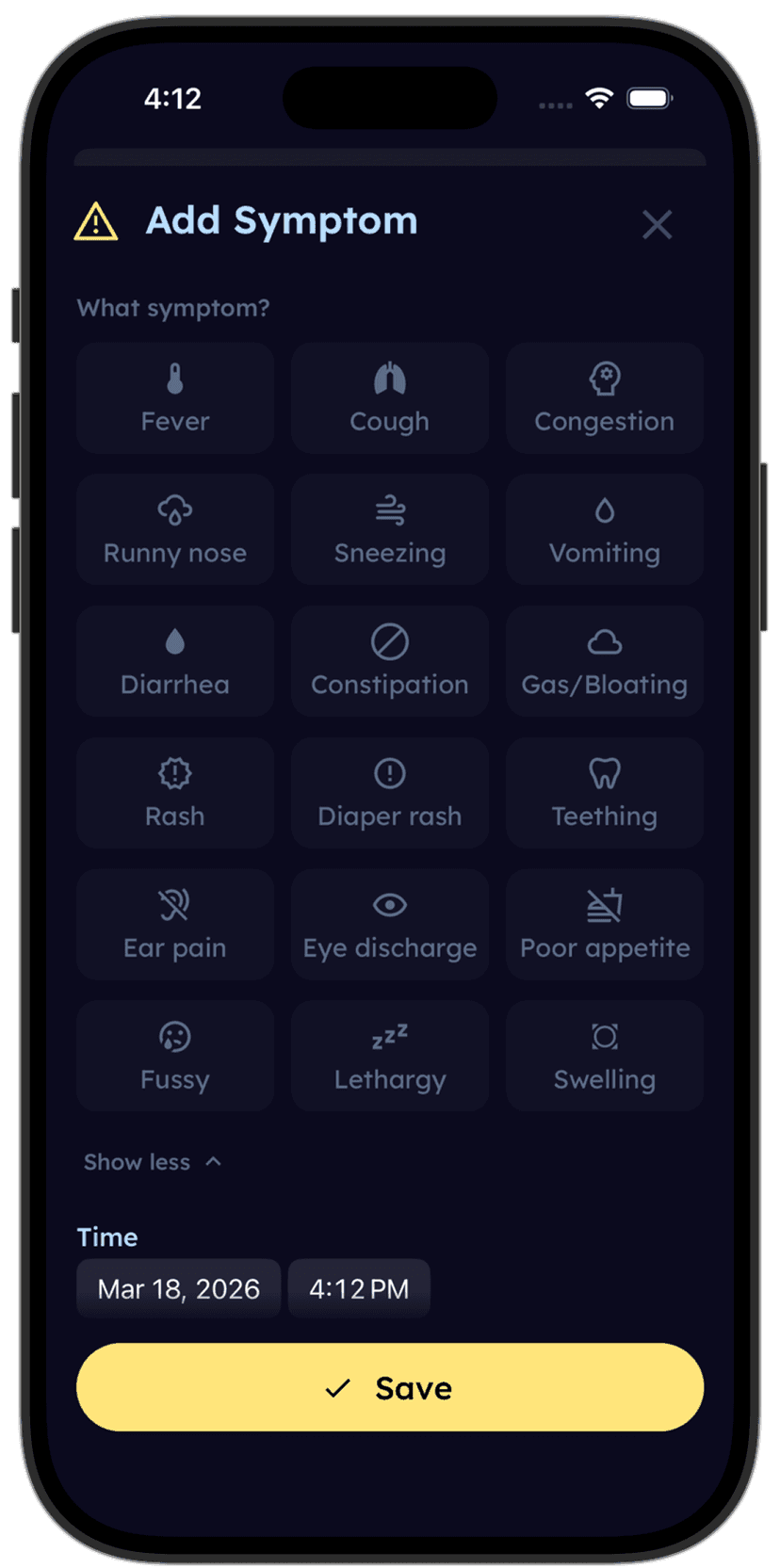
tinylog tracking screen showing symptom and milestone logs

Track what helps — every baby responds differently.

Some babies love cold washcloths. Others only calm down with a dose of ibuprofen. Logging what works in tinylog helps you build a personalized teething playbook — so when the next tooth arrives, you already know your baby's preferences.

Download on the App StoreGet It On Google Play

What Your Pediatrician Wants You to Know

The best teething remedies are the simplest. Cold items, pressure, and appropriate doses of acetaminophen or ibuprofen. That is the evidence-based toolkit. Everything else is either unproven or dangerous.

Do not use benzocaine products. The FDA has spoken clearly on this. Methemoglobinemia is rare but can be fatal. The risk is not worth it when safe alternatives exist.

Amber necklaces are a strangulation hazard. There is no anti-inflammatory mechanism, and the danger is real. Take them off and keep them off.

It is okay to medicate. Pain relief is appropriate for legitimate pain. You are not overmedication your baby by managing teething discomfort with acetaminophen or ibuprofen at recommended doses. You are being a good parent.

If you are unsure about a product, ask. Before using any teething product — especially one marketed as "natural" or "homeopathic" — call your pediatrician's office and ask. A 30-second phone call can prevent a serious problem.

Practical Tips

The best remedies are the simplest ones

Cold and pressure — that is the foundation of effective teething relief. A chilled teething ring, a cold washcloth, or your clean finger pressed on the gum addresses the actual problem (inflammation and pressure from the erupting tooth) with zero risk. The teething product industry profits from making this seem more complicated than it is.

Do not feel guilty about using medication

Some parents feel that giving acetaminophen or ibuprofen for teething is 'overmedication.' It is not. These are safe, effective, well-studied medications being used at appropriate doses for a legitimate cause of pain. Your pediatrician endorses their use for teething. You are not medicating needlessly — you are managing pain. That is responsible parenting.

Rotate remedies

What works during the day (teething toys, cold foods) may not be sufficient at night (when distraction is absent and discomfort feels worse). Many parents find that non-medication remedies work during the day, and a dose of acetaminophen or ibuprofen at bedtime addresses the nighttime pain. Use the full toolkit.

Ignore the marketing

The teething product market is worth millions of dollars and is largely unregulated. Amber necklaces, homeopathic tablets, essential oils, and countless other products are marketed to desperate parents with no evidence of efficacy and, in some cases, with documented safety risks. Stick with what your pediatrician recommends. If it sounds too good to be true, it is.

Related Guides

Sources

  • U.S. Food and Drug Administration (FDA). (2018). FDA warns about the use of benzocaine teething products. Safety Communication.
  • U.S. Food and Drug Administration (FDA). (2016, 2017). Safety alerts regarding homeopathic teething products.
  • American Academy of Pediatrics (AAP). Teething pain. HealthyChildren.org.
  • American Academy of Pediatric Dentistry (AAPD). Guideline on infant oral health care.
  • Massignan, C., et al. (2016). Signs and symptoms of primary tooth eruption: A meta-analysis. Pediatrics, 137(3), e20153501.
  • Consumer Product Safety Commission (CPSC). Warnings on jewelry and bead hazards for children.

Medical Disclaimer

This guide is for informational purposes only and is not a substitute for professional medical advice. If your baby has a fever of 100.4°F (38°C) or higher, is refusing to eat, or seems unusually unwell, contact your pediatrician — these symptoms are not typical of teething alone.

Get this guide in your inbox.
We'll email you this evidence-based remedy guide so you have safe options ready when teething strikes.
Track what works for your baby — every baby is different.
Download tinylog free — log milestones and symptoms in seconds.
Download on the App StoreGet It On Google Play