GUIDE

Natural Teething Remedies

'Natural' does not mean safe or effective. Some natural remedies work (cold, pressure). Others are dangerous (essential oils on gums, belladonna). Here is the complete breakdown.

If you want to minimize medication for teething, there are genuinely effective non-medication options. But the 'natural remedy' space is also full of products that are unproven, untested, or actively dangerous.

A Framework for Evaluating Natural Remedies

The desire to use natural remedies for your baby's teething is understandable. You want to minimize medication, avoid chemicals, and use gentle approaches. There is nothing wrong with this instinct — as long as it is paired with critical evaluation of what is actually safe and effective.

The problem is that the "natural teething remedy" space is largely unregulated. Products can be marketed as natural, herbal, or homeopathic without proving they are safe or effective. Some are genuinely harmless (coconut oil on gums). Some are actively dangerous (clove oil, belladonna tablets, amber necklaces). And the labeling rarely makes the distinction clear.

A useful framework: Does this remedy work through a mechanism that makes sense (cold reduces inflammation, pressure modulates pain)? Is there evidence it is safe for infants? Has any regulatory body issued warnings about it? If the mechanism is implausible, the safety data is absent, or there are regulatory warnings, skip it — regardless of how "natural" the marketing says it is.


Natural Teething Remedies: Three Categories
Works — evidence supported
ExamplesCold items (chilled teething rings, cold washcloths, refrigerated spoon), counter-pressure (teething toys, clean finger massage), comfort measures (cuddling, distraction, extra patience)
VerdictThese are the foundation of teething relief and are recommended by the AAP and AAPD.
Probably harmless but unproven
ExamplesCoconut oil on gums (likely a placebo — the gum massage is what helps), cooled chamomile tea in small amounts for 6+ months (calming effect is plausible but not proven for teething), frozen fruit in mesh feeders (works via cold mechanism)
VerdictLow risk, low evidence. Any benefit is likely from the cold or pressure, not the specific ingredient.
Avoid — unsafe or unproven with risks
ExamplesEssential oils on gums (clove oil can burn, others can irritate), homeopathic tablets with belladonna (FDA warning), amber necklaces (no evidence, strangulation/choking risk), whiskey on gums (no safe amount of alcohol for infants)
VerdictDo NOT use. Documented risks with no proven benefits.
The truly effective natural remedies are the simplest ones. Complex products with botanical ingredients are generally either unproven or unsafe for infants.

Essential Oils: The Risks Parents Do Not Hear About

Essential oils are one of the most commonly recommended "natural" teething remedies on social media, and they are one of the most problematic. The concentration of active compounds in essential oils is much higher than in the plants they come from, and infants are particularly vulnerable to their effects.

Clove oil deserves special mention because it contains eugenol, which is used in adult dentistry as a topical anesthetic and antiseptic. Some parents reason that if dentists use it, it must be safe for babies. But dental eugenol is used in specific concentrations, applied by professionals, in adult patients. Undiluted clove oil applied to infant gums can cause chemical burns and tissue damage. If swallowed in any significant amount, it can cause liver damage and other toxicity.

Peppermint oil is another frequently recommended option that is inappropriate for infants. The menthol in peppermint oil can cause reflexive apnea (breathing cessation) in young children — a potentially serious reaction. The AAP advises against menthol-containing products for young children.

Essential Oils and Infant Safety
Clove oil (eugenol)
Risk for InfantsCan cause chemical burns on delicate gum tissue. Toxic if swallowed in significant amounts. Not appropriate for infant use.
Safe UseNone for infants. Adult dental use only under professional supervision.
Peppermint oil
Risk for InfantsCan cause breathing problems in young children. Contains menthol, which can trigger reflexive apnea in infants.
Safe UseNot recommended for children under 3 years.
Lavender oil
Risk for InfantsLow toxicity but can cause allergic reactions. No evidence of teething pain relief.
Safe UseDiffusing in a well-ventilated room is generally considered safe. Do not apply to infant skin undiluted.
Tea tree oil
Risk for InfantsToxic if ingested. Can cause skin irritation and hormonal disruption with repeated topical use.
Safe UseDo not use on or near infant's mouth.
No essential oil has been shown to be safe and effective for teething pain in infants. The risks outweigh any theoretical benefit.

Safe Non-Medication Teething Approaches

  • Chilled teething ring — refrigerate for 30 minutes, offer to baby
  • Cold wet washcloth — twist, chill, let baby gnaw
  • Clean finger gum massage — firm, gentle pressure on the sore area
  • Refrigerated spoon — press the back against the swollen gum
  • Frozen breast milk in a mesh feeder — cold relief plus nutrition (6+ months)
  • Cold fruit or vegetables in a mesh feeder — dual purpose relief (6+ months)
  • Extra cuddling and skin-to-skin contact — comfort and distraction
  • Distraction with play and activities — redirects attention from discomfort
  • Warm bath — overall comfort and relaxation (does not directly treat gum pain)

All of these approaches are safe, free or inexpensive, and recommended by pediatric organizations. They work through well-understood mechanisms.

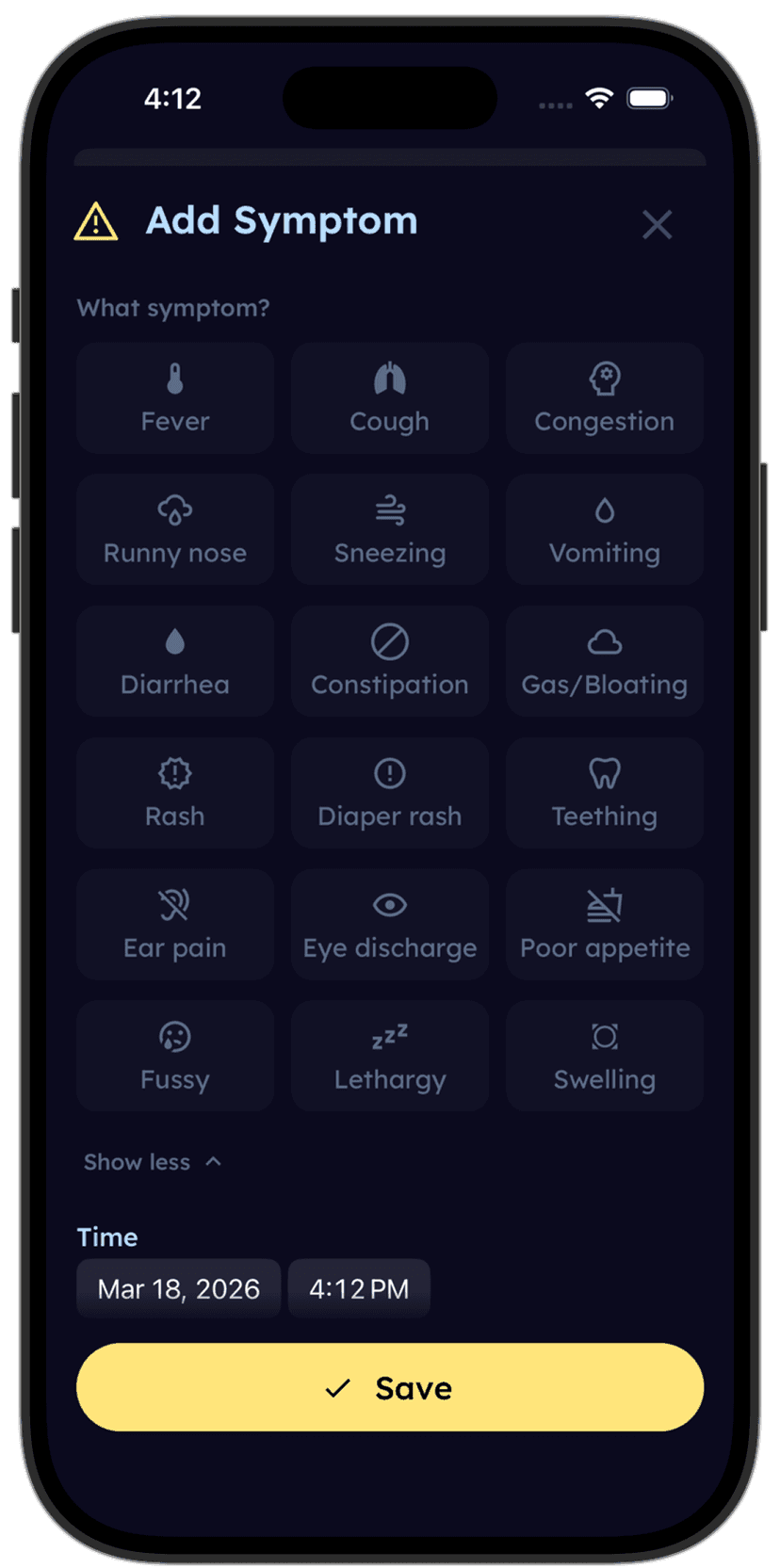
tinylog tracking screen showing symptom and milestone logs

Track what works — skip what does not next time.

Every baby responds differently. What soothes one teething baby may not help another. Logging what works and what does not in tinylog gives you a personalized teething playbook that gets better with every tooth.

Download on the App StoreGet It On Google Play

What Your Pediatrician Wants You to Know

Natural does not mean safe for babies. Many natural substances that are safe for adults can be harmful to infants. Always check with your pediatrician before applying any substance to your baby's gums.

If it is not food-grade, it should not go in baby's mouth. This simple rule eliminates most problematic natural remedies. Essential oils are not food-grade. Herbal tinctures are not designed for infant ingestion. If you would not eat it, do not put it on your baby's gums.

The homeopathic teething product recalls were serious. The FDA found inconsistent levels of belladonna — a toxic substance — in products marketed as gentle and natural. This is not theoretical risk. Adverse events were reported. Do not use homeopathic teething products.

Medication is a tool, not a concession. Acetaminophen and ibuprofen are among the most well-studied medications in pediatric medicine. Using them appropriately for teething pain is safe and responsible.

Practical Tips

'Natural' is a marketing term, not a safety guarantee

Belladonna is natural. Arsenic is natural. Hemlock is natural. The word 'natural' on a product label tells you nothing about its safety, especially for infants. Evaluate every product based on its specific ingredients, its evidence of safety in babies, and whether it has any documented regulatory concerns. Skip products that rely on 'natural' as their primary selling point without providing specific safety data.

The best natural remedies are the simplest

Cold and pressure are genuinely natural and genuinely effective. A cold washcloth. Your clean finger on the gum. A chilled teething ring. These work through well-understood mechanisms (reducing inflammation, providing counter-pressure) and carry zero risk. The irony is that the products marketed as 'natural remedies' are often less effective and less safe than these basic approaches.

Medication is not the enemy

If you prefer non-medication approaches, that is completely valid — cold and pressure work well for many babies. But if your baby is genuinely suffering and non-medication remedies are not enough, acetaminophen and ibuprofen are safe, effective, and well-studied. Using appropriate pain relief is not a failure of natural parenting — it is responsive parenting.

Be skeptical of influencer recommendations

Social media is full of parents recommending 'natural' teething products. Many of these recommendations are well-intentioned but uninformed, and some are paid partnerships with product manufacturers. An influencer testimonial is not evidence. Stick with what your pediatrician and the AAP recommend.

Related Guides

Sources

  • American Academy of Pediatrics (AAP). Teething pain. HealthyChildren.org.
  • U.S. Food and Drug Administration (FDA). (2016, 2017). Safety alerts regarding homeopathic teething products.
  • Tisserand, R., & Young, R. (2014). Essential oil safety: A guide for health care professionals. Churchill Livingstone Elsevier.
  • American Academy of Pediatric Dentistry (AAPD). Guideline on infant oral health care.
  • National Capital Poison Center. Essential oil poisoning in children.

Medical Disclaimer

This guide is for informational purposes only and is not a substitute for professional medical advice. If your baby has a fever of 100.4°F (38°C) or higher, is refusing to eat, or seems unusually unwell, contact your pediatrician — these symptoms are not typical of teething alone.

Get this guide in your inbox.
We'll email you this guide so you know which natural remedies are safe and which to skip.
Track what works for your baby — every baby is different.
Download tinylog free — log symptoms and milestones in seconds.
Download on the App StoreGet It On Google Play