GUIDE

Teething vs. Sleep Regression

Teething lasts days and responds to pain relief. Sleep regressions last weeks and are driven by brain development.

They overlap constantly, and sometimes both happen at once. Here is how to tell the difference — because the management is completely different.

Why This Distinction Matters

Teething and sleep regressions are the two most common explanations parents reach for when their baby's sleep falls apart. Both are real, both disrupt sleep, and they overlap in timing with frustrating frequency. But they are fundamentally different problems with different causes and different solutions.

If sleep disruption is caused by teething, pain management (cold items, medication) will help, and the disruption will be brief — a few days at most. If it is caused by a sleep regression, pain management will not make a difference, and the disruption will last weeks before resolving on its own as the developmental change settles.

Getting the diagnosis wrong leads to frustration. A parent who thinks their baby is teething for three straight weeks may not realize they are in a sleep regression that needs consistency, not medication. A parent who assumes sleep regression may miss genuine teething pain that could be easily managed with a dose of ibuprofen at bedtime.

Teething vs. Sleep Regression: Complete Comparison
Root cause
TeethingPhysical pain — tooth pushing through gum tissue
Sleep RegressionBrain development — new neural connections, emerging skills
Duration
Teething2-4 days per tooth (peaks around eruption)
Sleep Regression2-6 weeks
Visible physical signs
TeethingSwollen gums, drooling, visible tooth bump
Sleep RegressionNo physical signs — may see new motor or cognitive skills emerging
Response to pain relief
TeethingUsually improves with acetaminophen or ibuprofen
Sleep RegressionPain relief does not help (there is no pain to relieve)
Daytime symptoms
TeethingIncreased drooling, chewing, gum rubbing, mild fussiness
Sleep RegressionNew skills (rolling, sitting, pulling up), increased awareness, possible separation anxiety
Night waking pattern
TeethingMay wake once or twice, often consolable with pain relief and brief comfort
Sleep RegressionMultiple wakings, difficulty resettling, may resist going back to the crib
Nap impact
TeethingMay affect 1-2 naps around eruption
Sleep RegressionConsistent nap refusal or shortening over weeks
When it happens
TeethingAnytime between 4 and 33 months as teeth arrive
Sleep RegressionPredictable developmental windows (4, 6, 8-10, 12, 18, 24 months)
Solution
TeethingPain management + maintaining routine
Sleep RegressionPatience + consistency with sleep habits + time
The two most reliable differentiators: duration (days vs. weeks) and response to pain relief (helps vs. does not help).

When Both Happen at Once

Life is not kind enough to space out teething and sleep regressions. They overlap constantly — in fact, some of the most notorious "difficult periods" in the first two years are actually a regression plus teething happening simultaneously.

The 8-10 month period is the classic example. Many babies are cutting their upper front teeth while also going through the 8-month sleep regression (driven by separation anxiety, object permanence, and motor development like crawling). The result is a baby who is in pain from teething, anxious about being separated from their parent, practicing crawling in their crib at 2 AM, and generally having the worst week of their short life.

When both are happening, manage both:

  • For the teething component: Give pain relief at bedtime and as needed overnight. Offer a cold teething ring during the bedtime routine. Address the gum pain directly.
  • For the regression component: Be consistent with sleep routines. Offer comfort without creating major new sleep associations. Give extra reassurance for separation anxiety. Be patient — the regression will pass.

The teething will resolve first (days), and then you can focus on riding out the remainder of the regression (weeks) with a clearer picture of what is causing the continued disruption.


Regression Windows and Teething Overlap
4-month regression
Teething Overlap LikelihoodLow — most babies do not have teeth yet at 4 months
NotesIf sleep falls apart at 4 months, it is almost certainly the regression, not teething. The 4-month regression is the only permanent sleep architecture change.
6-month regression
Teething Overlap LikelihoodModerate — many babies get their first teeth around 6 months
NotesFirst teeth (lower incisors) often arrive in this window. Check gums to differentiate. The 6-month regression is usually milder and shorter.
8-10 month regression
Teething Overlap LikelihoodHigh — upper front teeth often arrive during this window
NotesThis is the most common overlap period. Separation anxiety (regression) + teething pain can be a rough combination.
12-month regression
Teething Overlap LikelihoodModerate — lateral incisors may be arriving
NotesWalking and first-birthday cognitive leaps drive the regression. Teething may add to the disruption.
18-month regression
Teething Overlap LikelihoodModerate to high — canines often arrive around this time
NotesCanines can be painful. Combine with toddler autonomy battles and the regression can feel intense.
2-year regression
Teething Overlap LikelihoodModerate — second molars may be arriving
NotesSecond molars (2-year molars) can overlap with the 2-year regression. Your toddler can communicate what hurts by this age.
Use the gum check and pain relief test to sort out which factor is driving the sleep disruption at any given point.

Quick Diagnostic Checklist

  • Check the gums — visible swelling or a tooth bump points to teething
  • Give pain relief — if sleep improves, teething was the main driver
  • Look for new skills — is your baby suddenly rolling, crawling, or pulling up? That suggests a developmental regression
  • Count the days — teething disruption resolves in under a week; regressions persist for weeks
  • Consider the age — does this match a known regression window?
  • Check for fever — teething does not cause fever; illness might be the real culprit

Running through this checklist usually gives you a clear answer within 24-48 hours.

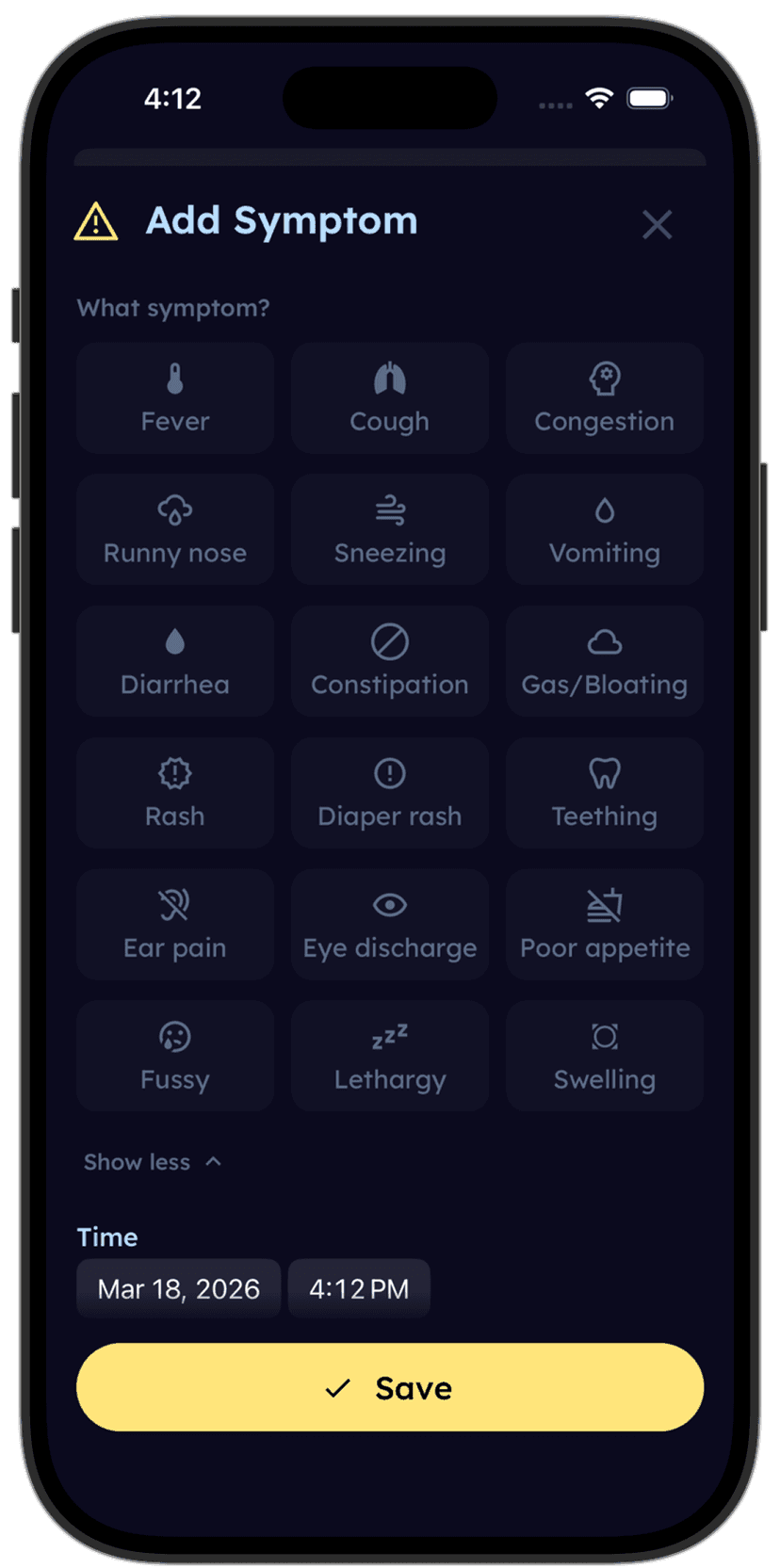
tinylog sleep and milestone tracking showing correlation between tooth eruption and sleep disruption

Sleep data plus milestone data equals answers.

When you are tracking sleep and milestones in tinylog, you can see whether sleep disruptions correlate with tooth eruptions, new motor skills, or both. Instead of guessing, you have data — and that data tells you exactly what to focus on.

Download on the App StoreGet It On Google Play

What Your Pediatrician Wants You to Know

Most prolonged sleep disruption is not teething. Pediatricians hear "the baby has been teething for a month" regularly. Teething does not cause month-long disruption. If sleep has been bad for weeks, a developmental regression, illness, or habit change is the more likely explanation.

It is fine to trial pain relief. If you are unsure whether it is teething or a regression, giving one dose of acetaminophen at bedtime is a reasonable diagnostic step. If sleep improves, you have your answer. If not, you have also ruled something out.

Both will pass. Neither teething nor sleep regressions last forever. The hardest part is the uncertainty — not knowing when it will end. But it will end. Every tooth eventually comes through, and every regression eventually resolves.

Practical Tips

The pain relief test

This is the simplest diagnostic tool. Give your baby an appropriate dose of acetaminophen or ibuprofen. If they settle and sleep noticeably better, pain was the issue — and teething is the most likely source of pain at this age. If pain relief makes no difference, you are probably looking at a sleep regression or another non-pain cause.

Manage what you can, ride out what you cannot

You can manage teething pain with cold items and medication. You cannot speed up a sleep regression. When both are happening at once, address the teething (pain relief, cold teething ring at bedtime) and ride out the regression (consistency, patience, minimal new sleep associations). Do not blame teething for a disruption that lasts three weeks.

Keep a log — your future self will thank you

When the next tooth or regression comes around, you will want to know how the last one went. How long did it last? What helped? What made it worse? A sleep log with milestone notes gives you a reference point instead of starting from scratch every time.

It ends — both do

Whether the disruption is a tooth or a regression (or both), it ends. Teeth break through in days. Regressions resolve in weeks. At 3 AM it feels permanent, but it is not. The only constant is change, and the change will eventually be back to better sleep.

Related Guides

Sources

  • Macknin, M. L., et al. (2000). Symptoms associated with infant teething: a prospective study. Pediatrics, 105(4), 747-752.
  • Massignan, C., et al. (2016). Signs and symptoms of primary tooth eruption: A meta-analysis. Pediatrics, 137(3), e20153501.
  • Mindell, J. A., et al. (2006). Behavioral treatment of bedtime problems and night wakings in infants and young children. Sleep, 29(10), 1263-1276.
  • American Academy of Pediatrics (AAP). Sleep and your baby. HealthyChildren.org.
  • Galland, B. C., et al. (2012). Normal sleep patterns in infants and children: A systematic review of observational studies. Sleep Medicine Reviews, 16(3), 213-222.

Medical Disclaimer

This guide is for informational purposes only and is not a substitute for professional medical advice. If your baby has a fever of 100.4°F (38°C) or higher, is refusing to eat, or seems unusually unwell, contact your pediatrician — these symptoms are not typical of teething alone.

Get this guide in your inbox.
We'll email you this comparison guide so you can figure out what is happening at 2 AM.
Track sleep and milestones together — the pattern reveals the cause.
Download tinylog free — log everything in seconds.
Download on the App StoreGet It On Google Play