GUIDE

Signs of Teething

The evidence-supported signs are gum swelling, drooling, and the urge to chew. That is largely it.

Teething gets blamed for everything from fever to rashes to bad days. The research tells a much simpler story. Here are the symptoms that are actually linked to teething — and the ones that mean something else is going on.

The Problem With 'Teething Symptoms'

If you search for "teething symptoms" online, you will find lists that include everything from fever to diarrhea to rashes to congestion to ear pulling to mood changes. The problem is that most of these symptoms have little to no support in the medical literature as actual teething symptoms.

This matters more than you might think. When parents (and even some well-meaning providers) attribute every symptom to teething, real illnesses sometimes get missed. A baby with a 102°F fever does not have "bad teething" — they have an infection that may need treatment. A baby with persistent diarrhea does not have "teething diarrhea" — they may have a stomach bug that requires monitoring for dehydration.

The landmark studies on this topic — Macknin et al. (2000), Wake et al. (2000), and the comprehensive systematic review by Massignan et al. (2016) — paint a much simpler picture of what teething actually causes. The evidence-supported symptoms are gum-related (swelling, tenderness, the urge to bite), drool-related (increased saliva, drool rash), and behavioral (mild irritability). That is largely it.

This does not mean your baby's discomfort is not real. Teething pain is genuine, and some babies clearly have a harder time than others. But understanding which symptoms are actually teething and which ones point to something else is one of the most important distinctions you can make as a parent.

Evidence-Supported Teething Signs
Gum swelling, redness, or tenderness
Evidence LevelStrongly supported — consistently found across multiple studies
DetailsThe gum directly over the erupting tooth may appear swollen, red, or have a bluish-white bump. This is the most reliable physical sign.
Increased drooling
Evidence LevelStrongly supported
DetailsDrooling often increases significantly during active teething. It can begin weeks before a tooth appears and may cause drool rash around the mouth.
Desire to bite or chew on objects
Evidence LevelStrongly supported
DetailsCounter-pressure on the gums provides relief. Babies instinctively seek firm objects to chew during teething.
Irritability or fussiness
Evidence LevelModerately supported
DetailsMild, intermittent irritability — not all-day inconsolable crying. The fussiness typically peaks around eruption and resolves quickly.
Gum rubbing
Evidence LevelModerately supported
DetailsBabies may rub or press on their gums with their fingers or fists.
Mild sleep disruption
Evidence LevelWeakly to moderately supported
DetailsSome studies show a slight increase in night waking around tooth eruption, but the effect is modest and short-lived.
Slight temperature elevation (below 100.4°F / 38°C)
Evidence LevelWeakly supported
DetailsSome studies show a very slight temperature increase, but this does NOT reach the level of true fever. Any temperature at or above 100.4°F is NOT teething.
Based on Macknin et al. (2000), Wake et al. (2000), and Massignan et al. (2016). These are the symptoms that have been reliably linked to teething in controlled, prospective studies.

What Teething Does NOT Cause

This section may surprise you, because some of these symptoms have been attributed to teething for generations. But the evidence is clear: teething does not cause fever, diarrhea, vomiting, body rashes, cough, or congestion.

Fever: Studies by Wake et al. (2000) and Macknin et al. (2000) both found that teething may cause a very slight temperature elevation — up to about 100°F (37.8°C) — but does NOT cause true fever (defined as 100.4°F / 38°C or higher). The systematic review by Massignan et al. (2016) confirmed this finding. A baby with a genuine fever has an infection of some kind, even if a tooth happens to be coming through at the same time.

Diarrhea: No controlled study has established a causal link between teething and diarrhea. The timing coincidence — teething peaks during the same months that babies are putting everything in their mouths and encountering more pathogens — explains why parents see the association. But the diarrhea is caused by what the baby picked up from chewing on that grocery cart handle, not by the tooth itself.

Rash (beyond drool rash): Drool rash — redness and irritation around the mouth, chin, and neck from constant moisture — is genuinely teething-related. But a rash on the trunk, limbs, or other areas of the body is not caused by teething and suggests a viral exanthem, allergic reaction, or other condition.

Congestion and runny nose: Teething does not cause nasal symptoms. The reason babies seem to get colds while teething is that the teething age coincides with the age when maternal antibodies decline and babies encounter more viruses, especially if they are in group childcare.


NOT Teething Signs: What to Look for Instead
Fever (100.4°F / 38°C or higher)
Is It Teething?Not supported — multiple controlled studies show teething does not cause true fever
What It Might Actually BeViral or bacterial infection. Evaluate based on age, fever height, and associated symptoms.
Diarrhea
Is It Teething?Not supported — no causal link established in controlled research
What It Might Actually BeViral gastroenteritis, food sensitivity, or other GI issue. The timing overlap with teething is coincidental.
Vomiting
Is It Teething?Not supported
What It Might Actually BeStomach virus, food intolerance, or other illness. Vomiting is never 'just teething.'
Congestion or runny nose
Is It Teething?Not supported
What It Might Actually BeUpper respiratory infection (common cold). Teething age coincides with the age of frequent viral infections.
Body rash (not localized to mouth area)
Is It Teething?Not supported
What It Might Actually BeViral exanthem, allergic reaction, eczema flare, or other dermatological cause.
Cough
Is It Teething?Not supported
What It Might Actually BeUpper respiratory infection, post-nasal drip, or other respiratory cause.
Ear pulling with fever or irritability
Is It Teething?Not supported as a teething sign when accompanied by fever
What It Might Actually BeEar infection (otitis media). Ear pulling alone may be teething-related, but with fever it needs evaluation.
Refusal to eat for more than 1-2 days
Is It Teething?Prolonged feeding refusal is not typical of teething
What It Might Actually BeIllness, oral thrush, or other condition. Brief appetite reduction around eruption is normal, but prolonged refusal is not.
The single most valuable thing these guides can do is help parents distinguish teething from illness. A baby with these symptoms deserves evaluation, not dismissal.
tinylog tracking screen showing sleep, feeding, and diaper data

Trying to figure out what is teething and what is not? Track the data.

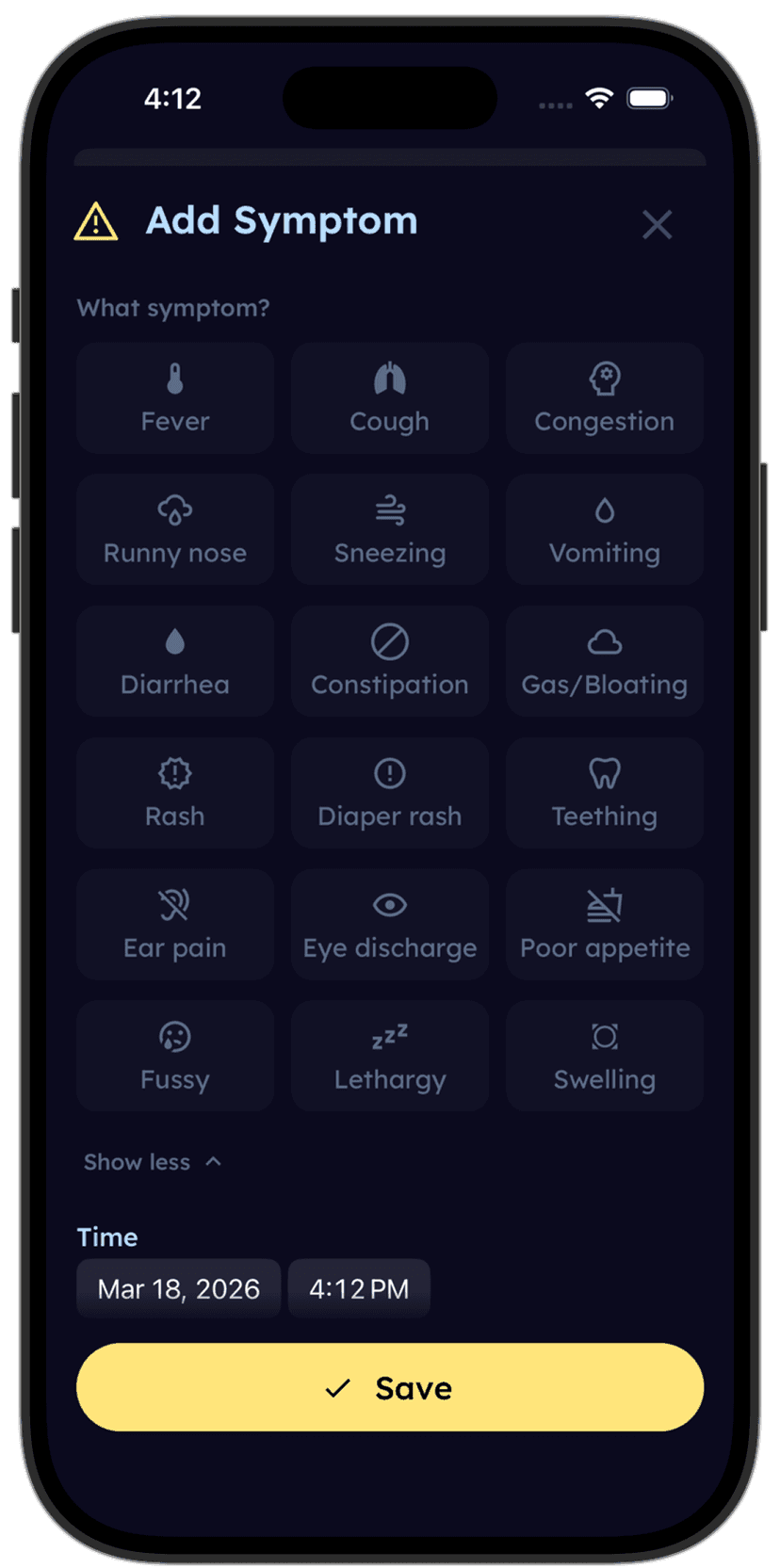
If you are trying to figure out whether your baby's fussiness is teething or something else, a few days of tracked data — sleep, feeds, diapers, and symptoms — gives you a much clearer picture than trying to piece it together from memory. tinylog tracks everything in one place, so you can see what changed and when.

Download on the App StoreGet It On Google Play

The Timing Problem: Why Teething Gets Blamed for Everything

There is a very good reason why teething has been blamed for fever, diarrhea, and colds for centuries: the timing lines up perfectly. Babies start teething between 4 and 12 months. This is also the exact window when:

  • Maternal antibodies from pregnancy begin to decline, leaving babies more susceptible to infections
  • Babies start putting everything in their mouths, increasing pathogen exposure
  • Many babies enter group childcare, dramatically increasing viral exposure
  • The developing immune system encounters new challenges regularly

So a baby who is cutting teeth, catching their third cold of the month, and having loose stools from a stomach bug looks like a baby with "teething fever and teething diarrhea." But correlation is not causation. The fever is from the virus. The diarrhea is from the gastroenteritis. The tooth is just along for the ride.

This is not just an academic distinction. When parents attribute genuine illness symptoms to teething, they may delay seeking care that could prevent complications. A fever over 100.4°F in a young infant always deserves evaluation, regardless of whether a tooth is visible in the gum.

What Your Pediatrician Wants You to Know

Pediatricians have a complicated relationship with teething. They know it causes real discomfort. They also see, on a daily basis, the consequences of over-attribution — sick babies whose symptoms were dismissed as "just teething."

Teething makes babies uncomfortable, not seriously ill. A teething baby may be fussy and drooly, but they should not be lethargic, inconsolable, or visibly unwell. A baby who seems truly sick — even if they are teething — needs evaluation.

If symptoms last more than a few days, it is probably not teething. Teething symptoms for any individual tooth peak around the day of eruption and typically resolve within a day or two. Symptoms that persist for a week or more have a different cause.

You can always call. No pediatrician has ever been annoyed by a parent who called because they were not sure if symptoms were teething or illness. The call is the right move. The worst that happens is reassurance. The best that happens is catching something that needed treatment.

Trust your instincts. If something feels off — if your baby seems sicker than "teething fussy" — trust that feeling. Parents who know their babies well are often right when they sense something is wrong, even if they cannot articulate exactly what.

Practical Tips

The most reliable sign is the gum itself

Everything else — drooling, fussiness, sleep changes — can be caused by multiple things. But if you look at your baby's gum and see swelling, redness, or a visible bump where a tooth should be, you can be reasonably confident that teething is happening. Feel along the gum with a clean finger — you may be able to feel a hard ridge or sharp point just beneath the surface.

Symptoms peak around eruption — not weeks before

If your baby has been 'teething' for three weeks with no tooth in sight, the symptoms you are seeing may not be teething at all. Research shows that teething symptoms are most concentrated in the days immediately before and on the day of eruption. Prolonged or worsening symptoms warrant a second look at what is actually going on.

Some babies teethe silently

Not every baby announces their teeth with a week of misery. Some parents discover a new tooth only when they hear it clink against a spoon or feel it during a gum check. If your baby is cutting teeth without apparent discomfort, count yourself lucky — and know that it is perfectly normal.

When in doubt, check — do not assume

The most dangerous thing about teething myths is not the myths themselves — it is that they cause parents to dismiss real illness. A 102°F fever is not teething. Persistent diarrhea is not teething. A baby who is unusually lethargic or unwell is not 'just teething.' When symptoms go beyond the mild and the expected, call your pediatrician.

Related Guides

Sources

  • Macknin, M. L., et al. (2000). Symptoms associated with infant teething: a prospective study. Pediatrics, 105(4), 747-752.
  • Wake, M., et al. (2000). Teething and tooth eruption in infants: A cohort study. Pediatrics, 106(6), 1374-1379.
  • Massignan, C., et al. (2016). Signs and symptoms of primary tooth eruption: A meta-analysis. Pediatrics, 137(3), e20153501.
  • Ramos-Jorge, J., et al. (2011). Prospective longitudinal study of signs and symptoms associated with primary tooth eruption. Pediatrics, 128(3), 471-476.
  • American Academy of Pediatrics (AAP). Teething: 4 to 7 months. HealthyChildren.org.

Medical Disclaimer

This guide is for informational purposes only and is not a substitute for professional medical advice. If your baby has a fever of 100.4°F (38°C) or higher, is refusing to eat, or seems unusually unwell, contact your pediatrician — these symptoms are not typical of teething alone.

Get this guide in your inbox.
We'll email you this evidence-based teething guide so you have it ready when you need it.
Track symptoms alongside milestones — spot the real pattern.
Download tinylog free — log everything with a single tap.
Download on the App StoreGet It On Google Play