GUIDE

Teething and Sleep

Teething can disrupt sleep, but the effect is usually mild and short-lived — peaking the day before and day of eruption.

If your baby's sleep fell apart, teething might be a factor — but it is rarely the whole story. Here is what the evidence says about teething and sleep, and practical strategies for tonight.

How Much Does Teething Really Affect Sleep?

If you believe the internet, teething destroys sleep for weeks at a time. If you believe the research, the effect is more modest: mild sleep disruption that peaks around the day of eruption and resolves within a few days.

The truth is somewhere in the middle — individual variation matters a lot. Some babies barely notice a tooth coming through and sleep right through it. Others have two or three genuinely rough nights per tooth. But the sustained, weeks-long sleep disruption that parents often attribute to teething is almost certainly caused by something else — or by a combination of teething plus another factor like a developmental leap or sleep regression.

The studies are helpful here. Macknin et al. (2000) found a modest increase in sleep disturbance in the days immediately surrounding tooth eruption. Massignan et al. (2016) confirmed in their systematic review that sleep disruption is weakly to moderately associated with teething — present in some studies but not all, and always described as mild and short-lived.

What does this mean practically? If your baby has been sleeping poorly for a few days and you can see a tooth working its way through the gum, teething is a reasonable explanation. If sleep has been bad for two or three weeks, you need to look for other causes.

Why Teething Disrupts Sleep (When It Does)

The mechanism is straightforward: teething causes gum pain. Pain is worse at night when there are fewer distractions. A baby lying in a dark, quiet room with nothing to focus on except the throbbing in their gums is going to have a harder time than the same baby during the day, when toys, activities, and interactions provide distraction.

There may also be a positional component. Lying down can increase blood flow to the head, which may slightly increase inflammation and pressure at the gum surface. This could explain why some babies are fine during the day but struggle at night.

The sleep disruption itself usually manifests as:

  • Difficulty falling asleep at bedtime (gum discomfort makes it hard to settle)
  • Night waking that is more frequent or harder to resolve than usual
  • Shorter sleep stretches between wakings
  • Earlier morning wake-ups

Notably, research shows this disruption is concentrated in a narrow window — typically the day before eruption, the day of eruption, and perhaps one or two days after. Once the tooth has broken through the gum surface, the acute discomfort subsides and sleep usually returns to baseline relatively quickly.

Sleep Strategies for Teething Nights
Pre-bed pain relief
DetailsIf your baby is clearly teething, give an appropriate dose of acetaminophen or ibuprofen (6+ months) about 30 minutes before bedtime. This addresses the pain proactively rather than waiting for a middle-of-the-night wake-up.
When to Use30 minutes before bedtime
Cold teething ring at bedtime
DetailsOffer a chilled (not frozen) teething ring as part of the bedtime routine. A few minutes of chewing on cold surfaces can reduce gum inflammation before your baby lies down.
When to UseDuring the bedtime routine
Keep the room comfortable
DetailsTeething babies drool more, and wet pajamas or sheets can add to nighttime discomfort. Use a bib during the day, change into dry pajamas at bedtime, and consider a light sleep sack to maintain comfort.
When to UseBedtime
Brief comfort visits for night waking
DetailsWhen your baby wakes at night during teething, offer brief comfort — a pat, soothing voice, check whether they need pain relief. Try to settle them in their crib rather than picking up if possible, to avoid creating a new sleep association.
When to UseMiddle of the night
Maintain the routine
DetailsIt is tempting to throw out the bedtime routine during teething. Do not. Consistency is what helps babies (and you) return to normal sleep once the tooth is through. The routine is the anchor.
When to UseEvery night
Consider a middle-of-the-night dose
DetailsIf your baby wakes inconsolable 4-6 hours after the bedtime dose, a second appropriate dose of acetaminophen or ibuprofen (if 6+ months and per dosing guidelines) can help them resettle for the remainder of the night.
When to Use4-6 hours after bedtime dose if needed
The goal is to manage discomfort while maintaining as much sleep routine consistency as possible. This minimizes the disruption and helps your baby return to baseline faster.

Teething vs. Sleep Regression: How to Tell

One of the most common questions parents face is whether their baby's sleep disruption is caused by teething or a sleep regression. The answer matters because the management is different.

Teething disruption is caused by physical pain and responds to pain management. Sleep regressions are caused by brain development and require patience and consistency with sleep habits. Teething lasts days; regressions last weeks. Teething has visible gum signs; regressions have visible developmental signs (new skills).

Of course, they can overlap. A baby can be going through the 8-month sleep regression while also cutting their upper incisors. In that case, manage the pain from teething and ride out the regression with consistency. See our sleep regression timeline for detailed guidance on each regression.

Teething vs. Sleep Regression
Duration
Teething DisruptionA few days around eruption — resolves once the tooth is through
Sleep RegressionTypically 2-6 weeks
Visible cause
Teething DisruptionSwollen gums, visible tooth bump, increased drooling
Sleep RegressionNo physical sign — driven by developmental changes
Response to pain relief
Teething DisruptionUsually improves with acetaminophen/ibuprofen
Sleep RegressionPain relief does not help (there is no pain)
Daytime behavior
Teething DisruptionFussier than usual, especially around the mouth. Drooling, chewing.
Sleep RegressionMay show new skills — rolling, sitting, pulling up, babbling
Pattern
Teething DisruptionDisruption concentrated in a few-day window
Sleep RegressionConsistent disruption over weeks
Age timing
Teething DisruptionCan happen anytime between 4-33 months as teeth arrive
Sleep RegressionPredictable windows: 4 months, 6 months, 8-10 months, 12 months, 18 months, 2 years
If pain relief helps and the disruption lasts a few days, it is probably teething. If pain relief does not help and the disruption lasts weeks, it is probably a sleep regression.
tinylog sleep tracking screen showing sleep patterns and milestone data

Is it teething or a sleep regression? Your data can help you tell.

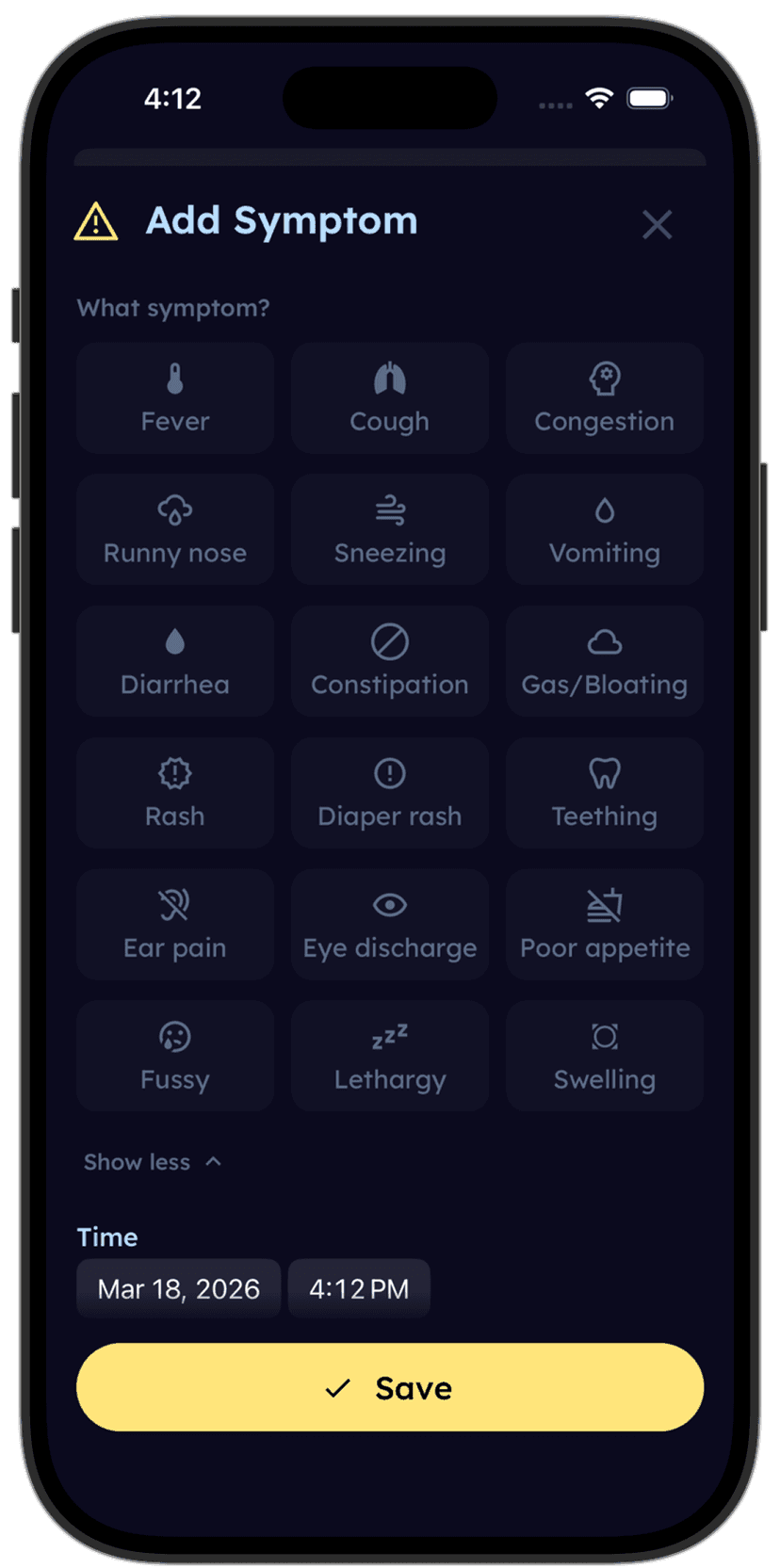
Having sleep data alongside milestone logs helps you (and your pediatrician) untangle what is causing the disruption. tinylog tracks both, so you can see if the night wakings started when that molar was cutting through — or when your baby started pulling to stand.

Download on the App StoreGet It On Google Play

What Your Pediatrician Wants You to Know

Teething is a short-term sleep disruptor. If sleep has been bad for weeks, teething is unlikely the sole explanation. Consider illness, developmental changes, schedule issues, or environmental factors.

It is okay to medicate for nighttime pain. Giving acetaminophen or ibuprofen at bedtime during active teething is safe and appropriate. You are managing legitimate pain, not masking a problem. Your pediatrician will agree that a baby does not need to suffer through teething pain at 2 AM.

Consistency pays off. The babies who bounce back to normal sleep fastest after teething are the ones whose parents maintained consistent sleep routines during the disruption. Offer extra comfort, manage the pain, but keep the framework of the routine intact.

Sleep disruption alone is not a reason to worry about teeth. Some parents worry that because their baby's sleep is bad, their teething must be unusually severe. Sleep disruption during teething is common and not an indicator of a dental problem. The teeth are fine — they just hurt temporarily while coming through.


Practical Tips

The worst night is usually the night before the tooth appears

Research shows that teething discomfort peaks in the 24 hours before a tooth breaks through the gum. Once the tooth is through the surface, the worst is over. If you are in the thick of a terrible night, check the gums in the morning — you may find a brand new tooth, and the next night is likely to be better.

Do not create new habits you will have to undo

Teething nights are hard, and it is tempting to do whatever it takes — bringing baby into your bed, restarting night feeds you had dropped, rocking to sleep for every waking. Try to use the least intervention that works. A few nights of extra comfort are fine. Weeks of new sleep associations that persist long after the tooth is through will create a different problem.

Two bad nights does not mean sleep training failed

If your baby was sleeping well and suddenly starts waking during teething, it does not mean your sleep training is undone. A tooth coming through is a temporary physical discomfort, not a regression in learned sleep skills. Once the discomfort passes, most babies return to their previous sleep patterns — as long as you have not introduced major new associations during the disruption.

If it lasts more than a week, look beyond teething

True teething disruption is short. If your baby's sleep has been bad for two weeks and you are still attributing it to teething, it is time to consider other possibilities: a sleep regression, illness, schedule issue, or environmental change. Teething is the convenient explanation, but it is not always the right one.

Related Guides

Sources

  • Macknin, M. L., et al. (2000). Symptoms associated with infant teething: a prospective study. Pediatrics, 105(4), 747-752.
  • Massignan, C., et al. (2016). Signs and symptoms of primary tooth eruption: A meta-analysis. Pediatrics, 137(3), e20153501.
  • Wake, M., et al. (2000). Teething and tooth eruption in infants: A cohort study. Pediatrics, 106(6), 1374-1379.
  • American Academy of Pediatrics (AAP). Teething pain. HealthyChildren.org.
  • Mindell, J. A., et al. (2006). Behavioral treatment of bedtime problems and night wakings in infants and young children. Sleep, 29(10), 1263-1276.

Medical Disclaimer

This guide is for informational purposes only and is not a substitute for professional medical advice. If your baby has a fever of 100.4°F (38°C) or higher, is refusing to eat, or seems unusually unwell, contact your pediatrician — these symptoms are not typical of teething alone.

Get this guide in your inbox.
We'll email you this guide so you have strategies ready for tonight.
Track sleep alongside milestones — see what is actually causing the disruption.
Download tinylog free — log sleep and teeth in seconds.
Download on the App StoreGet It On Google Play