GUIDE

Night Waking and Teething

Teething night waking is real but short-lived. Manage the pain, maintain the routine, and sleep will return.

When teething strikes at night, you need a plan — not a panicked Google search at 3 AM. Here is a practical playbook for getting through teething nights and back to normal sleep.

Tonight's Plan: What to Do Right Now

If your baby is waking at night and you think teething is the cause, here is a step-by-step plan for tonight. Not next week, not in theory — tonight.

The most effective approach combines pain management (addressing why they are waking) with minimal sleep disruption (preserving the habits that will bring you back to normal sleep once the tooth is through). You want to comfort your baby through the pain without inadvertently creating new sleep associations that outlast the teething episode.

Your Step-by-Step Plan for Tonight
1. Confirm it is teething
What to DoBefore attributing the waking to teething, check the gums. Look for swelling, redness, or a bump. Feel along the gum ridge with a clean finger. If you cannot find any gum changes, consider whether illness, hunger, or discomfort from another cause might explain the waking.
2. Offer pain relief
What to DoIf teething is confirmed or strongly suspected, give an appropriate dose of acetaminophen or ibuprofen (6+ months). This addresses the root cause — pain — rather than just soothing the symptoms. Give it time to work (20-30 minutes).
3. Provide brief comfort
What to DoWhile waiting for pain relief to kick in, offer comfort: hold your baby, pat their back, use a soothing voice. A cold teething ring or wet washcloth to chew on can help too. The goal is to bridge the gap until the medication takes effect.
4. Settle back in the crib
What to DoOnce your baby has calmed, try to put them back in their crib drowsy but awake if possible. If they need to be held to sleep tonight, that is okay — one night does not create a permanent habit. But aim to return to the crib as soon as they are settled.
5. Do not start the day early
What to DoIf your baby wakes at 4 or 5 AM and you suspect teething, treat it as a night waking, not a morning wake-up. Offer comfort, consider pain relief if it has been 4-6 hours since the last dose, and try to resettle. Starting the day early can shift the entire schedule.
This plan prioritizes pain relief and minimal disruption. The goal is to get through the teething nights without creating new sleep problems that persist after the tooth is through.
Do's and Don'ts for Teething Nights
Do
ActionGive pain relief proactively at bedtime
WhyManaging pain before it peaks is more effective than responding to it at 2 AM
Do
ActionOffer a cold teething ring during the bedtime routine
WhyReduces inflammation and provides comfort before lying down
Do
ActionKeep the room dark and calm during night check-ins
WhyBright lights and stimulation make it harder to resettle
Do
ActionUse the minimum effective intervention
WhyA pat and soothing voice before picking up; picking up before feeding; feeding before co-sleeping
Don't
ActionBring baby into your bed unless you planned to
WhyCo-sleeping started during teething often persists long after the tooth is through
Don't
ActionReintroduce night feeds that were dropped
WhyOnce a baby no longer needs night feeds, restarting them creates a new habit, not a solution to pain
Don't
ActionAssume every wake-up is teething
WhyIf there is no visible gum change and pain relief does not help, something else is going on
Don't
ActionUse topical teething gels (benzocaine, lidocaine)
WhyFDA warns against benzocaine for children under 2 (risk of methemoglobinemia). Systemic pain relief is safer and more effective for nighttime
The overarching principle: comfort the baby, manage the pain, and preserve the sleep framework as much as possible.

Why Night Pain Seems Worse

Parents often report that their baby seems fine during the day but falls apart at night. This is not your imagination — there are real reasons why teething pain can be worse at bedtime and overnight.

No distractions. During the day, your baby is busy: playing, eating, looking at things, interacting with you. At night, in a dark, quiet room, there is nothing to divert attention from the discomfort in their mouth. The pain has not actually increased — it just has no competition.

Lying down may increase pressure. Some experts believe that lying flat can increase blood flow to the head, which may slightly increase inflammation and pressure at the eruption site. This could explain why babies seem more uncomfortable in the crib than when held upright.

Fatigue lowers coping. An overtired baby has less capacity to self-soothe through mild discomfort. If teething disrupted the day's naps as well, your baby arrives at bedtime with even fewer resources to manage the gum pain.

Cortisol fluctuations. The body's natural cortisol levels are lowest in the early hours of the night, which may affect pain perception. This could explain why the worst waking often occurs in the first half of the night.

When Night Waking Is Not Teething

Not every night waking during the teething months is caused by teething. Before automatically reaching for the teething explanation, consider these other common causes:

Illness. A baby with a cold, ear infection, or stomach bug will also wake at night — and these are more common than teething during this age range. Check for fever, congestion, or other signs of illness.

Sleep regression. The 4-month, 6-month, 8-10-month, and 12-month sleep regressions all overlap with active teething periods. Regressions last longer (2-6 weeks) and do not respond to pain relief. See our sleep regression timeline for details.

Hunger. Growth spurts increase caloric needs and can cause genuine hunger-related night waking. If your baby eats eagerly when offered a feed, hunger may be the cause.

Schedule issues. A baby who is undertired or overtired at bedtime may wake more at night. If nap times or wake windows are off, sleep quality suffers regardless of teething.

Habit. A baby who was soothed with extra feeds or co-sleeping during a teething episode may continue waking for that intervention after the teething is resolved. The tooth is through, but the habit remains.


tinylog sleep tracking screen showing night waking patterns

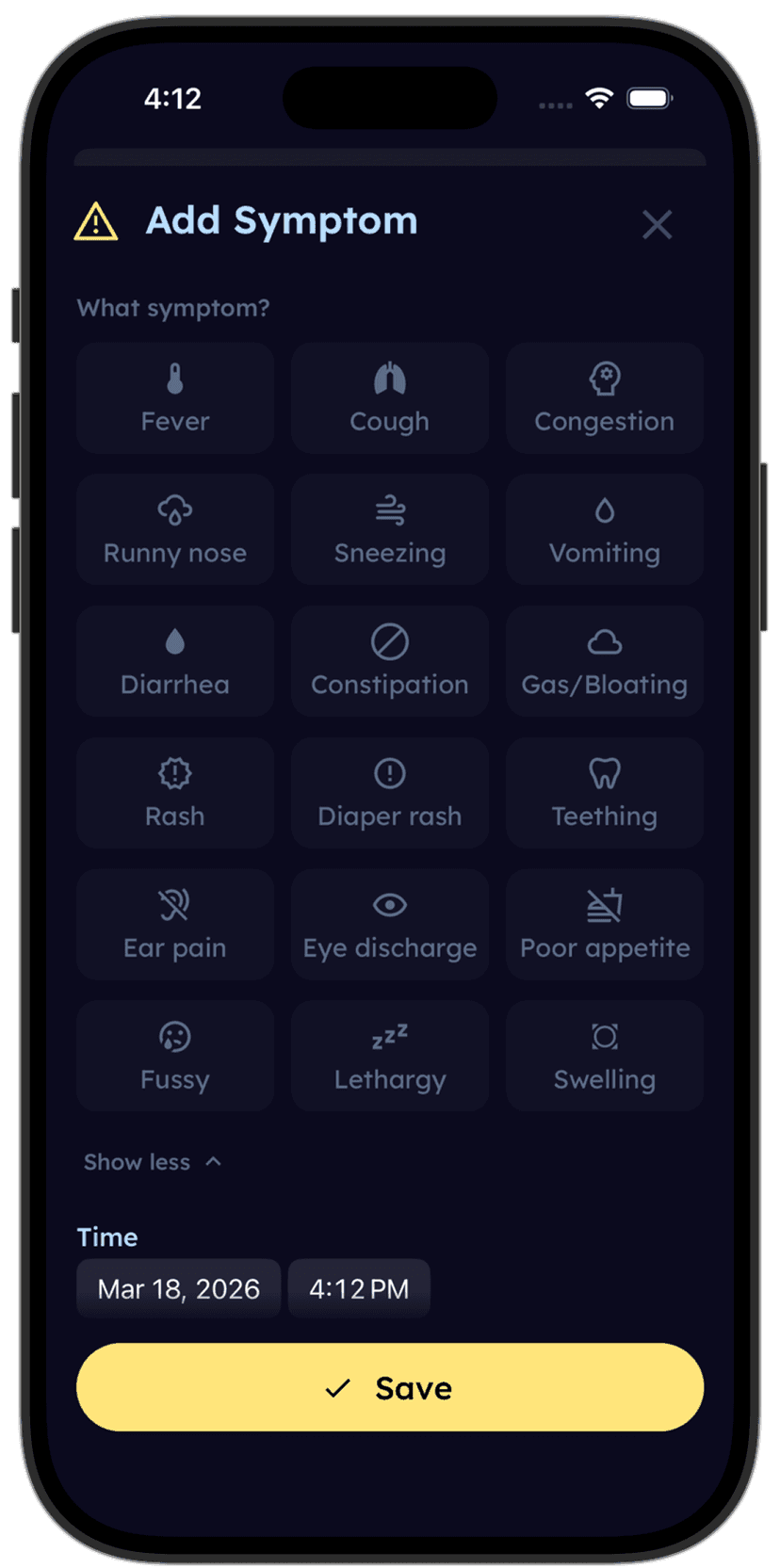
Track night wakings and tooth eruptions — see when they correlate.

When you are logging sleep in tinylog, you can compare night waking data with milestone logs to see whether disruptions actually line up with tooth eruptions. Sometimes what looks like teething disruption turns out to be a schedule issue — and the data makes that clear.

Download on the App StoreGet It On Google Play

What Your Pediatrician Wants You to Know

Pain relief at night is not overmedication. Your baby does not need to cry through teething pain to build character. Appropriate doses of acetaminophen or ibuprofen are safe and effective for nighttime teething discomfort.

A few bad nights will not ruin sleep training. Offering extra comfort during genuine pain is responsive parenting, not a setback. Your baby's sleep skills are still there — they are just temporarily disrupted by discomfort.

If pain relief does not help, it is not teething. This is a practical diagnostic tool. If you give an appropriate dose of acetaminophen and your baby is still inconsolable 30-45 minutes later, the cause may not be teething pain. Consider illness, digestive discomfort, or other causes.

Watch for fever. Night waking plus fever is not teething. Evaluate and manage the fever separately.

Practical Tips

Pre-medicate at bedtime — do not wait for the wake-up

If you know your baby is actively teething — you can see the gum swelling, they have been drooling and chewing all day — give pain relief at bedtime proactively. Waiting until your baby wakes screaming at midnight means you are behind the pain curve. An appropriate dose of acetaminophen or ibuprofen given 30 minutes before bed can prevent the worst night waking entirely.

Have your plan ready before the night starts

At 2 AM with a screaming baby, you will not be making good decisions. Have your plan in place before bedtime: medicine measured and ready, teething ring in the fridge, expectations set with your partner about who takes which wake-up. Preparation is the difference between a manageable night and a chaotic one.

Tag-team with your partner

If you have a partner, take turns. One person handles the first wake-up, the other handles the second. Or alternate nights. Teething disruption is temporary, but sleep deprivation from handling every wake-up alone can compound quickly. Share the load.

Remember: this is days, not weeks

When you are in the middle of a bad night, it feels endless. But teething disruption per tooth is measured in days, not weeks. The tooth will break through, the pain will subside, and sleep will return. You will barely remember this specific tooth six months from now.

Related Guides

Sources

  • Macknin, M. L., et al. (2000). Symptoms associated with infant teething: a prospective study. Pediatrics, 105(4), 747-752.
  • Massignan, C., et al. (2016). Signs and symptoms of primary tooth eruption: A meta-analysis. Pediatrics, 137(3), e20153501.
  • American Academy of Pediatrics (AAP). Teething pain. HealthyChildren.org.
  • Mindell, J. A., et al. (2006). Behavioral treatment of bedtime problems and night wakings in infants and young children. Sleep, 29(10), 1263-1276.

Medical Disclaimer

This guide is for informational purposes only and is not a substitute for professional medical advice. If your baby has a fever of 100.4°F (38°C) or higher, is refusing to eat, or seems unusually unwell, contact your pediatrician — these symptoms are not typical of teething alone.

Get this guide in your inbox.
We'll email you this guide so you have a plan for tonight.
Track night wakings — see when they start and when they stop.
Download tinylog free — log sleep in seconds, even at 2 AM.
Download on the App StoreGet It On Google Play