
GUIDE
Tiny Love Gymini Magical Tales vs. Baby Einstein Kickin' Tunes
Published on
Both are solid activity gyms with different strengths. Tiny Love nails high-contrast visual stimulation and newborn engagement. Baby Einstein wins on longevity and musical interaction with its kick piano. Your pick depends on your baby's age and what kind of play you want to encourage.
Activity gyms are one of the first 'big' baby purchases that actually get daily use. The Tiny Love Black & White Gymini Magical Tales and the Baby Einstein 4-in-1 Kickin' Tunes are two of the most popular options — and they take genuinely different approaches to keeping your baby entertained and developing.
Log tummy time, play sessions, and developmental milestones
Two Activity Gyms, Two Very Different Philosophies
OK so here's the thing about activity gyms — they all look kinda similar from the outside. Colorful mat, some arches, dangly toys, done. But the Tiny Love Gymini Magical Tales and the Baby Einstein Kickin' Tunes are actually taking pretty different approaches to what "play" means for a baby.
Tiny Love went all in on visual development. The black and white high-contrast design is not just an aesthetic choice — it's based on how newborn eyes actually work. Babies under 8 weeks see high-contrast patterns best, and Tiny Love built the whole gym around that science. Eighteen different activities, adjustable arches, compact fold. It's a newborn specialist.
Baby Einstein went all in on longevity and music. That detachable kick piano with 70+ sounds is the headliner, and it converts through four play modes that grow with your kid from day one through age three. It's the Swiss Army knife approach.
Neither is wrong. They're just answering different questions about what your baby needs right now.
For more on developmental milestones to watch during play sessions, see our baby milestones guide.
| Feature | Tiny Love Gymini Magical Tales | Baby Einstein Kickin' Tunes | What It Means |
|---|---|---|---|
| Manufacturer | Tiny Love (Dorel Industries) | Baby Einstein (Kids2) | Both are established baby gear brands with decades of product development. |
| Target age range | 0–5 months (practical use) | 0–36 months (4 play modes) | Baby Einstein wins on longevity. That kick piano gets used way past the gym stage. |
| Price | ~$50 | ~$45 | Baby Einstein is slightly cheaper and arguably offers more long-term value. |
| Visual design | High-contrast black & white with pops of color | Colorful, bright patterns | Tiny Love is specifically designed for newborn vision. Those first weeks matter. |
| Activities/toys included | 18 developmental activities | 70+ sounds and songs, detachable toys | Different flavors. Tiny Love has more tactile variety. Baby Einstein goes big on audio. |
| Music & sound | Electronic music module with melodies | Kick piano with 70+ sounds, songs, and melodies | Baby Einstein dominates here. The kick piano is genuinely fun and teaches cause-and-effect. |
| Arches | Adjustable arches (multiple positions) | Fixed arch design | Tiny Love's adjustable arches let you customize the setup as your baby grows. |
| Tummy time support | Prop-up pillow + overhead engagement | Tummy time pillow included | Both support tummy time. Tiny Love's high-contrast design gives babies more reason to stay. |
| Portability | Compact fold, lightweight | Bulkier due to piano attachment | Tiny Love wins for travel and storage. It packs down surprisingly small. |
| Language options | N/A | Multilingual mode (English, Spanish, French) | Baby Einstein has a nice multilingual feature if you want early language exposure. |
| Machine washable mat | Yes | Yes | Tie. Both mats survive the washing machine. You will need this feature. Trust us. |
| Battery life concern | Minimal electronics, long battery life | 3 AA batteries, moderate drain | Tiny Love is lower maintenance. Baby Einstein's piano eats batteries if your kid is obsessed (they will be). |
The High-Contrast Thing Is Not Just Marketing
Real talk: newborn vision is blurry. Like, really blurry. For the first 8–12 weeks, babies see best at about 8–12 inches away, and they are drawn to bold, high-contrast patterns over soft pastels every single time. This is well-documented developmental science, not a Tiny Love sales pitch.
The Tiny Love Gymini Magical Tales leans into this hard. The mat, the arch covers, and several of the hanging toys use stark black and white patterns with strategic pops of red and other high-contrast colors. When you put a 2-week-old under this gym, they actually look at it. You can watch their eyes track. It's one of those small parenting moments that makes you go "oh wow, they're in there."
The Baby Einstein Kickin' Tunes uses a more traditional colorful design. It absolutely works — babies engage with it. But in those very early weeks, the Tiny Love gym has a measurable visual engagement advantage.
After about 3 months, when color vision develops more fully, this advantage fades. That's worth knowing.
The Kick Piano Changes Everything (Around Month 3)
Here's where Baby Einstein pulls ahead for older babies. That kick piano is not a gimmick. It's legitimately one of the best cause-and-effect toys you can put in front of a 3-to-6-month-old.
Baby kicks foot. Piano makes sound. Baby's brain lights up. Baby kicks again. Repeat approximately ten thousand times.
This is cause-and-effect learning in its purest form, and it happens during a developmental window when babies are primed to make those connections. The piano plays over 70 different sounds, melodies, and songs, and it has a multilingual mode that cycles through English, Spanish, and French. Will your baby learn Spanish from a kick piano? No. But early exposure to different phonemes is a real thing in language development research.
The real kicker (pun intended): the piano detaches. When your baby outgrows the gym portion around 5–6 months, the piano lives on. Kids use it as a standalone toy through toddlerhood. That's where the long-term value lives.
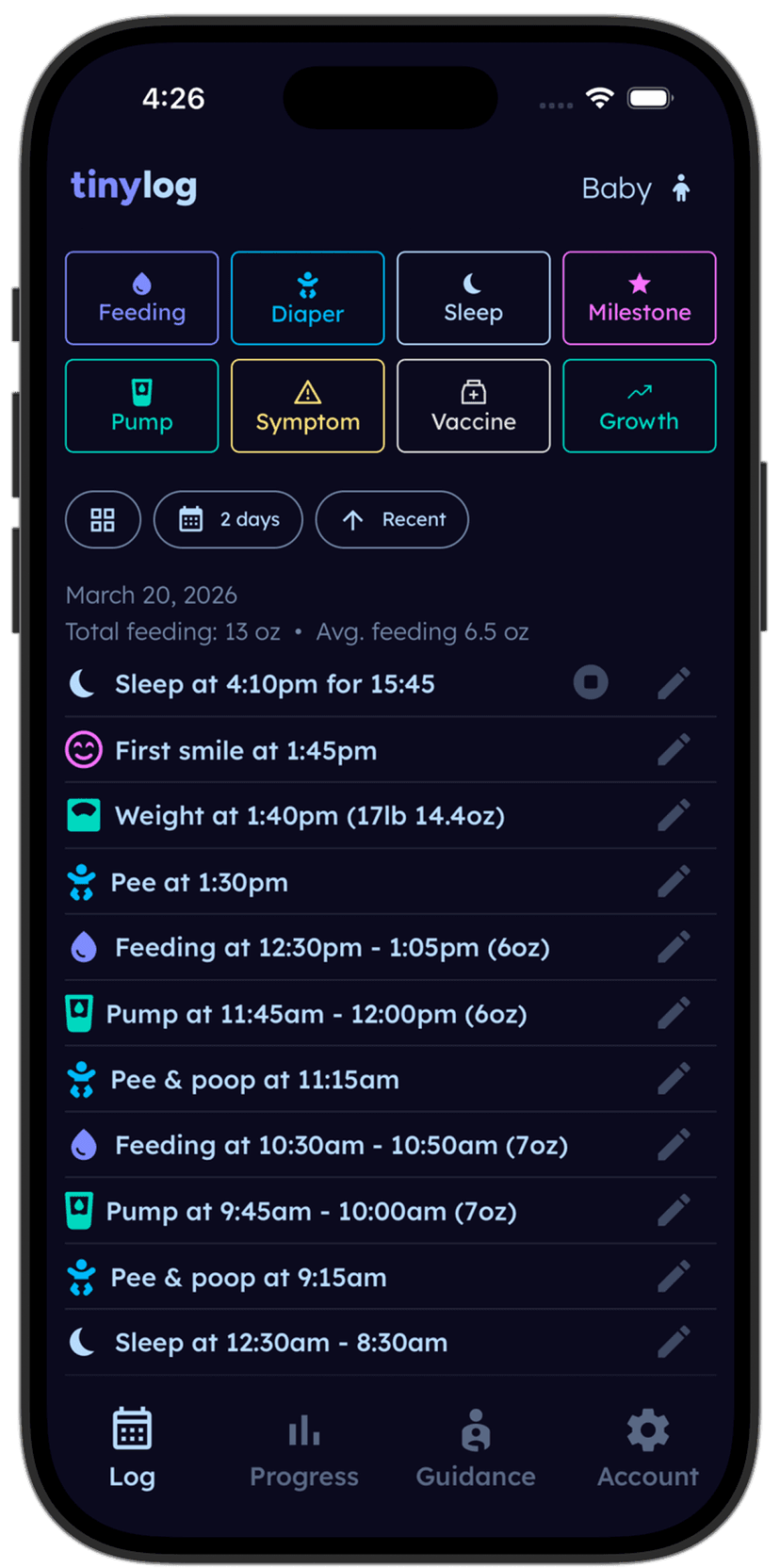
Tinylog tracks tummy time and play sessions.
Log tummy time minutes, track developmental milestones, and see patterns in your baby's daily activity. Bring the data to your next well-child visit.


Portability and Everyday Practicality
This one's straightforward. The Tiny Love Gymini folds flat. Like, genuinely flat. You can toss it in a diaper bag, bring it to grandma's house, set it up in a hotel room. The arches pop off, the mat folds, and the whole thing weighs next to nothing.
The Baby Einstein Kickin' Tunes is bulkier. The piano attachment adds weight and awkwardness. It's not impossible to travel with, but you're not casually throwing it in a bag. This is more of a "set it up in the living room and leave it there" product.
If you live in a small apartment or plan to move the gym between rooms regularly, Tiny Love has a real practical advantage here.
| Product | Typical Price | Cost Structure | Amortized Monthly Cost |
|---|---|---|---|
| Tiny Love Black & White Gymini Magical Tales | $45–$55 | One-time purchase | ~$8–$11/month over 5 months of use |
| Baby Einstein 4-in-1 Kickin' Tunes | $40–$50 | One-time purchase | ~$1.50–$4/month over 12–36 months of use |
Price and Value: Months of Use Matter More Than Sticker Price
The sticker prices are close — about $50 for Tiny Love, about $45 for Baby Einstein. But the value equation looks very different when you factor in how long each product gets used.
The Tiny Love Gymini gets heavy use for about 4–5 months. That's roughly $10–$12 per month of active use. Totally reasonable for something your baby uses every single day.
The Baby Einstein Kickin' Tunes gets gym use for about 5–6 months, but then the kick piano keeps going for another year or two as a standalone toy. When you spread $45 across 12–36 months of use, you're looking at maybe $1.50–$4 per month. That's wild value.
Both are one-time purchases with no ongoing costs (besides Baby Einstein's battery habit). Neither will break the bank. But if you're picking one and budget matters, Baby Einstein stretches further.
Choose the Tiny Love Gymini If
- Your baby is a newborn and you want something designed specifically for those first weeks
- High-contrast visual stimulation is a priority (pediatrician recommended it or baby is under 3 months)
- You need something portable that folds flat for travel or small spaces
- You prefer less electronic noise and more tactile, visual play
- You want adjustable arches that grow with your baby's reach
Choose the Baby Einstein Kickin' Tunes If
- You want a gym that lasts well past the newborn stage — through toddlerhood
- Your baby is already 3+ months and you want maximum engagement right now
- You love the idea of a kick piano that teaches cause-and-effect
- Multilingual exposure is something you care about
- You want the most sounds, songs, and audio stimulation per dollar
- You are buying one activity center and want it to work for as long as possible
Where to Buy
The Tiny Love Black & White Gymini Magical Tales (~$50) is the one to grab if you have a newborn or one on the way. That high-contrast design genuinely engages brand-new eyes in a way most colorful gyms cannot match. The adjustable arches and compact fold are just bonuses. Grab it on Amazon or Target for the best price.
The Baby Einstein 4-in-1 Kickin' Tunes (~$45) is the better long-game play. That kick piano will be your baby's favorite thing for months, and the four play modes mean you get a gym, a tummy time station, a sit-and-play toy, and a standalone piano all in one box. Amazon and Walmart usually have the best deals.
Honestly? If your budget allows, buying both is not crazy. Use the Tiny Love for those first 2–3 months of high-contrast magic, then transition to the Baby Einstein when your baby starts wanting to kick things and make noise. But if you're picking one, match it to your baby's current age.
Tinylog earns a small commission on purchases made through these links, at no cost to you.
We've found promo.new handy for finding discounts on baby gear. Doesn't always have what you need, but it's worth a shot.
The Bottom Line
These are both good activity gyms that take different approaches to the same goal: keeping your baby engaged, stimulated, and developing on track.
Tiny Love Gymini Magical Tales is the better newborn gym. High-contrast design, adjustable arches, and compact portability make it ideal for the first 0–5 months. It's purpose-built for the earliest developmental stage.
Baby Einstein 4-in-1 Kickin' Tunes is the better long-term investment. The kick piano is a standout feature that teaches cause-and-effect, the multilingual mode is a nice touch, and the four play modes extend usability well into toddlerhood.
The "wrong" choice here does not exist. Your baby will be entertained and stimulated by either one. Pick based on your baby's current age, your space constraints, and whether that kick piano makes you smile or makes you preemptively tired of hearing "Twinkle Twinkle Little Star" four hundred times a day.
One more thing worth mentioning: activity gyms get gross. Spit-up, drool, the occasional diaper situation. Both of these mats are machine washable, which is non-negotiable. Whichever you pick, you will wash it more than you expect.
If you are tracking tummy time and developmental milestones — which is super helpful during those first months — Tinylog makes it easy to log sessions and see progress over time.
Related Guides
- Baby Milestones — Month-by-month developmental milestones to watch for
- Tummy Time — How much, how often, and how to make it less miserable
- Baby Feeding Chart — How much your baby should eat by age
- 3-Month-Old Sleep Schedule — Naps, wake windows, and sample routines
Sources
- American Academy of Pediatrics. "Back to Sleep, Tummy to Play." healthychildren.org, 2025.
- Zero to Three. "Brain Development and Early Learning." zerotothree.org, 2025.
- Tiny Love. "Black & White Gymini Magical Tales — Product Information." tinylove.com, 2026.
- Baby Einstein. "4-in-1 Kickin' Tunes Activity Gym — Product Information." babyeinstein.com, 2026.
- What to Expect. "Best Baby Play Mats and Activity Gyms." whattoexpect.com, 2026.
- The Bump. "Best Play Gyms for Babies." thebump.com, 2026.
- Healthline Parenthood. "When Can Babies See Color?" healthline.com, 2025.
This guide is for informational purposes only. Activity gym choice is a personal preference based on your baby's age and developmental needs. Always supervise your baby during play sessions and tummy time.
Frequently asked questions
- Is the Tiny Love Gymini or Baby Einstein Kickin' Tunes better for newborns?
- The Tiny Love Gymini Magical Tales is better for newborns thanks to its high-contrast black and white design. Newborns can only see about 8–12 inches away, and high-contrast patterns are the most visually stimulating for them in the first 8 weeks. The Baby Einstein gym works from birth too, but its real strengths kick in around 3–4 months.
- How long will my baby use an activity gym?
- Most babies use traditional activity gyms from birth to about 5–6 months, when they start rolling and crawling away. The Baby Einstein Kickin' Tunes has an edge here — its kick piano detaches and can be used independently through 36 months. The Tiny Love Gymini is typically outgrown around 5–6 months.
- Do activity gyms actually help with development?
- Yes. Activity gyms encourage reaching, grasping, kicking, and visual tracking — all important motor milestones. Tummy time on a play mat with overhead toys builds neck and core strength. The AAP recommends supervised tummy time from day one, and an activity gym makes it more engaging.
- Are the batteries on the Baby Einstein Kickin' Tunes hard to replace?
- The piano takes 3 AA batteries. They are not hard to replace, but parents report going through batteries fairly quickly because kids love banging on that piano. Rechargeable AAs are a smart investment.
- Can I machine wash these activity gym mats?
- The Tiny Love Gymini mat is machine washable — toss it in on gentle. The Baby Einstein mat is also machine washable. Remove all toys and electronic components first. Both hold up well through multiple washes.
- Which activity gym is easier to travel with?
- The Tiny Love Gymini folds more compactly and is lighter overall. It is the better choice if you need something portable for grandparents' house or travel. The Baby Einstein gym is bulkier because of the piano attachment.