
GUIDE
Woolino 4 Season Sleep Sack vs. Kyte Baby Sleep Bag
Published on
Both are premium sleep sacks but take different approaches. Woolino uses merino wool to regulate temperature across all four seasons in a single sack. Kyte Baby uses bamboo rayon for a silky-soft feel and lighter layering. Your pick depends on whether you want one sack year-round or a softer fabric with seasonal sizing.
Woolino and Kyte Baby are two of the most recommended sleep sacks in parenting communities. They sit at the premium end of the market and both outperform budget options — but the materials, sizing philosophy, and temperature strategies are fundamentally different. One bets on merino wool's natural thermoregulation. The other bets on bamboo rayon's breathability and softness.
Log naps, bedtime, and wake windows
Two Premium Sleep Sacks, Two Different Philosophies
Woolino and Kyte Baby are the two sleep sacks that come up most often in parenting groups when someone asks for the "best" option. Both sit well above the $20 budget tier, and both deliver on quality. But the approach could not be more different.
Woolino bets on merino wool — a natural fiber that actively regulates body temperature, wicks moisture, and resists odor. Their flagship sack is designed to fit from 2 to 24 months with adjustable snaps, so you buy it once and use it across every season.
Kyte Baby bets on bamboo rayon — an incredibly soft, lightweight fabric that breathes well and feels luxurious against skin. Their sacks come in standard sizes, and you buy the appropriate TOG weight for your climate and season.
Neither approach is wrong. But one will almost certainly make more sense for your baby, your climate, and how you think about baby gear purchases.
For more on age-appropriate sleep expectations, see our baby sleep schedule guide.
| Feature | Woolino 4 Season | Kyte Baby Sleep Bag | What It Means |
|---|---|---|---|
| Primary material | Australian merino wool (inner), organic cotton (outer) | Bamboo rayon (97%), spandex (3%) | Fundamentally different fabrics. Merino wool is a natural thermoregulator. Bamboo rayon is lightweight and silky. |
| TOG rating | ~2.0 TOG (four-season design) | 1.0 TOG (standard); 2.5 TOG (winter option) | Woolino aims for one sack year-round. Kyte expects you to pick the right weight for the season. |
| Temperature regulation | Merino wool actively wicks moisture and adjusts to body temperature | Bamboo rayon breathes well but does not actively thermoregulate | Woolino has a genuine edge here. Merino wool adapts to temperature changes; bamboo rayon is passively breathable. |
| Softness | Soft — cotton exterior, wool interior | Extremely soft — silky bamboo rayon | Kyte wins on feel. The bamboo fabric is noticeably silkier and softer to the touch. |
| Sizing strategy | One size fits 2–24 months | Multiple sizes (S, M, L, XL) by age/weight | Woolino's one-size approach means fewer purchases. Kyte's sized approach means a better fit at each stage. |
| Zipper design | Two-way zipper (top-down and bottom-up) | Two-way zipper (top-down and bottom-up) | Tie. Both allow easy diaper changes without fully removing the sack. |
| Snap shoulders | Yes — adjustable shoulder snaps for sizing | No — sized by garment | Woolino's snaps help adjust the fit as baby grows. Kyte relies on buying the next size up. |
| Color and pattern options | Limited — mostly solids and simple prints | Extensive — seasonal prints, limited editions, wide color palette | Kyte wins on variety. They release new prints frequently and have a devoted collector following. |
| Care instructions | Machine wash gentle/wool cycle, lay flat or tumble dry low | Machine wash and tumble dry, standard care | Kyte is easier to wash and dry with no special handling needed. |
| Hypoallergenic | Yes — merino wool is naturally hypoallergenic and antimicrobial | Yes — bamboo rayon is naturally hypoallergenic | Tie. Both are good choices for babies with sensitive skin. True wool allergies are very rare. |
| Moisture wicking | Excellent — merino wool absorbs up to 30% of its weight in moisture | Good — bamboo rayon wicks moisture but less than merino wool | Woolino has the edge. Sweaty babies stay drier in merino wool. |
The Fabric Difference That Drives Everything
The single most important difference between these two sleep sacks is the material.
Woolino uses Australian merino wool on the inside with an organic cotton shell. Merino wool is one of nature's best thermoregulators — it absorbs moisture vapor from your baby's skin, releases it into the air, and generates a small amount of heat in the process. When it is warm, the fiber breathes. When it is cool, it insulates. This is why Woolino can credibly claim their sack works across all four seasons.
Kyte Baby uses bamboo rayon (sometimes marketed as bamboo viscose). It is derived from bamboo pulp through a chemical process that produces an extremely soft, breathable, lightweight fabric. Bamboo rayon does wick moisture and breathe well, but it does not actively thermoregulate the way merino wool does. It is a passively breathable fabric, not an active temperature manager.
In practice, this means Woolino handles wider temperature swings — your baby will stay comfortable as the nursery temperature drifts overnight. Kyte Baby works well in a stable, climate-controlled room but may need layering adjustments as temperatures change.
Softness: Kyte Baby's Superpower
If you have ever touched a Kyte Baby product, you already know. The bamboo rayon fabric is remarkably soft — silky, almost buttery against skin. It is noticeably softer than cotton, merino wool, or any other common sleep sack material.
Woolino is not scratchy by any means. The organic cotton exterior is smooth, and the merino wool interior is fine-grade and gentle. But in a side-by-side touch test, Kyte Baby wins on tactile softness every time.
For babies with eczema or very sensitive skin, both materials are hypoallergenic. True merino wool allergies are exceptionally rare — most "wool sensitivity" comes from coarse, low-grade wool, not the fine merino used in Woolino. Still, if your baby has reacted to wool before, Kyte's bamboo rayon is the safer bet.
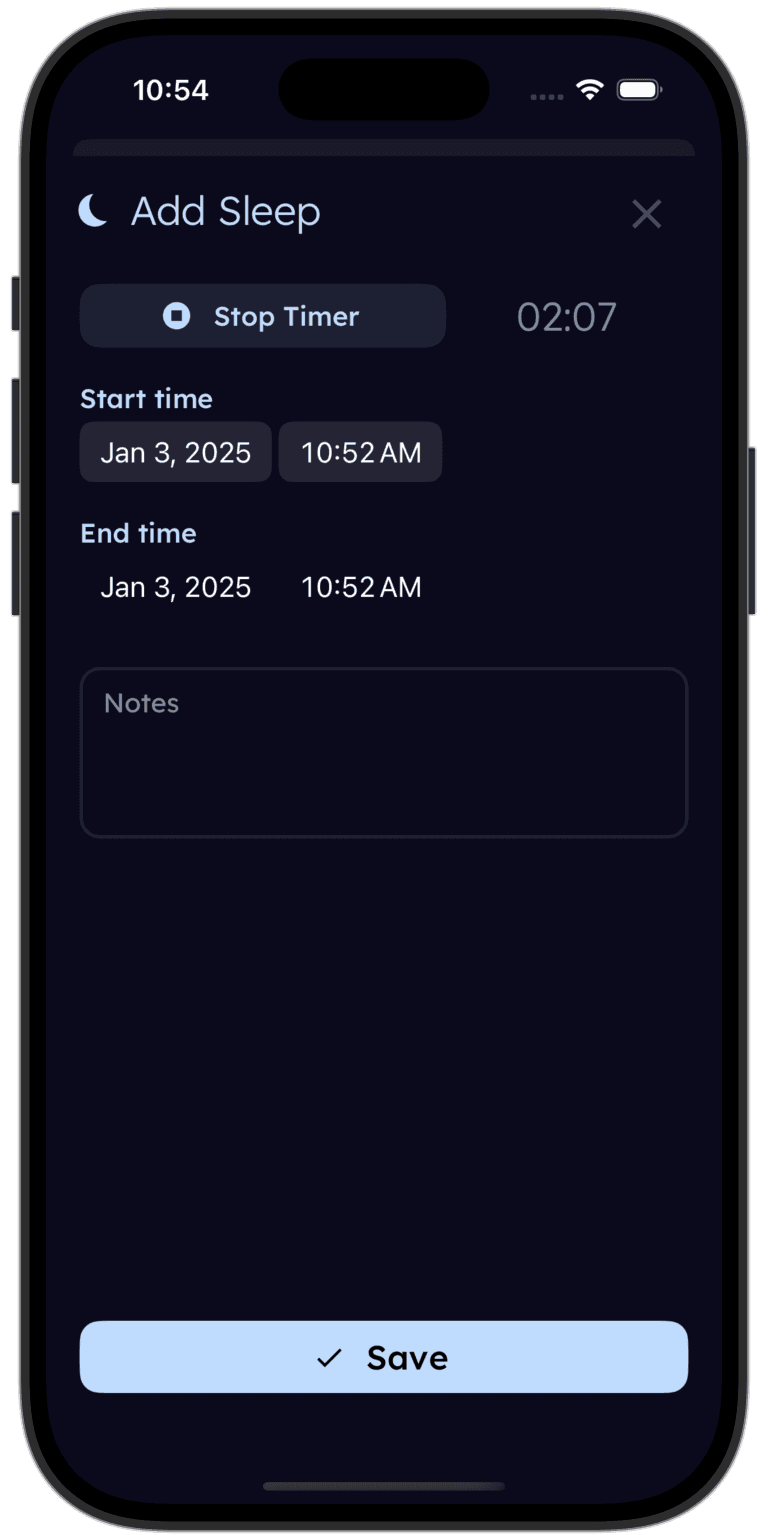
Tinylog tracks sleep so you can spot patterns.
Log naps, bedtime, night wakes, and wake windows. See trends over days and weeks. Bring the data to your next pediatrician visit.


Sizing: Buy Once vs. Buy as You Grow
Woolino takes an unconventional approach to sizing. Their 4 Season Ultimate sack fits babies from 2 to 24 months using adjustable shoulder snaps and a generous length. You buy one sack, adjust the snaps as your baby grows, and use it for nearly two years.
Kyte Baby uses standard sizes — Small, Medium, Large, and XL — based on age and weight ranges. You buy the size that fits now and size up when your baby outgrows it. Most babies go through 2 to 3 sizes between birth and age two.
The Woolino approach saves money and hassle. You never have to think about whether it still fits. The tradeoff is that the sack is slightly oversized on a small 2-month-old and slightly snug on a tall 22-month-old.
The Kyte approach gives a more precise fit at each stage. A well-fitting sleep sack looks neater and has less excess fabric around the legs. The tradeoff is that you buy multiple sacks and your baby will inevitably be between sizes at some point.
Temperature Regulation: The Real-World Test
This is where Woolino genuinely shines. Merino wool's thermoregulation is not marketing — it is textile science. The fiber's structure creates tiny air pockets that insulate in cold and release heat in warmth. It also absorbs up to 30% of its weight in moisture without feeling damp, which prevents the clammy feeling that wakes babies up.
Parents in climates with big temperature swings — cold winters, warm summers, or drafty old houses — consistently report that Woolino performs across conditions without needing to change layers underneath.
Kyte Baby's bamboo rayon breathes well and works great in stable, moderate temperatures (68–72°F). In warmer climates or well-insulated homes, the 1.0 TOG Kyte sack is plenty. But if your nursery drops below 65°F in winter, you will likely need the 2.5 TOG version or heavier pajamas underneath.
The honest take: if you keep your nursery at a consistent temperature year-round, Kyte is perfectly fine. If your indoor climate varies, Woolino's adaptability is a real functional advantage — not just a selling point.
| Product | Typical Price | Cost Per Month | Notes |
|---|---|---|---|
| Woolino 4 Season Ultimate (2–24 months) | $89–$99 | ~$4–$5/month over 22 months | One purchase covers nearly two years |
| Kyte Baby Sleep Bag 1.0 TOG (single size) | $36–$42 | ~$6–$10/month per size | Most babies need 2–3 sizes from birth to 2 years |
| Kyte Baby total cost (2–3 sizes, birth to 2 years) | $108–$126 | ~$5–$6/month over 22 months | Does not include winter-weight purchases |
| Kyte Baby with seasonal weights (1.0 + 2.5 TOG) | $180–$250+ | ~$8–$11/month over 22 months | If buying both weights in each size |
Price: Sticker Shock vs. Total Cost
The Woolino 4 Season Ultimate costs $89–$99. That is a lot for a sleep sack, and it causes sticker shock for nearly everyone who looks at it for the first time.
A single Kyte Baby Sleep Bag costs $36–$42. That feels much more reasonable.
But here is the math most people miss: you buy the Woolino once. You buy Kyte Baby sacks two to three times as your baby grows — and possibly in multiple TOG weights. Over two years, the total Kyte Baby spend can easily reach $108–$250 depending on how many seasonal weights you buy.
When you calculate cost per month of use, Woolino comes out to roughly $4–$5 per month. Kyte Baby comes out to $5–$11 per month depending on how many sacks you purchase.
Woolino is the better long-term value. Kyte Baby is the easier purchase to make in the moment. Both are premium products that cost more than budget alternatives like Halo or Burt's Bees.
Choose Woolino If
- You want one sleep sack that works from 2 months through toddlerhood
- Your nursery temperature fluctuates between seasons and you do not want to swap sacks
- Your baby tends to sweat at night and needs strong moisture wicking
- You prefer natural fibers over synthetic materials
- You value long-term cost savings over a lower upfront price
- You want a sleep sack with adjustable shoulder snaps that grows with your baby
Choose Kyte Baby If
- Softness is your top priority — you want the silkiest fabric against baby's skin
- Your baby runs hot and you need a lightweight, breathable sack for warm climates
- You prefer easy-care laundry with no special washing instructions
- You enjoy collecting prints and seasonal patterns
- You want a more precise fit at each growth stage rather than a one-size approach
- You prefer a lower upfront cost even if total spend over time may be higher
Where to Buy
The Woolino 4 Season Sleep Sack (~$95) is the buy-it-once option. Merino wool thermoregulation means one sack handles summer and winter, and the adjustable snaps fit from 2 to 24 months. The upfront cost is higher, but the per-month value is hard to beat. It is the sleep sack that parents who own it tend to recommend to everyone they know.
If softness and breathability are what matter most, the Kyte Baby Sleep Bag (~$38) is the one to grab. The bamboo rayon fabric is genuinely luxurious, it washes like a dream, and the prints are beautiful. It works especially well in warmer climates or well-regulated nurseries. You will likely need to size up once or twice, but each purchase feels manageable.
Either way, you are getting a sleep sack that is meaningfully better than the budget options. The right pick depends on your climate, your baby's temperature tendencies, and whether you prefer one purchase or a lower entry price.
Tinylog earns a small commission on purchases made through these links, at no cost to you.
Looking for a discount? Try checking promo.new. It doesn't always find what you're looking for, but when it does, it works like a charm.
The Bottom Line
These are two of the best sleep sacks on the market, and the choice comes down to material philosophy:
Woolino is the better investment if you want one sack that handles all seasons, all temperatures, and all growth stages from 2 to 24 months. Merino wool's thermoregulation is the real deal, and the long-term cost math works in its favor.
Kyte Baby is the better choice if you prioritize fabric softness, easy laundering, and a precise fit at each stage. The bamboo rayon is unmatched in how it feels, and the lower per-sack price makes it easier to try without committing to a big upfront spend.
For most families, both will keep your baby sleeping safely and comfortably. If your nursery temperature swings a lot, lean Woolino. If your nursery stays consistent and you want the softest possible fabric, lean Kyte.
If you are tracking your baby's sleep — which is especially useful during regressions and nap transitions — Tinylog makes it easy to log sleep patterns and see trends over time.
Related Guides
- Baby Sleep Schedule — Age-by-age sleep expectations and wake windows
- Sleep Regression vs. Sleep Problem — How to tell the difference
- Baby Sleep Safety — AAP safe sleep guidelines explained
- White Noise vs. Pink Noise vs. Brown Noise — Which sound helps babies sleep best
Sources
- Woolino.com. "Woolino 4 Season Ultimate Baby Sleep Bag — Product Information." 2026.
- KyteBaby.com. "Kyte Baby Sleep Bag — Product Information." 2026.
- Textile Research Journal. "Thermal Comfort Properties of Merino Wool." textileresearchjournal.com.
- Wirecutter (NYT). "The Best Baby Sleep Sacks and Wearable Blankets." nytimes.com/wirecutter, 2025.
- American Academy of Pediatrics. "Safe Sleep: Back Is Best." healthychildren.org.
- Babylist. "Best Sleep Sacks of 2026." babylist.com.
- WhatToExpect.com. "Best Sleep Sacks and Wearable Blankets." whattoexpect.com, 2026.
This guide is for informational purposes only. Sleep sack choice is a personal preference based on your baby's needs, your climate, and your budget. Always follow AAP safe sleep guidelines. If your baby has a known wool allergy, avoid merino wool products and consult your pediatrician.
Frequently asked questions
- Can the Woolino 4 Season Sleep Sack really be used year-round?
- Yes. Merino wool naturally regulates body temperature by wicking moisture and insulating in cold while breathing in heat. Most parents use the Woolino across all seasons with only minor adjustments to what the baby wears underneath. In very hot climates (above 80°F indoors), some parents switch to a lighter option for summer.
- Is Kyte Baby Sleep Bag warm enough for winter?
- The standard Kyte Baby Sleep Bag (1.0 TOG) is designed for room temperatures between 68–72°F. For cooler rooms or winter months, you may need to layer underneath or use their warmer-weight option. It is not a true four-season sack in the way Woolino is.
- Which sleep sack is better for babies who run hot?
- Kyte Baby's bamboo rayon is exceptionally breathable and tends to feel cooler against skin. For babies who overheat easily or in warmer climates, Kyte is often the better default. Woolino's merino wool also breathes well, but some hot-running babies still get too warm in it during summer.
- Are both sleep sacks safe for overnight use?
- Yes. Both are wearable blankets designed for safe overnight sleep per AAP guidelines. Neither has loose fabric, hoods, or weighted elements. Both replace loose blankets in the crib, which is the entire point of a sleep sack.
- Why is the Woolino sleep sack so much more expensive?
- Merino wool is a premium natural fiber that costs significantly more than bamboo rayon to source and manufacture. Woolino also sizes their sacks to fit for 2–24 months, meaning you buy one sack instead of multiple sizes. When you factor in not needing to rebuy, the per-month cost is closer than the sticker price suggests.
- Can I machine wash both sleep sacks?
- Yes. Kyte Baby is fully machine washable and dryable with no special care. Woolino recommends machine washing on a gentle or wool cycle with cold water and laying flat to dry or tumble drying on low. Woolino requires slightly more care, but it is not hand-wash-only.