GUIDE

2-3-4 Nap Schedule vs. Age-Based Schedule

The 2-3-4 schedule is a simple formula that works well for some babies on 2 naps. Age-based wake windows are more flexible and adapt to your specific baby's sleep needs. Neither is universally superior.

The 2-3-4 schedule is popular because it's easy to remember. But easy to remember doesn't always mean right for your baby.

Build your baby's ideal routine

AI-powered care routine based on your baby's age

Incorrectly timed daytime naps can interfere with nighttime sleep — if a toddler naps too late in the afternoon (even a catnap), they may not build up enough sleep pressure to fall asleep at their regular bedtime.
Dr. Krupa PlayforthDr. Krupa Playforth, MD, FAAP, Pediatrician, Warm Heart Pediatrics

The Appeal of a Simple Formula

The 2-3-4 schedule became popular because it solves the most common nap scheduling problem: parents don't know how long their baby should be awake between naps. The formula gives a clean answer — 2 hours, then 3 hours, then 4 hours. Done.

And for a specific group of babies, it works beautifully. The escalating wake windows make physiological sense. Sleep pressure builds throughout the day, so each wake window should be longer than the last. A baby who wakes at 7 AM naps at 9 AM, then naps again at 12:30 PM (assuming the first nap ends around 9:30-10 AM), and goes to bed around 7 PM. Clean, predictable, easy to plan around.

The problem is that babies are not formulas. The 2-3-4 schedule assumes a specific wake time, specific nap lengths, and a specific tolerance for that final 4-hour stretch. When any of those assumptions are wrong — and they often are — the schedule stops working. A baby who can only handle 3 hours before bed will be overtired and fight bedtime. A baby who needs 2.5 hours before the first nap will be undertired and fight it too.


2-3-4 Schedule vs. Age-Based Windows
Simplicity
2-3-4 ScheduleVery simple — one formula to remember
Age-Based WindowsRequires knowing age-appropriate wake windows
Flexibility
2-3-4 ScheduleRigid — same windows every day regardless of nap quality
Age-Based WindowsAdjusts to daily variables like short naps or early wake-ups
Age range
2-3-4 ScheduleBest for ~8-12 months (2-nap stage)
Age-Based WindowsAdapts across all ages and nap transitions
Individual fit
2-3-4 ScheduleOne-size-fits-all — doesn't account for baby's unique needs
Age-Based WindowsCustomized to your baby's sleepy cues and temperament
Overtiredness risk
2-3-4 ScheduleThe 4-hour pre-bedtime window is too long for some babies
Age-Based WindowsAdjusts window length based on baby's tolerance
Undertiredness risk
2-3-4 ScheduleThe 2-hour first window may be too short for older babies
Age-Based WindowsCan extend windows as baby's stamina increases
Age-based windows are recommended ranges from pediatric sleep research. Individual babies vary within these ranges.

2-3-4 Schedule Advantages

  • Dead simple — no charts or calculations needed
  • Escalating windows match natural sleep pressure buildup
  • Gives structure to parents who feel overwhelmed by flexibility
  • Works genuinely well for many 8-12 month olds on 2 naps
  • Easy for all caregivers to follow — grandparents, babysitters, daycare

Simplicity is the 2-3-4's greatest strength — and its biggest limitation.

2-3-4 Schedule Challenges

  • The 4-hour window before bed is too long for many babies under 10 months
  • Doesn't adapt when naps are short or the day starts early/late
  • Only works for the 2-nap stage — useless for 3 naps or 1 nap
  • Ignores individual sleepy cues in favor of the clock

These limitations become more apparent with younger or older babies at the 2-nap stage.

Age-Based Schedule Advantages

  • Adapts to your specific baby's needs and temperament
  • Works across all ages and nap transitions
  • Adjusts for short naps, early mornings, and off days
  • Follows your baby's actual tired signs rather than a formula
  • Supported by pediatric sleep research on wake window variability

Flexibility requires more effort but produces better results for most families.

Age-Based Schedule Challenges

  • Requires more knowledge — you need to know the right windows for your baby's age
  • Can feel overwhelming for parents who want a simple answer
  • Sleepy cues can be hard to read, especially in younger babies
  • Different sources recommend different wake windows, which adds confusion

Using an app to track wake windows and generate a care routine can simplify this approach significantly.

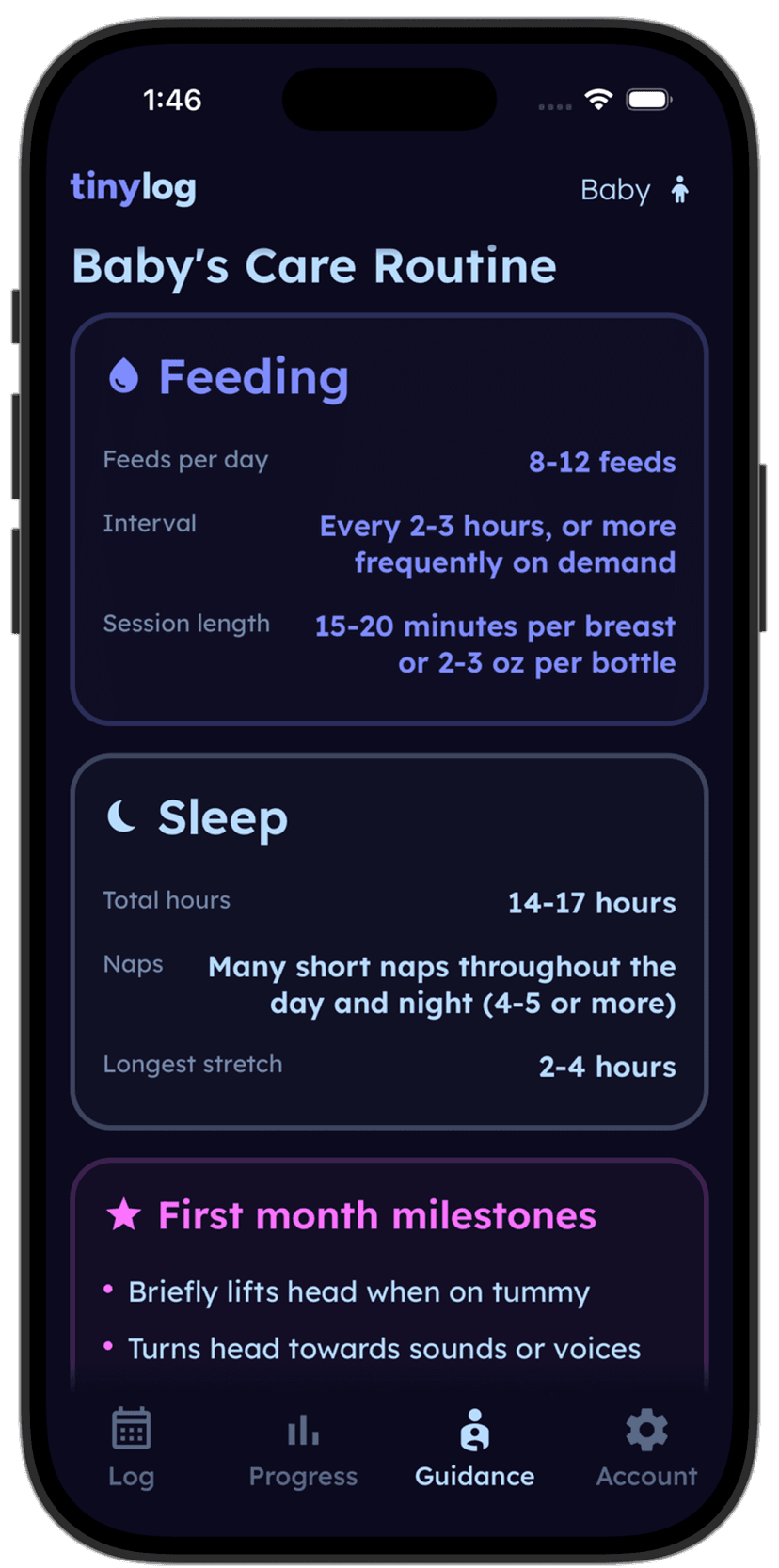
Tinylog care routine showing age-appropriate nap schedule

Get a care routine built for your baby's age.

Tinylog generates an AI-powered daily routine based on your baby's age and sleep needs — no formulas to memorize. Adjust as you go and see what actually works.

Download on the App StoreGet It On Google Play

When Each Approach Works Best

Use the 2-3-4 schedule if: your baby is 8-12 months old, solidly on 2 naps, handling the 4-hour stretch before bed without meltdowns, and you want the simplest possible framework. It also works well as a starting point if you have no idea where to begin.

Use age-based wake windows if: your baby is younger than 8 months or older than 12 months, if the 2-3-4 windows don't quite fit, if your baby's naps are variable in length, or if you want a more tailored approach. Our wake windows by age guide covers exact ranges for each month. Age-based windows adapt to short nap days, early mornings, and the transitions between nap stages.

Most experienced sleep consultants recommend age-based wake windows over rigid formulas because they account for the reality that every day is a little different. But they also acknowledge that the 2-3-4 schedule gives parents a useful scaffolding — especially during the overwhelm of early parenthood.

How to Find Your Baby's Actual Windows

Start with the age-appropriate wake window range for your baby and use it as a guide, not a rule. At 7-8 months, typical windows are 2.25-3.5 hours. At 9-10 months, they are 2.5-3.75 hours. At 11-12 months, they stretch to 3-4 hours.

Then watch your baby. If they are happily playing at the end of the window, they can handle a bit more awake time. If they are rubbing their eyes and fussing 20 minutes before the window is up, they need a shorter one. Adjust by 15-minute increments over a few days and track the results.

The best schedule is the one your baby actually follows — not the one that looks cleanest on paper.

Tips That Apply Either Way

Use the formula as a starting point, not gospel

The 2-3-4 schedule works as a baseline for the 2-nap stage. But if your baby consistently fights the second nap or melts down before bedtime, adjust the windows by 15-30 minutes. Your baby's behavior is better data than any formula.

Watch the baby, not just the clock

Whether you use 2-3-4 or age-based windows, sleepy cues are the tiebreaker. Yawning, eye rubbing, zoning out, fussiness — these signals tell you when your specific baby is ready, regardless of what the clock says.

Track and adjust weekly

Nap needs change fast in the first year. A schedule that works at 8 months may not work at 10 months. Review your baby's sleep data weekly and adjust windows as they grow.

Related Guides

Sources

  • Mindell, J. A., et al. (2016). "Development of infant and toddler sleep patterns." Sleep Medicine, 17, 15-22.
  • Galland, B. C., et al. (2012). "Normal sleep patterns in infants and children: a systematic review." Sleep Medicine Reviews, 16(3), 213-222.
  • Hirshkowitz, M., et al. (2015). "National Sleep Foundation's sleep time duration recommendations." Sleep Health, 1(1), 40-43.
  • Paavonen, E. J., et al. (2020). "Normal sleep development in infants: findings from two large birth cohorts." Sleep Medicine, 69, 145-153.

This guide is for informational purposes only and is not a substitute for professional medical advice. Consult your pediatrician for guidance specific to your baby.

Get this comparison in your inbox.
We'll send you this breakdown to help you find the nap schedule that fits your baby.
Find the schedule that fits your baby.
Download Tinylog — get an AI-generated care routine and track whether it's working.
Download on the App StoreGet It On Google Play