


GUIDE

20 Month Old Sleep Schedule

Your toddler's imagination is blooming — and with imagination comes the first real nighttime fears. The schedule is stable, but bedtime may need new emotional support.

At 20 months, the world your toddler imagines is as real to them as the world they see. Here's how to honor their fears while protecting their sleep.

Twenty Months: Imagination Arrives — and So Do Nighttime Fears

Twenty months is when many parents encounter something genuinely new: a toddler who is afraid of the dark. Not the generic fussiness of younger months, but a specific, articulated fear. "Scared." "Monster." "Dark bad." Your toddler's imagination — the same incredible cognitive development that produces elaborate pretend play during the day — now creates the capacity to fear things that aren't visible.

This is not a regression. It's a sign of extraordinary cognitive growth. Your toddler can now imagine things that might exist in the dark, anticipate scenarios, and project emotions into the future. These are sophisticated mental abilities, and the fact that they produce fear at bedtime is a side effect of healthy brain development.

The schedule at 20 months is unchanged — one nap, consistent bedtime, predictable routine. What changes is the emotional support your toddler needs around sleep. A comfort object, a dim nightlight, and genuine acknowledgment of their feelings are your new tools. The schedule is the skeleton. The emotional response is the muscle.

20 Month Old Sleep at a Glance
Total sleep (24 hrs)
11–14 hours
Nighttime sleep
10–12 hours
Number of naps
1
Nap duration
1.5–2.5 hours
Wake windows
5–6 hours
Sleep needs are stable. Emotional needs around sleep are evolving.

Sample 20 Month Old Schedule

The same reliable one-nap schedule. Consistency remains the foundation.

Sample daily schedule

  1. Wake + milk
  2. Breakfast
  3. Snack
  4. Lunch
  5. Nap (1.5–2.5 hrs)
  6. Wake + snack
  7. Dinner
  8. Bedtime routine
  9. Bedtime

The schedule is the same as previous months. What's different is how your toddler experiences it emotionally — especially bedtime.

Wake Windows at 20 Months

Wake windows are 5 to 6 hours. Morning: about 5.5 to 6 hours. Afternoon: about 5 hours. These are the same as 18 to 19 months and will hold steady through the rest of toddlerhood. Your toddler's circadian rhythm is well-established, and the wake windows should feel automatic by now. If bedtime resistance seems related to timing rather than fear, try extending the afternoon window by 15 minutes.

Naps at 20 Months

One nap, 1.5 to 2.5 hours. The nap should be well-established and reliable. If your toddler is consistently resisting the nap, this is behavioral (not a sign to drop it). Twenty-month-olds still need a daily nap. Keep offering it at the same time. Some toddlers at this age begin to show preferences about their nap environment — wanting a specific blanket, a certain stuffed animal, or the door open a crack. These preferences are fine as long as they don't become elaborate rituals that delay the nap.

Nighttime Sleep at 20 Months

Nighttime sleep is 10 to 12 hours. The emergence of nighttime fears may cause new wakings — but these are different from regression wakings. Fear-based wakings involve genuine distress, and your toddler may have difficulty articulating what scared them. Brief, calm reassurance works: go in, offer a few words of comfort, remind them of their comfort object, and leave. Avoid turning on overhead lights (use a nightlight or hall light), and keep your voice calm and boring. The message: nighttime is safe, you're nearby, and sleep continues.

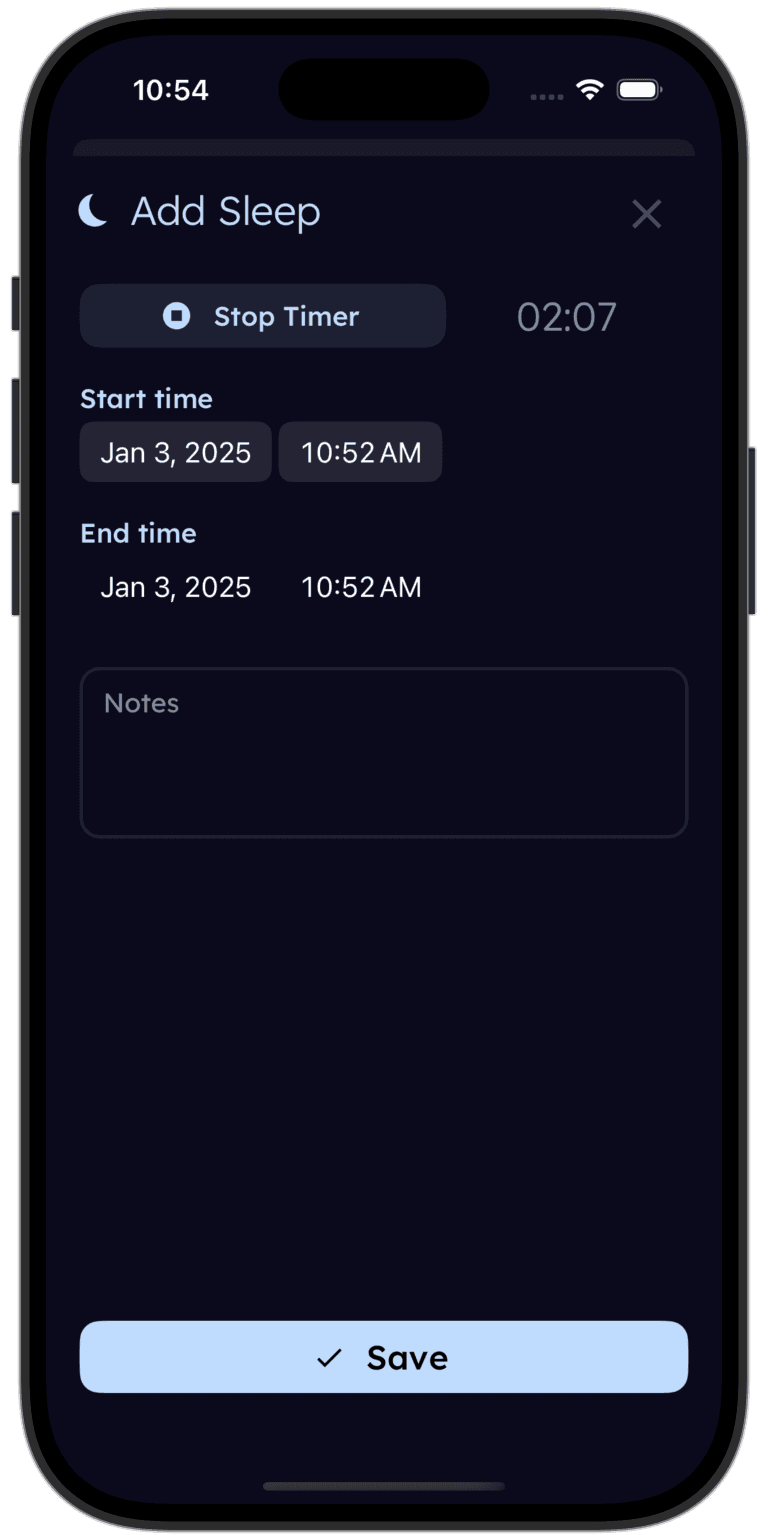
tinylog tracking 20 month old sleep with nighttime fears

Fears are new, but the rhythm is steady — see it in the data.

When bedtime suddenly involves tears and clingy behavior, it can feel like a regression. But tracked data shows what's really happening: the sleep pattern is stable even as the emotional experience of bedtime is changing.

Download on the App StoreGet It On Google Play

What's Happening Developmentally

At 20 months, your toddler has 100 to 300+ words, is forming multi-word sentences, running confidently, climbing everything, and engaging in increasingly elaborate pretend play. They're feeding themselves with utensils, helping with simple household tasks, and showing a growing sense of humor. Empathy is deepening — they may try to comfort other children or show concern when someone is upset.

The imagination development is the headline for sleep. Your toddler can now create mental images of things that aren't present, remember events from days ago, and anticipate future events. These abilities make them a more complex, interesting person — and they also make the dark room feel different. Where a 12-month-old saw nothing in the dark, a 20-month-old's mind fills it with possibilities. This is the price of cognitive advancement, and it passes as your toddler learns that the dark is safe.

Common Problems at 20 Months

Nighttime fears appearing for the first time

Your toddler may suddenly be afraid of the dark, shadows, sounds, or 'monsters.' These fears are real — their imagination can now create things that feel genuinely threatening. Don't dismiss the fear. Acknowledge it: 'I understand you feel scared. You're safe. I'm right here.' A comfort object, a dim nightlight, and a brief 'safety check' of the room before bed can all help. Avoid elaborate monster-hunting rituals — they can inadvertently confirm that there's something to be afraid of.

New nighttime wakings with crying

If your toddler wakes at night crying and seems genuinely frightened (rather than just awake and wanting company), this is different from regression wakings. Go to them, offer brief comfort — 'You're safe, I'm here, your teddy is here' — and leave. The comfort object becomes especially valuable here: it's something they can hold onto when you're not in the room. Repeated fear-based wakings usually ease within a few weeks as your toddler learns that nighttime is safe.

Bedtime routine taking longer

As your toddler's comprehension and language grow, they engage more actively with the bedtime routine — wanting to 'read' the book themselves, singing along with songs, choosing pajamas. This is wonderful, but it can stretch the routine to 45+ minutes. Set a structure: bath, pajamas, two books, one song, goodnight. Participation within the structure is great. Extending the structure is not. A predictable endpoint is what makes the routine work.

What No One Tells You About Sleep at 20 Months

Nighttime fears are a sign of cognitive advancement, not regression

The ability to fear something that isn't visible requires imagination, memory, and the cognitive capacity to anticipate. When your 20-month-old is scared of the dark, it means their brain has reached a new level of sophistication. They can project possibilities into the future and imagine scenarios. This is the same cognitive leap that makes pretend play possible. The fear and the play come from the same developmental engine.

A comfort object now is one of the best sleep investments you can make

If your toddler doesn't already have a comfort object, now is the ideal time to introduce one. A small lovey or stuffed animal that lives in the crib becomes a transitional object — it represents your comfort and presence even when you're not there. Sleep with it for a night first so it smells like you, then introduce it as their special sleep friend. This simple step can significantly reduce nighttime fear and help your toddler self-soothe for years.

When to Talk to Your Pediatrician

  • Nighttime fears that are so severe your toddler won't enter their room
  • Night terrors lasting more than 20 minutes or happening multiple times per night
  • Excessive daytime sleepiness despite adequate sleep
  • Snoring or breathing difficulties during sleep
  • Regression in language or motor skills
  • Any behavior that seems significantly different from your toddler's baseline

Nighttime fears are normal. Severe fears that prevent sleep entirely are worth discussing.

Related Guides

Sources

American Academy of Pediatrics (AAP). (2022). Healthy Sleep Habits: How Many Hours Does Your Child Need?
Mindell, J. A., et al. (2017). Sleep and Social-Emotional Development in Infants and Toddlers. Journal of Clinical Child & Adolescent Psychology, 46(2), 236–246.
Galland, B. C., et al. (2012). Normal sleep patterns in infants and children: A systematic review. Sleep Medicine Reviews, 16(3), 213–222.
Baby Sleep Information Source (BASIS), Durham University. Normal Infant Sleep Development. https://www.basisonline.org.uk
Zero to Three. (2022). 18-24 Months: Your Child's Development. https://www.zerotothree.org

Medical Disclaimer

This guide is for informational purposes only and is not a substitute for professional medical advice. Always follow safe sleep guidelines as appropriate for your child's age. Consult your pediatrician with any concerns about your child's sleep.

Want this guide in your inbox?
We'll send you this guide on toddler nighttime fears and sleep.
New fears, same steady rhythm — track it.
Download ${appName} free — see the stable pattern underneath the bedtime drama.
Download on the App StoreGet It On Google Play