
A growth spurt
Around 6 months, your baby is in the middle of a significant growth spurt. Their body needs more fuel, which means more hunger — including at night. This alone can disrupt sleep that had been going well for weeks.
GUIDE
Published on ·Updated on
It's not technically a regression — it's more like a perfect storm of growth, teething, and new skills all hitting at once.
The good news? This one is usually short-lived. Here's what's going on and how to get through it.
Log naps and wake windows
Let's start with the question you actually Googled: is this a real thing?
The honest answer is — it depends on who you ask. Many pediatric sleep experts don't classify what happens at 6 months as a true regression. The 4-month sleep regression is a genuine, permanent change in how your baby's brain handles sleep cycles. That one is real in the most technical sense. What happens at 6 months is different.
At 6 months, there's no single biological switch flipping. Instead, you've got a growth spurt, possibly the start of teething, major motor milestones, and maybe the introduction of solid foods — all converging in the same 2-3 week window. Each one of those things can independently mess with sleep. Stack them all together and you get what looks and feels exactly like a regression, even if the underlying mechanism is different.
So is it real? Your baby is really waking up. You're really exhausted. The sleep disruption is really happening. Whether we call it a "regression" or "a perfect storm of developmental chaos" doesn't matter much at 3 AM. What matters is understanding what's going on and knowing it's temporary.
The good news: this one usually lasts 1-2 weeks. Some babies are through it in a matter of days. That's significantly shorter than most other sleep disruptions, and it's because you're dealing with temporary triggers rather than a permanent brain change.
Your baby's world is expanding at a ridiculous pace right now. Here's what's colliding all at once:
Around 6 months, your baby is in the middle of a significant growth spurt. Their body needs more fuel, which means more hunger — including at night. This alone can disrupt sleep that had been going well for weeks.
Many babies cut their first teeth between 4 and 7 months. Sore gums are uncomfortable, and that discomfort tends to feel worse at night when there's nothing else to distract them. Even if you can't see a tooth yet, it might be working its way up.
Your baby is learning to sit, roll both directions, and maybe even start scooting. These are huge neurological achievements. And when the brain is wiring up new skills, it likes to practice — including at 3 AM in the crib.
If you've recently introduced solid foods, your baby's digestive system is adjusting to a completely new way of processing calories. Some babies handle this seamlessly. Others get a little gassy or uncomfortable as their gut adapts, and that can mess with sleep.
Around 6 months, your baby is starting to understand that you exist even when they can't see you. This isn't full-blown separation anxiety yet (that usually peaks at 8-10 months), but the early seeds of it can make them want you closer at night.
Any one of these would be enough to disrupt sleep on its own. Your baby is dealing with all of them simultaneously. No wonder things are messy right now. For more on how growth spurts affect feeding and sleep, we have a full guide on that too.
Sound familiar? You're probably in it. The combination of hunger, new skills, and possible teething makes this one feel especially chaotic — but it resolves faster than most regressions.
You don't need a complete sleep overhaul. You need a few things you can do right now, tonight, to get through this stretch. Here's your game plan:
If hunger is driving the night waking, the fix is more calories during daylight hours. Offer an extra feed or two during the day. For breastfed babies, try adding a feed before each nap. For formula-fed babies, consider offering a slightly larger bottle at the last feed before bed.
Your baby wants to practice sitting and rolling. If they get tons of floor time during the day, they're less likely to use the crib as their personal gym at 2 AM. Tummy time, supported sitting, rolling games — tire that little body out.
Because it kind of does. Whatever your routine is — bath, jammies, feed, book, song, crib — do it the same way, in the same order, every single night. When everything else feels chaotic, the routine is your anchor. Your baby finds it calming even if they fight it.
If you suspect teething, talk to your pediatrician about appropriate pain relief before bedtime. A cold teething ring before the bedtime routine can help too. Addressing the discomfort proactively can prevent a lot of unnecessary wake-ups.
When your baby wakes at night, wait 2-5 minutes before going in. They might be between sleep cycles and just fussing briefly before settling back down. If you rush in, you might actually wake them up more. This isn't sleep training — it's just giving them a chance.
When you do go in at night, keep the lights off, keep your voice low, and keep the visit short. Feed if they're hungry, change if they need it, then back down. No playing, no chatting, no eye contact if you can help it. Night is for sleeping, and you're reinforcing that message.
A lot of parents swear by the Hatch Baby (~$100) — it is a sound machine and night light in one, and you control it from your phone so you are not fumbling in the dark. It is not cheap, but it lasts from newborn through preschool, and the OK-to-wake clock becomes genuinely useful around age two.
Tinylog earns a small commission on purchases made through these links, at no cost to you.
Before you buy, it's worth checking promo.new for a deal. It doesn't cover everything, but we've had good luck with it.
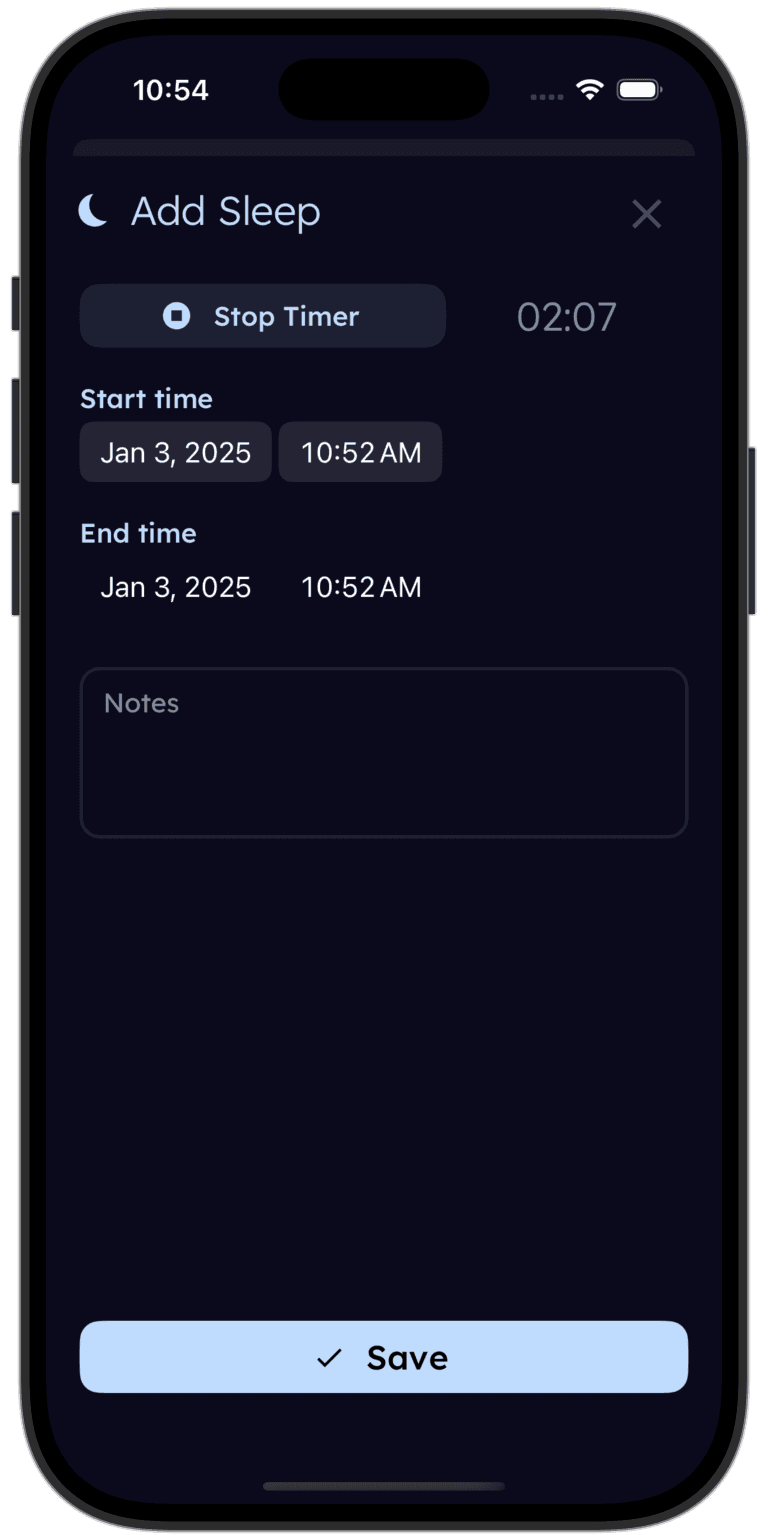
Tinylog tracks sleep and feeds so you can see the actual pattern — not just how it feels at 2 AM. Log wake-ups in a few taps and watch the data tell you when the regression is ending.


There are a few things about this particular sleep disruption that might surprise you — and a couple that might actually make you feel better.
The 4-month regression involves a permanent change in sleep architecture — your baby's sleep cycles literally reorganize. The 6-month disruption doesn't do that. It's a pile-up of temporary triggers, which is why it usually resolves in 1-2 weeks instead of the 2-6 weeks that the 4-month regression can take.
The idea that starting solids will help your baby sleep through the night is one of the most persistent myths in parenting. Research — including a large 2018 study published in JAMA Pediatrics — found that introducing solids early had only a very modest effect on sleep. Feed solids because your baby is developmentally ready for them, not as a sleep hack.
Unlike the 4-month regression (which hits almost everyone because it's a biological sleep cycle change), the 6-month disruption depends on which triggers your baby is experiencing and when. Some babies breeze through 6 months with barely a hiccup. If that's you, quietly enjoy it.
If your baby's sleep was never great to begin with, what you're seeing at 6 months might be a schedule issue or a sleep association rather than a regression. A regression means sleep was good and then fell apart. If sleep has been rough since month 4, you might be dealing with something else entirely — and our baby sleep playbook can help you sort that out.
One more thing worth knowing: the 8-10 month regression is next on the horizon, and that one involves separation anxiety and pulling to stand. Different triggers, different game plan. But if you get through this one with your routine intact, you'll be better prepared for whatever comes next.
A regression is temporary and self-resolving. If what you're seeing doesn't match that pattern — or if something just feels wrong — trust your instincts and make the call. You never need a 'good enough' reason to contact your pediatrician.
The 6-month sleep regression is less of a regression and more of a collision — growth, teething, motor milestones, and new foods all hitting at the same time. It feels brutal in the moment, but it's one of the shorter sleep disruptions you'll face. Most families are through it in 1-2 weeks.
Keep your routine consistent, pack in extra daytime feeds, give your baby tons of floor time to practice their new skills, and address teething pain proactively. You don't need to change your whole approach to sleep — you just need to ride this wave.
And if sleep was already a struggle before this hit, the disruption at 6 months might be a sign that it's time to look at the bigger picture. Our baby sleep playbook covers schedules, wake windows, and sleep training options for every age — no sleep consultant required.
Sleep Regression Timeline — A complete timeline from 4 months to 3 years
4-Month Sleep Regression — The previous regression
8-Month Sleep Regression — What comes next
Sleep Regression and Feeding — Why baby suddenly wants to eat at night again
This guide is for informational purposes only and is not a substitute for professional medical advice. If you have concerns about your baby's sleep or development, please consult your pediatrician.