GUIDE

The 8-Month Sleep Regression

Your baby just figured out object permanence — they know you're still there when you leave, and they really want you to come back.

Separation anxiety plus crawling plus standing equals sleep chaos. Here's your game plan.

What's Actually Going On

If your 8-month-old was sleeping reasonably well and then suddenly... wasn't — you're not imagining things and you didn't break anything. Around 8 months, several big developmental changes collide at once, and sleep takes the hit.

The biggest one is object permanence. Before now, when you left the room, you essentially ceased to exist in your baby's mind. Out of sight, out of mind — literally. But around 7-8 months, something clicks: they realize that you're still out there somewhere, even when they can't see you. And they want you back. Right now.

That's separation anxiety, and it's the primary driver of this regression. It's not a sleep problem — it's a cognitive leap that happens to destroy sleep.

On top of that, your baby is probably learning to crawl, pull to stand, or both. Their brain is processing these new motor skills around the clock, including during sleep. And the 3-to-2 nap transition often lands right in this window too.

The typical timeline? Three to six weeks. The separation anxiety piece tends to ease as your baby builds confidence that you always come back. The motor skill component usually resolves faster — once they've actually mastered crawling and standing, the nighttime practicing slows down.

If you're also dealing with a growth spurt, which can happen around this age, you might see increased hunger mixed in with the sleep disruption. That's normal and temporary too.


Signs You're in the 8-Month Regression

  • Crying or screaming the moment you leave the room — even if they were fine five seconds ago
  • Pulling to stand in the crib, then getting stuck and wailing because they can't figure out how to sit back down
  • Fighting the second nap like it personally offended them
  • Waking at night and calling out for you specifically — not just fussing, but wanting you there
  • Bedtime suddenly takes twice as long, with multiple curtain calls
  • Clinging to you during the day more than usual — extra velcro baby energy
  • Waking up 30–45 minutes after bedtime (right when you finally sat down, naturally)

You don't need to check every box. If three or four of these showed up in the same week, you're probably in it. This is a well-documented developmental phase — not a mystery.

What to Do Tonight

You don't need a new sleep training method or a complete overhaul. What you need right now are targeted strategies for the specific things causing the wake-ups. Here's your game plan.

Practice sitting down from standing — a lot

Many 8-month-olds can pull themselves up but genuinely do not know how to get back down. During the day, help them practice bending their knees and lowering themselves. This is a real skill gap, not stubbornness. Once they crack it, the standing-in-the-crib-screaming thing resolves fast.

Play peekaboo like it's your job

This isn't just a cute game right now — it's therapy. Peekaboo teaches your baby that when you disappear, you come back. Short separation games during the day (leave the room for 10 seconds, come back cheerful) build the confidence they need to handle bedtime goodbyes.

Don't sneak out of the room

It's tempting. They're finally drowsy, you start inching toward the door... but sneaking out actually makes separation anxiety worse. Your baby needs to trust that when you say goodnight, you mean it — and that you're not going to vanish without warning. A calm, predictable goodbye is better than a secret escape.

Keep check-ins boring

If you go back in to reassure them, make it brief and uneventful. Quick pat, quiet voice, same phrase every time: 'You're okay, I love you, it's time for sleep.' Then leave. The goal is reassurance, not re-engagement. If check-ins turn into a 20-minute snuggle session, you've accidentally created a new sleep association.

Stick to your bedtime routine

This is not the time to overhaul anything. Same steps, same order, same timing. The predictability of the routine is doing more heavy lifting right now than you realize. Your baby's world feels uncertain — the routine is the one thing that stays solid.

Protect the second nap

A lot of babies start refusing the afternoon nap around 8 months, and it's tempting to just drop it. Don't — most babies aren't ready for one nap until 14-18 months. If they fight it, try capping the morning nap at 60-90 minutes so they're tired enough for the second one.

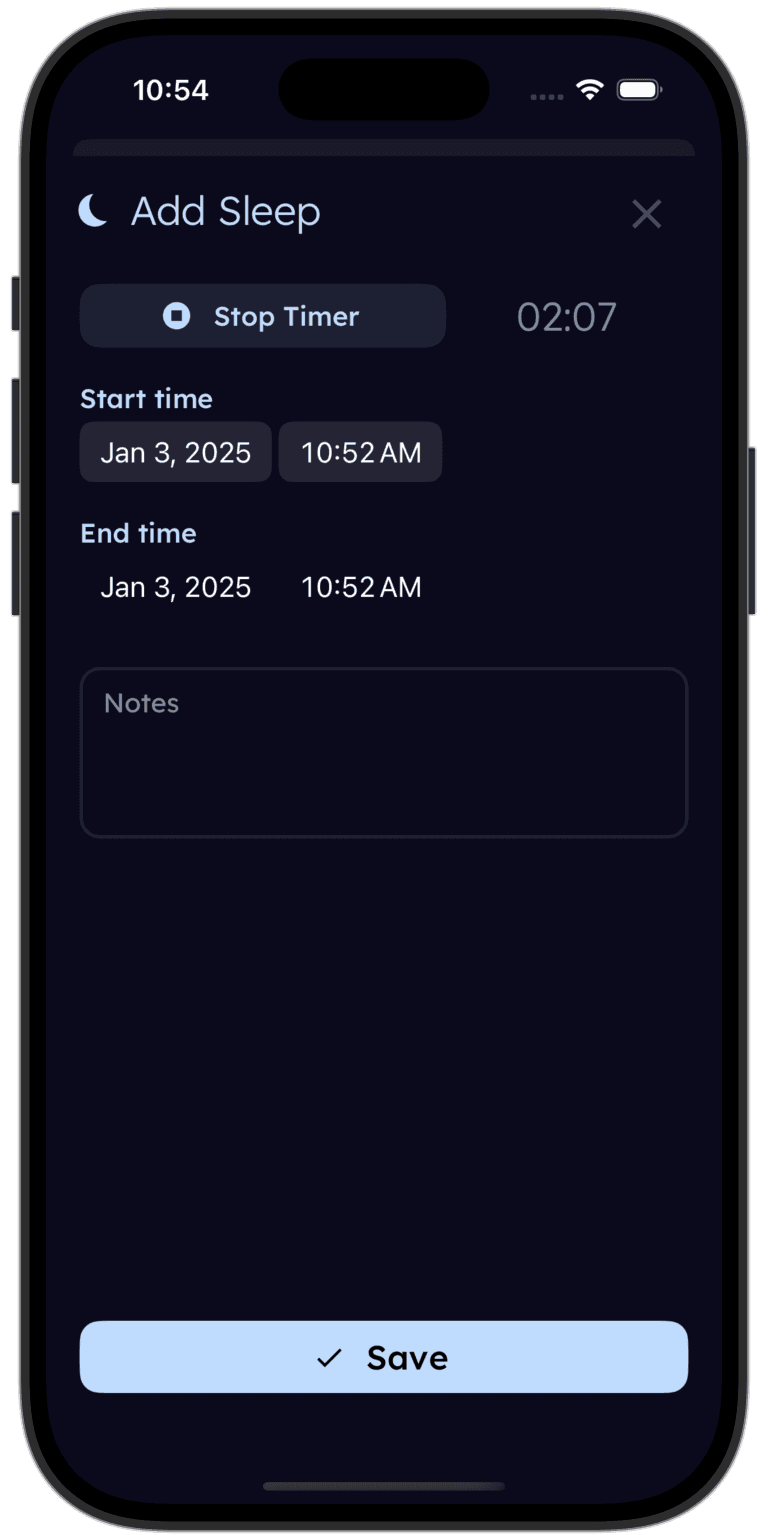
tinylog sleep tracking screen showing nightly sleep patterns over several weeks

Regressions feel endless — until you see the data.

Track sleep with one tap and watch the pattern emerge. Most parents start seeing improvement around week 3, but you won't notice it in the fog of 2 AM wake-ups. The data shows you what your exhausted brain can't.

Download on the App StoreGet It On Google Play

What No One Tells You About 8-Month Sleep

Object permanence is the real culprit

Before about 7-8 months, your baby literally didn't understand that things (and people) still exist when they can't see them. Now they do. When you walk out of the room, they know you're somewhere out there — and they have very strong opinions about you not being right here. It's actually a huge cognitive milestone. It just happens to wreck sleep.

Their brain rehearses motor skills at 2 AM

Crawling, pulling to stand, cruising — your baby's brain is consolidating these new motor patterns during sleep. Research shows that after a day of practicing a new physical skill, babies often 'rehearse' the movements during light sleep phases. That's why you'll find your baby standing in the crib at midnight looking confused. Their brain woke up their body.

This regression can overlap with the 3-to-2 nap transition

Right around 7-9 months, many babies drop from three naps to two. If the nap transition and the regression hit at the same time, it can feel like absolutely everything fell apart at once. It probably did. The good news is that once you're through both, you usually land in a really solid two-nap schedule.

Separation anxiety comes back in waves

Even after this regression resolves, separation anxiety can flare up again around 12 months, 18 months, and during big transitions like starting daycare. It's not a sign you did something wrong the first time — it's a normal, recurring developmental pattern. You'll know the playbook by then.

When to Talk to Your Pediatrician

  • Night waking hasn't improved at all after 6 weeks, even with consistent routines
  • Your baby seems to be in pain when lying down — could be ear infection or reflux flare
  • They've stopped gaining weight or are eating significantly less during the day
  • The anxiety seems extreme — not just fussing, but hours of inconsolable crying at every separation
  • You're noticing developmental concerns beyond sleep — not crawling, not babbling, not making eye contact
  • You're struggling with your own mental health from the sleep deprivation — your well-being matters too

Sleep regressions are normal, but that doesn't mean you have to suffer in silence. If something feels off — with your baby or with you — reach out. You don't need a 'good enough' reason to call.

You're Going to Get Through This

Here's the thing about the 8-month regression: it feels relentless while you're in it, but it has a clear cause and a clear end. Your baby isn't regressing — they're progressing. They've made a massive cognitive leap (understanding that you exist even when you're not visible), and they're working through what that means at the worst possible time of day.

Every time you come back after saying goodnight, you're teaching them the most important lesson of this phase: you always come back. That's not a sleep strategy — it's the foundation of secure attachment. You're doing important work at 2 AM, even if it doesn't feel like it.

The crawling and standing will click into place. The separation anxiety will ease. And in a few weeks, you'll look back on this stretch and realize your baby came out the other side with new skills, new confidence, and (eventually) better sleep.

For a broader look at sleep by age, wake windows, and every regression in context, check out the Baby Sleep Playbook. If you're coming off the 4-month regression or bracing for the 9-month regression, those guides cover the specifics for each phase.

Related Guides

Sources

  • American Academy of Pediatrics (AAP). "Sleep: What every parent needs to know." 2nd ed., 2018.
  • Mindell JA, et al. "Behavioral treatment of bedtime problems and night wakings in infants and young children." Sleep, 2006.
  • Galland BC, et al. "Normal sleep patterns in infants and children: A systematic review." Sleep Medicine Reviews, 2012.
  • BASIS (Baby Sleep Info Source), Durham University. "Infant sleep development and separation anxiety."
  • Zero to Three. "Brain development and sleep in the first year of life." National Center for Infants, Toddlers and Families.

This guide is for informational purposes only and is not a substitute for professional medical advice. If you have concerns about your baby's sleep or development, please consult your pediatrician.

Want this guide in your inbox?
We'll send you this guide so you can reference it during those long nights.
See the regression pattern in your baby's data.
Download tinylog free — track sleep and spot when things start improving.
Download on the App StoreGet It On Google Play