GUIDE

The 9-Month Sleep Regression

Your baby's brain is exploding with new skills — crawling, cruising, babbling, understanding — and sleep is paying the price.

This regression is closely linked to the 8-month one, but it has its own flavor. Here's what to expect and what to do.

If You're Reading This at 3 AM, Here's the Short Version

Your 9-month-old isn't broken. Their brain is going through one of the biggest developmental explosions of their first year — crawling confidently, pulling to stand, cruising along furniture, babbling with purpose, starting to understand actual words. That is a staggering amount of new wiring happening at once. And sleep is temporarily paying the price.

This is often called the 8-10 month sleep regression window, because the same cluster of developmental changes can disrupt sleep anytime across those months. If your baby already went through the 8-month regression, this might feel like a continuation. If they skipped 8 months, welcome to the party — it just showed up a little late.

The typical timeline is 2 to 4 weeks. It will end. You will sleep again. Let's talk about what's actually going on and what you can do tonight.

What's Happening Developmentally at 9 Months

There's a reason this regression hits so hard. Your baby is in the middle of a developmental traffic jam — multiple big milestones arriving at the same time, all competing for brain space.

Motor skills are exploding. By 9 months, many babies are crawling confidently, pulling to stand, and starting to cruise along furniture. Some are even taking their first tentative steps. Their body wants to move constantly, and lying still in a dark crib is the opposite of what their muscles are itching to do.

Cognitive development is leaping forward. Your baby is starting to understand words — not just respond to tone, but actually comprehend that "cup" means the thing they drink from. They're babbling with more intention, maybe even producing their first word-like sounds. Object permanence is solidifying, which means they now fully understand that when you leave the room, you still exist somewhere they can't see you.

Separation anxiety may still be strong. This started around 8 months for many babies, and at 9 months it can still be running hot. Your baby doesn't just prefer you — they may actively protest when you're not visible. Bedtime and middle-of-the-night wake-ups become emotionally charged because being alone in a dark room feels genuinely scary to them right now.

A growth spurt often overlaps. The 9-month growth spurt is one of the bigger ones. Extra hunger layered on top of developmental disruption means your baby may be waking for reasons that are both physical and neurological. Lucky you.

Signs You're in the 9-Month Sleep Regression

  • Waking multiple times a night after weeks of sleeping well
  • Fighting the second nap — or both naps — with everything they've got
  • Taking forever to fall asleep at bedtime, even with a solid routine
  • Standing up in the crib and not knowing how to get back down
  • Crying or protesting when you leave the room (separation anxiety in full swing)
  • Practicing crawling, pulling up, or babbling in the crib instead of sleeping
  • Waking up at night and wanting to play or 'talk' for 30+ minutes
  • Extra clingy during the day, especially around nap and bedtime

You don't need all of these to be in a regression. Even two or three showing up together — especially after a stretch of decent sleep — is a pretty clear signal.

What to Do Tonight

You don't need a whole new sleep strategy. You need a few targeted adjustments and a lot of patience. Here's what actually helps.

Practice new skills during the day — a lot

Your baby's brain is buzzing with new abilities. Crawling, pulling to stand, cruising along furniture, babbling new sounds — they want to practice all of it, including at 2 AM. Give them tons of floor time during the day to work through the excitement. A baby who's had plenty of practice is less likely to treat the crib as a gymnastics mat at midnight.

Stretch wake windows slightly

At 9 months, most babies need wake windows of about 2.5 to 3.5 hours. If your baby is fighting naps, the window might need to grow by 15 minutes. Don't jump to big changes — adjust slowly over a few days and see if it helps them fall asleep more easily.

Teach them to sit back down from standing

One of the most common middle-of-the-night problems right now: your baby pulls to stand in the crib, then gets stuck. They genuinely don't know how to get back down. Practice this skill during the day — hold their hands while they lower themselves to sitting. Once they've got it, one major source of night waking disappears.

Keep your bedtime routine rock solid

Same steps, same order, every single night. Bath, pajamas, book, song, crib. The predictability is doing more heavy lifting than you realize. When everything else feels chaotic to your baby — new skills, big feelings, separation anxiety — the bedtime routine is the anchor.

Play separation games during the day

Peekaboo isn't just cute — it's actually therapeutic right now. So is leaving the room for 10 seconds, coming back, and cheerfully saying hi. These micro-separations teach your baby that you always come back. It won't fix nighttime anxiety overnight, but it genuinely builds confidence over days and weeks.

Don't introduce new sleep crutches

It's tempting to do whatever it takes at 3 AM — rocking to sleep, bringing them into your bed, driving around the block. And honestly, if you're in survival mode for a night or two, no judgment. But try not to make it the new normal. Habits built during regressions are really hard to undo once the regression passes.

Feed extra during the day if a growth spurt is in the mix

The 9-month growth spurt often overlaps with this regression, which means your baby may genuinely be hungrier on top of everything else. Offer extra food and milk during the day so nighttime hunger isn't adding fuel to the fire.

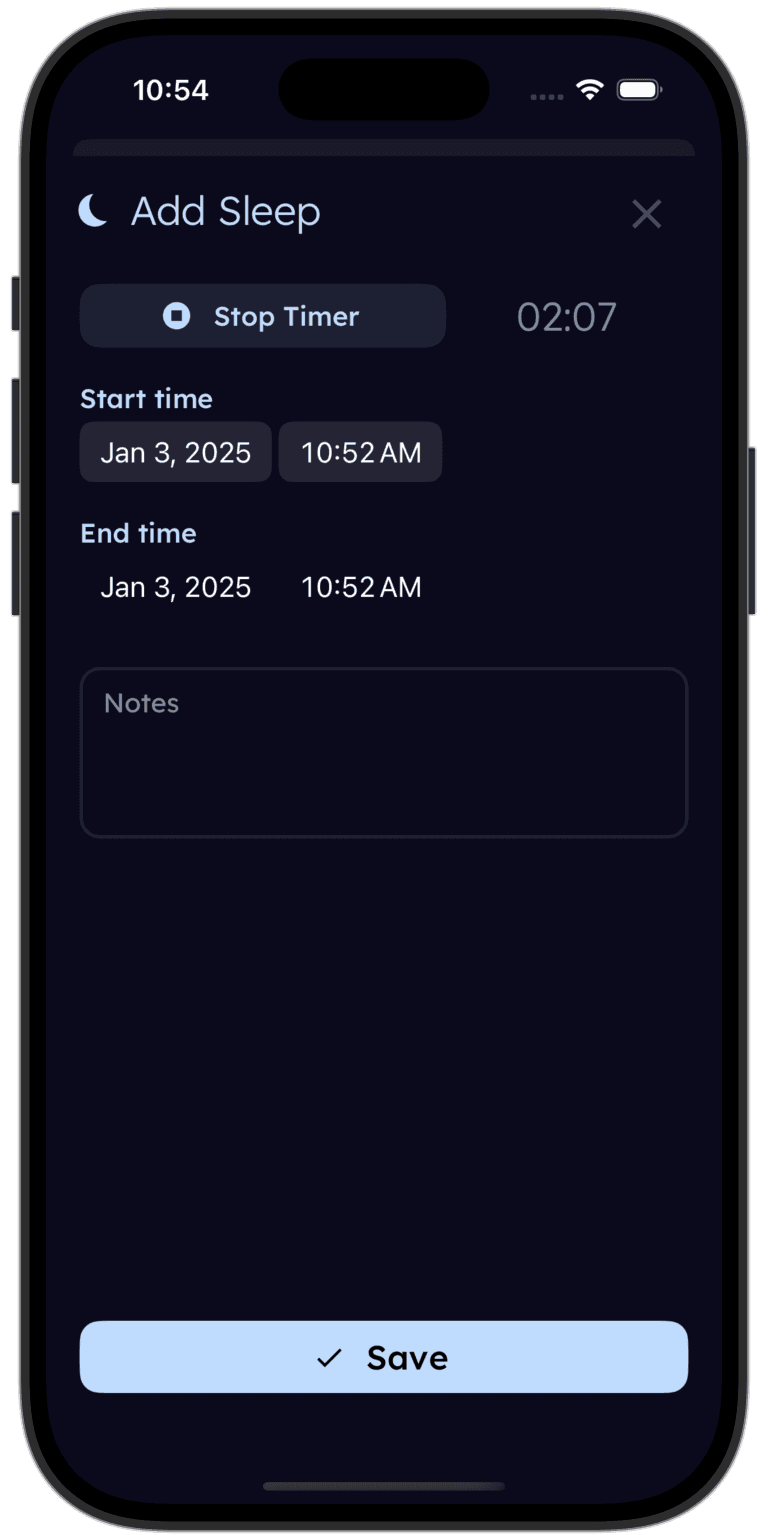
tinylog sleep tracking screen showing nap and night sleep patterns over time

A regression looks like chaos in the moment. In a sleep log, it looks like a pattern with an end date.

tinylog lets you log sleep in a couple of taps — so you can actually see when things start improving instead of just hoping they will. Track naps, night wakes, and bedtime, and watch the pattern emerge.

Download on the App StoreGet It On Google Play

What No One Tells You About the 9-Month Regression

It can feel like the 8-month regression never ended. And honestly, for some babies, it didn't. The 8-10 month window is one continuous zone of disruption that peaks and valleys. If you've been dealing with bad sleep since 8 months, you're not doing anything wrong. Some babies just take the scenic route through this one.

Nap resistance doesn't mean they're ready to drop a nap. This is one of the biggest traps at 9 months. Your baby fights the second nap so hard that you start wondering if they only need one. They don't. Almost no 9-month-old is ready for a single nap. The 2-to-1 nap transition typically happens between 14 and 18 months. What looks like nap readiness right now is almost always a regression or a wake window that needs adjusting.

Bedtime might need to shift temporarily. If your baby is skipping or shortening a nap, an earlier bedtime (even 30 minutes earlier) can prevent the overtired spiral. Overtired babies sleep worse, not better — so protecting total sleep sometimes means going to bed at 6:15 PM for a couple of weeks.

It sometimes gets worse before it gets better. Week two of a regression is often harder than week one. Your patience is thinner, the sleep debt is deeper, and you start wondering if this is permanent. It isn't. Most families see a clear turning point between weeks 2 and 4.

Your baby still loves you at 2 AM — they just have a terrible way of showing it. The night waking, the crying when you leave, the clinging — it's all driven by the fact that your baby's attachment to you has deepened dramatically. They're not manipulating you. They're processing enormous developmental change and you're their safe place. That's exhausting for you, but it's actually a sign of healthy attachment.


When to Talk to Your Pediatrician

  • Sleep disruption lasting more than 6 weeks with no improvement
  • Snoring, gasping, or pauses in breathing during sleep
  • Significant weight loss or refusal to eat during the day
  • Fever, pulling at ears, or signs of illness alongside sleep changes
  • Your baby seems excessively drowsy or lethargic during wake windows
  • You feel like something is off — parent instinct counts

Sleep regressions are normal and temporary. But if something doesn't feel right, trust your gut and call. You never need a reason beyond 'I'm worried.'

You're Closer to the End Than You Think

The 9-month regression is one of the tougher ones, mostly because it piles so many developmental changes on top of each other. Motor milestones, cognitive leaps, separation anxiety, and a possible growth spurt — all at once. That's a lot for a tiny human to process, and it's a lot for you to weather.

But here's the thing: every one of these disruptions is temporary, and every one of them is a sign that your baby's brain is doing exactly what it's supposed to do. They're not regressing — they're progressing so fast that sleep can't keep up.

Keep your routine steady. Practice those new skills during the day. Adjust wake windows if needed. And when you're standing in the dark at 2 AM wondering if this will ever end — it will. Usually within 2 to 4 weeks, and often sooner than you expect.

For the bigger picture on sleep at every age, our baby sleep playbook has schedules, wake windows, and game plans for every regression. And when the next one rolls around at 12 months, you'll be ready — because you survived this one.

Related Guides

Sources

  • American Academy of Pediatrics. "Bright Futures: Guidelines for Health Supervision of Infants, Children, and Adolescents." 4th ed.
  • Mindell JA, et al. "A nightly bedtime routine: impact on sleep in young children and maternal mood." Sleep, 2009.
  • Galland BC, et al. "Normal sleep patterns in infants and children: a systematic review of observational studies." Sleep Medicine Reviews, 2012.
  • BASIS (Baby Sleep Information Source), Durham University. "Normal infant sleep development."
  • Zero to Three. "Brain development milestones: 8-12 months."

This guide is for informational purposes only and is not a substitute for professional medical advice. If you have concerns about your baby's sleep, please consult your pediatrician.

Want this guide in your inbox?
We'll send you this guide for easy reference during those rough nights.
Track the pattern so you know when it's ending.
Download tinylog free — log sleep and see the light at the end of the tunnel.
Download on the App StoreGet It On Google Play