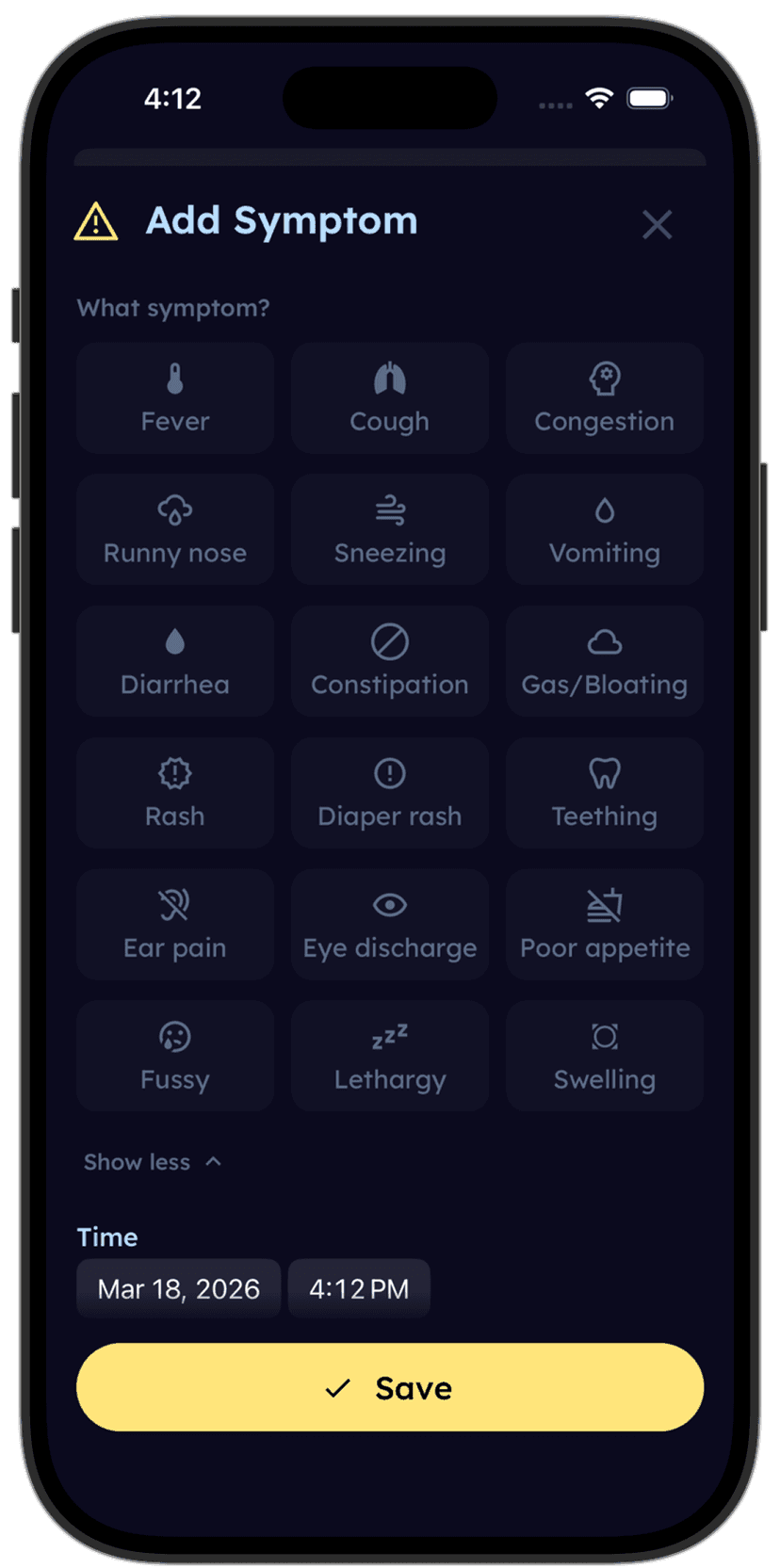
It is November and your seven-month-old woke up with a runny nose. Clear, watery discharge, a few sneezes, slightly crankier than usual. You know three kids at daycare have been sick this week. You are fairly sure it is a cold, but this is your first baby and every symptom feels significant.
Day one is mild. A little extra nose wiping, a slightly shorter nap, but she eats well and has plenty of wet diapers. You run the humidifier at night and suction her nose before bedtime.
Day two, the congestion is worse. She is mouth-breathing and struggling a bit to nurse — she latches, takes a few sucks, pulls off to breathe, then latches again. You saline-and-suction before each feed, and she manages to eat reasonably well. Her temperature is 100.2. The mucus is turning yellow. You resist the urge to call about the yellow mucus because you have read that it is normal.
Day three is the peak. She is miserable — congested, coughing a bit, not interested in solids, sleeping more than usual. But she still nurses (short, frequent sessions), produces five wet diapers, and when she is awake, she still makes eye contact and grabs at her toys. You check: her breathing rate is 38 breaths per minute. No retractions, no flaring.
Day four, there is a subtle shift. She seems a little less congested. Eats a better feed in the morning. Smiles at the dog.
By day seven, the runny nose is mostly gone but the cough lingers. By day ten, she is back to herself. You open Tinylog and compare her feeds and diapers to the week before — intake is back to normal. Cold number four of the season is in the books.
Had this been a two-week-old instead of a seven-month-old — same symptoms — you would have called the pediatrician on day one. Had her breathing rate been 65 instead of 38, you would have headed to the ER. Had the fever spiked to 103 on day six after she had been improving, you would have called about a possible ear infection. Context is everything.