GUIDE

Newborn Development (0–2 Weeks)

Your baby is adjusting to life outside the womb. So are you. Almost everything happening right now is normal.

The first two weeks aren't about milestones — they're about survival. Here's what your newborn is actually doing developmentally, and why it matters more than any checklist.

Physical and Motor Development

Your newborn arrived with a set of reflexes that are genuinely impressive. The rooting reflex makes them turn toward anything touching their cheek, mouth open, searching for food. The Moro (startle) reflex makes them fling their arms out at sudden movement — it looks dramatic and can wake them from a dead sleep (which is why swaddling helps). The grasp reflex is why they grip your finger like their life depends on it.

Voluntary movement is minimal. Their head is heavy relative to their body and their neck muscles are brand new. According to the WHO's Multicentre Growth Reference Study, head control develops gradually over the first several months. Tummy time can start now — even a few minutes on your chest counts — and most babies will attempt to lift their head briefly.

What Your Newborn Can Already Do

  • Rooting reflex — turns toward anything touching their cheek, searching for food
  • Moro (startle) reflex — flings arms out at sudden movement or loud noise
  • Grasp reflex — grips your finger tightly (involuntary but heart-melting)
  • Can turn head side to side when lying down
  • Jerky, uncoordinated arm and leg movements — their nervous system practicing
  • Brief head lifts during tummy time (on your chest counts)

These are reflexes, not voluntary skills. They're hardwired survival instincts — and they're exactly what your baby needs right now.

Cognitive and Sensory Development

Your newborn's brain is about 25% of its adult size at birth and is building neural connections at a staggering rate. They're processing sensory input — light, sound, touch, temperature — and beginning to sort what's important from background noise. They already prefer human faces over objects and can recognize your voice from the womb.

Vision is blurry beyond about 12 inches — exactly the distance to your face during a feeding. That's not a coincidence. Hearing is well developed at birth. Smell is surprisingly sophisticated — your newborn can recognize the scent of your breast milk and will turn toward it. Touch is their most developed sense. Skin-to-skin contact regulates their temperature, heart rate, breathing, and stress hormones. It's not a luxury — it's medicine.

What's Happening in Their Brain

  • Brain forming roughly 1 million new neural connections every second
  • Preference for human faces over objects
  • Recognizes your voice from hearing it in the womb
  • Vision limited to about 8–12 inches — exactly the distance to your face during feeding
  • Smell is sophisticated — can recognize the scent of your skin and breast milk
  • Touch is their most developed sense and primary comfort system

Language, Communication, and Social Development

Your newborn's primary language is crying — and it's a sophisticated communication system. According to the CDC's developmental guidelines, crying is a baby's first and most important way to signal needs. You'll start to notice different cries: hungry (starts slow, builds), pain (sudden and sharp), tired (whiny and intermittent).

Talk to your baby constantly. They're absorbing the rhythm, melody, and patterns of your language. According to Zero to Three, attachment is the main event of these first two weeks. Every time you respond to your baby's cry, you're teaching them: someone is here, and they care. Those early smiles are reflexive — the real social smile is coming around 6–8 weeks.


Feeding and Sleep

Your newborn has a stomach roughly the size of a cherry on day one, growing to about a walnut by the end of week two. They need to eat every 2–3 hours, or 8–12 times per day. Breastfed babies will often cluster feed in the evenings. Formula-fed babies typically take about 1–2 ounces per feeding.

The metric that matters most: 6 or more wet diapers per day after day 4. That tells you baby is getting enough. Newborns sleep 16–17 hours per day, but in stretches of 2–4 hours that respect no clock. Safe sleep is non-negotiable: alone, on their back, on a firm flat surface, with nothing else in the sleep space.

tinylog feeding tracker showing newborn feed log

When your sleep-deprived brain can't remember the last feeding, having it logged means one less thing to worry about.

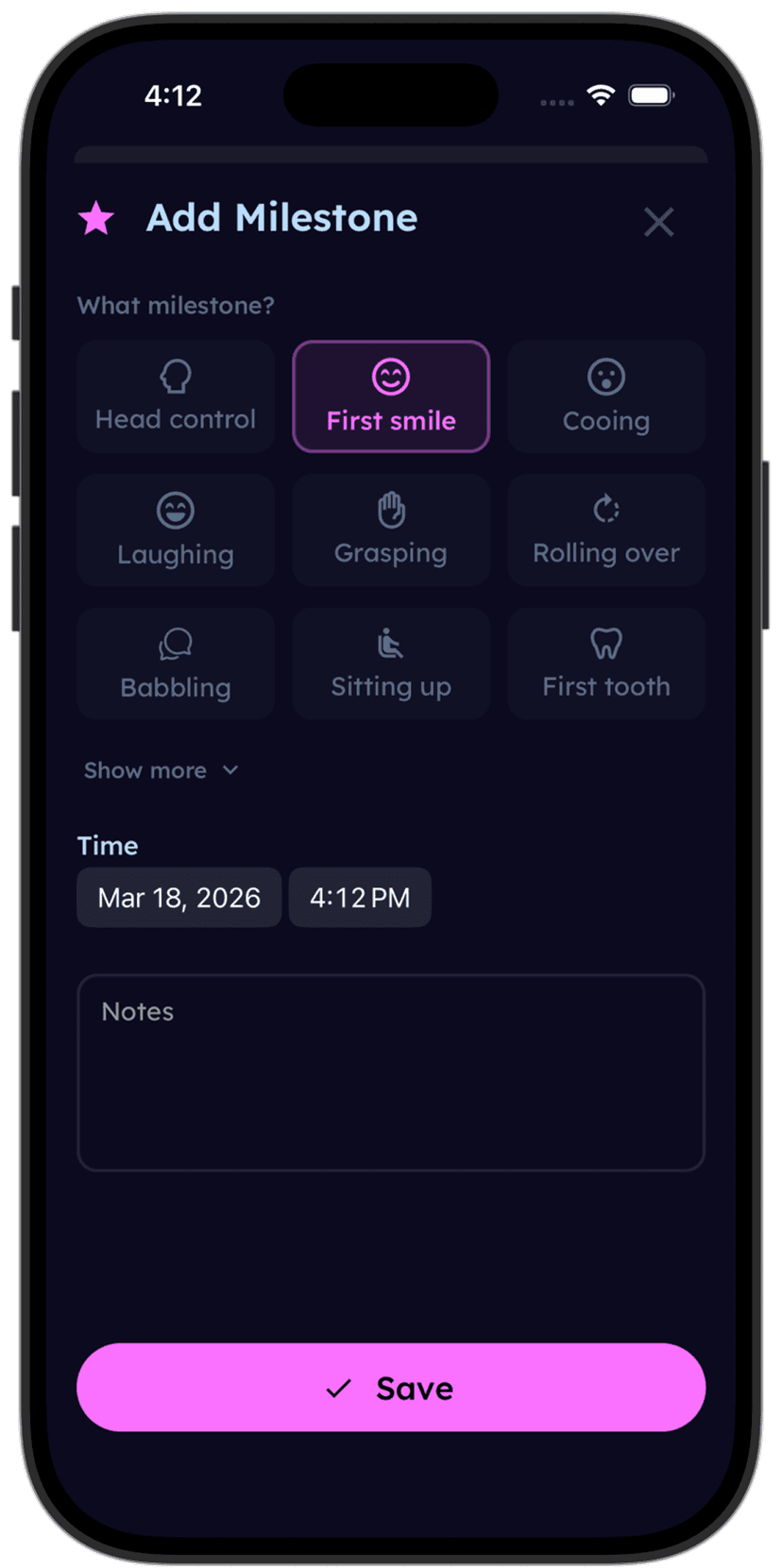
tinylog makes tracking feeds and diapers effortless — one-tap logging means you can track a feed even when you're half-asleep and holding a baby.

Download on the App StoreGet It On Google Play

What You Might Not Expect

Your baby might lose weight at first

It's normal for newborns to lose up to 7–10% of their birth weight in the first few days. They should regain it by about two weeks. Your pediatrician will be tracking this, so make it to those early weight checks.

The second night is often the hardest

Babies are often sleepy and calm on day one, then want to cluster feed all night on night two. It's your baby telling your body to bring in the milk supply. It's brutal, normal, and it passes.

Newborns make alarming noises when they sleep

Grunting, snorting, squeaking, irregular breathing with pauses — all typically normal. Their respiratory system is still maturing. If they're turning blue, gasping, or making a barking cough, that's different — call your pediatrician.

When to Call Your Pediatrician

  • Fever of 100.4°F (38°C) or higher — this is urgent in newborns, no exceptions
  • Fewer than 6 wet diapers per day after day 4–5
  • Baby is hard to wake up and too sleepy to eat
  • Not back to birth weight by two weeks
  • Yellow skin or yellowing of the whites of the eyes beyond what's being monitored
  • You feel something is 'off' — parental instinct is real and pediatricians respect it

You'll have a well-child visit within the first week and again at two weeks. Write your questions down — sleep-deprived brain will forget everything.

Related Guides

Get this guide in your inbox.
We'll send you this reference so you can pull it up one-handed at 3 AM when you're wondering if something is normal.
Too sleep-deprived to remember anything? Same.
Download tinylog free — track feeds, diapers, and sleep without thinking.
Download on the App StoreGet It On Google Play