
Don't force it
Babies are really good at self-regulating. If they turn away or clamp their mouth shut, they're done. Pushing it usually backfires and can create feeding aversions.
GUIDE
Published on
Most of the time, it's completely normal.
Babies go through phases where their appetite dips — teething, growth spurts ending, being too fascinated by the ceiling fan to eat. Here's how to figure out what's going on and when it actually matters.
Log breast, bottle and solids
| Reason | When It Happens | What You'll Notice | What to Do |
|---|---|---|---|
| Growth spurt ending | After 2–3 weeks, 6 weeks, 3 months, 6 months | Baby ate a ton for a few days, now intake dropped back down | Totally normal — their appetite just recalibrated |
| Teething | Usually 4–10 months, but can start earlier | Fussy at the breast or bottle, drooling more, chewing on everything | Offer a cold teether before feeds, try different positions |
| Distraction phase | Around 3–5 months | Baby keeps popping off to look around — every noise is more interesting than food | Feed in a quiet, dim room. Boring is your friend right now. |
| Starting solids | Around 6 months | Milk intake drops a bit as baby fills up on purées or finger foods | Offer milk before solids until about 9 months to keep intake up |
| Mild illness | Any age — colds, ear infections, tummy bugs | Eating less, possibly fussy, maybe a low fever | Offer smaller, more frequent feeds. Call your ped if fever is high or baby won't eat at all. |
| Developmental leap | Throughout the first year, roughly every 4–6 weeks | Baby seems more interested in practicing new skills than eating | They'll come back to eating once the new skill clicks. Keep offering. |
| Hot weather | Summer months or warm environments | Eating a bit less, but may want to nurse or bottle-feed more often in smaller amounts | Offer feeds more frequently. For 6+ months, small sips of water are fine too. |
| Vaccination day | After 2, 4, 6 month shots (and beyond) | Fussy, maybe a low fever, less interested in eating for 24–48 hours | Completely normal. Comfort feed and it usually bounces back in a day or two. |
If you're checking most of these boxes, your baby is almost certainly getting enough — even if individual feeds look tiny.
Trust your gut. If something feels off, call. Pediatricians would rather hear from you over nothing than miss something real.
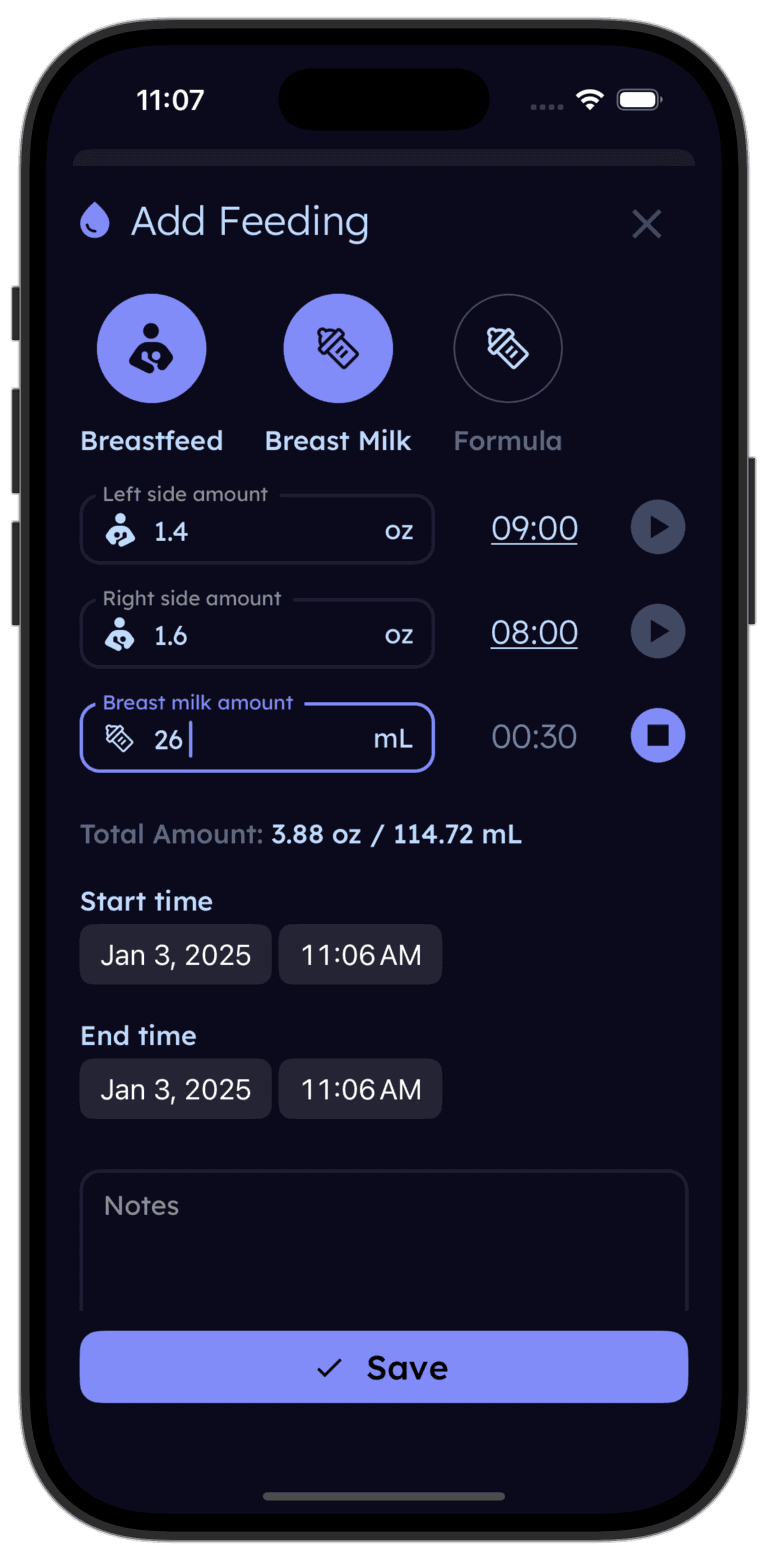
Open Tinylog, log each feed in a few taps, and see the daily totals add up. When you can look at real numbers instead of relying on memory, the anxiety drops fast.


Babies are really good at self-regulating. If they turn away or clamp their mouth shut, they're done. Pushing it usually backfires and can create feeding aversions.
Instead of trying to get them to finish a bigger bottle, try offering smaller feeds more frequently throughout the day. Less pressure, same total intake.
Tracking feeds even for 2–3 days gives you a clear picture. A lot of the time, when you add it all up, they're eating more than you thought.
Wet diapers are your best real-time indicator. If the diapers are wet, the input is working — even if individual feeds look small.
Check for a stuffy nose (babies can't eat and breathe through their mouth at the same time), make sure the bottle nipple flow isn't too slow or fast, and check if they're overtired.
Babies pick up on stress. If feeding time becomes tense, they associate the bottle or breast with anxiety. Take a breath. They'll eat when they're ready.
A lot of appetite dips happen right after a growth spurt winds down. If you want to know exactly when those hit, our guide to baby growth spurts breaks it all down.