GUIDE

Teething Survival Guide

It is real pain, and your baby deserves comfort. Cold items, pressure, and appropriate pain relief are your best tools. And this will pass.

You are here because your baby is miserable and so are you. This guide is for right now — practical steps, evidence-based relief, and the reassurance that this specific tooth will be through soon.

Right Now: What to Do This Minute

You are reading this because your baby is miserable and you want help now, not in four paragraphs. Here is your immediate action plan.

If you have not given pain relief yet, start there. Infant acetaminophen (Tylenol) or ibuprofen (Motrin/Advil, for babies 6 months and older) is the single most effective intervention for teething pain. Dose by weight — the dosing chart is on the box, or call your pediatrician's office for guidance. It takes 20 to 30 minutes to kick in.

While you wait for the medicine to work, offer something cold: a teething ring from the fridge, a cold wet washcloth, or your clean finger pressing firmly on the gum where the tooth is coming through. Cold reduces inflammation. Pressure provides counter-pressure. Both help bridge the gap until the pain relief takes effect.

Hold your baby. Your warmth, your heartbeat, your calm voice — these matter. Pain relief handles the pain; you handle the comfort.

Now take a breath. You are doing the right things. This will pass.

What to Do Right Now — Step by Step
1. Give pain relief
What to DoIf you have not already, give an appropriate dose of infant acetaminophen (any age) or ibuprofen (6+ months only). Dose by weight, not age. This is the single most effective thing you can do right now. It takes 20-30 minutes to take effect.
2. Offer cold and pressure
What to DoWhile you wait for the medication to work: a chilled (not frozen) teething ring, a cold wet washcloth twisted into a knot, or your clean finger pressed firmly on the sore gum. Cold reduces inflammation. Pressure provides counter-pressure relief.
3. Hold and comfort
What to DoSometimes the best remedy is you. Hold your baby, rock them, make skin-to-skin contact if they are young enough. Your calm, warm presence provides genuine comfort even if it does not stop the pain entirely.
4. Check the gums
What to DoLook for the tooth. You may be able to see a white bump or ridge on the gum where the tooth is about to break through. If you can see it, the worst is almost over — the most painful period is right before eruption.
5. Rule out other causes
What to DoIs this definitely teething? Check for fever (teething does not cause fever ≥100.4°F). Check for congestion, diarrhea, or rash beyond drool rash. If other symptoms are present, your baby may be sick in addition to or instead of teething.
6. Lower the bar for everything else
What to DoA teething day is not the day to introduce new foods, try a new sleep schedule, or maintain your usual productivity. Give yourself permission to do the minimum. Screen time for an older sibling while you hold the teething baby is fine. Cereal for dinner is fine. Today is about surviving.
This is your checklist for the immediate crisis. Once the pain relief kicks in and your baby calms down, you can read the rest of this guide at a less frantic pace.

Getting Through the Day

A bad teething day has a rhythm to it. Mornings are often the best stretch — your baby woke up with whatever sleep they got, the morning dose of pain relief is fresh, and there is daylight and activity ahead. The afternoon is typically the hardest — everyone is tired, the day is long, and patience is running thin. Bedtime brings anxiety about the night ahead.

Here is a rough plan for managing a teething day from morning to night. Adapt it to your baby's specific situation — this is a framework, not a prescription.

Hour-by-Hour Teething Day Survival
Morning
StrategyGive pain relief with breakfast if needed. Offer cold teething foods (chilled yogurt, cold fruit). Teething toys from the fridge. Get outside if possible — fresh air and new scenery provide distraction for both of you.
Midday / Nap time
StrategyTeething babies often fight naps. Give pain relief 30 minutes before nap time. Offer a cold teething ring during the wind-down routine. If the nap is a disaster, a short stroller walk may help them sleep.
Afternoon
StrategyThe afternoon is often the hardest stretch. Low energy for both parent and baby. Distraction is your friend — new toys, bath time, a video call with grandparents, a change of scenery. Cold foods as snack.
Bedtime
StrategyGive pain relief 30 minutes before bed. Cold teething ring during the bedtime routine. Maintain your normal routine as much as possible — the consistency helps baby settle. Have pain relief measured and ready for the overnight wake-up.
Overnight wake-up
StrategyKeep lights dim. Offer comfort, then check if a second dose of pain relief is appropriate (4-6 hours after the last dose for acetaminophen, 6-8 hours for ibuprofen). Try to settle baby back in the crib once the pain subsides. Do not start the day early.
The overarching goal for a bad teething day: manage pain, maintain basic routines, accept that everything else can wait. You are in survival mode, and that is okay.

What Actually Helps (Quick Reference)

When you are sleep-deprived and your baby is screaming, you need a short list, not a research paper. Here is what works:

Acetaminophen or ibuprofen (6+ months). These are the most effective tools you have. Do not feel guilty about using them. You are managing legitimate pain. Dose by weight, follow the timing guidelines, and give proactively (before bed, before naps) rather than waiting for the crisis.

Cold items. Chilled teething ring (refrigerator, not freezer). Cold wet washcloth (twist it, chill it, let them gnaw). Chilled spoon pressed on the gum. Frozen breast milk in a mesh feeder (6+ months). The cold reduces inflammation and provides numbing.

Pressure. Your clean finger pressed firmly on the sore spot. A solid teething toy designed for chewing. A cold washcloth with a knot to bite on. Counter-pressure on the gum modulates the pain signal.

Comfort. Holding, rocking, skin-to-skin, singing, white noise. Your baby is in pain and scared because they do not understand what is happening. Your presence is a genuine form of relief.

Distraction. For older babies and toddlers: new toys, bath time, going outside, music, books. Distraction does not eliminate pain but it competes with it for attention. A baby absorbed in a new activity hurts less than a baby with nothing to focus on except their gums.


When to Call the Doctor

  • Fever of 100.4°F (38°C) or higher — teething does not cause true fever
  • Symptoms lasting more than a week without improvement
  • Refusal of all food AND liquids for more than 24 hours
  • Signs of dehydration: fewer wet diapers, no tears, dry mouth, sunken fontanelle
  • Baby is inconsolable even with pain relief and comfort measures
  • Unusual lethargy — baby is hard to arouse or seems limp
  • Rash that is not limited to the drool area around the mouth
  • Your instinct says something is wrong beyond teething

Teething makes babies uncomfortable, not seriously ill. If your baby seems genuinely sick — not just fussy from gum pain — call your pediatrician. The presence of a tooth coming in does not explain away fever, illness symptoms, or significant distress.

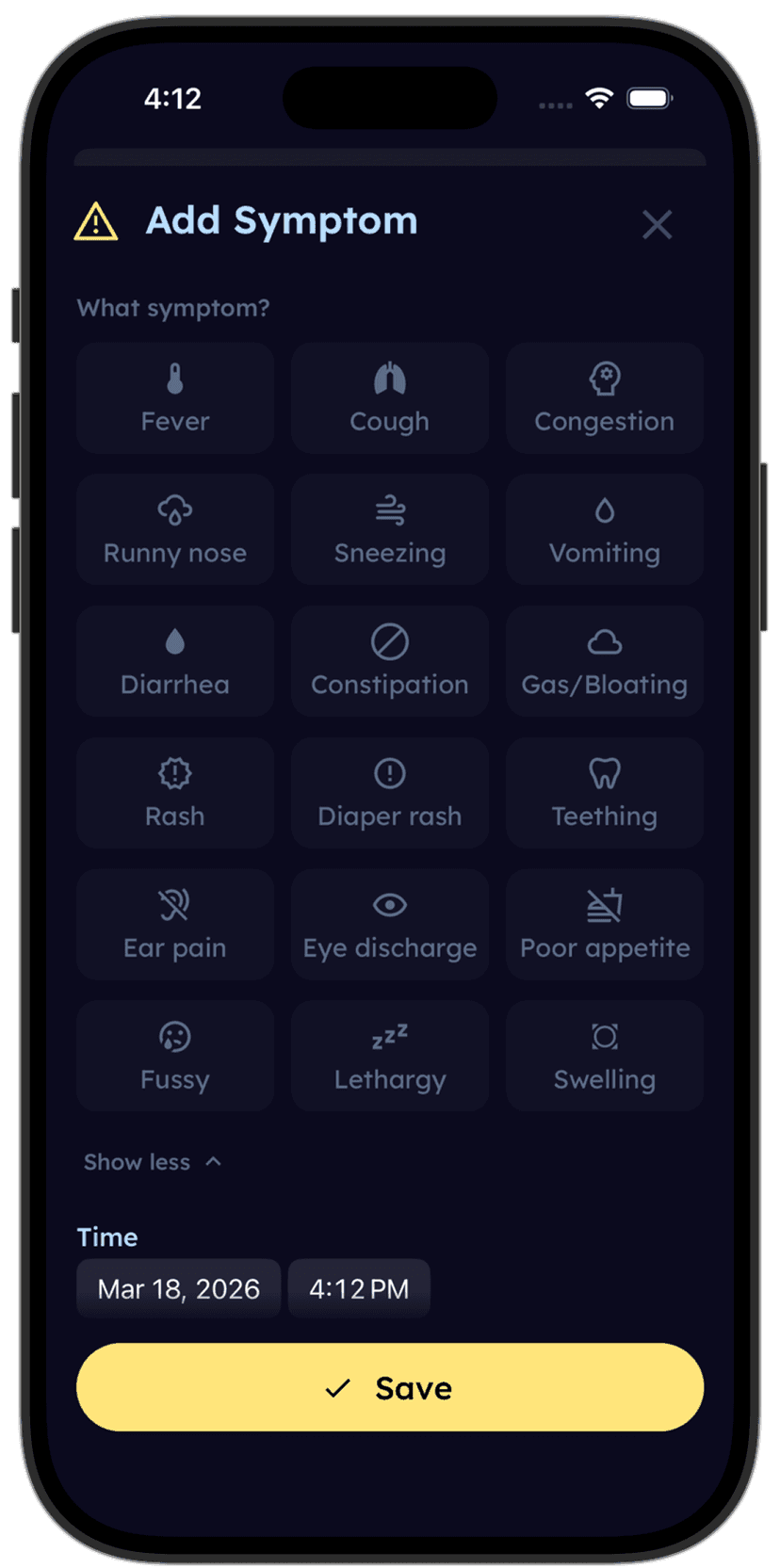
tinylog tracking screen showing symptom patterns over time

Track the worst days — they end, and the data proves it.

When you are in the middle of a terrible teething stretch, it helps to look back at the last one and see that it only lasted two days. Logging symptoms in tinylog gives you perspective — and evidence — that this, too, will pass.

Download on the App StoreGet It On Google Play

A Note for Parents at the End of Their Rope

If you are reading this at 3 AM with a baby who has been crying for an hour and you are feeling overwhelmed, frustrated, or close to tears yourself, please hear this:

You are not failing. A baby in pain is hard to comfort, and sometimes nothing works immediately. That does not mean you are doing it wrong. It means teething hurts and your baby is too young to understand why.

Your frustration is normal. It is completely normal to feel frustrated, exhausted, and even angry when you cannot soothe your baby. Feeling frustrated does not make you a bad parent. Acting on that frustration by shaking or hurting your baby would be dangerous — but feeling it is human.

If you need to step away, do it. Put your baby in a safe place — their crib, a playpen — and walk into another room for five minutes. Close the door. Breathe. Your baby will be safe, and you will come back calmer. This is not abandonment. It is responsible self-regulation.

Call for help if you need it. If you are overwhelmed, call your partner, a family member, a friend, or a helpline. The National Parent Helpline (1-855-427-2736) and the Childhelp National Child Abuse Hotline (1-800-422-4453) are available for parents who are struggling. Asking for help is strength, not weakness.

This tooth will come through. This night will end. And you will make it.

Survival Tips for Parents

Tag-team if you can

If you have a partner, take shifts. One parent handles the morning while the other sleeps in. Alternate overnight wake-ups. Even a single uninterrupted 4-hour stretch of sleep can restore some of your sanity. If you are solo parenting, call in backup — a grandparent, friend, or trusted neighbor who can hold the baby for an hour while you take a break.

It is okay to put baby down safely and take a minute

If you have been rocking and soothing for an hour and you are reaching your limit, it is okay to put your baby in a safe place (crib, playpen) and step away for five minutes. Take a deep breath. Splash water on your face. Your baby will be okay for five minutes, and you will be a better parent for having taken the break.

Lower every expectation

The house is a mess. The laundry is not done. You ate crackers for lunch. None of that matters today. Today you are managing a baby in pain, and that is a full-time job. Everything else can wait. Give yourself the same grace you would give a friend in your situation.

This is not forever

When your baby has been crying for hours and nothing seems to help and you have not slept in two nights, it feels permanent. It is not. This specific tooth will break through — probably within a day or two. The acute pain will stop. Your baby will go back to being their usual self. You will not even remember which tooth this was six months from now.

What Your Pediatrician Wants You to Know

Teething pain is real — do not let anyone minimize it. Some babies have a harder time with teething than others. If your baby is clearly in pain, they deserve pain relief. You are not overreacting and you are not overmedication.

But teething does not explain everything. A miserable baby with a 102°F fever is not having a bad teething day — they are sick. A baby who has been inconsolable for a week is not having a prolonged teething episode — something else is going on. Teething is a convenient explanation, but it should not prevent you from seeking care when symptoms go beyond what teething causes.

You will get through this. Pediatricians see teething parents at the office, in the ER, on the phone at midnight. Every one of them got through it. The teeth come through, the pain stops, and life goes back to normal. This is a bad week, not a bad life.

Related Guides

Sources

  • Macknin, M. L., et al. (2000). Symptoms associated with infant teething: a prospective study. Pediatrics, 105(4), 747-752.
  • Massignan, C., et al. (2016). Signs and symptoms of primary tooth eruption: A meta-analysis. Pediatrics, 137(3), e20153501.
  • American Academy of Pediatrics (AAP). Teething pain. HealthyChildren.org.
  • U.S. Food and Drug Administration (FDA). (2018). FDA warns about the use of benzocaine teething products.
  • American Academy of Pediatric Dentistry (AAPD). Guideline on infant oral health care.

Medical Disclaimer

This guide is for informational purposes only and is not a substitute for professional medical advice. If your baby has a fever of 100.4°F (38°C) or higher, is refusing to eat, or seems unusually unwell, contact your pediatrician — these symptoms are not typical of teething alone.

Get this guide in your inbox.
We'll email you this survival guide so you have it ready for the next rough day.
Track the worst days so you can see when they end.
Download tinylog free — log symptoms and milestones in seconds.
Download on the App StoreGet It On Google Play