
GUIDE
Bobbie vs. ByHeart
Published on ·Updated on
Both are premium, clean-label formulas from newer brands. Bobbie focuses on USDA Organic ingredients. ByHeart focuses on protein quality and includes lactoferrin. Both cost significantly more than conventional formula.
Bobbie and ByHeart are two of the most talked-about new-generation formula brands. They share a commitment to ingredient transparency but take very different approaches. Here is an honest breakdown of what each offers, what the science says, and whether the premium price makes sense.
Log formula and bottles
“All infant formulas must meet requirements that ensure optimal nutrition for babies. If your baby's formula is sold in the U.S., it has the nutrients your baby needs.”
 Dr. Matthew Badgett, MD, Pediatrician, Cleveland Clinic
The Honest Starting Point
Bobbie and ByHeart are two of the most prominent new-generation formula brands. Both were founded by parents frustrated with the conventional formula market. Both prioritize ingredient transparency. And both charge a significant premium — ByHeart being the most expensive mainstream formula available.
These are not fly-by-night brands. Both are FDA-registered and sold legally in the United States. Both have invested in their formulations and marketing. But they take different approaches: Bobbie bets on organic sourcing and clean processing, while ByHeart bets on protein innovation and bioactive additions like lactoferrin.
The honest context: for most healthy, full-term babies, conventional formula (including store brands at $0.70/oz) provides nutritionally complete feeding. Bobbie and ByHeart offer ingredient quality and sourcing differences — not fundamentally different nutritional outcomes. If the premium fits your budget and aligns with your values, both are excellent. If it does not, your baby will thrive on conventional formula.
For more on how formula fits into feeding at every age, see our baby feeding chart.
| Feature | Bobbie | ByHeart | What It Means |
|---|---|---|---|
| Founded | 2018 (launched 2021) | 2019 (launched 2022) | Both are relatively new brands challenging the Enfamil/Similac duopoly |
| Organic certification | USDA Organic | Not USDA Organic (uses organic grass-fed milk) | Bobbie is fully organic. ByHeart uses organic milk but is not fully certified. |
| Protein source | Organic nonfat milk, organic whey protein concentrate | Organic grass-fed whole milk protein (not separated into skim + whey) | ByHeart's whole protein approach is unique. Most formulas separate milk into skim + whey. |
| Fat source | Organic high oleic sunflower, coconut, soy oils | Patented fat blend (organic high oleic sunflower, coconut, soy oils) | ByHeart markets a proprietary fat blend. Actual oil sources are similar. |
| Carbohydrate source | Organic lactose | Organic lactose | Both use lactose as the sole carbohydrate. No corn syrup solids. |
| Signature ingredients | Clean organic sourcing, water-extracted DHA | Lactoferrin, whole protein, patented fat blend | Different innovation focuses. Bobbie emphasizes sourcing. ByHeart emphasizes bioactive additions. |
| DHA source | Water-extracted algal oil | Algal oil | Both avoid hexane extraction. |
| Price per oz (powder) | ~$1.80–$2.10/oz prepared | ~$2.20–$2.60/oz prepared | ByHeart is the most expensive mainstream formula. Bobbie is premium but less costly. |
| Availability | Subscription at bobbie.com, limited retail | Direct-to-consumer at byheart.com, limited retail | Both are primarily DTC. Neither is easy to grab off a shelf in an emergency. |
The Ingredient Differences That Actually Matter
These two formulas diverge in philosophy more than in base nutrition. Here is what genuinely differs.
Protein: separated vs. whole
Most formulas — including Bobbie — separate milk into skim milk and whey protein concentrate, then recombine them at a specific ratio. ByHeart keeps the milk protein intact (whole protein from organic grass-fed milk), arguing this is closer to how protein exists in breast milk and may be easier to digest.
This is an interesting approach, but the clinical evidence that whole protein in formula produces different outcomes than separated protein is limited. ByHeart has invested in its own clinical trial, which showed their formula supported growth comparable to breast milk — but growth equivalence is the expected FDA baseline, not a differentiator.
Lactoferrin: ByHeart's signature
ByHeart includes bovine lactoferrin, a protein found naturally in breast milk that supports immune function and iron absorption. Research on lactoferrin supplementation in formula is promising — some studies suggest it may reduce certain infections in infants. However, the evidence is still emerging, and no major pediatric organization has recommended lactoferrin as an essential formula ingredient.
Organic certification: Bobbie's foundation
Bobbie is fully USDA Organic, meaning every ingredient meets organic standards — no synthetic pesticides, no GMOs, no growth hormones. ByHeart uses organic grass-fed milk but is not fully USDA Organic certified. If complete organic certification is your priority, Bobbie is the clear choice.
DHA sourcing
Both brands avoid hexane-extracted DHA, which is common in conventional formulas. Both use algal oil. Bobbie specifically markets water-extracted DHA. This is a shared value that differentiates both from mainstream brands.
What the Marketing Doesn't Tell You
Both brands are built on compelling narratives — and both deserve honest scrutiny.
ByHeart's claim of being the "only formula clinically proven to be as good as breast milk" is based on their growth study showing non-inferiority to breast milk for growth outcomes. This sounds impressive, but growth equivalence is the baseline FDA expectation for all infant formula — every formula on the shelf meets this standard, including store brands that cost $0.70/oz.
Bobbie's USDA Organic certification is real and meaningful in terms of agricultural practices. However, there is no pediatric evidence that organic formula produces different health outcomes for babies compared to conventional formula. The organic choice reflects values about farming practices, not proven differences in infant health.
At $2.20–2.60/oz, ByHeart costs roughly 3x what store-brand formula costs. Over a year of formula feeding, that is roughly $1,900–2,500 more than a store brand. That is a significant financial commitment, and parents should not feel pressured into spending it by marketing that implies their baby needs these specific ingredients to thrive.
| Product | Typical Price | Cost Per Oz (Prepared) | Monthly Estimate |
|---|---|---|---|
| Bobbie Organic (powder, 14.1 oz) | $28–$32 | ~$1.90/oz prepared | ~$200–$240/month |
| ByHeart Whole Nutrition (powder, 22 oz) | $46–$54 | ~$2.40/oz prepared | ~$250–$300/month |
| Enfamil NeuroPro (for reference) | $33–$38 | ~$1.20/oz prepared | ~$150–$175/month |
| Store brand (for reference) | $16–$23 | ~$0.70–$0.85/oz prepared | ~$90–$120/month |
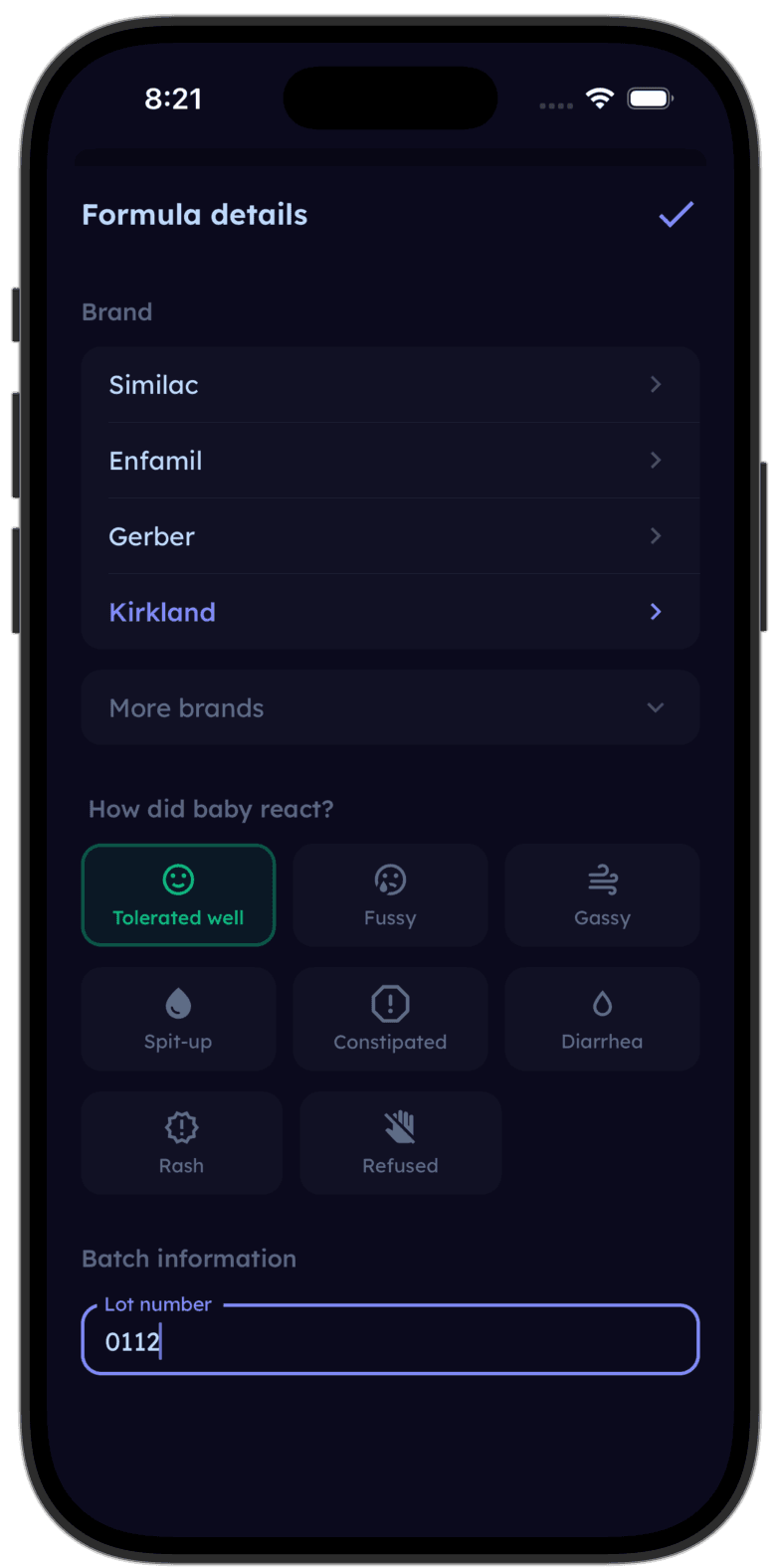
Tinylog tracks formula intake so you can spot what's working.
Log each bottle in seconds — see daily totals, track which formula your baby is on, and have real data ready for your pediatrician. Especially useful during formula transitions.


Taste, Mixing, and Practical Differences
Premium formulas have unique practical characteristics.
Taste: ByHeart tends to have a creamier, slightly sweeter taste due to the whole protein and fat blend. Bobbie has a milder, more neutral flavor. Some parents report babies transitioning from breast milk prefer one over the other — this is highly individual.
Mixing: Bobbie dissolves smoothly and consistently. ByHeart can be slightly thicker due to the whole protein. Both work well with a formula pitcher. Neither is difficult to prepare.
Availability: Both are primarily direct-to-consumer, which means planning ahead is essential. Running out at midnight means waiting for delivery, not running to the store. Bobbie is subscription-based with auto-delivery. ByHeart also offers subscriptions through their website.
Supply reliability: As smaller-scale producers, both brands are more susceptible to supply disruptions than Enfamil or Similac. Having a backup plan (or a conventional formula your baby has tried) is practical advice for any premium formula user.
When to Talk to Your Pediatrician
Neither formula requires a pediatrician's approval for healthy babies. However, talk to your doctor if you notice signs of intolerance or if your baby has specific medical needs.
Signs to Discuss With Your Pediatrician
- Your baby is consistently refusing feeds or eating significantly less than expected
- Persistent vomiting (not just spit-up) after most feedings
- Blood or mucus in stools
- Significant fussiness that does not improve after 1–2 weeks on a new formula
- Poor weight gain or weight loss
- Signs of allergic reaction: hives, facial swelling, wheezing, or difficulty breathing (seek immediate care)
Most formula discomfort (mild gas, occasional spit-up) is normal and does not require a formula change. Give any new formula at least 1–2 weeks before deciding it is not working.
The Bottom Line
Bobbie and ByHeart both deliver on their promise of clean-label, thoughtfully formulated infant formula. They take different approaches and charge different premiums.
Choose Bobbie if: USDA Organic certification is your top priority, you prefer a subscription model, and you want the most transparent organic sourcing available in infant formula.
Choose ByHeart if: you are drawn to the whole-protein approach and lactoferrin addition, you prioritize protein innovation over organic certification, and the higher price point fits your budget.
Either works well if: you want a premium, clean-label formula without corn syrup solids, and ingredient quality is a top priority for your family.
If you are switching formulas, tracking feeds and symptoms for 1–2 weeks gives you real data. Tinylog logs feeds, diapers, and fussiness so you can see what is working. Whichever brand you go with, sign up for free recall alerts to get notified if your formula is ever recalled.
For more premium comparisons, see Bobbie vs. Kendamil and ByHeart vs. Enfamil. For organic options, see best organic baby formulas.
Related Guides
-
Best Baby Formulas 2026 — An evidence-based guide
-
Bobbie vs. Kendamil — Two premium formulas compared
-
ByHeart vs. Enfamil — Is the premium price worth it
Sources
- U.S. Food and Drug Administration. "21 CFR Part 107 — Infant Formula." Code of Federal Regulations.
- American Academy of Pediatrics. "Choosing an Infant Formula." HealthyChildren.org, 2024.
- Manzoni P, et al. "Bovine lactoferrin supplementation for prevention of late-onset sepsis in very low-birth-weight neonates." JAMA, 2009.
- USDA. "National Organic Program Standards." usda.gov, 2024.
- U.S. FDA. "Infant Formula Guidance Documents and Regulatory Information." fda.gov, 2023.
This guide is for informational purposes only and is not a substitute for professional medical advice. Formula recommendations should be discussed with your pediatrician, especially for babies with allergies, reflux, or other medical conditions.
Frequently asked questions
- Is Bobbie or ByHeart better?
- Neither is objectively better. Both are FDA-compliant and prioritize ingredient quality. Bobbie offers USDA Organic certification and clean ingredient sourcing. ByHeart focuses on protein quality (whole protein, lactoferrin) and a patented fat blend. The best choice depends on whether organic certification or protein innovation matters more to you.
- Why is ByHeart so expensive?
- ByHeart is the most expensive mainstream formula because it uses organic grass-fed milk, includes lactoferrin (an expensive bioactive protein), has a patented fat blend, and operates at smaller scale than established brands. It also invests in its own clinical trials, which adds to costs.
- Does ByHeart have organic ingredients?
- ByHeart uses organic grass-fed whole milk as its primary ingredient, but the complete formula is not USDA Organic certified. Some non-milk ingredients are not organically sourced. If full organic certification is important, Bobbie is the organic option.
- Is Bobbie available in stores?
- Bobbie has been expanding retail availability but is still primarily sold through subscription at bobbie.com. Check their website for current retail partners. ByHeart is similarly direct-to-consumer with limited retail presence.
- What is lactoferrin in ByHeart formula?
- Lactoferrin is a protein found naturally in breast milk that plays a role in immune function and iron absorption. ByHeart includes bovine lactoferrin in its formula. Research on lactoferrin supplementation in infant formula shows some promise for reducing infections, but evidence is still emerging.