
GUIDE
Best Organic Baby Formulas
Published on ·Updated on
Organic certification means no synthetic pesticides, no GMOs, and no growth hormones — but it does not automatically mean 'better nutrition.' The best organic formula is the one your baby tolerates well and that fits your budget.
Organic baby formula is a growing category, with options ranging from $1.10/oz to $2.20/oz. This guide ranks the major organic formulas by ingredients, certifications, and real value — without the marketing spin.
Free 2-min quiz. Personalized match plus a recall check.
“All infant formulas must meet requirements that ensure optimal nutrition for babies. If your baby's formula is sold in the U.S., it has the nutrients your baby needs.”
 Dr. Matthew Badgett, MD, Pediatrician, Cleveland Clinic
What 'Organic' Actually Means for Baby Formula
Before ranking organic formulas, it is important to understand what organic certification actually guarantees — and what it does not.
USDA Organic requires: 95%+ organic ingredients, no synthetic pesticides or fertilizers, no GMOs, no antibiotics or growth hormones, no irradiation, and annual inspection. EU Organic has similar requirements with some additional restrictions — for example, stricter limits on certain carbohydrate sources in infant formula.
What organic certification does NOT guarantee: better nutrition, better health outcomes, or a safer product. All infant formula — organic or conventional — must meet the same FDA nutritional requirements under 21 CFR 107. The organic premium buys sourcing practices, not nutritional superiority.
The AAP has not recommended organic formula over conventional formula. A 2012 AAP report on organic foods concluded that there is no evidence of direct health benefits from organic foods for children, though organic farming reduces pesticide exposure.
This does not mean organic is pointless — it means the choice should be based on your values about agricultural practices, not on the belief that organic formula will make your baby healthier.
| Formula | Certification | Key Ingredients | Price Per Oz | Best For |
|---|---|---|---|---|
| Bobbie Organic | USDA Organic | Organic skim milk + whey, organic lactose, water-extracted DHA | ~$1.80–$2.10/oz | Clean-label purists who want full organic certification |
| Kendamil Organic | EU + USDA Organic | Organic whole milk, organic lactose, plant-based DHA, natural MFGM | ~$1.90–$2.20/oz | Whole-milk believers who want dual organic certification |
| HiPP Dutch Stage 1 | EU Organic | Organic skim milk + whey, organic lactose, GOS prebiotics, fish oil DHA | ~$1.80–$2.20/oz | European formula fans who want EU organic standards |
| Happy Baby Organic | USDA Organic | Organic nonfat milk, organic lactose, DHA/ARA | ~$1.20–$1.50/oz | Budget organic — best value among organic options |
| Earth's Best Organic | USDA Organic | Organic nonfat milk, organic lactose, DHA/ARA | ~$1.10–$1.40/oz | Budget organic with the longest market track record |
| Similac Organic | USDA Organic | Organic nonfat milk, organic lactose, no palm olein, DHA | ~$1.30–$1.50/oz | Name-brand trust with organic certification |
The Top Picks: Detailed Breakdown
Bobbie Organic — Best overall clean-label organic
Bobbie checks every box for clean-label parents: USDA Organic, organic lactose as the sole carbohydrate, water-extracted DHA (no hexane), no palm oil, and no corn syrup solids. It is modeled on EU formula standards. The trade-off is price ($1.80–2.10/oz) and availability (primarily subscription through bobbie.com).
Kendamil Organic — Best whole-milk organic
Kendamil Organic carries both EU and USDA Organic certification and uses whole organic milk — the only organic formula to retain the cream and natural MFGM. Plant-based DHA with no fish oil or hexane. The premium price ($1.90–2.20/oz) reflects dual certification and whole-milk processing.
Happy Baby Organic — Best budget organic
Happy Baby Organic offers USDA Organic certification at a significantly lower price point ($1.20–1.50/oz). It uses organic nonfat milk and organic lactose. It does not have the premium additions (MFGM, hexane-free DHA) that Bobbie and Kendamil offer, but it meets the same FDA nutritional baseline with organic sourcing.
Earth's Best Organic — Best value with longest track record
Earth's Best has been making organic baby formula longer than any other brand on this list. At $1.10–1.40/oz, it is the most affordable organic option. Standard ingredients with organic sourcing and USDA certification.
Similac Organic — Best name-brand organic
For parents who want the Similac name with organic certification, Similac Organic delivers. No palm olein, USDA Organic, and widely available at every major retailer. Mid-range pricing at $1.30–1.50/oz.
What the Marketing Doesn't Tell You
The organic formula market thrives on a simple implication: organic = better for your baby. The evidence does not support this. Every formula on this list meets the same FDA nutritional baseline as a $0.70/oz store-brand conventional formula.
The premium you pay for organic formula — anywhere from $20 to $130 more per month compared to conventional — buys agricultural practices, not better nutrition. Organic milk comes from cows (or goats) raised without synthetic pesticides, antibiotics, or growth hormones. These are legitimate values. They are not proven health advantages for your baby.
The most expensive organic formulas (Bobbie, Kendamil Organic) cost 2–3x more than the cheapest organic options (Earth's Best, Happy Baby). The price gap within the organic category reflects brand positioning, ingredient sourcing methods (hexane-free DHA, whole milk processing), and business model (DTC vs. retail). It does not reflect 2–3x better nutrition.
If organic matters to you but budget is tight, Happy Baby Organic and Earth's Best Organic deliver organic certification at close to conventional formula prices.
| Product | Typical Price | Cost Per Oz (Prepared) | Monthly Estimate |
|---|---|---|---|
| Earth's Best Organic (powder, 21 oz) | $27–$33 | ~$1.25/oz prepared | ~$140–$170/month |
| Happy Baby Organic (powder, 21 oz) | $28–$34 | ~$1.35/oz prepared | ~$145–$175/month |
| Similac Organic (powder, 20.6 oz) | $32–$38 | ~$1.40/oz prepared | ~$155–$185/month |
| Bobbie Organic (powder, 14.1 oz) | $28–$32 | ~$1.90/oz prepared | ~$200–$240/month |
| Kendamil Organic (powder, 28.2 oz) | $40–$48 | ~$2.00/oz prepared | ~$210–$260/month |
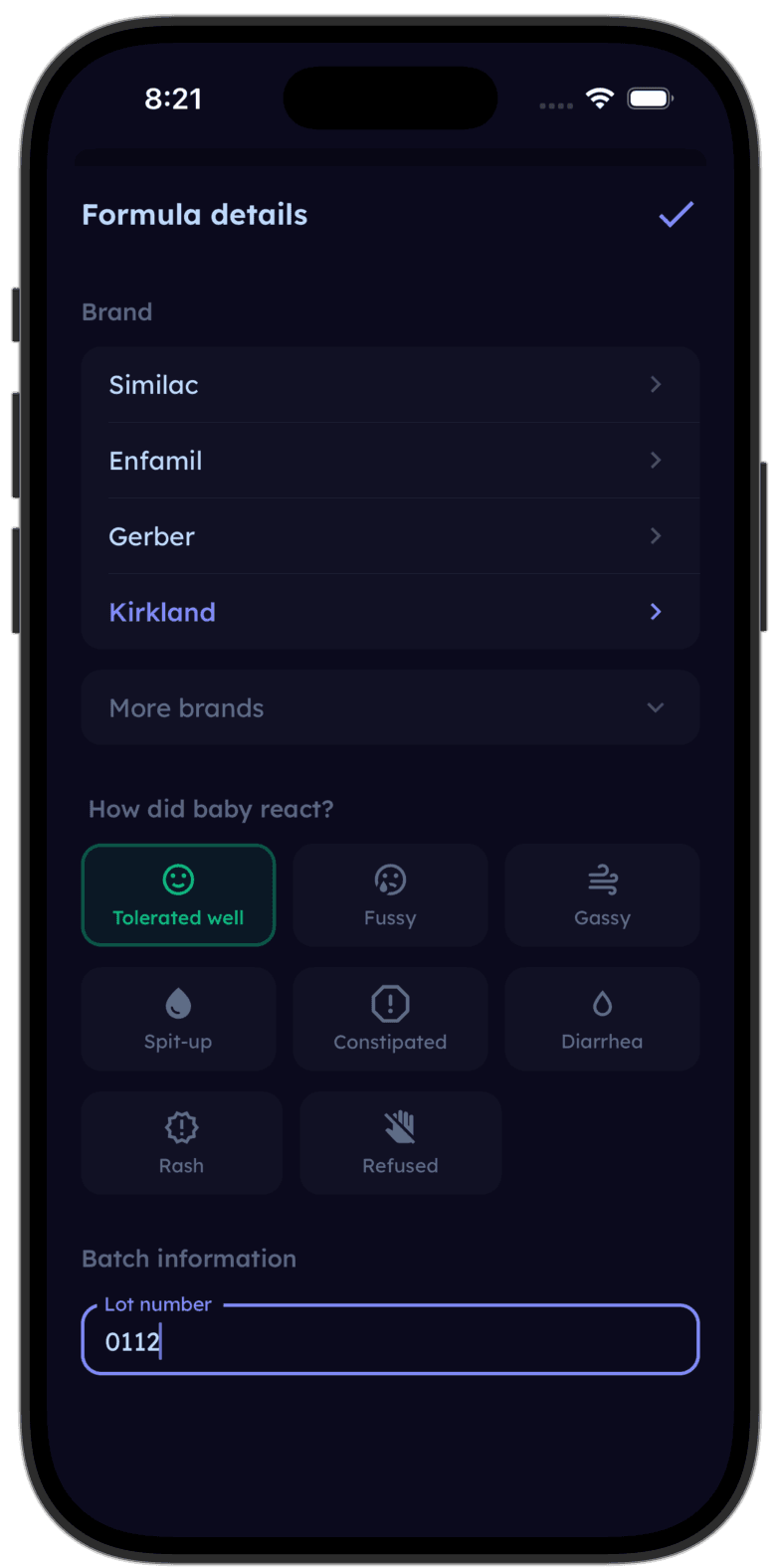
Know your baby is thriving on the organic formula you chose.
Log each bottle, note any fussiness or stool changes, and see daily intake patterns. Whether you went with Bobbie, Kendamil, or Earth's Best, two weeks of data tells you the formula is working — and gives you something real to bring to your pediatrician if it isn't.


Who Should Choose Organic (and Who Doesn't Need To)
Organic makes sense if: reducing pesticide exposure in your baby's food is important to your family, you can afford the premium without financial stress, and you value organic agricultural practices.
Organic is not necessary if: budget is tight (conventional formula meets the same nutritional standards), your baby is on a specialty formula (hypoallergenic or amino acid-based options have limited organic availability), or your pediatrician has recommended a specific non-organic formula.
The compromise option: If you want some organic benefit without the full premium, consider mixing organic and conventional formula during the day, or using organic formula at home and conventional when traveling.
When to Talk to Your Pediatrician
Organic vs. conventional is not a medical decision for most healthy babies. However, contact your pediatrician if your baby shows signs of formula intolerance regardless of organic status.
Signs to Discuss With Your Pediatrician
- Your baby is consistently refusing feeds or eating significantly less than expected
- Persistent vomiting (not just spit-up) after most feedings
- Blood or mucus in stools
- Significant fussiness that does not improve after 1–2 weeks on a new formula
- Poor weight gain or weight loss
- Signs of allergic reaction: hives, facial swelling, wheezing, or difficulty breathing (seek immediate care)
Formula intolerance is unrelated to organic certification. If your baby has symptoms, discuss them with your pediatrician regardless of which formula you use.
The Bottom Line
Organic baby formula offers sourcing and agricultural practice differences, not nutritional superiority. All formulas on this list meet FDA requirements. The best organic formula depends on your budget and priorities.
Best overall organic: Bobbie — full USDA Organic, clean label, hexane-free DHA.
Best whole-milk organic: Kendamil Organic — dual EU + USDA certification, natural MFGM.
Best budget organic: Happy Baby Organic or Earth's Best Organic — USDA Organic at near-conventional prices.
Best name-brand organic: Similac Organic — widely available, palm-free, trusted brand.
Whichever organic formula you choose, the first two weeks matter. Any formula switch comes with an adjustment period — stool changes, possible fussiness, intake shifts. Logging daily in Tinylog during that window shows you whether your baby is settling in well or whether something warrants a call to your pediatrician. It also tells you whether the premium you are paying is going toward a formula your baby actually does well on.
If you decide organic is not the right fit for your budget or your baby, the conventional starting points most pediatricians reach for are Enfamil NeuroPro Baby Formula and Similac 360 Total Care Baby Formula — both meet the same FDA nutritional standards at a lower cost.
Tinylog earns a small commission on purchases made through these links, at no cost to you.
Before you buy, it's worth checking promo.new for a deal. It doesn't cover everything, but we've had good luck with it.
For brand-specific comparisons, see Bobbie vs. Kendamil, HiPP vs. Kendamil, and cheapest baby formulas.
Related Guides
-
Organic vs. Conventional — Does it actually matter
-
Best Baby Formulas 2026 — An evidence-based guide
-
European vs. American Formula — Real differences explained
-
Bobbie vs. Happy Baby Organic — Premium vs. budget organic compared
-
Similac Organic vs. Enfamil Organic — Name-brand organic head-to-head
Sources
- U.S. Food and Drug Administration. "21 CFR Part 107 — Infant Formula." Code of Federal Regulations.
- American Academy of Pediatrics. "Organic Foods: Health and Environmental Advantages and Disadvantages." Pediatrics, 2012.
- USDA. "National Organic Program Standards." usda.gov, 2024.
- European Commission. "EU Organic Farming Regulations." ec.europa.eu, 2024.
- U.S. FDA. "Infant Formula Guidance Documents and Regulatory Information." fda.gov, 2023.
This guide is for informational purposes only and is not a substitute for professional medical advice. Formula recommendations should be discussed with your pediatrician, especially for babies with allergies, reflux, or other medical conditions.
Frequently asked questions
- Is organic baby formula better than regular formula?
- Organic formula uses ingredients produced without synthetic pesticides, GMOs, or growth hormones. However, there is no pediatric evidence that organic formula produces different health outcomes for babies compared to conventional formula. Both meet the same FDA nutritional requirements. The organic choice reflects values about agricultural practices.
- What is the difference between USDA Organic and EU Organic?
- USDA Organic requires 95%+ organic ingredients, no synthetic pesticides or fertilizers, no GMOs, and annual USDA inspection. EU Organic has similar requirements with some additional restrictions (e.g., stricter limits on certain carbohydrate sources). Some formulas carry both certifications.
- Is organic formula worth the extra cost?
- That depends on your values and budget. Organic formula costs 20–80% more than conventional. The premium buys organic agricultural practices, not proven nutritional differences. If organic sourcing matters to you and the cost is manageable, it is a reasonable choice. If it creates financial stress, conventional formula is nutritionally equivalent.
- What is the cheapest organic baby formula?
- Happy Baby Organic and Earth's Best Organic are typically the most affordable organic formulas at $1.10–$1.50/oz prepared. Similac Organic is moderately priced at $1.30–$1.50/oz. Bobbie, Kendamil Organic, and HiPP are premium-priced at $1.70–$2.20/oz.
- Do all organic formulas avoid corn syrup solids?
- No. Some organic formulas use organic corn syrup solids or organic maltodextrin as carbohydrate sources, especially in sensitive or gentle versions. Check the ingredient list. Bobbie, Kendamil Organic, and HiPP use organic lactose as the primary carbohydrate.