
GUIDE
HiPP vs. Kendamil
Published on ·Updated on
HiPP is German, EU-organic, and uses skim milk + whey with prebiotics. Kendamil is British, uses whole milk with natural MFGM, and offers both classic and organic lines. Both avoid corn syrup solids.
HiPP and Kendamil are the two most popular European formulas among U.S. parents. Both have EU heritage and ingredient standards that differ from mainstream American formulas. Here is how they compare — and which approach might fit your family.
Log formula and bottles
“All infant formulas must meet requirements that ensure optimal nutrition for babies. If your baby's formula is sold in the U.S., it has the nutrients your baby needs.”
 Dr. Matthew Badgett, MD, Pediatrician, Cleveland Clinic
The Honest Starting Point
HiPP and Kendamil are the two European formula brands that have captured the most attention from U.S. parents. Both come from countries with long traditions of infant nutrition and are now officially FDA-registered and legally available in the United States.
Both formulas avoid corn syrup solids and use lactose as the primary carbohydrate. Both cost significantly more than mainstream American formulas. But they take notably different approaches to formulation — HiPP follows a traditional skim milk + whey model with strong organic credentials, while Kendamil uses a whole-milk approach that naturally provides MFGM.
Neither is "better" in an absolute sense. Both meet FDA requirements and provide nutritionally complete feeding. The choice comes down to which specific ingredient philosophy matters to you — and whether details like palm oil, DHA source, and organic certification align with your priorities.
For more on European vs. American formula differences, see our European vs. American formula guide.
| Feature | HiPP Dutch Stage 1 | Kendamil Classic Stage 1 | What It Means |
|---|---|---|---|
| Country of origin | Germany (manufactured in Netherlands for Dutch version) | United Kingdom (English Lake District) | Both have long European heritage. HiPP has been making baby food since 1899. Kendamil since 1962. |
| Organic certification | EU Organic certified | Classic: not organic. Organic line: EU + USDA Organic | HiPP is always EU organic. Kendamil Classic is not, but Kendamil Organic is. |
| Protein source | Organic skim milk, organic whey protein | Whole milk (includes cream) | Standard skim + whey approach (HiPP) vs. whole milk with natural MFGM (Kendamil) |
| Fat source | Palm oil, rapeseed, sunflower oils | Whole milk fat, coconut oil, rapeseed oil (no palm oil) | HiPP uses palm oil. Kendamil does not. This is a meaningful ingredient difference. |
| Carbohydrate source | Organic lactose | Lactose | Both use lactose. No corn syrup solids. |
| DHA source | Fish oil | Plant-based algal oil (no fish oil) | Different DHA sources. Kendamil avoids fish oil entirely. |
| Prebiotics/Probiotics | GOS (galactooligosaccharides) prebiotics | GOS prebiotics (in some versions) | HiPP consistently includes GOS. Kendamil's prebiotic inclusion varies by product. |
| MFGM | Not added | Naturally present from whole milk cream | Kendamil's whole-milk approach provides natural MFGM. HiPP does not include it. |
| Price per oz (powder) | ~$1.80–$2.20/oz prepared | ~$1.70–$2.00/oz prepared | Similar premium pricing. Kendamil tends to be slightly less expensive. |
| Available at | Amazon, specialty formula retailers | Amazon, Target, specialty retailers | Kendamil has broader retail presence in the U.S. Both available online. |
The Ingredient Differences That Actually Matter
Three differences genuinely distinguish these formulas.
Whole milk vs. skim milk + whey
Kendamil uses whole milk, retaining the cream and its natural MFGM. HiPP uses organic skim milk and whey protein concentrate — the standard approach. Kendamil argues that whole milk is closer to breast milk's composition. The clinical significance of this difference in healthy term babies is unproven, but it is a genuine formulation distinction.
Palm oil: HiPP uses it, Kendamil does not
HiPP includes palm oil in its fat blend. Kendamil does not use any palm oil. Research links palm oil (specifically palm olein) to firmer stools and slightly reduced calcium and fat absorption. If avoiding palm oil is important to you, Kendamil wins on this point. This is the most actionable practical difference between the two.
DHA source: fish oil vs. plant-based
HiPP Dutch sources DHA from fish oil. Kendamil uses plant-based algal DHA without any fish oil. For parents who prefer to avoid fish-derived ingredients (whether for dietary, environmental, or preference reasons), this is a meaningful distinction. Both provide adequate DHA levels.
What the Marketing Doesn't Tell You
The "European formula" category has a certain mystique among U.S. parents — the idea that European formulas are inherently better regulated or higher quality than American ones. The reality is more nuanced.
EU formula regulations differ from FDA regulations in some respects (the EU bans certain sugar sources that the U.S. allows, for example), but both regulatory frameworks produce safe, nutritionally complete formulas. U.S. store-brand formula at $0.70/oz meets the same FDA nutritional baseline as these $2.00/oz European imports.
HiPP's EU Organic certification is legitimate and reflects strict agricultural standards. However, organic certification does not mean the formula is more nutritious or produces different health outcomes for babies. It reflects sourcing practices.
Kendamil's heritage marketing — Lake District manufacturing, NHS hospital use, British Royal Warrant — is charming but does not equal clinical superiority. Manufacturing location does not determine nutritional quality.
Both formulas cost roughly $40–80 more per month than Enfamil or Similac, and roughly $100–140 more than store brands. The premium buys ingredient sourcing and formulation philosophy, not fundamentally different outcomes.
| Product | Typical Price | Cost Per Oz (Prepared) | Monthly Estimate |
|---|---|---|---|
| HiPP Dutch Stage 1 (powder, 28.2 oz) | $36–$44 | ~$2.00/oz prepared | ~$210–$250/month |
| Kendamil Classic Stage 1 (powder, 28.2 oz) | $34–$40 | ~$1.80/oz prepared | ~$190–$230/month |
| Enfamil NeuroPro (for reference) | $33–$38 | ~$1.20/oz prepared | ~$150–$175/month |
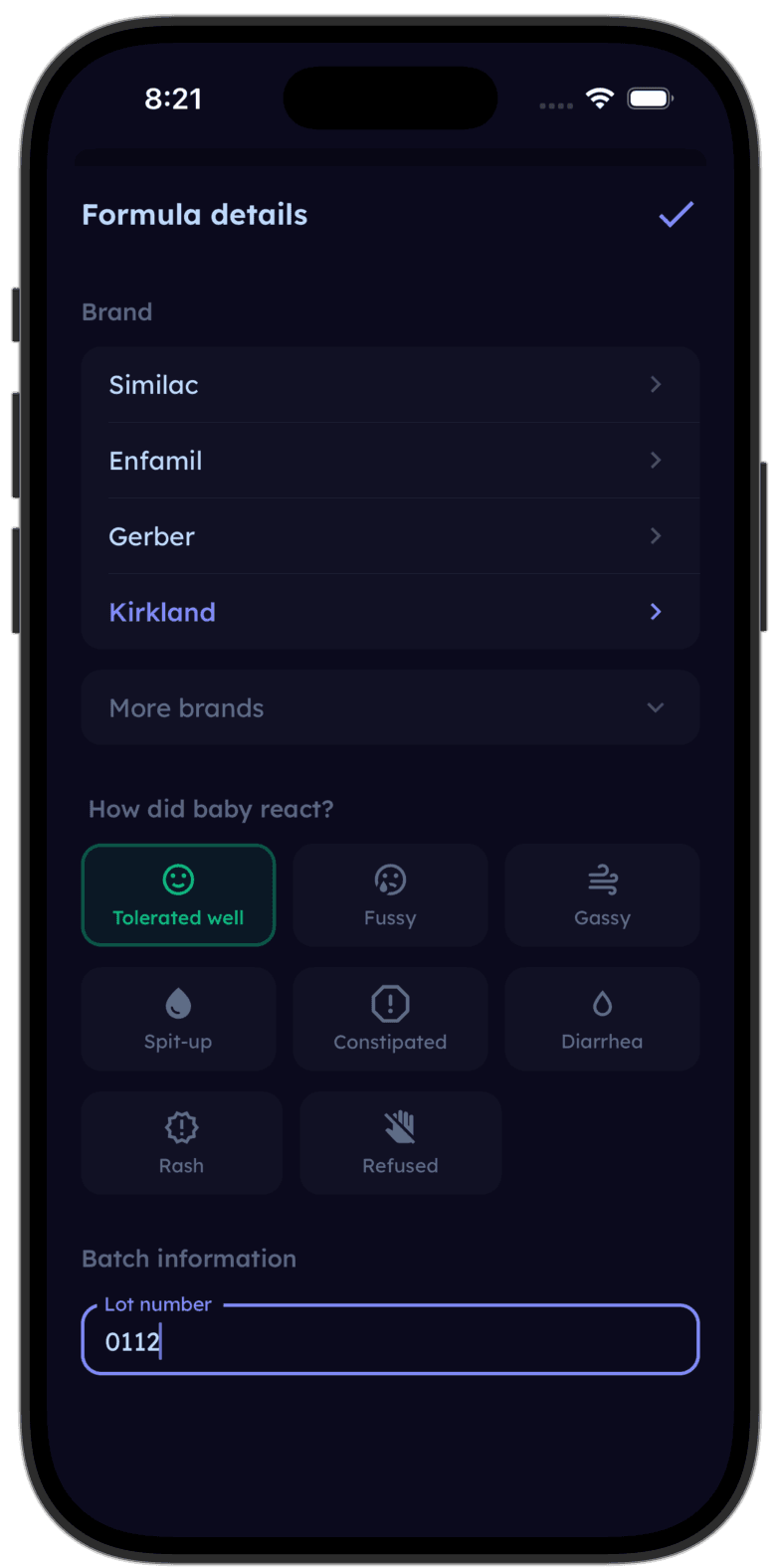
Tinylog tracks formula intake so you can spot what's working.
Log each bottle in seconds — see daily totals, track which formula your baby is on, and have real data ready for your pediatrician. Especially useful during formula transitions.


Taste, Mixing, and Practical Differences
Taste: Kendamil has a creamier taste from the whole milk. HiPP is milder and slightly sweeter. Both taste notably different from mainstream American formulas.
Mixing: HiPP dissolves fairly smoothly. Kendamil can be thicker and may benefit from warmer water. Both work well in a formula pitcher.
Availability: Kendamil has better U.S. retail distribution — available on Amazon and at Target. HiPP is primarily available online through Amazon and specialty retailers. Neither is as easy to grab off the shelf as Enfamil or Similac.
Staging: Both brands use a European-style stage system (Stage 1 for 0–6 months, Stage 2 for 6–12 months, Stage 3 for toddlers). American formula typically does not use stages for the first year. Follow your pediatrician's guidance on when or whether to transition stages.
Import considerations: Both are now officially available in the U.S. through FDA-registered channels. Avoid purchasing from gray-market importers, as storage and handling cannot be verified.
When to Talk to Your Pediatrician
Using either HiPP or Kendamil does not require a doctor's approval for healthy babies. Both are FDA-registered. However, talk to your pediatrician if your baby shows signs of intolerance.
Signs to Discuss With Your Pediatrician
- Your baby is consistently refusing feeds or eating significantly less than expected
- Persistent vomiting (not just spit-up) after most feedings
- Blood or mucus in stools
- Significant fussiness that does not improve after 1–2 weeks on a new formula
- Poor weight gain or weight loss
- Signs of allergic reaction: hives, facial swelling, wheezing, or difficulty breathing (seek immediate care)
Most formula discomfort (mild gas, occasional spit-up) is normal. Give any new formula at least 1–2 weeks before deciding it is not working.
The Bottom Line
HiPP and Kendamil are both excellent European formulas with different strengths. HiPP offers consistent EU-organic certification and added prebiotics. Kendamil offers whole-milk formulation with natural MFGM and no palm oil.
Choose HiPP if: EU-organic certification is your priority, you do not mind palm oil in formula, and added prebiotics (GOS) are important to you.
Choose Kendamil if: you prefer whole-milk formulation with natural MFGM, avoiding palm oil matters, you want plant-based DHA instead of fish oil, and you prefer broader retail availability.
Either works well if: you want a European-style formula with lactose as the sole carbohydrate and no corn syrup solids.
If you are switching between formulas, tracking feeds and symptoms for 1–2 weeks gives you real data. Tinylog logs feeds, diapers, and fussiness so you can see whether the switch made a difference. Once you've settled on a formula, sign up for free recall alerts so you'll know immediately if it's ever recalled.
For more, see Bobbie vs. Kendamil, Kendamil vs. Similac, and European vs. American formula.
Related Guides
-
European vs. American Formula — Real differences explained
-
Kendamil vs. Similac — European-style vs. American formula
Sources
- U.S. Food and Drug Administration. "21 CFR Part 107 — Infant Formula." Code of Federal Regulations.
- American Academy of Pediatrics. "Choosing an Infant Formula." HealthyChildren.org, 2024.
- European Commission. "Regulation on Infant Formula and Follow-On Formula." EC 2016/127.
- Koo WW, et al. "Palm olein in infant formula affects bone mineralization and calcium absorption." Journal of the American College of Nutrition, 2006.
- Timby N, et al. "Neurodevelopment, nutrition, and growth until 12 mo of age in infants fed a low-energy, low-protein formula supplemented with bovine milk fat globule membranes." American Journal of Clinical Nutrition, 2014.
- U.S. FDA. "Infant Formula Guidance Documents and Regulatory Information." fda.gov, 2023.
This guide is for informational purposes only and is not a substitute for professional medical advice. Formula recommendations should be discussed with your pediatrician, especially for babies with allergies, reflux, or other medical conditions.
Frequently asked questions
- Is HiPP or Kendamil better for babies?
- Neither is objectively better. HiPP is EU-organic with added prebiotics (GOS) and uses skim milk + whey protein. Kendamil uses whole milk with natural MFGM and plant-based DHA. Both are FDA-registered and meet U.S. nutritional requirements. The choice depends on whether organic certification or whole-milk formulation matters more.
- Are HiPP and Kendamil FDA approved?
- Both HiPP and Kendamil are now FDA-registered and legally sold in the United States. They meet all FDA requirements under 21 CFR 107. Previously, these formulas were only available through gray-market importers, but both brands have official U.S. distribution.
- Does HiPP formula contain fish oil?
- HiPP Dutch Stage 1 sources DHA from fish oil. Kendamil uses plant-based algal DHA without fish oil. If you prefer to avoid fish oil in formula, Kendamil is the fish-oil-free option.
- Which European formula is closest to breast milk?
- Both claim to be close to breast milk in different ways. Kendamil's whole-milk approach retains natural MFGM (a breast milk component). HiPP's prebiotic GOS mimics the prebiotic effect of breast milk oligosaccharides. No formula fully replicates breast milk.
- Can I buy HiPP and Kendamil at regular stores?
- Kendamil is available at Amazon, Target, and some specialty retailers. HiPP is available through Amazon and specialty formula retailers. Neither is as widely available as Enfamil or Similac, so plan ahead to avoid running out.