
GUIDE
European vs. American Baby Formula
Published on ·Updated on
The regulatory differences are real. The EU requires lactose as the primary carb and uses a staged system. The US allows corn syrup solids and doesn't require stages. Neither system is objectively 'better.'
Parents interested in European formulas aren't being irrational — EU regulations do differ from US ones in meaningful ways. But importing non-FDA-registered formulas comes with real risks that deserve honest discussion.
Free 2-min quiz. Personalized match plus a recall check.
“All infant formulas must meet requirements that ensure optimal nutrition for babies. If your baby's formula is sold in the U.S., it has the nutrients your baby needs.”
 Dr. Matthew Badgett, MD, Pediatrician, Cleveland Clinic
The Regulatory Differences Are Real
Parents who look into European formulas are not being irrational or trendy. The regulatory differences between EU and US infant formula standards are genuine, documented, and in some cases meaningful. Dismissing this interest helps no one.
At the same time, importing non-FDA-registered formulas introduces risks that deserve honest discussion. Both things can be true: the EU has some regulation that arguably serve infants well, AND importing formula around the FDA system creates real safety gaps.
Let us walk through what actually differs.
| Factor | EU (EFSA) | US (FDA) | Why It Matters |
|---|---|---|---|
| Primary Regulator | EFSA (European Food Safety Authority) via EU Commission | FDA (Food and Drug Administration) | Both are rigorous regulatory bodies with different approaches |
| Primary Carbohydrate | Lactose required (must provide at least 30% of energy). Corn syrup solids not permitted in Stage 1. | Lactose common but not required. Corn syrup solids, maltodextrin, and sucrose all permitted. | Lactose is the primary sugar in breast milk and may have benefits for gut health |
| Staged System | Required: Pre, Stage 1, Stage 2, Stage 3 with different nutritional profiles for each age | Not required. Most formulas are 'birth to 12 months.' Separate toddler formulas exist but aren't required. | Staging allows more targeted nutrition by age but adds complexity for parents |
| DHA Requirement | Mandatory since 2020 (20-50 mg/100 kcal) | Not mandatory, but most major brands include it voluntarily | In practice, most US formulas include DHA anyway |
| Pesticide Limits | Stricter limits — 0.01 mg/kg for most pesticides in infant formula ingredients | EPA tolerances apply — generally more permissive than EU limits | Both are within safety margins, but EU limits are tighter |
| GMO Ingredients | Strict labeling required if >0.9% GMO content. Most formulas are GMO-free. | GMO ingredients permitted and common (soy, corn derivatives). No specific labeling required for formula. | Matters if GMO avoidance is a priority for you |
| Manufacturing Oversight | Pre-market notification, facility inspections by national authorities | Pre-market notification required, FDA inspects facilities, every batch tested before sale | Both have oversight — different structures |
| Recall Infrastructure | EU Rapid Alert System for Food and Feed (RASFF) — covers EU/EEA countries | FDA recall system with mandatory reporting — covers US market only | Critical: non-FDA-registered imports have NO US recall coverage |
| Iron Content | 0.3-1.3 mg/100 kcal | Minimum 0.15 mg/100 kcal (low-iron) or 1 mg/100 kcal (iron-fortified). AAP recommends iron-fortified. | Different ranges but both adequate for infant needs |
The Carbohydrate Issue: Why It's the Biggest Difference
The most substantive regulatory difference is carbohydrate requirements.
In the EU, infant formula (Stage 1) must derive at least 30% of its energy from lactose. Corn syrup solids, maltodextrin, and glucose syrup are restricted or prohibited as primary carbohydrates in Stage 1 formulas. The rationale: lactose is the primary carbohydrate in human breast milk, it promotes the growth of beneficial Bifidobacterium in the infant gut, it enhances calcium and magnesium absorption, and it has a lower glycemic index than glucose-based alternatives.
In the US, the FDA does not restrict carbohydrate type. Many popular formulas use a blend of lactose and corn syrup solids. Corn syrup solids are not harmful — they are a simple glucose polymer that babies digest easily and they have been used in formula for decades. But they lack the prebiotic properties of lactose and have a higher glycemic index.
This is the reason many parents seek out European formulas. It is a legitimate scientific distinction, and the preference for lactose-dominant formulas is reasonable. The good news: you no longer need to import European formula to get a lactose-only option. Several FDA-registered formulas now use lactose as the sole carbohydrate.
The Staged System Explained
European formulas use a staged system that adjusts the nutritional profile as your baby grows. This is a real structural difference from the US approach.
| Stage | Age Range | What It Means |
|---|---|---|
| Pre (EU) | Birth to 6 months | Whey-dominant protein ratio (60:40 whey to casein, closest to breast milk). Lactose as sole carb. Lowest protein overall. Designed to mimic early breast milk composition. |
| Stage 1 (EU) | Birth to 6 months | More casein than Pre stage (closer to 50:50 or casein-dominant). Still lactose-based. Slightly more satiating. Some parents find babies sleep longer stretches on Stage 1 vs. Pre. |
| Stage 2 (EU) | 6-12 months | Follow-on formula. Higher iron and protein content to support growth during the complementary feeding period. Can include starch. Designed to work alongside solid foods. |
| Stage 3 (EU) | 12+ months | Toddler formula. Higher protein, adjusted vitamin/mineral profile for toddlers. Not a medical necessity — most toddlers can transition to whole cow's milk at 12 months. |
| US Standard | Birth to 12 months | Single formulation covers the entire first year. Nutritional profile is set to meet needs across the range. Separate toddler formulas exist but are not required and are not a replacement for whole milk. |
| Brand | Stages | Carbohydrate | Protein | Key Extras | FDA-Registered? | Import Risk |
|---|---|---|---|---|---|---|
| HiPP (Germany) | Pre, 1, 2, 3 | Organic lactose, organic starch | Organic skim milk, organic whey | Prebiotics (GOS), DHA, probiotics (some versions) | No | High — gray market import, German labels |
| Holle (Switzerland) | Pre, 1, 2, 3 | Organic lactose, organic maltodextrin | Organic skim milk | DHA from algae oil, Demeter biodynamic certification | No | High — gray market import, German/Dutch labels |
| Lebenswert (Germany) | 1, 2, 3 | Organic lactose, organic starch | Organic skim milk, organic whey | Bioland organic certification, DHA | No | High — gray market import, German labels |
| Kendamil (UK) | Stage 1, Stage 2, Stage 3 | Lactose (only) | Whole milk | 3'-GL HMO, DHA from algae, no palm oil | Yes | Low — FDA-registered, English labels |
| Bobbie (US-made) | Infant (0-12 months), Toddler | Organic lactose (only) | Organic nonfat milk, organic whey | DHA, iron, EU-inspired formulation | Yes | None — domestically produced |
The Import Reality: Risks You Should Know About
If you are considering importing a European formula that is not FDA-registered (HiPP, Holle, Lebenswert, etc.), you need to understand the risks clearly. These formulas are well-regulated in Europe — they meet strict EFSA standards and are perfectly safe when purchased through European supply chains. The risks emerge in the import process.
Risks of Importing Non-FDA-Registered Formula
- No US recall infrastructure — if a batch is contaminated, the FDA has no mechanism to notify US consumers or pull product from US homes
- Shipping and storage concerns — formula shipped internationally may be exposed to extreme temperatures during transit, and there's no cold chain verification
- Labels in foreign languages — dosing instructions, allergen warnings, and preparation guidelines may be in German, Dutch, or French. Translation errors can lead to incorrect preparation
- No FDA batch testing — the FDA requires testing of every batch of formula sold in the US. Imported formulas bypass this entirely
- Counterfeit risk — gray market formula sourced through third-party resellers has a higher risk of counterfeiting or product substitution
- Supply chain disruption — international shipping delays, customs holds, and stockouts at overseas retailers can interrupt your baby's supply. Running out of formula is a real safety concern.
These risks don't mean EU formulas are unsafe. They mean the process of importing them around the FDA system introduces uncertainties that don't exist with FDA-registered products. If you choose to import, buy from reputable sellers, verify packaging integrity, and never use formula from a damaged or improperly sealed container.
The New Middle Ground: EU-Style, FDA-Registered
The formula market has evolved significantly in the past few years. You no longer have to choose between US regulatory safety and EU-style formulations. Several brands now bridge the gap.
| Brand | Origin | EU-Style Features | US Compliance | Cost | Availability |
|---|---|---|---|---|---|
| Kendamil Classic | Made in UK, FDA-registered | Lactose-only, whole milk protein, no palm oil, staged system | FDA-registered, US recall infrastructure, English labels | ~$30-35/can | Target, Walmart, Amazon, direct |
| Kendamil Organic | Made in UK, FDA-registered | All Kendamil Classic features plus USDA/EU organic certification | FDA-registered, USDA organic certified, English labels | ~$33-38/can | Target, Walmart, Amazon, direct |
| Bobbie Organic | Made in US | Lactose-only, no palm oil, EU-inspired formulation philosophy | US-manufactured, FDA-compliant, USDA organic | ~$32-36/can | Subscription (direct), select retailers |
| ByHeart | Made in US | Whole protein approach, lactose-based, focus on breast milk-inspired fat blend | US-manufactured, FDA-compliant | ~$36-40/can | Direct, select retailers |
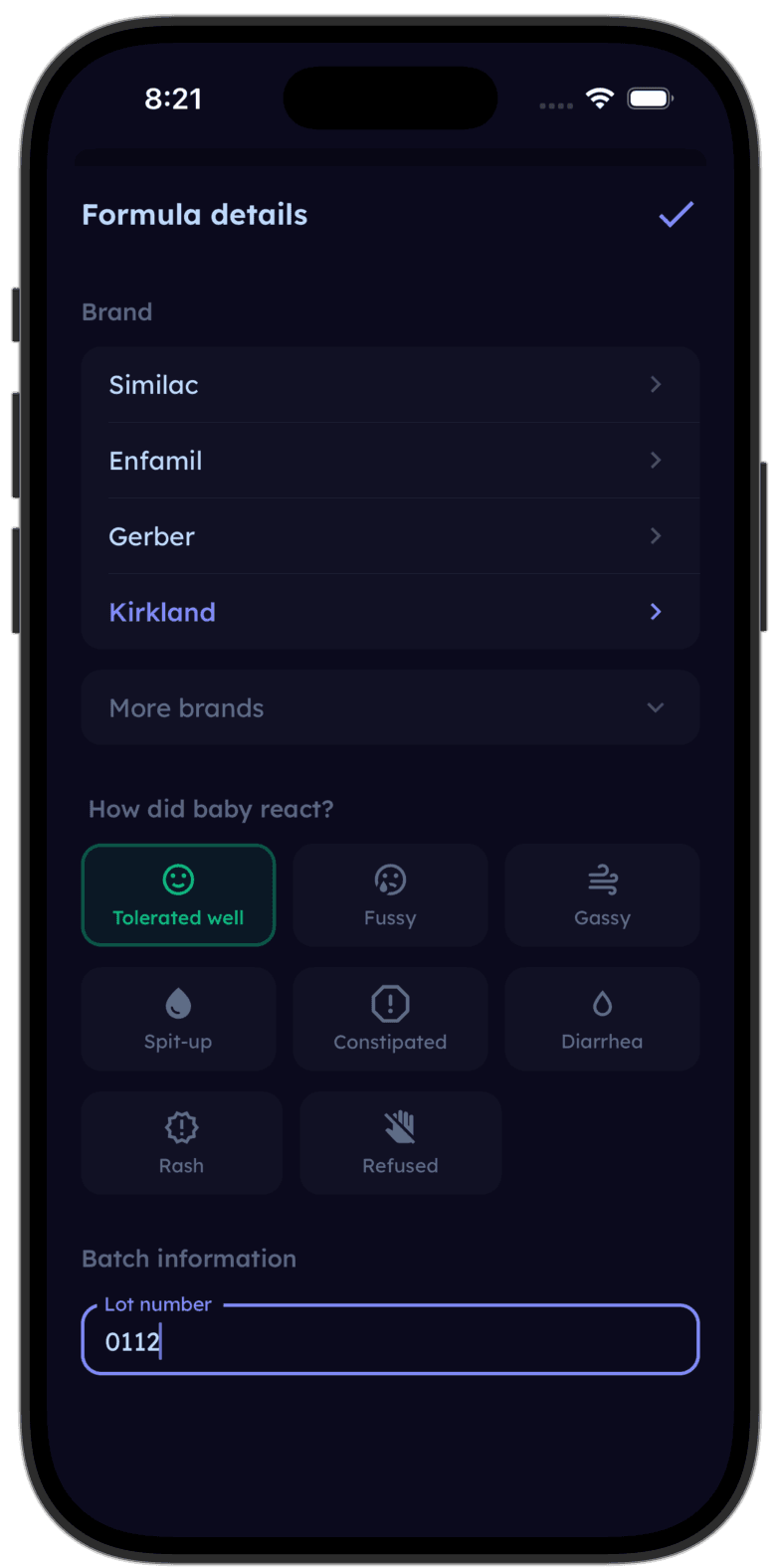
Know if your formula switch is actually making a difference.
When you move from a standard US formula to a lactose-only or EU-style option, log each bottle, note any digestive or fussiness changes, and track it over days. If the switch is helping, you'll see it. If it's not, you'll have real data for your pediatrician instead of a vague sense that something feels different.


What the Marketing Doesn't Tell You
European formula brands market to American anxiety. The growth of European formula imports in the US tracks directly with parental anxiety about US formula ingredients. EU formula brands (and the third-party importers who profit from reselling them) benefit from the narrative that US formula is inferior. The reality is more nuanced — both systems have strengths and weaknesses.
"No corn syrup" is the EU formula selling point — but context matters. Corn syrup solids in US formula are not the same as high-fructose corn syrup in soda. They are a simple glucose polymer used as an energy source. The argument for lactose over corn syrup solids is real (prebiotic properties, lower glycemic index), but the implication that corn syrup solids are dangerous or harmful is not supported by evidence.
The staged system sounds more scientific than it is. While tailoring nutrition to developmental stages makes intuitive sense, there is limited clinical evidence that the EU's staged approach produces measurably different outcomes than the US single-formula approach. Babies on US formula grow normally through the first year on the same formulation.
"Strict EU regulations" doesn't mean US regulations are lax. The FDA requires pre-market notification for new formulas, inspects manufacturing facilities, requires batch testing before sale, and mandates specific nutrient levels. The EU has stricter rules in some areas (carbohydrate type, pesticide limits) and the US has stricter rules in others (manufacturing inspection, batch testing). Neither system is categorically more rigorous.
Import prices include a significant markup. Third-party importers of HiPP, Holle, and other EU brands charge $35-45 per can for formulas that retail for 10-15 euros ($11-17) in European supermarkets. You are paying a substantial premium for the import service — and getting none of the FDA safety infrastructure that comes with domestically sold formula.
When to Talk to Your Pediatrician
Discuss your formula choice with your pediatrician if:
- You are currently using an imported, non-FDA-registered formula — your pediatrician should know what your baby is eating, and they can flag any concerns about preparation or storage
- You are considering switching from a US formula to a European-style one (or vice versa) — they can help you transition smoothly
- You want to understand whether the specific regulatory differences (lactose vs. corn syrup solids, staged system, etc.) matter for your individual baby
- Your baby has special nutritional needs (prematurity, allergies, metabolic conditions) that may affect which formula is appropriate
- You are uncertain about how to prepare formula with instructions in a foreign language
Most pediatricians will not have a strong opinion about EU vs. US formula for a healthy, full-term baby. What they will care about is that you are using a product that meets recognized safety standards, that you are preparing it correctly, and that your baby is growing well. If you can check all those boxes, the specific brand and origin matter less than you might think.
Tracking feeds, growth, and any symptoms during a formula switch makes the pediatrician conversation much more productive. If you are logging in Tinylog or a similar tracker, share that data at your next visit.
The Bottom Line
The differences between EU and US formula regulations are real and worth understanding. EU formulas have legitimate strengths: lactose requirements, stricter pesticide limits, and a staged nutritional system. US formulas have their own strengths: rigorous manufacturing oversight, batch testing, and a recall infrastructure that protects consumers.
If the EU formulation philosophy appeals to you, the best option in 2026 is an FDA-registered formula with EU-style features — Kendamil, Bobbie, or ByHeart. You get the ingredient profiles you want with the safety infrastructure you need. Importing non-registered formulas introduces risks that these middle-ground brands eliminate.
And if your baby is thriving on a standard US formula — name brand or store brand — there is no evidence-based reason to switch. Growing well on Enfamil NeuroPro Baby Formula or Similac 360 Total Care Baby Formula is not a problem that needs solving.
Tinylog earns a small commission on purchases made through these links, at no cost to you.
Tip: check promo.new before purchasing. It's hit or miss depending on the product, but when it hits, you'll be glad you checked.
For our full formula comparison, see our best baby formulas 2026 guide. For more on the organic question specifically, see our organic vs. conventional formula guide. And if you do decide to switch, track how your baby responds in the first two weeks — that data will tell you far more than any regulatory comparison.
Related Guides
-
HiPP vs. Kendamil — European formula head-to-head
-
Best Organic Formulas — Honest, evidence-based rankings
Sources
- U.S. Food and Drug Administration — "21 CFR 107: Infant Formula Requirements." Code of Federal Regulations.
- European Commission — Commission Delegated Regulation (EU) 2016/127 on Infant Formulae and Follow-On Formulae.
- European Food Safety Authority — "Scientific Opinion on the Essential Composition of Infant and Follow-On Formulae." EFSA Journal, 2014.
- Koletzko B, et al. "Global Standard for the Composition of Infant Formula: Recommendations of an ESPGHAN Coordinated International Expert Group." Journal of Pediatric Gastroenterology and Nutrition, 2005.
- Vandenplas Y, et al. "Carbohydrate Composition in Infant Formulas: A Review of Current Evidence." Nutrients, 2022.
- U.S. Food and Drug Administration — "FDA Compliance Program Guidance Manual: Infant Formula Program," 2023.
- Jiang T, et al. "Effect of Lactose and Glucose-Based Carbohydrates in Infant Formula on Gut Microbiota." Nutrients, 2021.
- RASFF — EU Rapid Alert System for Food and Feed, Annual Report, 2023.
This guide is for informational purposes only and is not a substitute for professional medical advice. If you have concerns about your baby's formula or nutrition, please consult your pediatrician.
Frequently asked questions
- Are European baby formulas better than American formulas?
- Neither is objectively better. EU and US formulas have different regulatory standards, and each has strengths. The EU requires lactose as the primary carbohydrate and has a staged system. The US requires different vitamin and mineral levels and has stricter manufacturing inspection requirements. Both produce formulas that support healthy infant development.
- Is it safe to import European baby formula?
- Non-FDA-registered European formulas (like HiPP, Holle, and Lebenswert) are not subject to US recall infrastructure, haven't been reviewed by the FDA, and may have shipping and storage concerns during import. Labels are often in German, Dutch, or other languages. While the formulas themselves are well-regulated in Europe, importing them introduces risks around the supply chain. FDA-registered alternatives like Kendamil and Bobbie offer EU-style formulations with US safety oversight.
- Why do European formulas ban corn syrup solids?
- EU regulations (Commission Delegated Regulation 2016/127) require lactose to provide at least 30% of energy in infant formula, and carbohydrates in Stage 1 formula must come primarily from lactose. This effectively excludes corn syrup solids as a primary carbohydrate. The rationale is that lactose is the primary sugar in breast milk and promotes beneficial gut bacteria. US regulations do not impose this restriction.
- What are Kendamil and Bobbie?
- They represent the 'new middle ground' — formulas with EU-inspired formulations that are FDA-registered for US sale. Kendamil is UK-made with whole milk, lactose-only carbohydrates, and no palm oil. Bobbie is US-made with organic ingredients, lactose-only, and no palm oil. Both are FDA-registered, meaning full US recall infrastructure and safety oversight apply.
- What is the staged system in European formula?
- EU regulations require formula to be sold in stages: Pre (birth to 6 months, whey-dominant), Stage 1 (birth to 6 months, casein-dominant), Stage 2 (6-12 months, follow-on), and Stage 3 (12+ months, toddler). Each stage has different protein, carbohydrate, and nutrient specifications matched to developmental needs. US formula doesn't require stages — most products are 'birth to 12 months' with a separate toddler formula.