GUIDE

Bottle to Sippy Cup vs. Bottle to Open Cup

Most pediatric dentists and speech-language pathologists now recommend transitioning from bottle to an open cup or straw cup rather than a traditional sippy cup. Sippy cups are convenient but can promote the same sucking pattern as a bottle. Open cups develop more mature drinking skills.

The sippy cup has been the default transition tool for decades. Here's why that's changing and what actually matters for your baby's oral development.

Track milestones during the transition

Log cup drinking and developmental progress

Consider starting with a plastic or silicone cup with no lid. There's no question that a 1-year-old can start to use a cup with two hands.
Dr. Jason ShermanDr. Jason Sherman, DO, Pediatrician, Cleveland Clinic

Why Pediatric Dentists Changed Their Minds

For decades, the sippy cup was the unquestioned step between bottle and cup. Every baby registry included one. Every daycare required them. The convenience was undeniable — a spill-proof vessel baby could carry independently.

Then pediatric dentists and speech-language pathologists started raising concerns. If you are also navigating the end of breast or bottle feeding, our complete weaning guide pairs well with this transition. Research published in the Journal of the American Dental Association showed that prolonged sippy cup use — especially when filled with milk or juice and used as an all-day drinking vessel — was contributing to early childhood caries (cavities) in the same way bottles did. The hard spout rested against the front teeth, bathing them in sugary liquid throughout the day.

Beyond dental concerns, speech-language pathologists noted that hard-spout sippy cups promote the same anterior tongue posture as bottles — the tongue pushes forward against the spout rather than retracting. This is the opposite of the mature swallowing pattern needed for speech development. A position statement from the American Speech-Language-Hearing Association notes that sippy cups can delay the development of mature oral motor patterns when used as a long-term bottle replacement.

Sippy Cup vs. Open Cup Transition
Oral motor pattern
Sippy Cup TransitionSimilar to bottle sucking — tongue pushes forward against the spout (hard spout sippys)
Open Cup TransitionPromotes mature sipping pattern — tongue stays retracted, jaw and lips work together
Dental impact
Sippy Cup TransitionProlonged use can contribute to malocclusion and dental caries, especially with sugary liquids
Open Cup TransitionPromotes proper oral posture; no association with dental problems
Mess factor
Sippy Cup TransitionMinimal — spill-proof designs keep liquid contained
Open Cup TransitionSignificant at first — spilling is part of the learning process
Independence
Sippy Cup TransitionBaby can carry and use independently early — minimal supervision needed
Open Cup TransitionRequires supervision and parent assistance initially; independence develops gradually
Speech development
Sippy Cup TransitionHard-spout sippy may delay mature tongue positioning needed for speech sounds
Open Cup TransitionEncourages tongue retraction and lip control that support speech development
Convenience
Sippy Cup TransitionEasy for travel, car seats, and on-the-go hydration
Open Cup TransitionBest used at a table; not portable for on-the-go drinking
Age appropriateness
Sippy Cup TransitionMarketed for 6+ months; most useful as a brief transitional tool
Open Cup TransitionCan start practicing at 6 months; functional by 12 months for most babies
Straw cups represent a middle-ground option that combines portability with better oral motor development.

Sippy Cup Advantages

  • Spill-proof — dramatically less messy than open cups during the learning phase
  • Easy for baby to hold and use independently from an early age
  • Convenient for travel, car seats, strollers, and outings
  • Familiar sucking motion makes the transition from bottle easier for baby
  • Gives parents peace of mind about hydration without constant supervision

Sippy cups aren't evil — they're convenient. The concern is about long-term reliance, not short-term use.

Sippy Cup Concerns

  • Hard-spout sippy cups promote the same forward tongue posture as bottles
  • Prolonged use is associated with dental caries and bite misalignment
  • Can become a 'bottle replacement' that delays development of mature drinking skills
  • All-day sippy cup use with milk or juice is a top pediatric dental concern

These issues arise with prolonged, all-day use. Brief, mealtime-only sippy cup use is far less concerning.

Open Cup Advantages

  • Develops mature oral motor skills — sipping, lip closure, and tongue retraction
  • Recommended by pediatric dentists and speech-language pathologists for optimal development
  • No association with dental problems or speech delays
  • Teaches the cup skill baby will use for life — no secondary transition needed later
  • Reduces the risk of excessive liquid intake that can displace solid food

The developmental benefits are real, even though the mess is also very real.

Open Cup Challenges

  • Messy — significant spilling is expected during the learning phase (weeks to months)
  • Requires supervision — baby can't carry an open cup independently
  • Not practical for travel, car seats, or on-the-go drinking
  • Some parents find the mess stressful or impractical for their daily routine

These are logistics challenges, not developmental concerns. They're solvable with practice and patience.

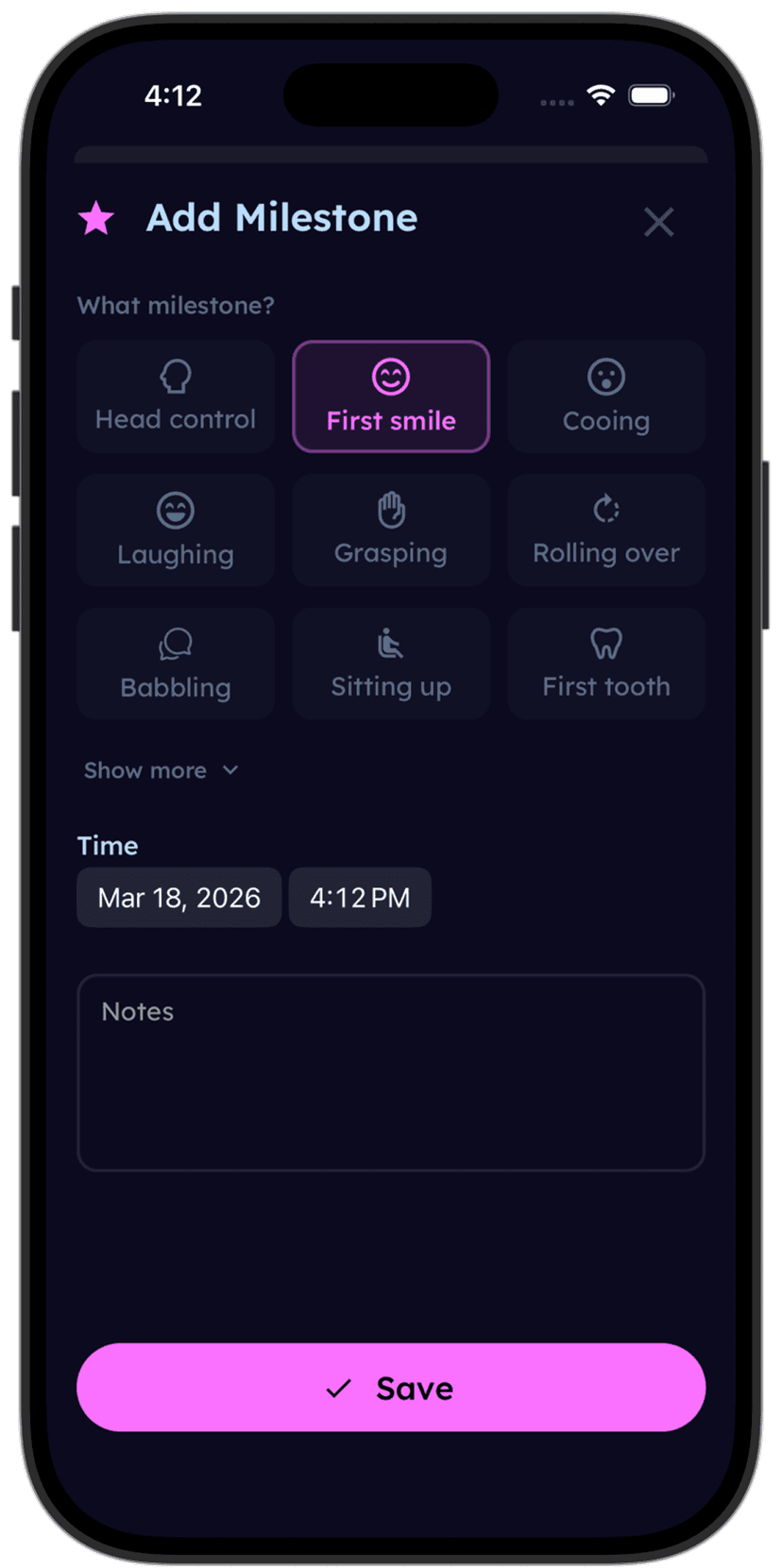
Tinylog app showing milestone log tracking feeding transitions

Logging milestones during the cup transition helps you see progress week by week.

Tinylog tracks feeding milestones — first sips from a cup, bottle feeds dropped, and new skills mastered. When the transition feels endless, checking your log shows how far baby has come.

Download on the App StoreGet It On Google Play

The Practical Path: What Most Families Actually Do

In practice, most families use a combination of cup types. Open cups at mealtimes when someone can supervise and mop up. Straw cups for water throughout the day and on outings. Maybe a soft-spout sippy for the car seat when spilling isn't an option.

This is fine. The concern with sippy cups isn't about occasional, supervised use — it's about replacing the bottle with an equally problematic all-day vessel. A child who drinks from an open cup at meals, uses a straw cup for water during the day, and occasionally uses a sippy for convenience is developing normal oral motor skills.

What to avoid: filling a hard-spout sippy cup with milk or juice and letting baby carry it around all day. This is the specific pattern associated with dental caries and delayed oral development. If a sippy is used, keep it to mealtime, fill it with water rather than sugary liquids, and treat it as a transitional tool rather than a permanent solution.


How to Decide: A Realistic Framework

Start with open cup practice at 6 months. This is typically around the same time you begin introducing solid foods. Just a tiny cup with a tablespoon of water at mealtimes. Expect spilling. The goal is building the skill gradually so it's functional by 12-15 months when the bottle should go.

Use straw cups for portability. Weighted straw cups work well from about 6-9 months. They promote better oral motor patterns than sippys and are spillproof enough for the diaper bag. This is the recommended portable option.

If you use sippy cups, use them briefly. A soft-spout sippy for the car seat or during a specific transition period is fine. Just don't let it become the permanent replacement for the bottle. The goal is moving to open cups and straw cups.

Drop the bottle by 12-15 months. The specific cup you replace it with matters less than the timeline. Our breast vs. bottle weaning comparison covers the different strategies for each. Bottles after 18 months are more strongly associated with dental problems and excessive milk intake than any cup choice.

Tips That Apply Either Way

Start practicing early — cup skills develop over months, not days

Introduce a small open cup (like a tiny 2 oz cup) at mealtimes starting around 6 months. Put just a tablespoon or two of water in it. Baby will spill most of it. That's the point — they're learning the motor skill. By the time you want to wean the bottle at 12 months, they'll already have months of practice.

Consider straw cups as a practical middle ground

If open cups aren't realistic for your daily routine (daycare, car seats, outings), straw cups are the recommended alternative. Drinking from a straw uses a different, more mature oral motor pattern than sippy cup sucking. Weighted straw cups work well for young babies learning to tilt and sip.

Drop bottle feeds gradually, not all at once

Most families do best replacing one bottle feed at a time with a cup feed, starting with the feed baby is least attached to (usually mid-day). Keep the morning and bedtime bottles longest. Over 2-4 weeks, all bottles transition to cups. After the bedtime bottle goes, brush baby's teeth and don't let them fall asleep with a cup of milk.

Related Guides

Sources

  • American Academy of Pediatric Dentistry. (2020). Policy on Early Childhood Caries. AAPD Reference Manual, 42(6), 58-62.
  • American Speech-Language-Hearing Association. (2004). Roles of Speech-Language Pathologists in Swallowing and Feeding Disorders. Position Statement.
  • Keim, S. A., et al. (2018). Injuries Associated With Bottles, Pacifiers, and Sippy Cups in the United States, 1991-2010. Pediatrics, 129(6), 1104-1110.
  • Orimadegun, A. E., & Mohan, A. (2015). A review of pediatric fluid intake and dental caries. International Journal of Pediatric Dentistry, 25(4), 289-295.
  • AAP Section on Oral Health. (2014). Maintaining and Improving the Oral Health of Young Children. Pediatrics, 134(6), 1224-1229.

This guide is for informational purposes only and is not a substitute for professional medical advice. Consult your pediatrician for guidance specific to your baby.

Get this comparison in your inbox.
Save this guide for when you're ready to start weaning off the bottle.
Milestone tracking helps you see progress during big transitions.
Download Tinylog — log cup practice, feeding changes, and developmental wins.
Download on the App StoreGet It On Google Play