
GUIDE
Braun No Touch Thermometer vs. Frida Baby Basics Kit
Published on
These tools solve different problems — the Braun thermometer gives you fast, reliable temperature readings without waking your baby, while the Frida Baby Basics Kit handles congestion, medicine dosing, and cradle cap. Most families need both eventually. Which to buy first depends on your baby's age and your most pressing current need.
The Braun No Touch + Forehead Thermometer (~$40–50) and the Frida Baby NoseFrida + Baby Basics Kit (~$35–45) are both staples of the newborn health kit — but they cover completely different ground. The Braun is built around one task done extremely well: taking your baby's temperature without contact or cooperation. The Frida kit bundles four tools that collectively handle some of the most common early-baby annoyances: congestion, medicine administration, and cradle cap. Understanding what each solves will help you decide where to spend first.
Log symptoms, temps, and more
Two Different Tools for Two Different Problems
The Braun No Touch + Forehead Thermometer and the Frida Baby Basics Kit are not really competing products — they handle completely different aspects of baby health. Comparing them is genuinely useful, though, because most families have a limited budget and need to prioritize what to buy first.
Here is the honest breakdown: the Braun thermometer is a precision instrument for one specific job. It reads temperature fast, without waking your baby, and tells you whether you have a green-light situation, a watch-closely situation, or a call-the-pediatrician situation. That is its entire purpose, and it does it well.
The Frida Baby Basics Kit is a bundle that addresses several common newborn challenges: mucus-clogged noses, the logistical nightmare of giving liquid medicine to a baby who does not want it, and cradle cap. No single tool in the kit is doing something miraculous, but collectively they solve problems you will definitely encounter in the first year.
Most families end up owning both. The question is which to buy first — and for newborns, the thermometer wins that argument.
| Feature | Braun No Touch Thermometer | Frida Baby Basics Kit |
|---|---|---|
| Product type | Dual-mode thermometer (infrared no-touch + forehead contact) | Multi-tool health kit (4 tools + storage case) |
| Price range | ~$40–$50 | ~$35–$45 |
| What it does | Measures baby's temperature; color-coded fever guidance | Clears nasal congestion, administers medicine, treats cradle cap, aids burping |
| Reading speed | ~2 seconds | N/A — not a thermometer |
| Memory | Stores last 9 readings | N/A |
| Night use | Silent mode + backlit display; no-touch mode works without waking baby | NoseFrida works any time; quiet, no powered components |
| Age range | Birth through childhood and beyond | Birth through ~18–24 months |
| Learning curve | Low — one button, color-coded results | Low to moderate — NoseFrida technique takes a few tries |
| Replaces what | Ear or rectal thermometers for older babies; the go-to for quick checks | Bulb syringe, medicine syringes, separate cradle cap brush |
| Best for | Fast, non-invasive temperature checks — day and night | Congestion relief, medicine dosing, cradle cap management |
The Braun No Touch Thermometer: What It Does Well
The Braun No Touch + Forehead Thermometer operates in two modes. In no-touch infrared mode, it reads skin surface temperature from up to 5 centimeters away — no contact required. In forehead contact mode, you press it gently to the forehead for a slightly more accurate reading. Both take about 2 seconds.
The color-coded display is genuinely useful: green means no fever, yellow means elevated temperature worth monitoring, and red means fever territory. At 3 AM with a screaming baby, you do not want to squint at numbers and do mental math. The visual signal handles that for you.
The silent mode and backlit display mean you can check a sleeping baby without turning on a light or triggering a beep that undoes the last 45 minutes of effort. The memory stores the last 9 readings, so if you are tracking whether a fever is trending up or down, you have the data without needing to write anything down.
A few limitations worth knowing: no-touch infrared readings are more susceptible to environmental factors — drafts, sweat, and room temperature can affect accuracy. For clinical decisions (especially for babies under 3 months, where fever thresholds are strict), use the forehead contact mode and follow the positioning instructions carefully. The thermometer is not a rectal thermometer, which is still the AAP gold standard for babies under 3 months — but for quick checks and ongoing monitoring, the Braun is practical and reliable.
For a deeper look at fever thresholds by age, see our baby fever chart.
The Frida Baby Basics Kit: What You Are Actually Getting
The kit bundles four tools designed to cover recurring newborn health situations:
NoseFrida Nasal Aspirator — The most-used item in the kit. You place one end gently at the baby's nostril (it does not insert), create suction with your mouth, and pull mucus through a tube. A hygiene filter in the tube blocks everything before it reaches your mouth. The design is more effective than a bulb syringe because you control the suction — you can modulate how hard you pull based on the baby's response. It looks alarming the first time you use it. It works.
MediFrida Pacifier Medicine Dispenser — A pacifier with a hollow nipple connected to a medicine reservoir. You fill it with the measured dose, give it to the baby, and they draw the medicine out while sucking. For babies who spit a syringe straight back at you, this approach delivers the dose with far less drama. It does not replace accurate dosing — you still need to measure the correct amount — but it makes delivery much easier.
DermaFrida Foam Bath Brush — A soft silicone brush for treating cradle cap during bath time. You apply baby oil or cradle cap shampoo and use the brush to gently loosen flakes. It works better than a washcloth and is gentler than an adult fingernail. Not every baby develops cradle cap, but enough do that this tool earns its place in the kit.
Winding Key — A visual aid for the "bicycle legs" burping technique. Minimal utility, but adds no bulk.
Storage Case — Keeps the tools together and clean. Worth more than it sounds, because the NoseFrida has small parts that get lost easily.
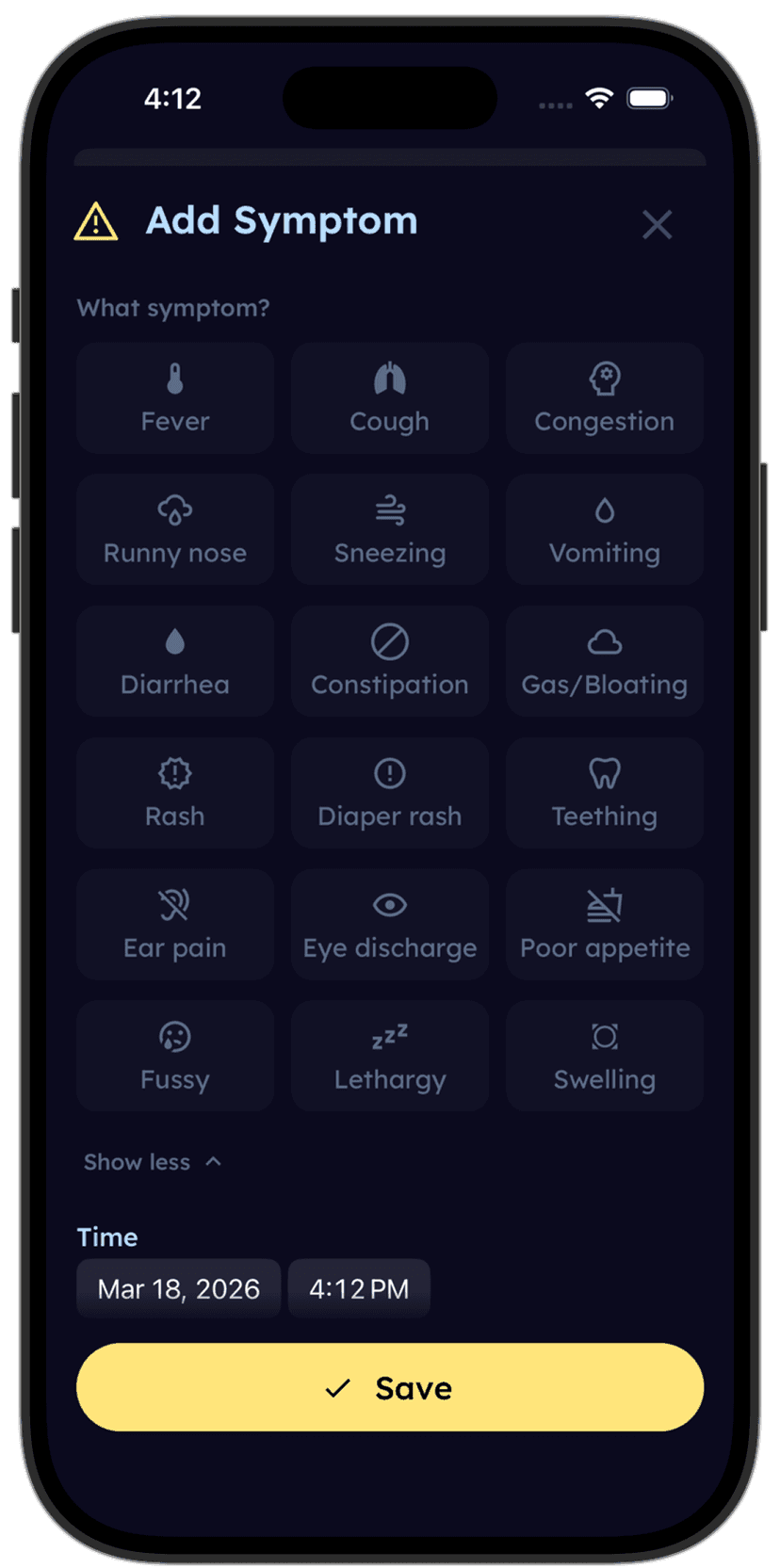
Tinylog tracks health so you can spot patterns.
Log temperatures, symptoms, medicine doses, and feeding changes. See patterns over days and weeks — and share the data with your pediatrician without relying on your memory.


| Product | Typical Price | Notes |
|---|---|---|
| Braun No Touch + Forehead Thermometer (BNT400) | $40–$50 | Includes 2 AAA batteries. No ongoing consumable costs beyond battery replacement. |
| Frida Baby NoseFrida + Baby Basics Kit | $35–$45 | Includes NoseFrida filters. Replacement filter packs (~$5–$8 for 20 filters) needed periodically — more often if baby has frequent congestion. |
| NoseFrida Replacement Hygiene Filters (20-pack) | $5–$8 | Ongoing consumable. Replace every 10 uses or when visibly saturated. Budget ~$10–15/year for average use. |
| Braun + Frida Kit (both) | $75–$95 combined | Most families end up buying both. Buying together before birth is often cheaper than buying separately when you need them urgently. |
The Cost Picture
The Braun thermometer runs $40–50 and has no meaningful ongoing costs — just batteries that last a long time. The Frida kit runs $35–45 upfront, with small recurring costs for NoseFrida replacement filters (a pack of 20 runs about $5–8, and you go through them faster if your baby has frequent congestion).
Neither product is expensive in the context of what you are spending on a baby. But if the question is where to spend first:
- The thermometer pays for itself the first time your baby has a fever — a 100.4°F reading in a 6-week-old is a same-day ER visit. Having an accurate, fast thermometer at that moment is not optional.
- The Frida kit earns its value over the first year, particularly during cold season and the newborn congestion phase. It also tends to get borrowed by grandparents and partners who find the NoseFrida technique easier than struggling with a bulb syringe.
If budget requires choosing just one right now, buy the thermometer first. Then add the Frida kit before cold and flu season, or as soon as congestion becomes an issue.
Choose the Braun No Touch Thermometer First If
- You have a newborn and need a reliable thermometer from day one — this is the single highest-priority health item for a new baby
- You check temperatures frequently and want a fast, non-disruptive reading that works while your baby is asleep
- You have multiple children or check temps across different family members — the dual-mode design works reliably for all ages
- You want built-in fever guidance — the color-coded display (green/yellow/red) removes the guesswork at 3 AM when your brain is not fully operational
- You need to track temperature trends across multiple checks — the 9-reading memory makes it easy to see whether a fever is climbing or responding to medication
Prioritize the Frida Baby Basics Kit If
- Your baby has congestion that is interfering with feeding or sleep — newborns are obligate nose-breathers and a blocked airway is genuinely miserable for them
- You are struggling to give liquid medicine to a baby who turns away from or spits out a syringe — the MediFrida pacifier dispenser delivers the dose through sucking
- Your baby has cradle cap and needs a gentler removal method than a washcloth or your fingernail
- You want to consolidate multiple baby health tools into one organized, labeled storage case rather than hunting through multiple drawers
- Your baby is in the 4–8 week window, which is peak congestion season for many newborns as they encounter their first environmental exposure
- You already have a thermometer and are ready to fill the next gap in your health kit
Using Both Together: How They Complement Each Other
Once you have both tools, they cover a large chunk of the day-to-day health situations you will face in the first year without a pediatrician visit.
Congestion with a fever is a common scenario — a cold that comes with a stuffed nose and a temperature. You use the NoseFrida to clear the airway enough that your baby can breathe and feed, and the Braun to check the temperature so you know whether you have a "monitor at home" situation or a "call the doctor" situation. The two tools work on the same problem from different angles.
Medicine administration during illness is where the MediFrida earns its place. Once you have confirmed a fever with the Braun and your pediatrician has recommended a dose of acetaminophen, the MediFrida gives you a reliable delivery method for a baby who would otherwise spit a syringe back at you. Logging the dose and time in a tracking app means you will not accidentally give a second dose too soon.
Routine health monitoring — even outside of illness — is easier when you have these tools readily accessible. Newborns run warm and cool more variably than older children. Having a thermometer you can grab in 10 seconds removes the friction from checking, which means you check more often and catch things earlier. The Frida kit staying in its case means you can find the NoseFrida in the dark without knocking over three bottles of saline spray.
The practical advice: store the Braun thermometer and the Frida case in the same drawer or bin in your baby's room. When something is off — fussiness, poor feeding, congestion, warmth to the touch — you have everything you need in one place to do a first assessment before deciding whether to call the pediatrician.
For more on what to do when your baby seems unwell, see our guide on when a cold is something worse.
The Bottom Line
The Braun No Touch + Forehead Thermometer and the Frida Baby Basics Kit occupy different lanes, and both lanes matter.
The Braun thermometer is the higher-priority purchase, particularly for newborns. Temperature is the single most important data point in early baby health — fever in a young baby triggers a different clinical response than fever in a toddler, and you need a fast, reliable reading to act on. The dual-mode design, 2-second speed, color-coded guidance, silent mode, and 9-reading memory make this one of the most practical thermometers at its price point.
The Frida Baby Basics Kit is the better tool for day-to-day symptom management. Congestion in a newborn who can only breathe through their nose is genuinely distressing — for the baby and for the parent watching it. The NoseFrida handles this better than any bulb syringe. The MediFrida solves the medicine-refusal problem without a fight. The DermaFrida addresses cradle cap gently and effectively. The storage case keeps it all in one place.
Neither product is optional. Buy the thermometer before the baby arrives. Add the Frida kit as soon as you can — ideally before the first cold, not during it.
Where to Buy
The Braun No Touch Thermometer (~$40–50) is widely available at major retailers and online. It is one of the more reliable forehead thermometers at this price point, with the silent mode and 9-reading memory making it particularly practical for overnight checks.
The Frida Baby Basics Kit (~$35–45) bundles the NoseFrida nasal aspirator, MediFrida medicine dispenser, DermaFrida cradle cap brush, winding key, and storage case into a single purchase that covers most non-fever health situations in the first year.
Both are solid additions to a newborn health kit. The thermometer belongs in the house before the baby arrives. The Frida kit is worth having in the first few weeks, especially if you are anticipating congestion or medicine-administration challenges.
Tinylog earns a small commission on purchases made through these links, at no cost to you.
We've found promo.new handy for finding discounts on baby gear. Doesn't always have what you need, but it's worth a shot.
Related Guides
- Baby Fever Chart by Age — Fever thresholds, what they mean, and when to call the doctor
- Baby Cold vs. Something Worse — How to tell when congestion or a fever needs medical attention
- Infant Tylenol vs. Motrin — Dosing rules, age limits, and timing guidance for fever reducers
- Baby Ear Infections — Signs, treatment, and when to see a doctor
- Baby Fever at Night — What to do when a fever spikes after the pediatrician's office is closed
Sources
- Braun. "No Touch + Forehead Thermometer BNT400 — Product Information." braunhealthcare.com. 2026.
- Frida Baby. "NoseFrida The SnotSucker — How It Works." fridababy.com. 2026.
- Frida Baby. "Baby Basics Kit — Product Description." fridababy.com. 2026.
- American Academy of Pediatrics. "How to Take Your Child's Temperature." HealthyChildren.org. 2025.
- American Academy of Pediatrics. "Fever and Your Baby." HealthyChildren.org. 2025.
- Mayo Clinic. "Nasal Congestion in Infants: What to Do." MayoClinic.org. 2025.
- Cleveland Clinic. "Cradle Cap (Seborrheic Dermatitis in Babies)." my.clevelandclinic.org. 2025.
This guide is for informational purposes only. Product features, pricing, and availability are subject to change. For any concerns about your baby's fever, congestion, or health, consult your pediatrician. Fever of 100.4°F or higher in a baby under 3 months requires immediate medical evaluation.
Frequently asked questions
- Is the Braun No Touch thermometer accurate?
- Yes, when used correctly. The no-touch infrared mode reads skin surface temperature from up to 5 cm away — useful for sleeping babies — but forehead contact mode is generally more accurate. The color-coded fever guidance (green, yellow, red) gives you an immediate visual cue. For maximum accuracy, use the forehead contact mode and follow the positioning instructions in the manual.
- What comes in the Frida Baby Basics Kit?
- The kit includes the NoseFrida nasal aspirator (parent-powered suction with a hygiene filter that prevents any mucus from reaching the parent), the MediFrida pacifier medicine dispenser, the DermaFrida foam bath brush for cradle cap, a winding key for burping, and a storage case to keep everything together.
- Is the NoseFrida safe and hygienic?
- Yes. The NoseFrida uses a disposable hygiene filter in the tube that physically blocks mucus from reaching the parent. As long as you use the filters and replace them regularly, there is no risk of parent-to-baby or baby-to-parent transmission through the device. Frida recommends replacing the filter every 10 uses or any time you can see it becoming saturated.
- Can I use the Braun No Touch thermometer on a sleeping baby?
- Yes — that is one of its primary design advantages. The no-touch infrared mode reads temperature from up to 5 cm away without any physical contact, so you can check on a sleeping baby without waking them. The silent mode turns off the audible beep. Note that ambient temperature, drafts, and sweat can affect no-touch infrared readings; for the most reliable result, use the forehead contact mode when precision matters.
- Does the Frida kit replace the need for a thermometer?
- No. The Frida Baby Basics Kit does not include a thermometer. You will still need a dedicated thermometer to check your baby's temperature. The Braun No Touch covers that gap, which is why many families end up with both. For newborns especially, a thermometer is non-negotiable — any fever above 100.4°F in a baby under 3 months requires immediate medical attention.
- Which should I buy first, the Braun thermometer or the Frida kit?
- For newborns, the thermometer comes first. A reliable thermometer is essential from day one — fever thresholds for young babies have serious medical implications, and you need accurate readings fast. The Frida kit becomes especially valuable around 4–8 weeks when congestion and feeding challenges are most common. If budget allows, buy both before the baby arrives.