GUIDE

Breastfeeding and Sleep

Breastfed babies do wake more often in the early months — but total parental sleep loss may actually be less because nursing is faster than preparing a bottle at 3 AM.

Everyone has an opinion about breastfeeding and sleep. Here's what the evidence says instead of what your mother-in-law says.

The Sleep Question Every Breastfeeding Parent Gets

"Have you tried giving a bottle before bed?" You've heard it from your mother, your neighbor, the stranger in the grocery store, and probably your own sleep-deprived inner voice. The assumption is simple: formula is heavier, takes longer to digest, so baby sleeps longer.

The reality is more complicated — and more reassuring — than that narrative suggests. Yes, breastfed babies tend to wake slightly more often in the early months. But the total impact on parental sleep is smaller than you'd expect, and the relationship between feeding method and sleep is far less direct than people assume.

Babies wake at night because they're babies, not because of what's in their stomach. Developmental stage, sleep environment, temperament, and neurological maturity matter more than feeding method. And the hormones released during nighttime nursing — prolactin and oxytocin — actually help both you and baby fall back asleep faster.

Breastfeeding and Sleep: Myth vs. Evidence

Formula-fed babies sleep through the night sooner

**What the research shows:** The difference is modest at best. A 2015 study in Pediatrics found that breastfed babies woke about 1 more time per night than formula-fed babies in the first 3 months. By 6 months, the difference was minimal. The primary driver of sleeping through the night is neurological development, not feeding method.

Breastfeeding parents are more sleep-deprived

**What the research shows:** Surprisingly, studies comparing total sleep time find that breastfeeding parents get comparable or slightly more total sleep. Nursing releases prolactin and oxytocin, which promote drowsiness and faster return to sleep. Bottle preparation takes longer at 3 AM than rolling over to nurse.

A full stomach = longer sleep

**What the research shows:** Babies wake at night for many reasons besides hunger: sleep cycle transitions, discomfort, temperature, developmental leaps, separation anxiety, and habit. Loading up on calories before bed doesn't address any of these. Some studies show that a 'dream feed' can help with the first stretch, but it doesn't prevent all wakings.

You have to stop breastfeeding to sleep train

**What the research shows:** Breastfeeding and sleep training are completely compatible. Most evidence-based sleep training methods focus on falling asleep independently — not on eliminating all night feeds. You can teach a baby to self-settle at bedtime while still nursing 1-2 times overnight.

Nursing to sleep is always a bad habit

**What the research shows:** Nursing to sleep is biologically normal. The hormones released during nursing are literally designed to make baby (and you) sleepy. It only becomes a 'problem' if baby cannot fall asleep any other way AND this bothers you. If it works for your family, it's not something that needs fixing.

Surviving Night Feeds

Side-lying nursing is a survival skill

Learning to nurse while lying down means you can feed baby without fully waking up. You don't have to sit up, turn on lights, or change positions. Many breastfeeding parents report that side-lying nursing is when they actually started getting reasonable sleep.

Keep the lights off (or very dim)

Bright light suppresses melatonin for both you and baby. Use a nightlight or your phone on the lowest setting. Keep night feeds boring — no talking, no play, no screens. Feed, burp, back to bed.

Have everything at arm's reach

Water bottle, burp cloth, and your phone for logging. The less you have to get up and move, the less you wake up, and the faster you both fall back asleep.

Feed on demand in the early months

Under 3-4 months, most babies genuinely need night feeds. Breast milk digests in about 90 minutes, and tiny stomachs mean frequent refills. This is biology, not a problem to solve. It's also protecting your supply — prolactin peaks overnight.

Night weaning can happen gradually

When you and your pediatrician agree baby is ready (usually after 6 months if weight gain is solid), you can gradually reduce night feeds. Shorten nursing sessions by a minute or two each night, or increase the minimum time between feeds. Gradual is kinder than cold turkey.

For more on sleep patterns and regressions, see our sleep regression guides.

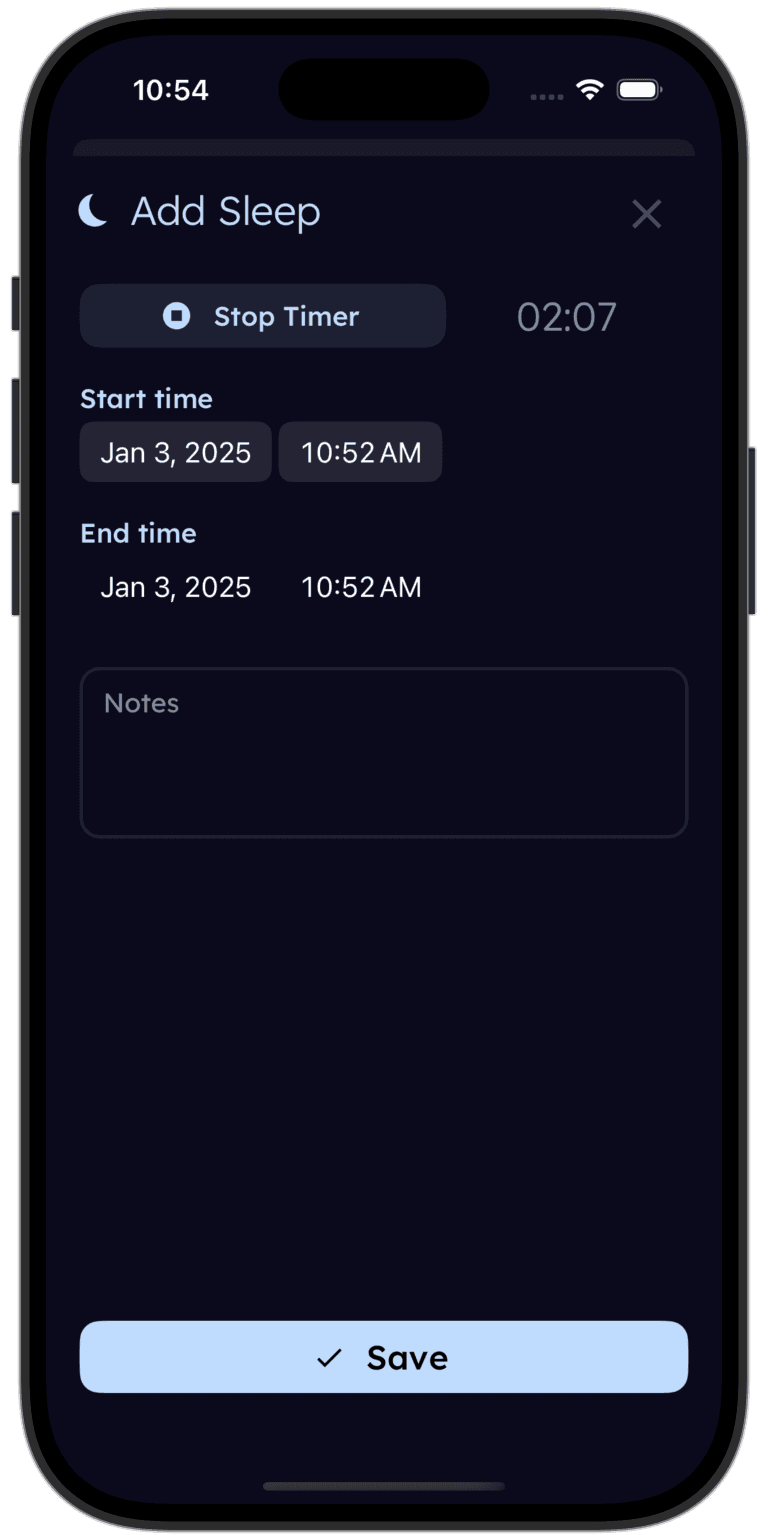
tinylog showing feeds and sleep events in one timeline for pattern recognition

Is baby waking because they're hungry or because of a sleep cycle transition? Feed logging plus sleep logging shows you the pattern.

tinylog tracks feeds and sleep in one timeline. When you can see that baby always wakes 45 minutes after falling asleep (sleep cycle) vs. 3 hours after the last feed (hunger), you know what you're dealing with.

Download on the App StoreGet It On Google Play

Breastfeeding and Sleep Training: They're Compatible

The idea that you have to choose between breastfeeding and good sleep is a false dichotomy. Here's how they work together:

Sleep training is about falling asleep independently. It teaches baby to go from awake to asleep without being nursed, rocked, or held. It doesn't require eliminating night feeds — it requires baby being placed in the crib awake at the start of the night and (eventually) after night feeds.

You can nurse before bed without nursing TO sleep. Feed baby as the second-to-last step of the bedtime routine (feed, book, then bed) rather than the last step (feed to sleep). Baby still gets the calories and comfort; they just practice the last part of falling asleep on their own.

Night feeds can continue during sleep training. Most sleep consultants recommend keeping 1-2 feeds per night for babies under 6-9 months. You feed when baby is hungry, then place them back in the crib awake (or awake-ish). The skill being taught is falling asleep, not starving through the night.

Night weaning comes later, gradually. When baby is developmentally ready (pediatrician's call), you can slowly reduce night feeds — shorter nursing sessions, longer intervals, and eventually dropping feeds one at a time.


What the Evidence Actually Says

"Adding cereal to a bottle helps babies sleep longer." This outdated advice has been studied and debunked. A study by Macknin et al. (1989) found no significant difference in sleep patterns between babies given cereal in bottles and those who weren't. The AAP recommends against adding cereal to bottles. It doesn't improve sleep and poses a choking risk.

"Breastfeeding causes sleep problems." Correlation, not causation. Breastfed babies wake more often partly because breastfeeding parents are more likely to room-share and respond quickly to wakings — both of which are recommended by the AAP for safe sleep. It's the responsive parenting pattern, not the milk, that drives the association.

"Sleep training destroys breastfeeding." Not supported by evidence. A 2012 study published in Pediatrics followed families who participated in sleep training and found no impact on breastfeeding duration or maternal-child attachment at age 6. Teaching baby to fall asleep independently doesn't require weaning.

When to Get Help and What Kind

See your pediatrician if: baby's night waking is excessive (waking every hour for weeks), you suspect an underlying issue (reflux, ear infection, sleep apnea), or you want guidance on when night weaning is appropriate for your baby.

See an IBCLC if: you're concerned that night weaning will affect your supply, or if you need help adjusting your breastfeeding schedule around new sleep patterns.

Consider a sleep consultant if: you want personalized help with a sleep plan that preserves breastfeeding. Look for one who is breastfeeding-friendly and won't push night weaning before baby is ready.

For a comprehensive look at infant sleep by age, our baby sleep playbook covers wake windows, regressions, and schedules from newborn through 12 months.

Related Guides

Sources

  • Montgomery-Downs, H. E., et al. (2010). Normative longitudinal maternal sleep: The first 4 postpartum months. American Journal of Obstetrics and Gynecology, 203(5).
  • Doan, T., et al. (2007). Breastfeeding increases sleep duration of new parents. Journal of Perinatal and Neonatal Nursing, 21(3).
  • Macknin, M. L., et al. (1989). Infant sleep and bedtime cereal. American Journal of Diseases of Children, 143(9).
  • Hiscock, H., et al. (2012). Long-term effects of an infant sleep intervention. Pediatrics, 130(4).
  • American Academy of Pediatrics (AAP). (2022). Breastfeeding and the Use of Human Milk. Pediatrics, 150(1).

Medical Disclaimer

This guide is for informational purposes only and is not a substitute for professional medical advice. If you're experiencing breastfeeding difficulties, consider consulting an IBCLC (International Board Certified Lactation Consultant) or your pediatrician.

Get this guide in your inbox.
We'll send you the evidence on breastfeeding and sleep so you can make informed decisions, not guilt-driven ones.
Track feeds and sleep together — and see how they actually relate.
Download tinylog free — log both in one timeline and find your baby's real patterns.
Download on the App StoreGet It On Google Play