GUIDE

Corrected Age vs. Standard Milestones

Corrected age adjusts for prematurity by subtracting the weeks born early from the baby's actual age. A baby born 8 weeks early who is 6 months old has a corrected age of 4 months — and should be assessed against 4-month milestones.

Using the wrong age for milestone comparison is the fastest way to create unnecessary worry about a preemie's development.

Track growth with corrected age

Fenton and WHO charts built in

When a baby is born 2 months premature and is now 4 months old, we're not going to expect them to be doing what a 4-month-old is doing. We're really looking at what a 2-month-old should be doing.
Dr. Laurel BearDr. Laurel Bear, MD, Developmental-Behavioral Pediatrician, Children's Wisconsin

The Age Your Baby Should Have Been

If your baby was born prematurely, one of the most important concepts to understand is corrected age (also called adjusted age). Your baby's actual age is the time since birth. Their corrected age is the time since their original due date. The difference matters because brain and body development follows gestational time, not calendar time.

A baby born at 28 weeks spent 12 fewer weeks developing in the womb compared to a full-term baby. When that baby is 6 months old by the calendar, their brain and body have had the equivalent of about 3 months of post-term development. Expecting them to meet 6-month milestones is neither fair nor accurate.

The AAP recommends using corrected age for developmental assessment until at least 24 months. Some developmental specialists continue correcting until 36 months for very preterm infants (born before 28 weeks). This is not "making excuses" for your baby — it is using the developmentally appropriate benchmark.


Corrected Age vs. Standard Milestones
What it measures
Corrected AgeDevelopmental expectations adjusted for weeks of prematurity.
Standard (Actual Age)Developmental expectations based on birth date regardless of gestational age.
Who should use it
Corrected AgeBabies born before 37 weeks gestation, especially those born before 32 weeks.
Standard (Actual Age)Full-term babies (37+ weeks gestation).
Growth charts
Corrected AgeUse Fenton charts for NICU/early months, then WHO charts plotted at corrected age.
Standard (Actual Age)WHO growth charts plotted at actual age.
Duration of use
Corrected AgeMost clinicians use corrected age until 24-30 months; some extend to 36 months for very preterm.
Standard (Actual Age)Used from birth onward for all full-term children.
Milestone comparison
Corrected AgeCompare milestones to the corrected age, not birth age. A 6-month-old born 2 months early should meet 4-month milestones.
Standard (Actual Age)Compare milestones to the child's actual age in months.
Common mistake
Corrected AgeForgetting to correct, leading to false alarm about delays. Or correcting too long, masking real delays.
Standard (Actual Age)Applying standard expectations to preemies, causing unnecessary concern.
Corrected age applies to developmental milestones and growth charting. Some areas like vision and hearing screening may use actual age.

Corrected Age Advantages

  • Provides a fair, accurate assessment of a premature baby's development
  • Reduces unnecessary parental anxiety by setting appropriate expectations
  • Supported by the AAP, WHO, and all major developmental guidelines
  • Helps pediatricians identify true delays versus expected prematurity effects
  • Fenton growth charts offer preemie-specific percentiles that standard charts cannot

Every major pediatric organization recommends corrected age for preemie developmental assessment.

Corrected Age Challenges

  • Calculating corrected age can be confusing, especially for borderline preemies (34-36 weeks)
  • Well-meaning relatives and comparison apps often use actual age, creating confusion
  • There is no single agreed-upon cutoff for when to stop correcting
  • Some preemies catch up faster in certain domains than others, complicating the picture

These are practical challenges, not reasons to avoid using corrected age.

Standard Milestone Advantages

  • Simple and universal — no calculation needed
  • Appropriate for the vast majority of babies (90% are born at term)
  • Provides a single, consistent benchmark for development
  • Used by all milestone tracking resources and most parenting apps
  • After age 2-3, even preemies transition to standard milestone expectations

Standard milestones become appropriate for preemies once they reach 24-30 months corrected age.

Standard Milestone Challenges

  • Applying standard milestones to preemies creates false expectations and unnecessary worry
  • Milestone apps that don't adjust for prematurity can make preemie parents feel their baby is behind
  • Well-child visit milestone questionnaires may not account for corrected age unless the provider adjusts
  • Comparing a preemie to full-term peers using actual age is developmentally inappropriate

Using standard milestones for preemies without correction is the most common source of unnecessary parental worry.

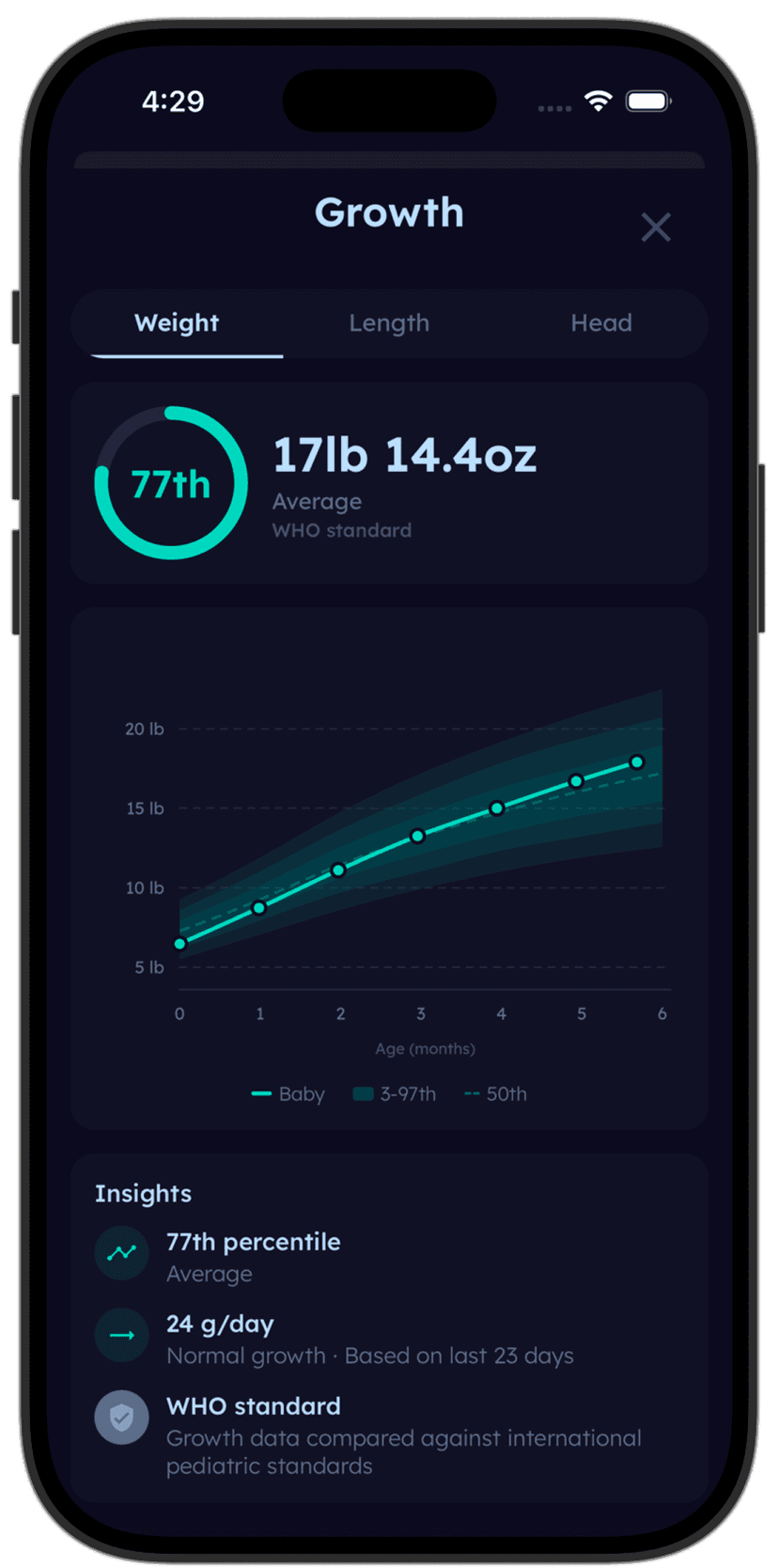
Tinylog growth chart showing Fenton chart for preemie tracking

Track your preemie's growth with the right charts.

Tinylog includes Fenton growth charts for premature infants and WHO charts for all babies, so you can track your baby's growth using the developmentally appropriate benchmark.

Download on the App StoreGet It On Google Play

When Corrected Age Still Shows a Delay

Corrected age is a tool for fair assessment, not a guarantee that your baby is on track. Premature infants have a higher baseline risk for developmental delays, particularly in motor skills, language, and cognitive development. If your baby is not meeting milestones even at their corrected age, this is information worth acting on.

Request a referral to your state's early intervention program or a preemie follow-up clinic. If you are unsure whether to act now, our guide on early intervention vs. wait and see can help you weigh the decision. Early intervention for preemies is well-studied and effective, particularly for motor and language development (Spittle et al., 2015). Use the appropriate growth percentile charts — including Fenton charts — to monitor physical growth alongside milestones. The combination of prematurity and delayed milestones at corrected age is a clear indication for evaluation.

Navigating the Transition to Standard Milestones

Between 24 and 36 months, your preemie's corrected age and actual age converge. Most preemies have caught up by this point, and the correction becomes less meaningful. Your pediatrician will guide you on when to stop adjusting. If your child has not caught up by this age, ongoing developmental monitoring is appropriate — not to alarm you, but to ensure they receive any support they need.

Tips That Apply Either Way

Always mention prematurity at new appointments

Every new provider — pediatrician, dentist, therapist, daycare — should know your baby's gestational age at birth. This context is essential for appropriate developmental assessment. Keep your baby's birth gestational age in their health summary.

Use tools that support corrected age

When tracking growth and milestones, use charts and apps that let you plot against corrected age. Fenton charts are the standard for preemie growth tracking in the first months. After discharge, WHO charts plotted at corrected age give the most accurate picture.

Connect with preemie follow-up clinics

Many NICUs offer developmental follow-up clinics that monitor preemie development through age 3-5. These clinics specialize in distinguishing between expected prematurity effects and genuine delays. Ask your NICU team about follow-up programs before discharge.

Related Guides

Sources

  • Engle, W. A. (2004). Age Terminology During the Perinatal Period. Pediatrics, 114(5), 1362-1364.
  • Fenton, T. R., & Kim, J. H. (2013). A Systematic Review and Meta-Analysis to Revise the Fenton Growth Chart for Preterm Infants. BMC Pediatrics, 13, 59.
  • Spittle, A., Orton, J., Anderson, P. J., Boyd, R., & Doyle, L. W. (2015). Early Developmental Intervention Programmes Provided Post Hospital Discharge to Prevent Motor and Cognitive Impairment in Preterm Infants. Cochrane Database of Systematic Reviews, (11).
  • WHO Multicentre Growth Reference Study Group. (2006). WHO Child Growth Standards. World Health Organization.
  • D'Agostino, J. A. (2010). The Corrected-Age Controversy. Journal of Perinatal & Neonatal Nursing, 24(2), 112-114.

This guide is for informational purposes only and is not a substitute for professional medical advice. Consult your pediatrician for guidance specific to your baby.

Get this comparison in your inbox.
We'll send you the corrected age breakdown to share with your care team.
Growth tracking with the right chart makes all the difference.
Download Tinylog — with built-in Fenton charts for preemies and WHO charts for all babies.
Download on the App StoreGet It On Google Play