


GUIDE

Daylight Saving Time & Baby Sleep

It's just one hour. But for a baby on a schedule, one hour might as well be three. The good news: most babies adjust within 3-7 days with a simple gradual approach.

Here's your game plan for both spring forward and fall back, with a day-by-day shift that actually works.

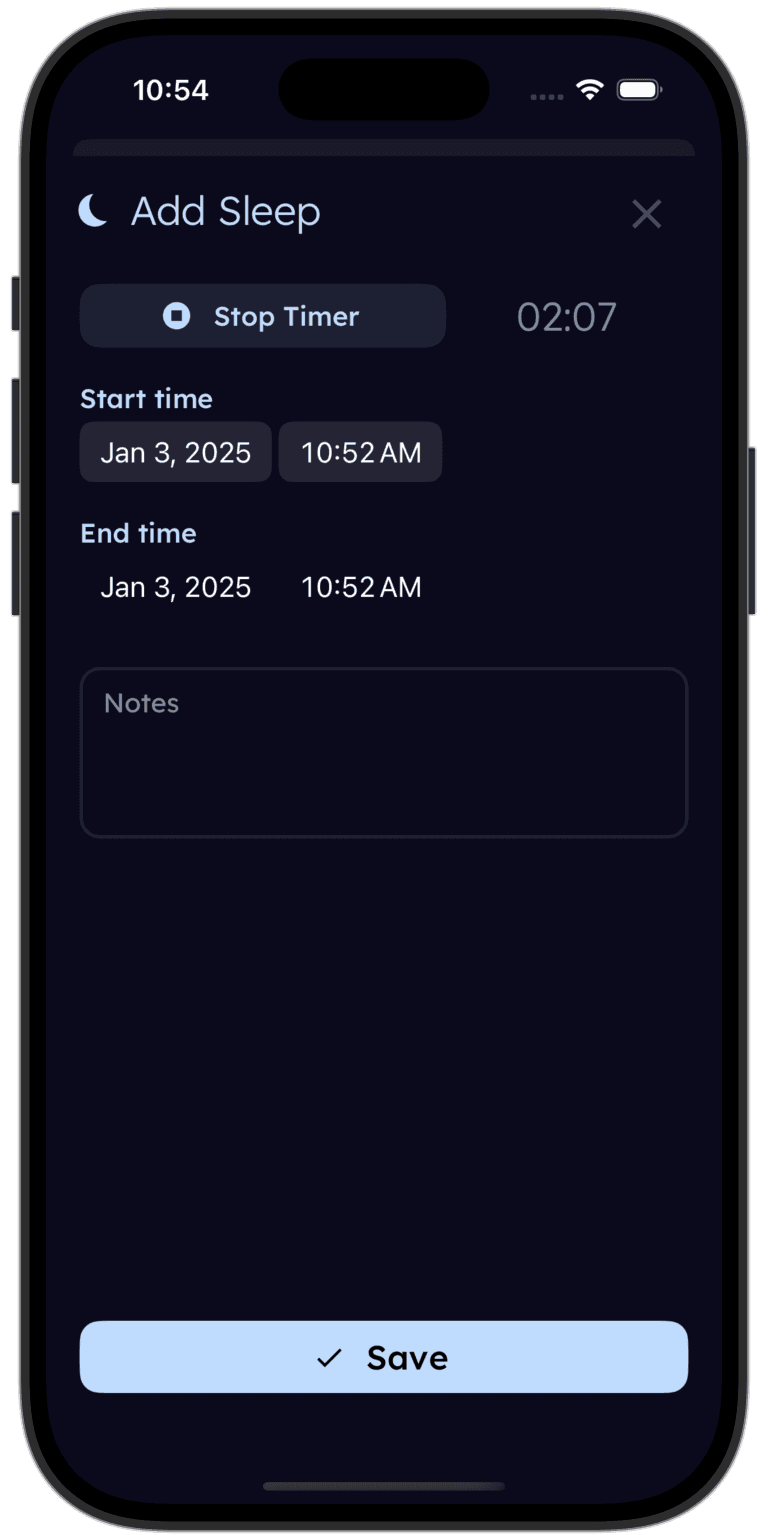
Track the transition in the app

Free trial • See how your baby adjusts in real time

Why One Hour Wrecks Everything

Adults barely notice the time change. We grumble about losing an hour of sleep, drink an extra coffee, and move on. Babies can't do that. Their internal clock, the circadian rhythm that tells them when to sleep, eat, and wake, doesn't care what the clock on the wall says.

When you shift everything by an hour, you're asking your baby's biology to override its own schedule. And baby biology is stubborn. It takes 3-7 days for their internal clock to sync with the new external time, and during that gap, things get messy: bedtime resistance, early mornings, off naps, and a general sense that the whole day is slightly wrong.

The good news: this is temporary, predictable, and manageable. Here are two approaches that work.

The Gradual Approach: Spring Forward

Spring forward (March) means the clocks jump ahead one hour. Your baby's 7 PM bedtime suddenly feels like 6 PM to their body. You're asking them to sleep an hour earlier than their internal clock says. Here's how to ease into it:

Spring Forward: Day-by-Day Plan
3 days before
Bedtime15 min earlier than usual
Wake TimeWake at normal time
NapsShift each nap 15 min earlier
NotesStart meals and feeds 15 minutes earlier too. Keep everything consistent.
2 days before
Bedtime30 min earlier than usual
Wake TimeWake at normal time
NapsShift each nap 30 min earlier
NotesYour baby might resist the earlier bedtime a little. That's fine, keep the routine.
1 day before
Bedtime45 min earlier than usual
Wake TimeWake at normal time
NapsShift each nap 45 min earlier
NotesAlmost there. Baby is already mostly adjusted.
Day of change
BedtimeNormal new clock time
Wake TimeNormal new clock time
NapsNormal new clock time
NotesThe clock jumped forward, but your baby barely notices because you've been shifting all week.
Shift meals and feeds on the same schedule. Consistency across all cues (not just sleep) helps the internal clock adjust faster.

Use light to your advantage

In the morning, get bright light exposure as soon as your baby wakes up. Open the curtains, go outside if you can. Light is the strongest signal for resetting the circadian clock. In the evening, dim the lights starting 30-45 minutes before the new bedtime. Blackout curtains are especially important in spring when it stays lighter later.
Don't skip the last nap

When you're pushing everything earlier, the last nap of the day is tempting to drop because it feels too late. Don't. An overtired baby at bedtime will make the transition harder, not easier. Even a short 20-minute catnap is better than nothing if it prevents a bedtime meltdown.

Bedtime might be a fight

You're asking your baby to fall asleep when their body says 'this isn't bedtime yet.' The first couple of nights may involve more bedtime resistance than usual. Stick with your routine, keep the room dark, and be patient. Their body will catch up to the clock.

The Gradual Approach: Fall Back

Fall back (November) means the clocks jump back one hour. Your baby's body thinks it's 7 AM when the clock says 6 AM. Hello, early mornings.

Fall Back: Day-by-Day Plan
3 days before
Bedtime15 min later than usual
Wake Time15 min later
NapsShift each nap 15 min later
NotesStart meals and feeds 15 minutes later too. Push everything gradually.
2 days before
Bedtime30 min later than usual
Wake Time30 min later
NapsShift each nap 30 min later
NotesIf your baby wakes early, try to keep them in the crib a bit longer.
1 day before
Bedtime45 min later than usual
Wake Time45 min later
NapsShift each nap 45 min later
NotesThe last nap might be tricky. A short catnap is fine to bridge to the later bedtime.
Day of change
BedtimeNormal new clock time
Wake TimeNormal new clock time
NapsNormal new clock time
NotesClock fell back, but your baby's already adjusted. Early wake-ups may still happen for a few days.
The early morning wake-ups are the hardest part. They may persist for a few days even after the rest of the schedule adjusts. Be patient, it resolves.

Early mornings are the real problem

Fall back means your baby's 6:30 AM wake-up is now 5:30 AM. This is the hardest part of the fall time change. If your baby wakes too early, try to delay the first feed by 15 minutes and keep the room dark. Don't start the day at 5:30 just because they're awake. A quiet, dark room signals that it's still sleep time.

Push bedtime later gradually

If your baby normally goes to bed at 7 PM, their body thinks it's 7 PM when the clock says 6 PM. Putting them down at 6 PM will lead to an even earlier morning wake-up. Push bedtime by 15-minute increments over a few days to get back to the right clock time.

The afternoon nap may need extending

If your baby is waking up an hour early, they may need a slightly longer or later afternoon nap to bridge to the later bedtime. This is temporary. Once their body adjusts (usually within a week), naps will fall back into place.

The Cold Turkey Approach

Not everyone plans ahead. And that's fine.

Just switch and ride it out

Some parents prefer to skip the gradual approach and just adjust everything to the new time on the day the clocks change. This means a rougher first 2-3 days. Your baby will be tired at the 'wrong' times and might fight bedtime or wake up too early. But most babies recalibrate within 4-5 days. This approach works especially well for babies under 6 months whose schedules are already flexible.

When cold turkey makes sense

If you didn't plan ahead, if your baby's schedule is already inconsistent, if you have an easy-going baby who adapts quickly, or if you simply forgot the time change was coming (no judgment, it sneaks up on everyone). Don't stress about not doing the gradual shift. Babies are more resilient than we give them credit for.

How It Affects Different Ages

Daylight Saving Impact by Age
0-4 months
DifficultyEasy
Best StrategyNewborns don't have a strong circadian rhythm yet, so the time change barely affects them. Just switch to the new time and move on.
4-8 months
DifficultyModerate
Best StrategyBabies on a consistent schedule will notice. The gradual 15-min shift works well. Pay extra attention to wake windows, which may need to be shortened for a few days as your baby adjusts.
8-12 months
DifficultyModerate-Hard
Best StrategyOlder babies with rigid schedules feel it the most. Use the gradual approach and expect 4-7 days of adjustment. Extra-dark room and consistent routines help a lot.
12-24 months
DifficultyModerate-Hard
Best StrategyToddlers are creatures of habit. The gradual shift is your best bet. Explain it in simple terms if they're verbal ('We're going to bed a little earlier/later this week'). Maintain the naptime routine firmly.
2-3 years
DifficultyModerate
Best StrategyOld enough to understand a simple explanation. A toddler clock that changes color at wake time is genuinely useful here because it gives them a visual cue that doesn't depend on the sun.
These are generalizations. Some babies are more sensitive to schedule changes than others regardless of age.
tinylog sleep tracker showing baby's bedtime and wake time trends over a week

See exactly how long it takes your baby to adjust.

tinylog tracks bedtime, wake time, and nap timing automatically. During the daylight saving transition, you can see the day-by-day shift in your baby's actual sleep pattern, so you know if they're adjusting on track or if you need to nudge things a little more.

Download on the App StoreGet It On Google Play

The Stuff Nobody Mentions

It affects meals too. Your baby's hunger cues will be off by the same hour as their sleep. If they normally eat lunch at noon, their stomach will be ready at 11 AM (spring forward) or 1 PM (fall back). Shift meals on the same gradual schedule as sleep for the smoothest transition.

Daycare makes it harder. If your baby is in daycare, you don't control the nap schedule during the day. Do what you can at home (bedtime and morning wake time) and accept that daytime naps might be off for a few days. Most daycares don't adjust their schedule, which means your baby is essentially doing the cold turkey approach during the day and the gradual approach at night. It's not ideal, but it works.

It's a good time to fix bedtime. If your baby's bedtime has drifted too late or too early, the time change is a natural reset point. Spring forward is perfect for moving bedtime earlier (since you're already doing that). Fall back is a good opportunity to push bedtime later if it's been too early.

The second day is usually the worst. Day one your baby runs on adrenaline. Day two the sleep debt catches up. Don't panic if day two is rougher than day one. That's the normal pattern, and day three typically starts improving.

Quick Summary

Spring forward (lose an hour): Gradually shift everything 15 min earlier per day for 3-4 days before. Use bright morning light and dark evenings. Expect bedtime resistance.

Fall back (gain an hour): Gradually shift everything 15 min later per day for 3-4 days before. Expect early morning wake-ups. Keep the room dark and don't start the day at 5 AM.

Didn't plan ahead? Just switch to the new time and expect 4-7 days of adjustment. Your baby will be fine.

Most important thing: Be consistent with the new schedule, use light exposure strategically, and give it a week. Every baby adjusts eventually.

Related Guides

Sources

  • Harrison, Y. (2013). The impact of daylight saving time on sleep and related behaviours. Sleep Medicine Reviews, 17(4), 285-292.
  • Kantermann, T., Juda, M., Merrow, M., & Roenneberg, T. (2007). The human circadian clock's seasonal adjustment is disrupted by daylight saving time. Current Biology, 17(22), 1996-2000.
  • Mindell, J. A., & Owens, J. A. (2015). A Clinical Guide to Pediatric Sleep: Diagnosis and Management of Sleep Problems. Lippincott Williams & Wilkins.
  • American Academy of Pediatrics (AAP). (2022). Healthy Sleep Habits: How Many Hours Does Your Child Need? HealthyChildren.org.
  • Mindell, J. A., Li, A. M., Sadeh, A., Kwon, R., & Goh, D. Y. (2015). Bedtime routines for young children: a dose-dependent association with sleep outcomes. Sleep, 38(5), 717-722.
  • National Sleep Foundation. (2020). Daylight Saving Time and Sleep.

Medical Disclaimer

This guide is for informational purposes only and is not a substitute for professional medical advice. If you have concerns about your baby's sleep, please consult your pediatrician.

Send this to my inbox.
We'll email you this guide so you have it ready before the next time change instead of Googling it at midnight.
The clock changed but your baby didn't get the memo.
Download tinylog free. Track naps and bedtime to see exactly how fast your baby adjusts.
Download on the App StoreGet It On Google Play