GUIDE

When Do Babies Sleep Through the Night?

Most babies can do a 5–6 hour stretch by 4–6 months. A full 10–12 hours usually comes between 6 and 12 months — if it comes at all.

Sleeping through the night doesn't mean what most people think it means. Here's the real timeline, why every baby is different, and what actually helps.

First, Let's Redefine 'Sleeping Through the Night'

Here's something that would have saved a lot of parents a lot of stress: when doctors and researchers say a baby is "sleeping through the night," they mean a 5 to 6 hour stretch. Not 10 hours. Not 12 hours. Five to six.

So if your baby sleeps from 7 PM to midnight without waking, congratulations — by the medical definition, your baby is sleeping through the night. It probably doesn't feel like it when you're up for a feed at 12:30, but that's the actual benchmark.

The 10 to 12 hour stretches that parenting books promise? Those come later, and not for every baby. Understanding this distinction is the difference between thinking something is wrong and realizing your baby is right on track.

The Real Timeline, Age by Age

Every baby is different, but here's what the research and real-world experience show for when longer sleep stretches typically emerge.

Newborn (0–3 months)

Don't expect it. Newborns need to eat every 2 to 4 hours around the clock. Their stomachs are tiny, their circadian rhythm isn't developed yet, and long sleep stretches aren't biologically appropriate at this age. The longest stretch you might get is 3 to 4 hours, and that's a win.

3–4 months

Some babies start offering one longer stretch of 4 to 5 hours, usually in the first half of the night. This is the earliest edge of 'sleeping through the night' by the clinical definition. But this is also when the 4-month sleep regression can hit, temporarily wrecking whatever progress you'd made.

4–6 months

This is when many babies become capable of a 5 to 6 hour stretch without feeding. Their stomachs are bigger, they're taking in more calories during the day, and their sleep cycles are maturing. If your baby isn't doing this yet, it doesn't mean something is wrong — it means they're not ready.

6–9 months

Most babies can now physically go 8 to 10 hours without needing to eat. Whether they actually will depends on temperament, sleep associations, and developmental milestones. The 8-to-10-month regression (separation anxiety, crawling, pulling up) can cause temporary setbacks.

9–12 months

By 12 months, roughly 70 to 80 percent of babies are sleeping 10 to 12 hours at night with zero or one wakeup. The remaining 20 to 30 percent are still normal — they're just on a different timeline. Walking, first words, and other big milestones around 12 months can cause another temporary regression.

For more detail on how sleep evolves from birth through the first year, including nap schedules and wake windows, our baby sleep playbook covers it all.


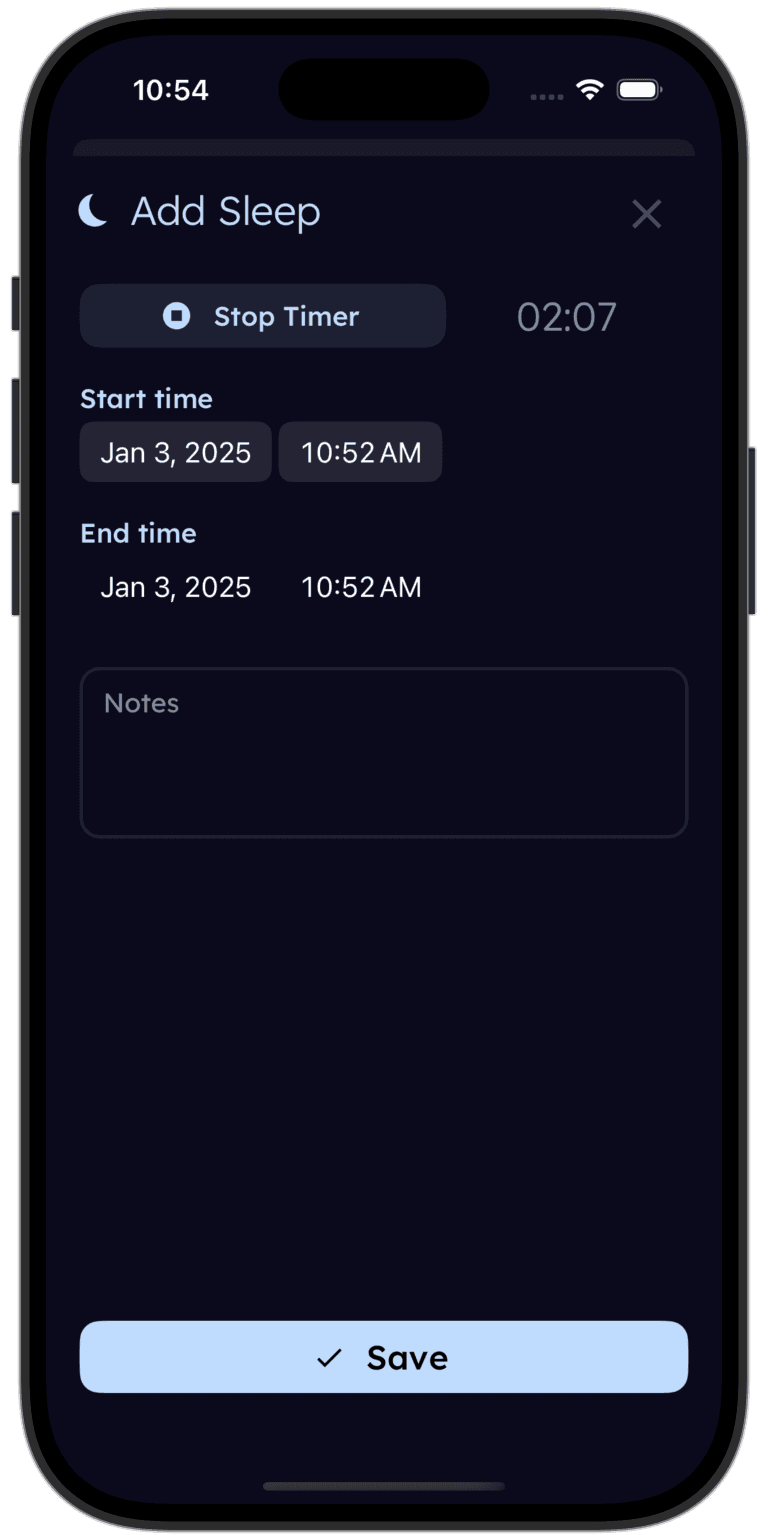
tinylog sleep tracker showing gradually longer nighttime sleep stretches

You can't see progress when you're in the middle of it.

Log sleep in a couple taps and watch the stretches get longer over weeks. The data tells a story your sleep-deprived brain can't — and it's usually better than you think.

Download on the App StoreGet It On Google Play

Why Some Babies Do It Early and Others Don't

If your friend's baby slept 8 hours at 3 months and yours is still up every 2 hours at 7 months, nothing is broken. Here's why the range is so wide.

Temperament

Some babies are naturally deeper sleepers. Others are more alert, more sensitive to stimulation, and more likely to wake at every sleep cycle transition. This is hardwired — it's not something you caused or can fully control.

Feeding method

Breastfed babies tend to wake more often in the first 4 to 6 months because breast milk digests faster than formula. This difference mostly evens out by 6 months. A dream feed (feeding your baby at 10 or 11 PM without fully waking them) can help extend the first stretch regardless of feeding method.

Developmental milestones

Every new skill — rolling, sitting, crawling, standing, walking — can temporarily disrupt sleep. Your baby's brain is literally practicing these skills during sleep. This is frustrating but completely normal and temporary.

Sleep environment

A dark room, consistent white noise, and a comfortable temperature (68–72°F / 20–22°C) make a measurable difference. Light is the biggest disruptor — even a small amount can signal your baby's brain to wake up during a light sleep phase.

Sleep associations

If your baby falls asleep nursing, rocking, or being held, they may need those same conditions to get back to sleep when they naturally wake between sleep cycles. This isn't a problem unless it's a problem for you — there's no urgency to change it.

What Actually Helps

You can't force a baby to sleep through the night before they're developmentally ready. But you can set up the conditions that make it more likely once they are.

Consistent bedtime routine

A predictable 20 to 30 minute routine — dim lights, diaper, pajamas, feed, book or song, into bed — signals your baby's brain that sleep is coming. Same order, same time, every night. The routine itself matters more than what's in it.

Age-appropriate wake windows

An overtired baby actually sleeps worse, not better. Watch wake windows carefully: 45 to 60 minutes for newborns, 1.5 to 2 hours at 4 months, 2.5 to 3 hours at 8 months. Our baby sleep playbook has the full breakdown by age.

Dark, boring sleep environment

Blackout curtains, white noise machine running all night (not on a timer), no nightlight. When you do night feeds, keep lights dim and interactions minimal — feed, burp, back to bed. No talking, no playing, no screens.

Full daytime feeds

Making sure your baby gets enough calories during the day reduces the need for nighttime feeds. This doesn't mean force-feeding — it means offering full feeds rather than snacking, especially in the afternoon and evening.

Drowsy but awake (when ready)

Putting your baby down drowsy but awake helps them learn to fall asleep independently — which means they can get themselves back to sleep between sleep cycles. This skill usually develops around 4 to 6 months. Before that, do whatever works.

Sleep Regressions Will Set You Back — Temporarily

Just when you think you've cracked the code, a sleep regression will come along and scramble everything. The major ones hit around 4 months, 6 months, 8 to 10 months, and 12 months.

The 4-month regression is the big one — it's the only one that represents a permanent change in sleep architecture. Every other regression is temporary and tied to developmental milestones. They're frustrating, but they pass in 1 to 4 weeks.

The best thing you can do during a regression is maintain your routine and avoid introducing new sleep crutches out of desperation. The regression will end, and if your routine is still intact, sleep will bounce back faster.

When to Talk to Your Pediatrician

  • Your baby isn't gaining weight or has dropped percentiles
  • They seem excessively sleepy during the day and are hard to wake
  • You notice pauses in breathing, gasping, or unusual sounds during sleep
  • Sleep hasn't improved at all by 12 months and your baby still wakes 4+ times nightly
  • You suspect reflux, food sensitivities, or chronic congestion are disrupting sleep
  • Your own mental health is suffering from sleep deprivation — this is a valid medical reason to seek help

Most of the time, night waking is developmentally normal. But if something feels off, trust your instincts and call your doctor. 'I'm worried' is always a good enough reason.

The Bottom Line

Sleeping through the night is not a milestone with a fixed due date. It's a gradual process that unfolds differently for every baby. The 5-to-6-hour stretches usually show up between 4 and 6 months. The longer 10-to-12-hour stretches often come between 6 and 12 months. And some perfectly healthy babies take even longer.

Your job isn't to make it happen on a schedule. It's to set up the conditions that support good sleep — a dark room, a consistent routine, full daytime feeds, and age-appropriate wake windows — and then wait for your baby's brain and body to get there.

You're doing better than you think. And it does get better.

Related Guides

Sources

  • Galland, B. C., Taylor, B. J., Elder, D. E., & Herbison, P. (2012). Normal sleep patterns in infants and children: A systematic review of observational studies. Sleep Medicine Reviews, 16(3), 213–222.
  • Mindell, J. A., Leichman, E. S., DuMond, C., & Sadeh, A. (2017). Sleep and Social-Emotional Development in Infants and Toddlers. Journal of Clinical Child & Adolescent Psychology, 46(2), 236–246.
  • Henderson, J. M. T., France, K. G., Owens, J. L., & Blampied, N. M. (2010). Sleeping through the night: The consolidation of self-regulated sleep across the first year of life. Pediatrics, 126(5), e1081–e1087.
  • American Academy of Pediatrics (AAP). (2022). Sleep-Related Infant Deaths: Updated 2022 Recommendations. Pediatrics, 150(1).
  • Baby Sleep Information Source (BASIS), Durham University. Normal Infant Sleep Development. https://www.basisonline.org.uk

Medical Disclaimer

This guide is for informational purposes only and is not a substitute for professional medical advice. If you have concerns about your baby's sleep or health, please consult your pediatrician.

Want this sleep timeline on your fridge?
We'll send you a printable cheat sheet with age-by-age sleep expectations so you're not guessing at 2 AM.
Track sleep so you can see what's actually happening.
Download tinylog free — log sleep in seconds and spot the patterns you'd miss otherwise.
Download on the App StoreGet It On Google Play