GUIDE

When Sleep Through the Night Stops

Your baby hasn't forgotten how to sleep. Something changed — and it's almost always temporary. Here's how to figure out what's going on.

This is one of the most frustrating moments in parenting. You finally got there, and now it's gone. Let's sort it out.

First Things First — You Didn't Break Anything

Take a breath. We know where you are right now. You finally — after weeks or months of exhaustion — got to a place where your baby was sleeping through the night. Maybe not every night, but enough that you started to feel human again. You started going to bed without dread. You stopped checking the monitor every 20 minutes. You allowed yourself to believe that the hard part was over.

And then it stopped.

Your baby is up again at 1 AM. Then 3 AM. Then 5 AM. And the worst part isn't the sleep deprivation itself — it's the feeling that you lost something you worked so hard to build.

Here's what you need to hear: you didn't do anything wrong. Your baby didn't forget how to sleep. Something changed — and in the vast majority of cases, it's temporary, it's identifiable, and it will resolve. This guide will help you figure out what happened and what to do about it.

The Most Common Reasons Your Baby Stopped Sleeping Through

There are really only a handful of things that cause a good sleeper to suddenly stop sleeping well. And most of them are completely normal parts of baby development. Here's what's most likely going on.

Sleep regression (the most likely culprit)

Sleep regressions happen when your baby's brain is going through a major developmental leap — learning to roll, crawl, stand, talk, or process a cognitive milestone like object permanence. The brain keeps practicing at night, pulling your baby out of deep sleep. Regressions are the single most common reason a good sleeper suddenly stops sleeping well. They hit at predictable ages — around 4, 6, 8–10, 12, 15, and 18 months — and they resolve on their own, usually within 2 to 6 weeks. For the full breakdown, see our sleep regression timeline.

Growth spurt

Growth spurts cause a temporary spike in hunger that can wake your baby at night — even if they had been getting enough calories during the day. These often overlap with regressions, making it hard to tell which one is driving the wake-ups. Growth spurts are usually shorter, lasting a few days to a week. If your baby suddenly seems ravenous and the night waking started at the same time, hunger is worth considering.

Illness or teething

A cold, ear infection, or teething pain can wreck sleep overnight — literally. If your baby has a runny nose, fever, is pulling at their ears, or has swollen gums, that's likely your answer. Teething pain tends to be worst in the days right around a tooth breaking through, not for weeks on end. Illness-related sleep disruption should improve once your baby feels better.

Schedule needs adjusting

Babies' sleep needs change faster than most parents realize. The wake windows that worked perfectly at 5 months are wrong at 7 months. If your baby is being put down too early (undertired) or too late (overtired), both can cause night waking. This is one of the most overlooked causes — and one of the easiest to fix.

Sleep associations surfacing

If your baby has always fallen asleep while being fed, rocked, or held, they may have been sleeping through the night despite that association — until now. As sleep cycles mature and lighten, your baby surfaces more fully between cycles and realizes the conditions they fell asleep under have changed. They need you to recreate them. This isn't a new problem — it's an existing one that just became visible.

Change in environment or routine

Travel, a new caregiver, moving to a new room, starting daycare, a disrupted bedtime routine, or even a seasonal time change — any shift in what your baby expects can temporarily throw off sleep. Babies are creatures of habit, and they notice changes you might not think twice about.

For a complete map of when regressions happen and what drives each one, our sleep regression timeline covers every major window from 4 months to 3 years. And if you're wondering whether this could be a growth spurt, our baby growth spurts guide breaks down the timing and signs.


How to Figure Out What's Going On

The cause usually becomes clearer when you look at your baby's age, the specific symptoms, and the timing of when things changed. Here's a diagnostic framework.

Under 4 months

At this age, sleeping through the night is rare and biologically unnecessary. If your baby had been doing long stretches and stopped, it's most likely a growth spurt or the beginning of the 4-month sleep cycle maturation. This is not a setback — newborn sleep is inherently unpredictable. Try not to compare what's happening now to that one magical week when they slept 6 hours straight.

4 to 6 months

The 4-month regression is the most common culprit here. Your baby's sleep architecture is permanently shifting from newborn-style deep sleep to adult-style light and deep cycles. They're surfacing between cycles more often and don't yet know how to get back to sleep on their own. Growth spurts, the start of teething, and motor milestones like rolling also pile up in this window.

6 to 12 months

This is peak regression territory — the 6-month, 8–10 month, and 12-month regressions all live here. Separation anxiety shows up around 8 months and can make night waking intensely emotional. Crawling, pulling to stand, and first steps all disrupt sleep as the brain practices at night. Check whether the schedule still fits — wake windows stretch significantly between 6 and 12 months, and a schedule that worked two months ago might be outdated.

12 months and beyond

Nap transitions (2-to-1 typically happens between 14 and 18 months), the 18-month regression, toddler independence and boundary testing, nightmares, and big life changes all cause setbacks after the first birthday. If your toddler was sleeping well and stopped, check whether a nap transition is needed and whether bedtime has shifted without you noticing.

If you're not sure which category fits, ask yourself three questions: Did this start suddenly or gradually? Is my baby showing signs of illness, teething, or a new skill? Has anything in our routine or environment changed in the last week or two?

Those three answers will point you in the right direction most of the time. And if you've been tracking sleep in an app, a few days of data makes the pattern much more visible than trying to reconstruct it from memory. For help distinguishing a temporary regression from a deeper issue, see our guide on sleep regression vs. sleep problem.

What to Do — Assess, Adjust, Wait

When sleep falls apart, the impulse is to try everything at once. Resist that. The most effective approach is methodical: figure out the likely cause, make one targeted change, and give it time. Here's the framework.

Step 1: Assess — figure out what changed

Before you change anything, spend a few days observing. Check your baby's age against common regression windows. Look for signs of illness or teething. Think about whether anything in the routine or environment changed recently. Review your sleep logs if you have them — patterns become obvious in data that are invisible in the fog of sleep deprivation. Your goal is to identify the most likely cause before taking action.

Step 2: Adjust — make one change at a time

Once you have a working theory, make a single targeted adjustment. If the schedule seems off, try shifting wake windows by 15 minutes. If hunger seems likely, add a feed or increase daytime calories. If illness or teething is the cause, address the discomfort and give your baby extra comfort while they recover. If it's a regression, your main job is to stay consistent with your existing routine and avoid introducing new habits you'll need to undo later. One change at a time so you can tell what's actually helping.

Step 3: Wait — give it 2 to 3 weeks

This is the hardest part. Most sleep disruptions — especially regressions — need time to resolve. If you've made a reasonable adjustment, give it at least 2 weeks before concluding it didn't work. Changing strategies every few days creates more chaos, not less. If things haven't improved after 3 weeks, reassess your theory and try a different angle. If it's been 6 weeks with zero improvement, it's time to talk to your pediatrician or consider whether what you're dealing with is a sleep problem, not a regression.

For age-specific schedules, wake windows, and troubleshooting strategies, our baby sleep playbook has everything you need.

What 'Sleeping Through the Night' Actually Means

  • For sleep researchers, 'sleeping through the night' means 5 consecutive hours — not 7 PM to 7 AM
  • Most babies under 6 months still need at least one night feed, even if they've done longer stretches before
  • Brief wake-ups between sleep cycles are biologically normal at every age — adults do it too, we just don't remember
  • A baby who sleeps 7 PM to 5 AM with one quick feed at 3 AM is sleeping through the night by any reasonable definition
  • Night sleep consolidates gradually and unevenly — good nights and bad nights will coexist for months
  • Many babies don't consistently sleep 10+ hours without waking until 9 to 12 months, and some not until well after their first birthday

The cultural expectation of 12 hours of unbroken sleep sets parents up to feel like failures when their baby does something completely normal. Adjust your definition, and the 'problem' might look very different.

What No One Tells You

Sleeping through the night is a milestone, not a switch that stays on

We don't talk about this enough. When your baby first walks, they still fall down. When they first sleep through the night, they'll still have bad nights. Setbacks are part of the developmental process, not evidence that something went wrong. The ability to sleep long stretches gets more reliable over time, but it's never perfectly linear.

Your baby didn't forget how to sleep

This is the most important thing to understand. Whatever your baby learned about sleep is still in there. A regression or disruption doesn't erase the progress you've made. Their brain is temporarily occupied with something else — a new skill, a growth spurt, an illness — and once that passes, they'll come back to baseline. You don't have to start over from scratch.

What you do during the disruption matters more than the disruption itself

The regression will end on its own. But if you introduce a new sleep association during it — feeding to sleep every wake-up, bringing your baby into your bed, rocking for 45 minutes each time — that new habit can outlast the regression by months. Do what you need to survive, but try to keep it temporary and stay as close to your normal routine as you can.

Comparing your baby to other babies will make you feel worse, not better

Every baby's sleep is different. Temperament, feeding method, schedule, environment, developmental pace — all of it affects sleep. The baby in your parent group who sleeps 12 hours straight has a different brain and a different set of circumstances. That comparison provides zero useful information about your baby.

For a broader look at what's actually normal across the first year and beyond, our guide on whether your baby's sleep is normal can help recalibrate your expectations.

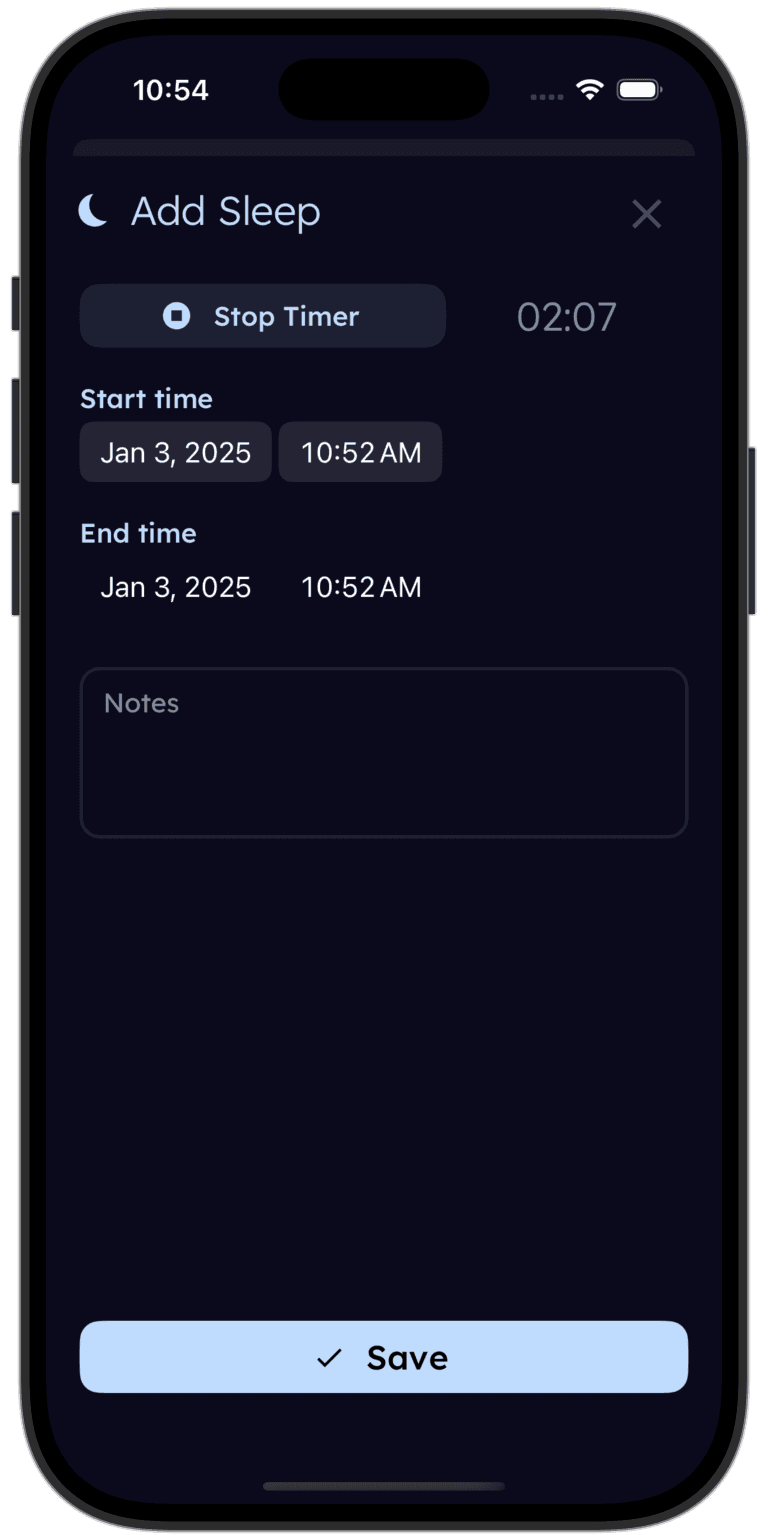
tinylog sleep tracker showing before and after sleep pattern comparison during a regression

Compare before and after — your logs show exactly what shifted.

When sleep falls apart, tinylog's sleep data shows you what changed: total sleep, wake-up frequency, nap length, bedtime drift. One tap to log, and the patterns surface on their own. That's how you stop guessing and start solving.

Download on the App StoreGet It On Google Play

When to Talk to Your Pediatrician

  • The disruption has lasted more than 6 weeks with no improvement at all
  • Night waking is accompanied by signs of pain — arching, screaming, pulling at ears, refusing to lie flat
  • Your baby snores, breathes irregularly, or has pauses in breathing during sleep
  • Waking started after an illness and hasn't resolved even though other symptoms have cleared
  • Your baby is not gaining weight appropriately or has suddenly started refusing feeds
  • You notice any new physical symptoms alongside the sleep changes — rashes, congestion, digestive issues
  • Your own mental health is suffering — sleep deprivation can trigger or worsen postpartum depression and anxiety, and that's a medical concern, not a parenting inconvenience

You never need a 'good enough' reason to call your pediatrician. If something feels off, make the call. And if you're struggling with sleep deprivation yourself, that matters too — your health is part of your baby's health.

You'll Get Back There

Sleep setbacks are one of the most emotionally loaded parts of the first few years. Not because the sleep deprivation itself is new — you've already survived that — but because you had a taste of what life felt like on the other side, and losing it is genuinely devastating.

But here's the truth that almost every parent discovers: this is temporary. In most cases, the disruption has a clear cause, a predictable duration, and a resolution that doesn't require you to start over from the beginning. Your baby's sleep foundation is still intact. The work you put in isn't lost.

Stay consistent. Stay patient. And be gentle with yourself — you're doing harder work than most people realize.

Related Guides

Sources

  • Mindell, J. A., Kuhn, B., Lewin, D. S., Meltzer, L. J., & Sadeh, A. (2006). Behavioral Treatment of Bedtime Problems and Night Wakings in Infants and Young Children. Sleep, 29(10), 1263–1276.
  • Galland, B. C., Taylor, B. J., Elder, D. E., & Herbison, P. (2012). Normal sleep patterns in infants and children: A systematic review of observational studies. Sleep Medicine Reviews, 16(3), 213–222.
  • Sadeh, A., Tikotzky, L., & Scher, A. (2010). Parenting and infant sleep. Sleep Medicine Reviews, 14(2), 89–96.
  • Mindell, J. A., Leichman, E. S., DuMond, C., & Sadeh, A. (2017). Sleep and Social-Emotional Development in Infants and Toddlers. Journal of Clinical Child & Adolescent Psychology, 46(2), 236–246.
  • Henderson, J. M. T., France, K. G., Owens, J. L., & Blampied, N. M. (2010). Sleeping through the night: The consolidation of self-regulated sleep across the first year of life. Pediatrics, 126(5), e1081–e1087.
  • Baby Sleep Information Source (BASIS), Durham University. Normal Infant Sleep Development. https://www.basisonline.org.uk
  • American Academy of Pediatrics (AAP). (2022). Sleep-Related Infant Deaths: Updated 2022 Recommendations for Reducing Infant Deaths in the Sleep Environment. Pediatrics, 150(1).

Medical Disclaimer

This guide is for informational purposes only and is not a substitute for professional medical advice. If you have concerns about your baby's sleep or health, please consult your pediatrician.

Want this guide in your inbox?
We'll send you this troubleshooting guide for the next time sleep falls apart.
Compare before and after to see what changed.
Download tinylog free — your sleep logs show you exactly what shifted.
Download on the App StoreGet It On Google Play