
GUIDE
Elvie Double Electric vs. Willow Go Wearable Breast Pump
Published on
Both are premium wearable pumps with app tracking and hands-free operation. The Willow Go edges out on spill-proof design and pumping positions. The Elvie wins on noise and weight. Cost is similar, so the choice comes down to lifestyle fit.
The Elvie Double Electric and Willow Go are two of the most popular premium wearable breast pumps on the market. Both cost between $250 and $550, both connect to companion apps, and both promise discreet, cord-free pumping. But they differ in meaningful ways — spill resistance, noise, container design, and how they handle different pumping positions. We compared every spec so you can pick the right one.
Log sessions, output, and feeding patterns
Two Premium Wearable Pumps — But They Solve Different Problems
The Elvie Double Electric and Willow Go sit at the top of the wearable breast pump market. Both ditch the cords and bottles. Both connect to apps. Both let you pump while doing basically anything else with your hands.
But they take different design approaches to the same goal, and those differences matter depending on how and where you pump. The Elvie optimized for quiet and sleek. The Willow Go optimized for freedom of movement and spill resistance.
We compared every meaningful spec so you can figure out which one fits your actual pumping life — not just which one looks better on Instagram.
For tips on building a pumping routine that works, see our exclusive pumping guide.
| Feature | Elvie Double Electric | Willow Go | What It Means |
|---|---|---|---|
| Manufacturer | Elvie | Willow | Elvie is a UK-based women's health tech company. Willow is a US-based breast pump innovator that pioneered in-bra pumping. |
| Type | Wearable, in-bra, cordless | Wearable, in-bra, cordless | Tie. Both fit inside a nursing bra and operate without tubes or cords. |
| Max suction | ~270 mmHg | ~280 mmHg | Very close. Real-world output depends far more on flange fit than max suction numbers. |
| Noise level | ~40 dB (library quiet) | ~45–48 dB (soft conversation) | Elvie is noticeably quieter. Matters most if you pump during calls or in shared spaces. |
| Milk container | Open-top 150 mL (5 oz) container | Spill-proof 5 oz bag or container | Willow Go wins here. The spill-proof design lets you move freely without worrying about leaks. |
| Pumping positions | Upright only (container can spill if tilted) | Any position — lying down, bending, leaning | Willow Go's spill-proof system means you can pump however you're comfortable. |
| App connectivity | Bluetooth app with real-time volume display | Bluetooth app with session logging | Both track sessions. Elvie shows volume in real time while pumping; Willow logs it after. |
| Battery life | ~2.5 hours (4–5 sessions) | ~2 hours (3–4 sessions) | Elvie lasts a bit longer per charge. Both charge via USB. |
| Weight per cup | ~160 g (5.6 oz) | ~195 g (6.9 oz) | Elvie is lighter and slimmer in the bra. |
| Flange sizes included | 24 mm and 28 mm included | 21 mm and 24 mm included | Both include two sizes. Willow covers smaller flanges; Elvie covers larger. Measure before buying. |
| Parts to clean | 5 parts per cup | 4 parts per cup (fewer with bags) | Willow Go is slightly easier to clean, especially if you use disposable bags. |
The Spill-Proof Factor: Willow Go's Biggest Advantage
This is the single biggest design difference between these two pumps.
The Elvie Double Electric collects milk into an open-top container inside the bra cup. It works great when you're sitting or standing upright. But tilt too far forward — reaching for something, picking up your kid, bending to grab a bag — and milk can spill back through the flange. It's not a constant problem, but it's a real one that pops up in everyday life.
The Willow Go uses a sealed collection system. Whether you choose the reusable containers or the disposable bags, the milk is contained. You can pump lying on your side in bed, lean forward to type, or bend down to pick up a toy without worrying.
If you pump mostly while sitting at a desk or on the couch, this difference is minor. If you pump while wrangling a baby, commuting, or doing anything that involves unpredictable body positions, the Willow Go's spill-proof system is a genuine quality-of-life upgrade.
Noise: Where the Elvie Pulls Ahead
The Elvie Double Electric runs at roughly 40 dB. That's about the sound level of a quiet library. You can take a video call, sit in a meeting, or pump next to a sleeping baby without the motor being obvious.
The Willow Go is a bit louder at 45–48 dB — closer to a soft conversation. Still much quieter than a traditional plug-in pump, but noticeable in a silent room. If someone is sitting right next to you, they might hear a faint hum.
For pumping at home or in a car, neither noise level is a problem. For pumping in a quiet office or during work calls, the Elvie gives you more confidence that nobody will hear it.
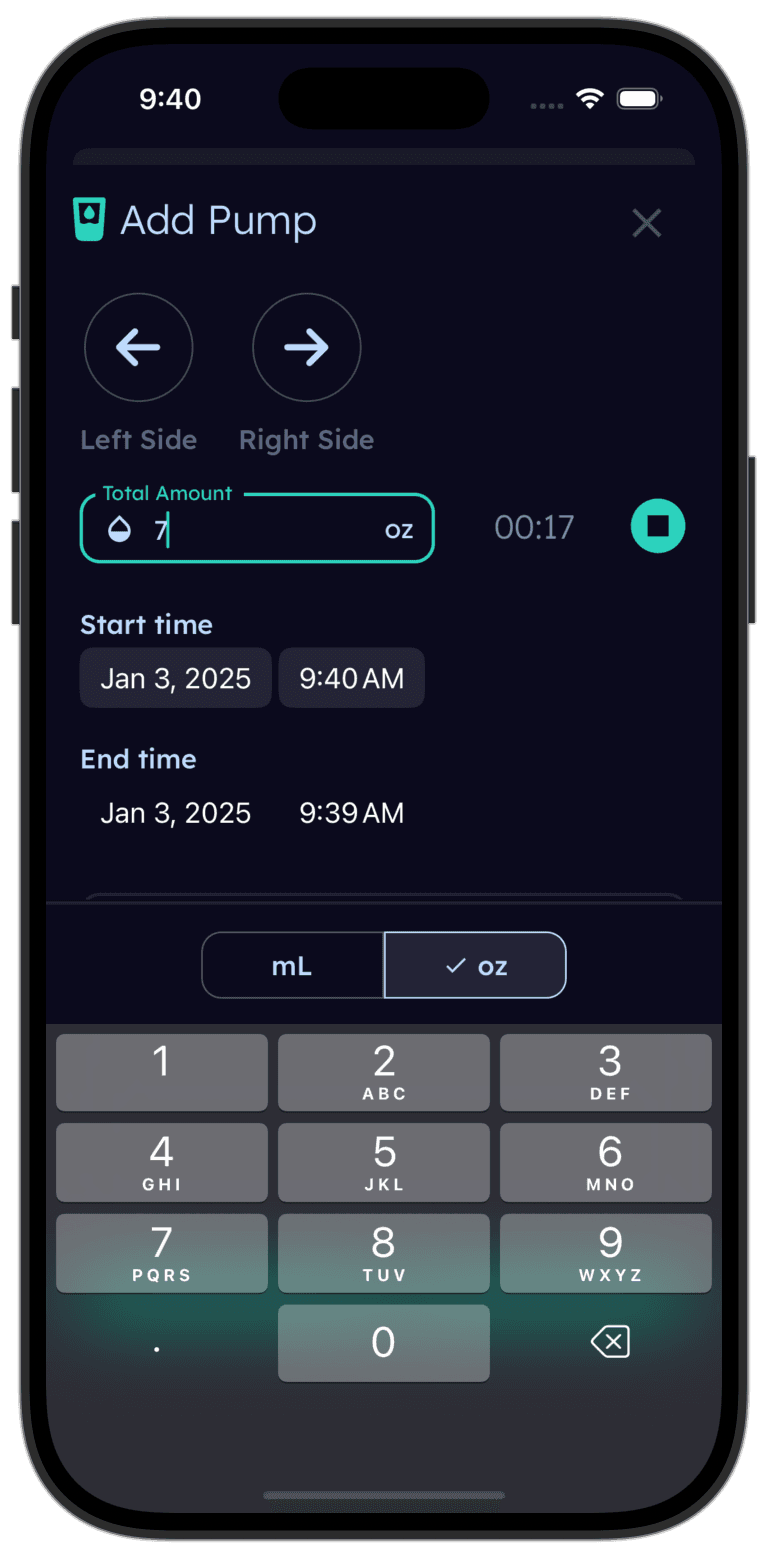
Tinylog tracks pumping sessions so you can spot supply trends.
Log each session with duration and volume, see daily and weekly totals, and bring the data to your lactation consultant. Works with any pump — Elvie, Willow, or whatever you've got.


App Experience: Both Track, But Differently
Both pumps connect to companion apps via Bluetooth, but they handle tracking differently.
The Elvie app shows your milk volume in real time as it fills the container. You can watch the ounces tick up on your phone screen during the session. It also logs session history, tracks trends, and lets you set reminders. For data-oriented parents, the real-time feedback is satisfying and useful.
The Willow app logs your sessions and tracks output over time, but it doesn't show volume in real time while you pump. You see the totals after the session is done. The app also includes personalized coaching tips and a community feature.
If you're already using Tinylog or another app to log feeds and pumping, the built-in tracking on either pump is somewhat redundant. But if you want a single device that tracks automatically without manual entry, the Elvie's real-time display has a slight edge.
Comfort and Fit: You'll Wear These for Hours a Day
The Elvie is lighter at 160 g per cup compared to the Willow Go's 195 g. Under a nursing bra, that 35-gram difference translates to a slightly less noticeable profile. The Elvie also sits a bit flatter, so it's harder to spot under clothing.
The Willow Go is a touch bulkier, but the sealed design means the weight distribution stays consistent even as milk collects. With the Elvie, the container fills from the bottom up, which can shift the weight slightly during a session.
Both work with standard nursing bras. If you have a smaller frame, the Elvie's slimmer profile might feel more comfortable for longer sessions. If you're more concerned about milk sloshing around when you move, the Willow Go's sealed system keeps things stable.
Flange fit matters more than anything else here. The Elvie ships with 24 mm and 28 mm flanges. The Willow Go ships with 21 mm and 24 mm. If you know your size, make sure the pump you choose includes it. If you don't know, a lactation consultant can measure you in about five minutes — and it's the best five minutes you'll spend on your pumping setup.
| Product | Typical Price | Frequency | Ongoing Cost |
|---|---|---|---|
| Elvie Double Electric (wearable) | $400–$550 | One-time cost | $0 after purchase |
| Willow Go (wearable, double) | $250–$350 | One-time cost | $0 after purchase |
| Replacement parts (Elvie, per set) | $20–$30 | Every 2–3 months | ~$8–$15/mo |
| Replacement parts (Willow Go, per set) | $15–$25 | Every 2–3 months | ~$6–$12/mo |
Price: Premium, But Not Identical
Both of these are premium-priced pumps, but there's a real gap. The Elvie Double Electric typically runs $400–$550. The Willow Go comes in at $250–$350. That's a $100–$200 difference for a product you'll use for six to twelve months.
A few things that shift the math:
- Insurance coverage. Many US health insurance plans cover breast pumps under the ACA. Some plans cover wearable pumps fully, others partially, and some limit you to basic models. Check before you buy — if your plan covers either one fully, price stops being a factor.
- Replacement parts. Elvie parts cost a bit more ($20–$30 vs. $15–$25 per set). Over six months, that adds another $10–$20 to the gap.
- Disposable bags. If you use Willow Go's disposable bags instead of reusable containers, that's an ongoing cost of roughly $0.50–$0.75 per bag. Using the reusable containers eliminates this.
- Resale value. Both premium pumps hold decent resale value on secondary markets if you sell after weaning.
The practical advice: check your insurance first. If it covers one but not the other, that's your answer. If you're paying out of pocket, the Willow Go delivers premium wearable pumping at a lower price.
Choose the Elvie Double Electric If
- Quiet pumping is your top priority — you pump during calls, meetings, or while baby naps nearby
- You want real-time milk volume displayed on your phone as you pump
- A lighter, slimmer profile under clothing matters to you
- You primarily pump sitting upright and spill risk isn't a concern
- You want longer battery life between charges for back-to-back sessions
- You need 28 mm flanges included in the box
Choose the Willow Go If
- You need to pump in different positions — lying down at night, bending over with a toddler, leaning forward at a desk
- Spill-proof design is non-negotiable because you're active while pumping
- You want a lower upfront price for a premium wearable pump
- Fewer parts to wash appeals to you (especially with the disposable bag option)
- You need 21 mm flanges included in the box
- You want to spend less on replacement parts over time
Where to Buy
If quiet operation and real-time tracking matter most, the Elvie Double Electric Wearable Pump (~$400–$550 retail) is one of the quietest wearable pumps you can buy. The real-time volume display and lightweight build make it ideal for parents who pump in shared spaces. Check your insurance first — many plans cover it. Available from Elvie directly, Amazon, and most major baby retailers.
If spill-proof pumping and freedom of movement are your priorities, the Willow Go Wearable Breast Pump (~$250–$350 retail) lets you pump in any position without worrying about leaks. It's the better choice for active pumping parents who are always on the move. Available from Willow directly, Amazon, and Target.
Our honest advice: check your insurance coverage before paying retail for either one. Both are excellent pumps — the right choice depends on whether you value silence or spill-proof flexibility more.
Tinylog earns a small commission on purchases made through these links, at no cost to you.
Looking for a discount? Try checking promo.new. It doesn't always find what you're looking for, but when it does, it works like a charm.
The Bottom Line
The Elvie Double Electric and Willow Go are both premium, well-designed wearable breast pumps. The differences are real and come down to what you need most:
Willow Go wins on spill-proof design, pumping position flexibility, lower upfront price, easier cleaning, and included smaller flange sizes. It's the better pick for parents who pump on the move and want fewer restrictions.
Elvie Double Electric wins on noise level, real-time app tracking, lighter weight, longer battery life, and discreet fit under clothing. It's the better pick for parents who pump in quiet or shared spaces and want the most refined experience.
For most families paying out of pocket, the Willow Go offers more practical value. If insurance covers either pump, go with whichever design fits your pumping routine better.
If you're tracking output — which is especially helpful when building supply or troubleshooting dips — Tinylog makes it easy to log sessions, see trends, and share the data with your lactation consultant.
Related Guides
- Exclusive Pumping — How to build and maintain supply when you pump full-time
- Pumping Schedule for Working Parents — Realistic schedules for the office, hybrid, and remote work
- How Much Milk Should I Be Pumping? — Output expectations by age and frequency
- How to Increase Milk Supply — Evidence-based strategies that actually work
Sources
- Elvie.com. "Elvie Double Electric Breast Pump — Product Specifications." 2026.
- Willow.com. "Willow Go Wearable Breast Pump — Product Information." 2026.
- Wirecutter (NYT). "The Best Breast Pumps." nytimes.com/wirecutter, 2026.
- Healthline Parenthood. "Willow Go Breast Pump Review." healthline.com, 2025.
- What to Expect. "Elvie vs. Willow Breast Pump Comparison." whattoexpect.com, 2025.
- Journal of Human Lactation. "Comparison of Milk Output Using Wearable vs. Traditional Electric Breast Pumps." 2025.
- ACA Breast Pump Coverage Guide. healthcare.gov, 2026.
This guide is for informational purposes only. Breast pump selection depends on your individual anatomy, supply needs, and pumping goals. If you have concerns about milk supply or pumping effectiveness, consult a board-certified lactation consultant (IBCLC).
Frequently asked questions
- Is the Elvie Double Electric or Willow Go quieter?
- The Elvie Double Electric is quieter at roughly 40 dB, about the volume of a library. The Willow Go runs at around 45–48 dB, closer to a quiet conversation. In a noisy room you won't notice the difference, but in a silent office the Elvie has a clear edge.
- Can you pump lying down with the Willow Go?
- Yes. The Willow Go uses a spill-proof bag system that lets you pump in any position — lying down, bending over, or leaning forward. The Elvie uses an open container that can spill if you lean too far forward, so upright pumping is recommended.
- Do both pumps connect to an app?
- Yes. Both the Elvie and Willow Go have Bluetooth companion apps that track session duration and milk volume. The Elvie app shows real-time volume as you pump. The Willow app logs sessions and tracks trends but does not display real-time volume.
- Does insurance cover the Elvie or Willow Go?
- Many US health insurance plans cover breast pumps under the ACA. Coverage for wearable pumps specifically varies by plan. Some insurers cover the full cost, others cover only a portion or limit coverage to basic electric models. Contact your insurance provider or use a pump benefits company like Aeroflow to check.
- How often do you need to replace parts on wearable breast pumps?
- Both manufacturers recommend replacing flanges, valves, and membranes every two to three months for optimal suction. Elvie replacement parts run $20–$30 per set. Willow Go parts run $15–$25 per set. Worn-out parts are the most common reason for decreased output.
- Can I use either pump while nursing on the other side?
- Yes. Both pumps are compact enough to wear in one cup while your baby nurses on the other breast. This is a great way to collect letdown milk and boost your total output per feeding session.