
GUIDE
Enfamil Sensitive vs. Enfamil Gentlease
Published on
Enfamil Sensitive is reduced-lactose (corn syrup solids replace most of the lactose) — for suspected lactose sensitivity. Enfamil Gentlease uses partially hydrolyzed milk and whey proteins and is clinically shown to reduce fussiness within 24 hours — for protein digestion issues. Neither is hypoallergenic, and they're not interchangeable.
Enfamil makes two 'gentle' formulas, and their names are easy to confuse. Enfamil Sensitive and Enfamil Gentlease take fundamentally different approaches to fussy, gassy babies. Here's how they actually differ and how to pick the right one.
Log feeds, fussiness, and stool changes
“Partially hydrolyzed formulas can be helpful if your baby is very fussy, gassy or colicky.”
 Dr. Matthew Badgett, MD, Pediatrician, Cleveland Clinic
What's the Difference Between Enfamil Sensitive and Enfamil Gentlease?
Enfamil Sensitive is Enfamil's reduced-lactose formula. Enfamil Gentlease uses partially hydrolyzed milk and whey proteins. They sit in the same "gentle formula" category and both aim at fussy, gassy babies, but they solve the problem through completely different mechanisms — lactose reduction versus protein hydrolysis.
That distinction matters because the mechanism has to match the actual trigger. If your baby's fussiness is driven by lactose sensitivity, Gentlease's partially hydrolyzed protein won't address it. If the trigger is protein digestion, Sensitive's reduced lactose won't help either. Picking the right one depends on knowing which problem you're actually solving — and often, neither is needed because most newborn fussiness resolves on its own between 6 and 12 weeks regardless of formula changes.
Is Enfamil Sensitive the Same as Enfamil Gentlease?
No. They're both made by Enfamil and both marketed for fussy, gassy babies, but they use different mechanisms. Enfamil Sensitive is reduced-lactose with intact proteins — built for babies who don't tolerate milk sugar well. Enfamil Gentlease keeps lactose low and partially hydrolyzes the proteins — built for babies whose digestive systems struggle with whole milk protein.
The easy way to remember it: Sensitive changes the sugar, Gentlease changes the protein. Neither is hypoallergenic, so neither is suitable for babies with confirmed cow's milk protein allergy (CMPA). If your pediatrician has diagnosed CMPA, you need an extensively hydrolyzed or amino acid-based formula like Nutramigen or PurAmino — not either of these.
| Feature | Enfamil Sensitive | Enfamil Gentlease | What It Means |
|---|---|---|---|
| Approach | Reduced lactose (milk sugar) | Partially hydrolyzed proteins (pre-broken milk protein) | Different strategies. Sensitive targets lactose sensitivity. Gentlease targets protein digestion. |
| Protein source | Intact nonfat milk and whey protein | Partially hydrolyzed nonfat milk and whey protein | Gentlease proteins are pre-broken. Sensitive keeps the original protein structure. |
| Carbohydrate source | Corn syrup solids (primary), minimal lactose | Corn syrup solids (primary), reduced lactose (~20%) | Both swap most lactose for corn syrup solids. Gentlease keeps slightly more lactose than Sensitive. |
| Fat source | Palm olein, soy, coconut, high oleic sunflower oils | Palm olein, soy, coconut, high oleic sunflower oils | Same fat blend. Both use palm olein, which may firm stools slightly. |
| Hypoallergenic | No | No | Neither is suitable for confirmed cow's milk protein allergy. Both are for mild sensitivity. |
| DHA / ARA | Yes | Yes | Both include DHA and ARA from algal and fungal oils. |
| Target baby | Fussy baby with suspected lactose sensitivity | Fussy baby with suspected protein digestion issues | Pick based on which mechanism matches your baby's actual trigger. |
| FDA approved | Yes | Yes | Both meet all FDA requirements under 21 CFR 107. |
| Price (powder, ~19–20 oz) | $30–$36 | $30–$36 | Very similar pricing. Both are ~10-20% more than standard Enfamil. |
The Ingredient Differences That Actually Matter
The core difference is what each formula changes from the standard Enfamil NeuroPro.
Protein: intact vs. partially hydrolyzed
Enfamil Gentlease uses partially hydrolyzed nonfat milk and whey protein. "Partially hydrolyzed" means the proteins are broken into smaller fragments, which may be easier for some babies to digest. This is different from extensively hydrolyzed protein (used in hypoallergenic formulas like Nutramigen or Alimentum) — partially hydrolyzed proteins still contain larger protein fragments and are NOT suitable for confirmed cow's milk protein allergy.
Enfamil Sensitive uses intact milk protein — the protein is not broken down. If protein digestion is your baby's issue, Gentlease's approach addresses it more directly.
Carbohydrates: how much lactose stays
Both formulas replace most lactose with corn syrup solids. Sensitive removes more of the lactose than Gentlease (Gentlease retains about 20% lactose, Sensitive retains less). Despite the alarming name, corn syrup solids in formula are not the same as high-fructose corn syrup — they're a glucose polymer used as a carbohydrate source. Both serve the same function: providing calories without triggering lactose sensitivity.
Fat: essentially the same
Both use the same fat blend — palm olein, soy, coconut, and high oleic sunflower oils. The palm olein difference you might see between brands doesn't apply here. If your baby tends toward constipation, palm olein may firm stools with either formula.
What the Marketing Doesn't Tell You
Neither box will tell you the most important thing: most newborn fussiness resolves on its own between 6 and 12 weeks of age, regardless of formula changes. The "improvement" many parents see after switching to a gentle formula often coincides with natural digestive maturation, not the formula itself.
A 2018 study in the Journal of Pediatrics found that formula switching did not improve outcomes for most fussy babies. The AAP recommends giving any new formula at least 2 weeks before switching again and consulting a pediatrician if symptoms persist.
Both Enfamil Sensitive and Enfamil Gentlease use corn syrup solids as the primary carbohydrate. If you switched to a gentle formula specifically to avoid "processed" ingredients, you may be surprised to find corn syrup solids on the label. They're safe and well-studied, but worth knowing about.
Store-brand equivalents exist and meet the same FDA requirements. Parent's Choice Gentle (Walmart) and Up & Up Gentle (Target) use similar partially hydrolyzed protein approaches at 30-50% less per ounce.
| Product | Typical Price | Cost Per Oz (Prepared) | Monthly Estimate |
|---|---|---|---|
| Enfamil Sensitive (powder, 19.5 oz) | $30–$36 | ~$1.30/oz prepared | ~$155–$180/month |
| Enfamil Gentlease (powder, 19.9 oz) | $30–$36 | ~$1.30/oz prepared | ~$155–$180/month |
| Store-brand gentle / sensitivity (for reference) | $18–$25 | ~$0.80–$0.95/oz prepared | ~$100–$130/month |
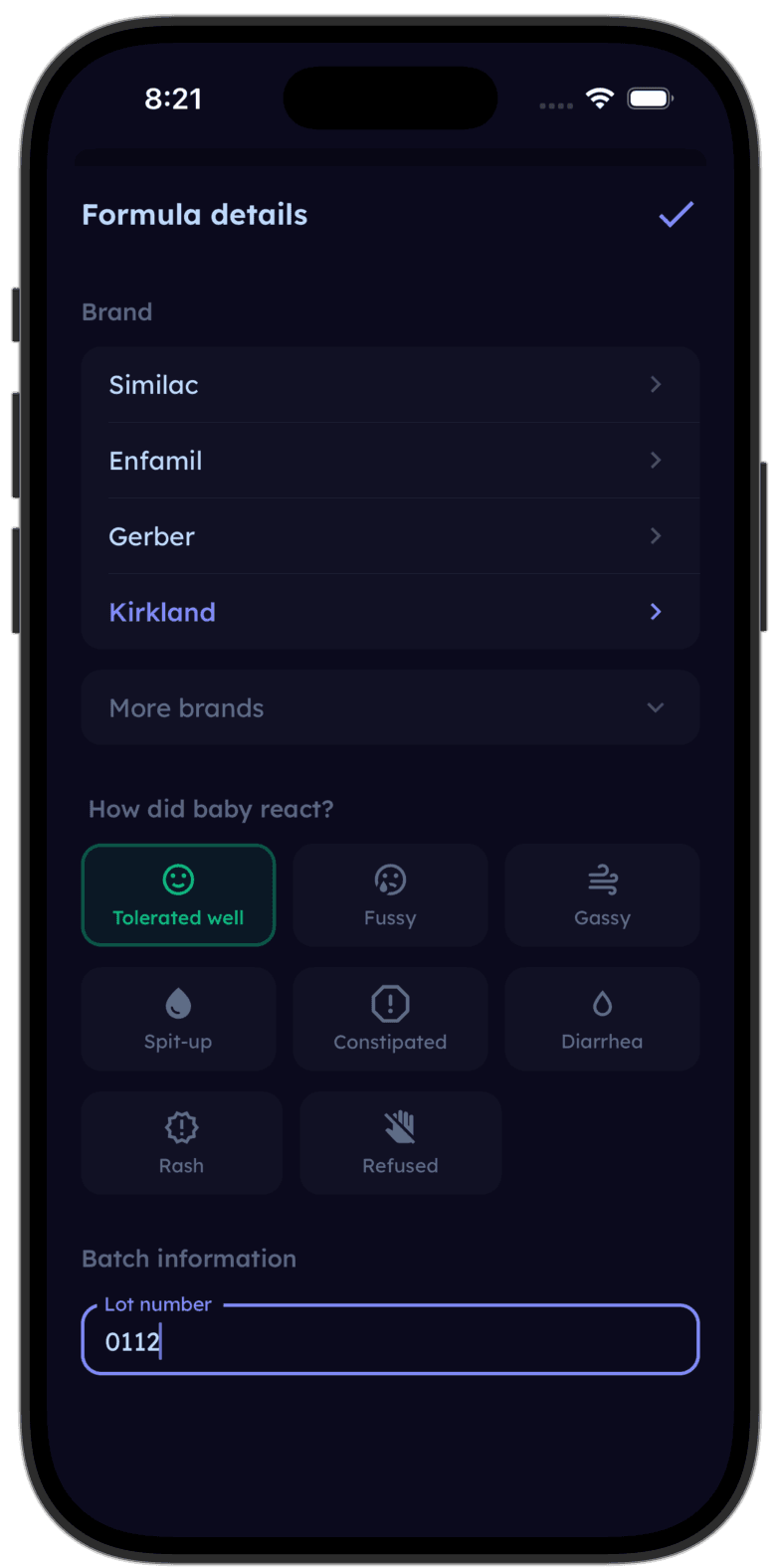
Tinylog tracks formula alongside fussiness — so you can see if the switch is actually helping.
Log each bottle, note fussiness episodes and stool changes, and see the pattern over 1–2 weeks. When you bring real data to your pediatrician instead of a vague 'something feels off,' the conversation is more productive for everyone.


Taste, Mixing, and Practical Differences
Taste: Enfamil Gentlease has a slightly bitter taste due to the hydrolyzed protein — some babies reject it initially. Enfamil Sensitive is slightly sweeter (corn syrup solids are sweeter than lactose). Most babies adjust to either within a few days.
Mixing: Gentlease can be slightly foamier due to the hydrolyzed protein. Let bottles settle or use a formula pitcher to reduce bubbles. Sensitive mixes like most standard formulas.
Stool changes: Expect stool changes with either formula. Reduced-lactose formulas can produce looser stools. Partially hydrolyzed formulas sometimes produce greenish stools. Both are normal and not cause for concern.
Availability: Both are widely available at every major retailer. Neither requires specialty ordering.
When to Talk to Your Pediatrician
Gentle formulas are for mild fussiness and gas — not for true allergy or intolerance. If your baby's symptoms are severe or don't improve after 2 weeks on either formula, talk to your pediatrician about hypoallergenic options instead of switching between gentle formulas.
Signs That Need Medical Evaluation
- Blood or mucus in stools (possible CMPA — needs hypoallergenic formula, not gentle)
- Persistent vomiting (not just spit-up) after most feedings
- Failure to gain weight or weight loss
- Severe eczema flares that worsen with formula changes
- Wheezing, hives, or facial swelling after feeds (seek immediate care)
- Fussiness that does not improve after 2 weeks on a gentle formula
Blood in stool, persistent vomiting, or failure to gain weight are NOT mild sensitivity symptoms. These require pediatric evaluation and potentially a hypoallergenic formula (Alimentum, Nutramigen, or PurAmino).
The Bottom Line
Enfamil Sensitive and Enfamil Gentlease address fussiness through different mechanisms. Sensitive targets lactose sensitivity by removing most of the milk sugar. Gentlease targets protein digestion by partially hydrolyzing the proteins. Neither is hypoallergenic.
Choose Enfamil Sensitive if: your baby's fussiness pattern suggests lactose sensitivity — gas, bloating, and diarrhea more than protein-related symptoms.
Choose Enfamil Gentlease if: your baby seems to struggle with digestion broadly — general fussiness, frequent spit-up, and discomfort that persists despite good feeding technique. Most pediatricians recommend Gentlease as the more common first try because partially hydrolyzed protein addresses a broader range of digestive triggers.
Important context: most newborn fussiness resolves on its own by 3 months. If a gentle formula doesn't help after 2 weeks, don't keep switching — talk to your pediatrician about whether a hypoallergenic formula or a non-formula cause (reflux, overfeeding, feeding technique) is at play.
If you're switching formulas, tracking feeds and symptoms (gas, spit-up, fussiness, stool changes) for 1–2 weeks gives you and your pediatrician a clear picture. Tinylog makes this easy — a few taps per feed. Whichever formula you go with, sign up for free recall alerts to get notified if your formula is ever recalled.
For the cross-brand comparison, see Similac Sensitive vs. Enfamil Gentlease. For hypoallergenic options, see Alimentum vs. Nutramigen vs. PurAmino. For the standard Enfamil comparison, see Enfamil NeuroPro vs. Enfamil Gentlease.
Related Guides
-
Similac Sensitive vs. Enfamil Gentlease — The cross-brand comparison
-
Enfamil NeuroPro vs. Enfamil Gentlease — Standard Enfamil vs. the gentle version
-
Best Formula for Gassy Babies — What actually helps
-
Enfamil vs. Similac — A complete brand comparison
Sources
- U.S. Food and Drug Administration. "21 CFR Part 107 — Infant Formula." Code of Federal Regulations.
- American Academy of Pediatrics. "Choosing an Infant Formula." HealthyChildren.org, 2024.
- Iacovou M, et al. "Randomised clinical trial: reducing the intake of cow's milk protein in infants." Journal of Pediatrics, 2018.
- Vandenplas Y, et al. "Guidelines for the diagnosis and management of cow's milk protein allergy in infants." Archives of Disease in Childhood, 2007.
- Heyman MB. "Lactose Intolerance in Infants, Children, and Adolescents." Pediatrics, 2006.
- U.S. FDA. "Infant Formula Guidance Documents and Regulatory Information." fda.gov, 2023.
This guide is for informational purposes only and is not a substitute for professional medical advice. Formula recommendations should be discussed with your pediatrician, especially for babies with allergies, reflux, or other medical conditions.
Frequently asked questions
- What's the difference between Enfamil Sensitive and Enfamil Gentlease?
- Enfamil Sensitive is Enfamil's reduced-lactose formula — it removes most of the milk sugar and replaces it with corn-derived carbohydrates. Enfamil Gentlease uses partially hydrolyzed milk and whey proteins, so the proteins are pre-broken into smaller fragments that are easier to digest. Sensitive targets lactose sensitivity. Gentlease targets protein digestion. They're not interchangeable.
- Is Enfamil Sensitive the same as Enfamil Gentlease?
- No. They're both made by Enfamil and both marketed for fussy, gassy babies, but they use different mechanisms. Enfamil Sensitive is reduced-lactose with intact proteins. Enfamil Gentlease keeps lactose low and partially hydrolyzes the proteins. Which one helps depends on whether your baby's fussiness is triggered by lactose or by protein digestion.
- Which is better for gas, Enfamil Sensitive or Gentlease?
- It depends on the cause. If lactose is the trigger, Enfamil Sensitive is the match. If protein digestion is the trigger, Enfamil Gentlease (partially hydrolyzed protein) may be more effective. True lactose intolerance in infants is extremely rare, so for most gassy babies, Gentlease's partially hydrolyzed approach is more often the right first try — but most newborn gassiness resolves on its own regardless of formula.
- Is Enfamil Gentlease hypoallergenic?
- No. Enfamil Gentlease uses partially hydrolyzed proteins, which are easier to digest but still contain intact cow's milk protein fragments. It's not suitable for babies with confirmed cow's milk protein allergy (CMPA). Hypoallergenic formulas like Nutramigen use extensively hydrolyzed or amino acid-based proteins.
- Does Enfamil Sensitive have lactose?
- Most of it is removed. Enfamil Sensitive significantly reduces lactose and replaces it with corn syrup solids as the primary carbohydrate. It's not 100% lactose-free, but the lactose content is low enough to help most babies with lactose sensitivity. If a baby needs a truly lactose-free formula, a dedicated lactose-free option is more appropriate.
- Is Enfamil Gentlease partially hydrolyzed?
- Yes. Enfamil Gentlease uses partially hydrolyzed nonfat milk and whey protein — the proteins are broken into smaller fragments to make them easier to digest. This is different from 'extensively hydrolyzed' (used in hypoallergenic formulas). Partially hydrolyzed is the middle ground: gentler than intact proteins, but not suitable for true milk protein allergy.
- Can I switch between Enfamil Sensitive and Enfamil Gentlease?
- Yes. You can transition between them. Give each formula at least 1-2 weeks before deciding it isn't working — switching too frequently makes it hard to tell what's actually helping. Track feeds, fussiness, and stool changes so you have real data, not guesses.
- What's the Similac equivalent of these Enfamil formulas?
- Enfamil Sensitive is closest to Similac Sensitive (now sold as Similac 360 Total Care Sensitive) — both reduce lactose. Enfamil Gentlease is closest to Similac Pro-Total Comfort — both use partially hydrolyzed whey protein. Picking the wrong pair is one of the most common mistakes parents make when switching between brands.