GUIDE

Best Formulas for Gassy Babies

Before switching formula, try slower-flow nipples and better burping. If gas persists, partially hydrolyzed formulas like Gentlease or Total Comfort are the evidence-based next step.

Almost every newborn is gassy. Their digestive system is brand new and still figuring things out. Most of the time, the formula isn't the problem — but sometimes a switch can genuinely help. Here's how to tell the difference.

The First Thing to Understand: Gas Is Normal

Your baby's digestive system is roughly the size of their fist and has never processed food before. Gas is an inevitable byproduct of digestion, and for newborns, the whole system is still learning how to move things along efficiently.

Here is what is actually happening: newborn intestines have not yet developed the coordinated muscle contractions (peristalsis) needed to move gas through efficiently. The gut microbiome is still establishing itself. And babies swallow air — during feeds, during crying, sometimes just because. All of this means gas.

The AAP notes that most newborn gassiness peaks around 4-6 weeks and gradually improves by 3-4 months as the digestive system matures. This timeline holds regardless of what formula you use.

So before you assume the formula is the problem, consider: is this just normal newborn gas?

What to Try Before Switching Formula

Switching formula should not be your first move. The techniques below solve the problem for many babies — and they are free.

Try a slower-flow nipple

Fast-flow nipples cause babies to gulp air along with milk. If your baby is coughing, sputtering, or milk is leaking from the corners of their mouth, the flow is too fast. Drop to a slower nipple size — even newborn flow nipples for young babies.

Use paced bottle feeding

Hold baby in a more upright position (about 45 degrees), keep the bottle horizontal so milk just barely fills the nipple, and let baby pull milk in at their own pace. This reduces air intake dramatically. Most hospital lactation consultants teach this technique.

Burp more frequently

Don't wait until the bottle is finished. Burp after every 1-2 ounces for young babies. Try different positions: over the shoulder, sitting upright on your lap, or face-down on your forearm. Some babies burp easily in one position and not another.

Hold upright after feeds

Keep baby upright for 10-15 minutes after feeding. Gravity helps gas rise and escape before it gets trapped lower in the digestive tract. This is especially helpful for babies who spit up a lot.

Check the bottle for air

Air bubbles in the bottle mean air bubbles in the baby. Anti-colic bottles (like Dr. Brown's) use a vent system to reduce air in the milk. Mixing formula by swirling instead of shaking also reduces bubbles.

Give these changes at least a week before evaluating. If you are tracking feeds and symptoms in an app like tinylog, note when you made the change so you can look back and see whether things actually improved or if you are just having a better day.

The Escalation Path: From Standard to Specialty
Step 1: Standard Formula
Formula TypeEnfamil NeuroPro, Similac 360, any standard
When to TryStarting point for all formula-fed babies
What ChangesBaseline — intact proteins, full lactose
Time to Evaluate2-3 weeks
Step 2: Feeding Technique
Formula TypeSame formula, different approach
When to TryBaby is gassy but otherwise thriving
What ChangesSlower nipple, paced feeding, better burping, upright position after feeds
Time to Evaluate1 week
Step 3: Partially Hydrolyzed
Formula TypeGentlease, Total Comfort, GentlePro
When to TryGas persists after technique changes for 1-2 weeks
What ChangesPre-broken-down proteins, usually reduced lactose
Time to Evaluate1-2 weeks
Step 4: Extensively Hydrolyzed
Formula TypeNutramigen, Alimentum
When to TrySymptoms persist on gentle formula + signs of possible CMPA
What ChangesFully broken-down casein protein. Requires pediatrician guidance.
Time to Evaluate2-4 weeks
Step 5: Amino Acid-Based
Formula TypeEleCare, PurAmino
When to TryNo improvement on extensively hydrolyzed — rare
What ChangesFree amino acids instead of any intact protein. Pediatrician-directed only.
Time to Evaluate2-4 weeks
Most babies never need to go past Step 3. Steps 4 and 5 should only happen under pediatrician guidance. Moving too quickly through this ladder means you might skip past a solution that would have worked.

How Gentle Formulas Actually Work

"Gentle" formulas are not just standard formula with something added. They are structurally different in ways that matter for digestion.

Protein hydrolysis is the key change. Standard formula contains intact cow's milk proteins — large molecules that require significant digestive work to break down. Partially hydrolyzed formulas pre-break these proteins into smaller pieces using enzymes, similar to what your baby's stomach would do. Smaller protein fragments are easier and faster to digest, which means less fermentation in the gut and less gas.

Reduced lactose is the other common change. Most gentle formulas replace some or all of the lactose with corn syrup solids or maltodextrin. This is not because lactose is bad — it is the primary carbohydrate in breast milk and the ideal sugar for infants. But reducing lactose can help babies whose lactase enzyme production is still ramping up, which is a normal developmental process.

To be clear: this does not mean your baby is lactose intolerant. True congenital lactose intolerance is exceptionally rare in infants — fewer than 50 cases have been documented in medical literature worldwide. The AAP considers it virtually nonexistent in babies under 12 months. What your baby might have is transient developmental lactase insufficiency, meaning their enzyme production is still catching up. This resolves on its own.

Gentle Formula Comparison: What Each One Actually Changes
Enfamil Gentlease
Protein ChangePartially hydrolyzed nonfat milk and whey
Carbohydrate ChangeCorn syrup solids (reduced lactose — 20% vs 80% in standard)
Other ChangesIncludes 2'-FL HMO, DHA, MFGM
Approximate Cost~$1.15/oz
Similac Total Comfort
Protein Change100% partially hydrolyzed whey
Carbohydrate ChangeCorn syrup solids (reduced lactose)
Other ChangesIncludes 2'-FL HMO, DHA, lutein. No palm oil.
Approximate Cost~$1.20/oz
Enfamil Reguline
Protein ChangePartially hydrolyzed nonfat milk and whey
Carbohydrate ChangeCorn syrup solids, polydextrose, galactooligosaccharides
Other ChangesPrebiotics specifically for stool consistency. For babies with both gas and constipation.
Approximate Cost~$1.15/oz
Gerber Good Start GentlePro
Protein Change100% partially hydrolyzed whey (comfort proteins)
Carbohydrate ChangeLactose, corn maltodextrin
Other Changes2'-FL HMO, DHA. Retains more lactose than other gentle formulas.
Approximate Cost~$1.10/oz
Store Brand Gentle (various)
Protein ChangePartially hydrolyzed nonfat milk and whey
Carbohydrate ChangeCorn syrup solids (reduced lactose)
Other ChangesVaries by brand. Same FDA requirements. Significantly cheaper.
Approximate Cost~$0.65-0.75/oz
All gentle formulas meet the same FDA nutritional requirements (21 CFR 107) as standard formulas. The differences are in protein processing and carbohydrate source, not overall nutrition.
tinylog feeding tracker showing bottle feeds with notes on symptoms

tinylog helps you track what's actually working.

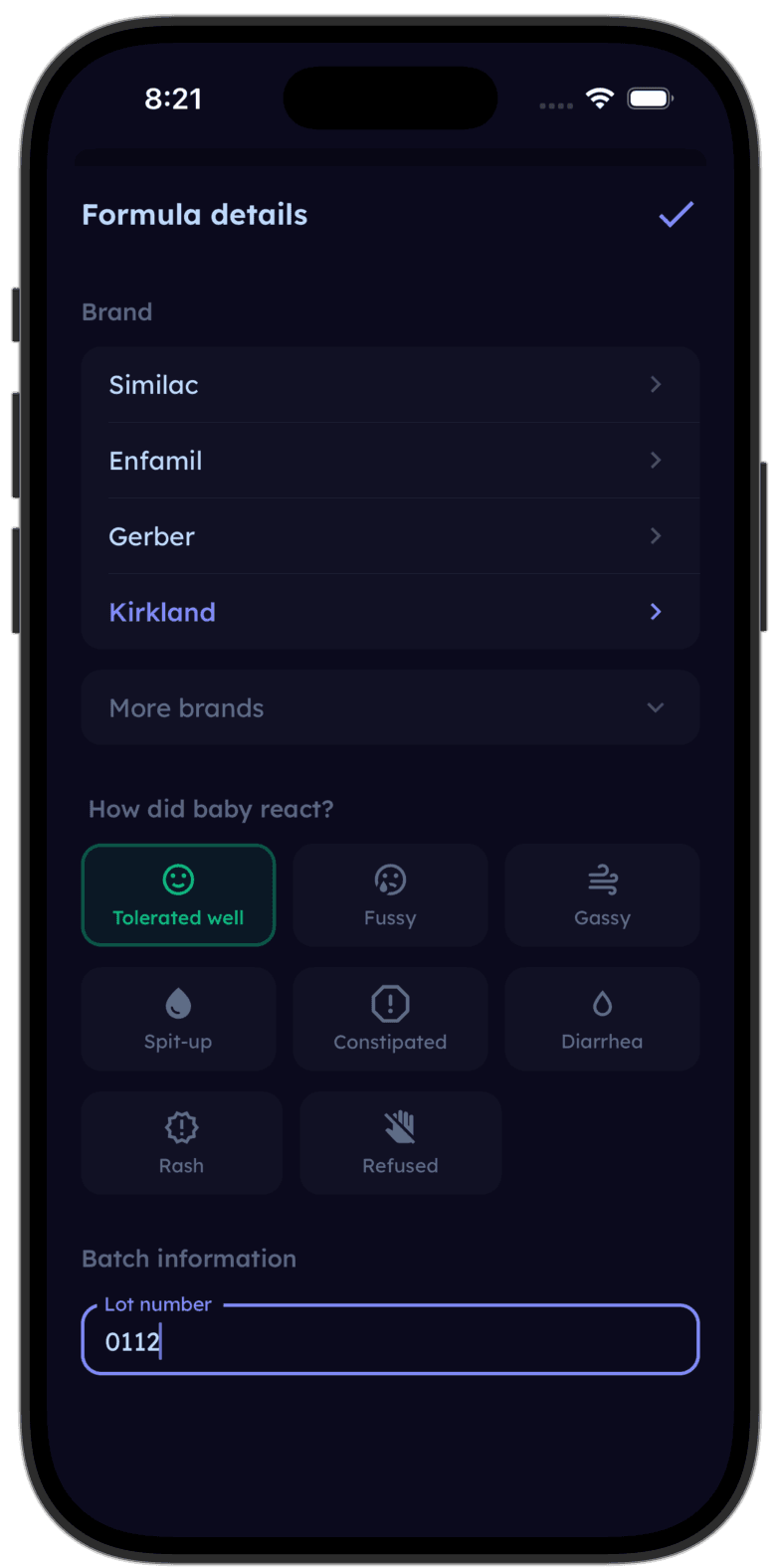
Log feeds and note symptoms like gas, fussiness, or spit-up. When you switch formulas or try a new technique, you'll have a clear before-and-after picture instead of relying on memory.

Download on the App StoreGet It On Google Play

What the Marketing Doesn't Tell You

Every formula brand has a "gentle" version, and they all claim to reduce fussiness and gas. Here is what they leave out:

Most gentle formulas are very similar. Enfamil Gentlease and its store-brand equivalents have nearly identical ingredient lists. The main difference is the label and the price. Store-brand gentle formulas cost 40-50% less and meet the same FDA requirements.

"Clinically proven to reduce fussiness in 24 hours" needs context. You will see this claim on Gentlease packaging. The study behind it was funded by Mead Johnson (Enfamil's parent company), measured parent-reported fussiness (subjective), and compared switching to Gentlease vs. staying on a standard formula. When you switch any formula, parents tend to pay more attention and use better feeding technique. Placebo effect is real and powerful, especially when you are sleep-deprived and desperate.

Gas drops may not do much. Simethicone drops (Mylicon, Little Remedies) break up gas bubbles in the stomach but do not prevent gas from forming. A randomized controlled trial published in Pediatrics (Metcalf et al., 1994) found simethicone no more effective than placebo for infant colic. They are safe, so there is no harm in trying — but don't expect a miracle.

Switching formulas too quickly creates its own problem. Every formula switch causes a 3-5 day adjustment period where stools change and fussiness may temporarily increase. If you switch every few days, you never give any formula a fair trial, and you add digestive disruption on top of whatever was already happening.


Gas vs. Possible Allergy: How to Tell the Difference

  • Gas and fussiness that resolve between feeds — probably just gas
  • Gas plus blood or mucus in stool — possible CMPA, talk to pediatrician
  • Gas plus severe eczema — possible CMPA, talk to pediatrician
  • Gas plus persistent vomiting (not just spit-up) — possible CMPA or reflux
  • Gas plus poor weight gain — needs evaluation regardless of cause
  • Gas plus extreme irritability during and after every feed — warrants pediatrician visit

Normal gas is uncomfortable but manageable. If your baby has gas PLUS any of the red-flag symptoms above, talk to your pediatrician before switching formula on your own.

When to Talk to Your Pediatrician

Talk to your pediatrician about your baby's gas if:

  • You have tried feeding technique improvements for at least a week with no change
  • Your baby's gas is accompanied by blood or mucus in stool
  • Your baby has poor weight gain alongside persistent fussiness
  • Severe eczema or skin rashes have appeared or worsened
  • Your baby seems to be in genuine pain (not just discomfort) during or after feeds
  • You are considering moving to an extensively hydrolyzed formula like Nutramigen or Alimentum

Bring your feeding log. Seriously. Your pediatrician will want to know how much your baby is eating, how often, what formula you are using, when the gas seems worst, and what you have already tried. That data turns a vague "my baby is gassy" into a productive conversation with a clear next step. If you are using tinylog or a similar tracker, share the data.

For more on hypoallergenic formulas, including when you need one and how they compare, see our hypoallergenic formula guide.

The Bottom Line

Most newborn gas is normal and temporary. It peaks around 4-6 weeks and improves by 3-4 months regardless of formula type. Start with feeding technique changes — slower nipple, paced feeding, better burping — before switching formula.

If gas persists, partially hydrolyzed formulas like Enfamil Gentlease or Similac Total Comfort are the evidence-based next step. Give any new formula at least 1-2 weeks. Don't escalate to extensively hydrolyzed formulas without pediatrician guidance — they are expensive, they taste different (babies sometimes resist the switch), and they are designed for a specific condition (CMPA) that most gassy babies do not have.

The "best" formula for your gassy baby is ultimately whichever one resolves the symptoms while keeping your baby well-fed and growing. For our full formula comparison, see our best baby formulas guide.

Related Guides

Sources

  • American Academy of Pediatrics — "Lactose Intolerance in Infants, Children, and Adolescents." Pediatrics, 2006.
  • Metcalf TJ, et al. "Simethicone in the treatment of infant colic: a randomized, placebo-controlled, multicenter trial." Pediatrics, 1994.
  • Vandenplas Y, et al. "Functional gastrointestinal disorders in infancy: impact on the health of the infant and family." Pediatric Gastroenterology, Hepatology & Nutrition, 2019.
  • Czinn SJ, Blanchard SS. "Gastroesophageal reflux disease in neonates and infants." Pediatric Drugs, 2013.
  • U.S. Food and Drug Administration — "21 CFR 107: Infant Formula Requirements."
  • Berseth CL, et al. "Clinical response to 2 commonly used switch formulas occurs within 1 day." Clinical Pediatrics, 2009.

This guide is for informational purposes only and is not a substitute for professional medical advice. If you have concerns about your baby's gas, fussiness, or feeding tolerance, please consult your pediatrician.

Get this guide in your inbox.
We'll email you this guide so you can reference the comparison table and escalation path anytime.
Track feeds and fussiness in one place.
Download tinylog free — see if the gas is tied to feeding patterns or formula type.
Download on the App StoreGet It On Google Play