
GUIDE
Best Formula for Constipation
Published on ·Updated on
Formula-related constipation is usually linked to the fat source (palm olein oil) or iron content. Switching to a palm-free formula or a comfort formula with added prebiotics often helps — but true constipation in babies under 6 months is uncommon.
Most parents who think their baby is constipated are actually seeing normal newborn straining (infant dyschezia). This guide helps you understand the difference, know which formula ingredients affect stool consistency, and choose a formula that may help if constipation is genuine.
Free 2-min quiz. Matched to your baby's symptoms.
“Partially hydrolyzed formulas can be helpful if your baby is very fussy, gassy or colicky.”
 Dr. Matthew Badgett, MD, Pediatrician, Cleveland Clinic
What Actually Causes Formula Constipation
Before switching formulas, it helps to understand what causes firm stools — and what does not.
Palm olein oil: the most common culprit
Multiple studies have linked palm olein oil in infant formula to firmer stools. Palm olein can form insoluble calcium soaps in the gut, which harden stool and reduce calcium and fat absorption. A 2017 meta-analysis in Food and Nutrition Research confirmed this effect. Formulas using palm olein include Enfamil NeuroPro, Enfamil Gentlease, and most Enfamil-family products. Similac's standard line does not use palm olein.
Iron: probably not the cause
Iron is often blamed for constipation, but the evidence is weak. A 2010 study in the Journal of Pediatrics compared iron-fortified formula to low-iron formula and found no significant difference in stool consistency or frequency. The AAP recommends iron-fortified formula for all formula-fed infants, and switching to a low-iron formula is not recommended.
Infant dyschezia: the most common "false alarm"
Many parents interpret straining as constipation. Infant dyschezia is a condition where babies strain, grunt, cry, and turn red while passing a perfectly soft stool. The baby has not yet learned to coordinate pushing with relaxing the pelvic floor. It looks alarming but resolves on its own — usually by 3–4 months. No formula change will fix it because it is not a formula problem.
True constipation: what to look for
Actual constipation means hard, pellet-like stools that are difficult or painful to pass. The stool consistency matters more than frequency. A formula-fed baby who has one soft stool every two days is not constipated. A baby who has daily hard pellets is.
| Formula | Palm Oil | Protein Type | Prebiotics | Price Per Oz | Best For |
|---|---|---|---|---|---|
| Similac 360 Total Care | No palm olein | Intact (nonfat milk + whey) | 2'-FL HMO | ~$1.10–$1.30/oz | First switch if currently on a palm-olein formula |
| Similac Sensitive | No palm olein | Intact (milk protein isolate), reduced lactose | None | ~$1.20–$1.40/oz | Gas + constipation (palm-free + reduced lactose) |
| Enfamil Reguline | Yes (palm olein) | Intact (nonfat milk + whey) | Dual prebiotics (polydextrose + GOS) | ~$1.30–$1.50/oz | Specifically designed for soft stools via prebiotics |
| Enfamil Gentlease | Yes (palm olein) | Partially hydrolyzed (nonfat milk + whey) | None | ~$1.20–$1.40/oz | Fussiness + firm stools (easier protein digestion) |
| Kendamil Classic | No palm oil | Whole milk (intact) | GOS (some versions) | ~$1.70–$2.00/oz | Premium palm-free option with whole milk |
| Store-brand (check label) | Varies (check label) | Intact (nonfat milk + whey) | Varies | ~$0.70–$0.90/oz | Budget option — check if palm-free |
The Palm Olein Connection
The most actionable step for formula-related constipation is switching from a formula with palm olein to one without it.
How it works: Palm olein oil contains palmitic acid at the sn-1 and sn-3 positions of the triglyceride (unlike breast milk, where it is at sn-2). When digested, this configuration allows palmitic acid to bind with calcium, forming calcium soaps — insoluble compounds that harden stool and exit unabsorbed. This reduces both fat and calcium absorption.
What the research shows: A 2006 study by Koo et al. in the Journal of the American College of Nutrition found lower calcium absorption and firmer stools in infants fed palm olein formula compared to palm-free formula. The 2017 meta-analysis confirmed the effect across multiple studies.
Practical implications: If your baby is on an Enfamil formula (most use palm olein) and has firm stools, switching to Similac (no palm olein) or Kendamil (no palm oil) is a reasonable first step. This is the single most evidence-backed formula change for stool consistency.
Iron and Constipation: Separating Fact from Fiction
The belief that iron causes constipation is widespread among parents but not well supported by research.
The 2010 study by Singhal et al. randomly assigned infants to iron-fortified or low-iron formula and tracked stool outcomes. There was no significant difference in stool frequency, consistency, or parent-reported constipation. Other studies have reached similar conclusions.
The AAP strongly recommends iron-fortified formula for all formula-fed infants from birth to 12 months. Iron deficiency in infancy can impair cognitive development. Switching to low-iron formula to address constipation is not recommended and may cause more harm than the constipation itself.
If your baby is constipated, address palm olein first. If that does not help, talk to your pediatrician — not about reducing iron, but about other potential causes.
What the Marketing Doesn't Tell You
Enfamil Reguline is marketed specifically for "soft, comfortable stools." It works — the dual prebiotic blend (polydextrose + GOS) is effective at softening stool. However, Reguline still contains palm olein oil. This means it is adding prebiotics to counteract an ingredient issue that palm-free formulas avoid entirely.
A simpler approach: switch to a palm-free formula. If stool consistency is your primary concern, removing the ingredient that hardens stool is more logical than adding prebiotics to soften it. Reguline is a reasonable option if you prefer to stay within the Enfamil family, but it is not the only or necessarily the best solution.
Store-brand formulas vary on palm olein. Some store brands are palm-free; others are not. Check the ingredient list before assuming a store brand will help with constipation.
| Product | Typical Price | Cost Per Oz (Prepared) | Monthly Estimate |
|---|---|---|---|
| Similac 360 Total Care (powder, 20.6 oz) | $33–$38 | ~$1.20/oz prepared | ~$150–$175/month |
| Enfamil Reguline (powder, 19.5 oz) | $32–$38 | ~$1.40/oz prepared | ~$160–$190/month |
| Kendamil Classic (powder, 28.2 oz) | $34–$40 | ~$1.80/oz prepared | ~$190–$230/month |
| Store-brand palm-free (if available) | $16–$23 | ~$0.70–$0.90/oz prepared | ~$90–$120/month |
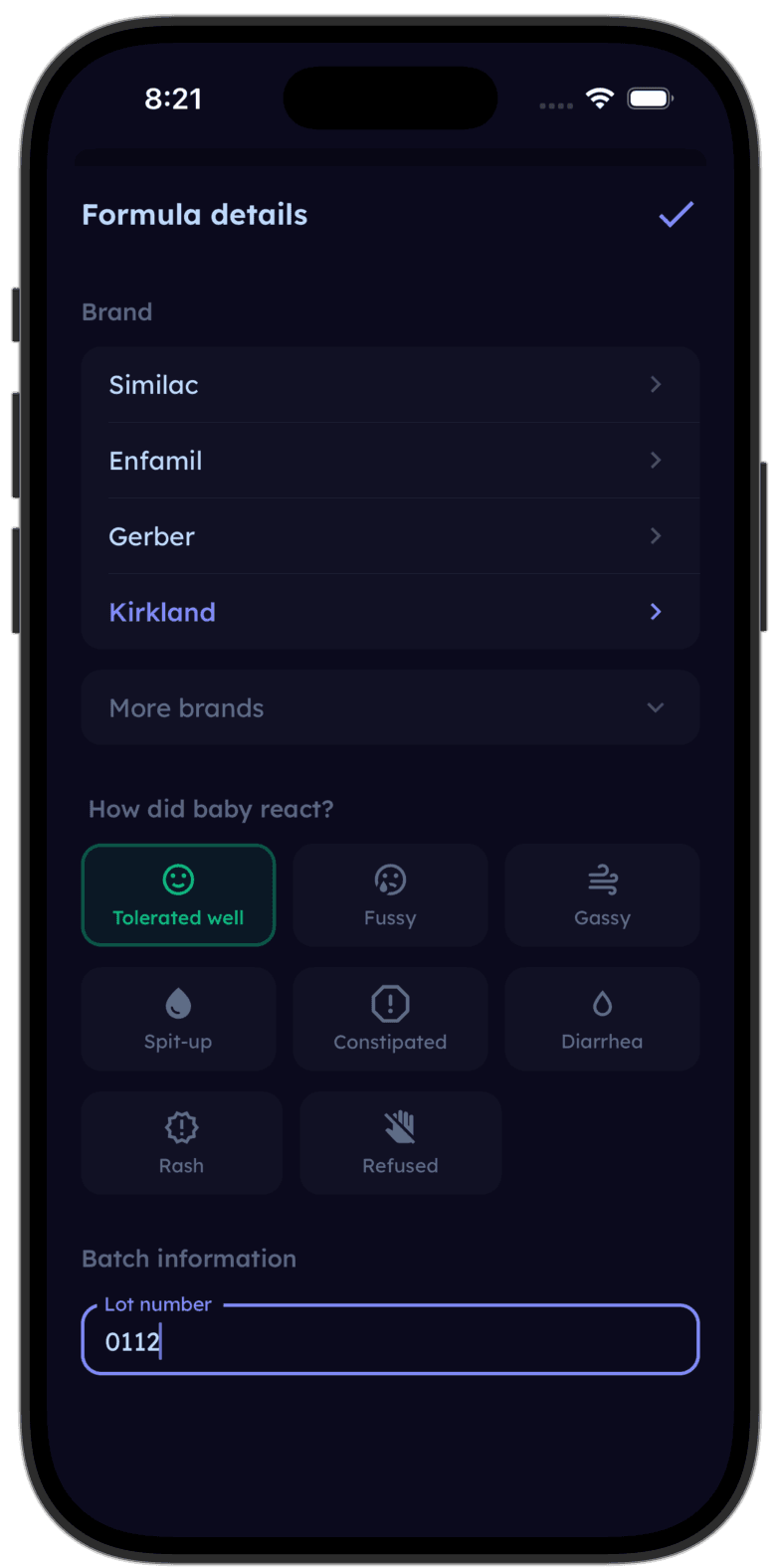
Know if the formula change actually fixed the constipation.
Log stool consistency and timing before and after switching formulas. After two weeks on a palm-free formula, you'll have a clear record of whether things improved — so you're not guessing, and your pediatrician isn't either.


Is It Actually Constipation? A Quick Check
Before switching formulas, make sure your baby is actually constipated.
Signs of True Constipation
- Hard, pellet-like stools that are difficult or painful to pass
- Fewer than 1 bowel movement per day (for formula-fed babies over 1 month old) combined with hard stools
- Blood on the stool surface (from small anal fissures caused by hard stool)
- Baby arches back and cries during bowel movements with visibly hard stool
- Abdomen feels firm or distended
If your baby has hard, painful stools with any of these signs, constipation is likely. Talk to your pediatrician if it persists beyond 2 weeks.
Signs That Are NOT Constipation
- Straining, grunting, and turning red while passing a SOFT stool (this is infant dyschezia — normal)
- Infrequent stools that are soft when they arrive (normal pattern variation)
- Stool color changes when switching formulas (normal)
- Occasional fussiness around feeding time (normal)
These are all normal infant behaviors that can look like constipation but are not. No formula change is needed for these.
The Bottom Line
Formula-related constipation is real but less common than parents think. The most evidence-backed intervention is switching from a formula with palm olein to one without it. Iron is not the likely cause.
First step: Switch to a palm-olein-free formula (Similac 360 Total Care Baby Formula, Similac Sensitive, or Kendamil). Give it 1–2 weeks.
Tinylog earns a small commission on purchases made through these links, at no cost to you.
Tip: check promo.new before purchasing. It's hit or miss depending on the product, but when it hits, you'll be glad you checked.
If that does not help: Try a formula with added prebiotics (Enfamil Reguline) or a partially hydrolyzed formula (Enfamil Gentlease).
If constipation persists: Talk to your pediatrician. Persistent constipation may have causes beyond formula (Hirschsprung disease, hypothyroidism, or anatomical issues — all rare but worth ruling out).
If your baby is straining but stools are soft: This is likely infant dyschezia, not constipation. No formula change will help — it resolves on its own.
Tracking stools daily is the only way to know if a formula switch actually made a difference. Start logging before you switch — that baseline is what makes the after meaningful. Tinylog logs diapers alongside feeds so when you bring data to your pediatrician, you can show exactly what changed and when.
If you are currently on a standard Enfamil formula and want to try a palm-free alternative, Similac 360 Total Care Baby Formula is a straightforward first switch. If you want to stay in the Enfamil family, Enfamil NeuroPro Baby Formula is the standard base — the Reguline and Gentlease variants build on it for specific stool-related concerns.
For specific formula matchups, see Similac Sensitive vs. Enfamil Gentlease and Enfamil vs. Similac. For budget options, see cheapest baby formulas.
Related Guides
-
Best Formula for Gassy Babies — What actually helps
-
Switching Formulas — How to do it safely
-
Baby Constipation — Causes, remedies, and when to worry
Sources
- U.S. Food and Drug Administration. "21 CFR Part 107 — Infant Formula." Code of Federal Regulations.
- American Academy of Pediatrics. "Choosing an Infant Formula." HealthyChildren.org, 2024.
- Koo WW, et al. "Palm olein in infant formula affects bone mineralization and calcium absorption." Journal of the American College of Nutrition, 2006.
- Alarcon PA, et al. "Effect of individual fatty acids on calcium absorption in infant formulas." Food and Nutrition Research, 2017.
- Singhal A, et al. "Effect of iron on growth and iron absorption in breast-fed infants." Journal of Pediatrics, 2010.
- Tabbers MM, et al. "Evaluation and treatment of functional constipation in infants and children." Journal of Pediatric Gastroenterology and Nutrition, 2014.
- U.S. FDA. "Infant Formula Guidance Documents and Regulatory Information." fda.gov, 2023.
This guide is for informational purposes only and is not a substitute for professional medical advice. If your baby has persistent constipation, blood in stool, or failure to gain weight, consult your pediatrician.
Frequently asked questions
- What formula is best for constipated babies?
- Formulas without palm olein oil (like Similac 360 Total Care or Kendamil) tend to produce softer stools. Enfamil Reguline is specifically designed with prebiotics to promote soft stools. If your baby is on a formula with palm olein, switching to a palm-free option is a reasonable first step.
- Does iron in formula cause constipation?
- This is a common belief, but research does not strongly support it. A 2010 study in the Journal of Pediatrics found no significant difference in stool frequency or consistency between iron-fortified and low-iron formulas. The AAP recommends iron-fortified formula for all formula-fed infants.
- How do I know if my baby is actually constipated?
- True constipation means hard, pellet-like stools that are difficult or painful to pass — not infrequent stools. Breastfed babies may go days without a bowel movement and still be normal. Formula-fed babies typically have 1–2 bowel movements per day, but frequency varies. Focus on stool consistency, not frequency.
- What is infant dyschezia?
- Infant dyschezia is when a baby strains, grunts, cries, and turns red while trying to pass a soft stool. It looks like constipation but is actually the baby learning to coordinate abdominal muscle pushing with pelvic floor relaxation. It resolves on its own and does not require a formula change.
- Should I switch formula if my baby is constipated?
- If your baby has truly hard, painful stools (not just straining), switching to a palm-olein-free formula is a reasonable first step. Give the new formula at least 1–2 weeks before evaluating. If constipation persists, talk to your pediatrician before making additional changes.